AMD Bristol Ridge APUs: Same Carrizo design, 20 percent more performance

AMD FX, A12, and A10 cover the high end, while A9, A6, and E2 round out the bottom.

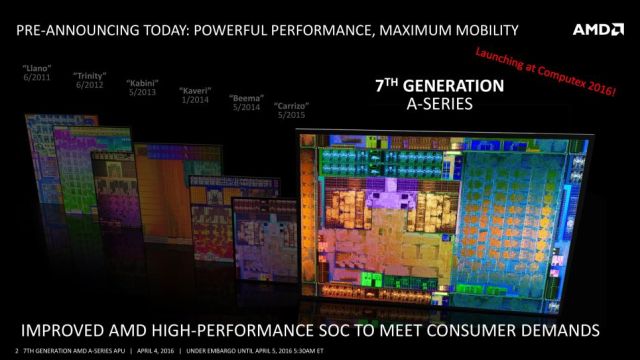
AMD has fully taken the wraps off its brand new seventh generation APU architecture Bristol Ridge, which it announced earlier this year. It promises users around a 20 percent boost in CPU performance, and a 37 percent boost in GPU performance over Bristol Ridge's predecessor Carrizo, which launched in 2015. That's standard fare for generational updates, but what's most impressive is that AMD has squeezed this performance out of the exact same architecture as Carrizo: same 28nm transistors, same Excavator-based design.

At the high-end are the quad-core AMD FX, A12, and A10 chips, which come in 35W and 15W variants. Base clock speeds are as low as 2.4GHz in the 15W A10 and as high as 3.7GHz boost clock in the 35W FX. The FX and A12 come with up to eight GCN cores in a Radeon R7 graphics package, while the A10 comes with Radeon R5 graphics. All support DRR4 memory up to 2400MHz (versus 2133MHz DDR3 in Carrizo), which should give the on-board GPU a nice boost given how dependent its performance is on system memory.

At the mid- to low-range are the A9, A6, and E2 APUs, all of which sport a 15W TDP and more conservative clock speeds. Graphics take a cut too, with the A9 featuring Radeon R5, the A6 Radeon R4, and the E2 Radeon R2. Compared to Carrizo, these low-end chips still get a boost in performance, though, with AMD claiming clock speeds that are 1GHz higher, and up to 50 percent more GCN graphics cores. There's also support for HDMI 2.0 (finally), PCIe 3.0, and built in hardware decoding for MPEG, H.265, and VP9 video up to 4K resolutions.

Read 7 remaining paragraphs | Comments
AMD Radeon RX 480 revealed: Polaris debuts in a £160/$200 card designed for VR

AMD goes mainstream with 36 CUs, 4GB of GDDR5 on a 256-bit bus, and 150W TDP.

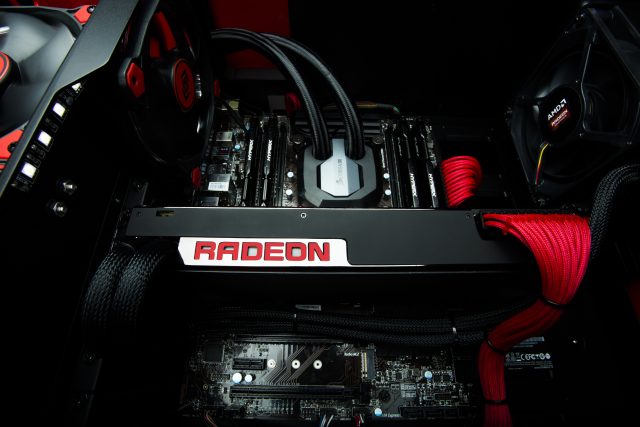
AMD's first Polaris-based graphics card is here: the Radeon RX 480. Rather than launch a high-end card to compete with the likes of Nvidia's GTX 1080 or 1070, AMD's RX 480 is pitched at the wider mainstream market, offering just over five teraflops of performance for a mere $199—about half the price of a GTX 1070. UK pricing is currently TBC, but it'll probably be about £160. The RX 480 will be available to buy on June 29.

Details on the Polaris architecture—which is based on AMD's forth generation GCN architecture and a new 14nm FinFET manufacturing process—were thin on the ground during the RX 480's reveal at Computex 2016 in Taiwan, but the company did divulge a few key specs. The RX 480 will feature 36 compute units (CUs)—that's eight more than the R9 380, and just shy of the 40 of the R9 390—along with some fast GDDR5 memory attached to a 256-bit memory bus for 256GB/s of bandwidth.

The RX 480 will come in both 4GB and 8GB configurations (the former being the £160/$200 model), and will support AMD FreeSync and HDR video via its DisplayPort 1.3/1.4 and HDMI 2.0b outputs. Best of all, it has an average power draw of just 150W, which should make it cooler and quieter than AMD's previous-generation graphics cards.

Read 5 remaining paragraphs | Comments

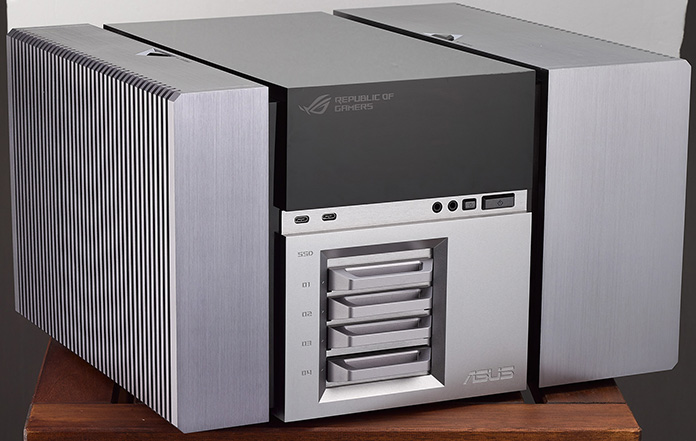
Asus Avalon is a bold, cable-free DIY PC

Stylish modular PC combines motherboard and case for easy upgrades.

Thanks to standardised components and simplified operating systems (RIP MS-DOS), building a PC isn't all that difficult these days—so long as you're comfortable with wielding a Phillips head screwdriver, at least. Asus, however, thinks that it "can do it better."

Enter the Asus ROG (Republic of Gamers) Avalon concept PC, unveiled at Computex 2016 in Taiwan: a tightly integrated system that combines the motherboard and case into one, allowing for a modular and easily upgradable system that's (mostly) devoid of complex cabling.

Plus, it looks like a hi-fi straight out of a 1970's Technics catalogue—and as we all know, retro hi-fi is so in right now.

Read 7 remaining paragraphs | Comments
Backpack VR PCs are now a thing: MSI, HP, and Zotac unveil new models

Does carrying around 10lb of PC sound like a fun time?

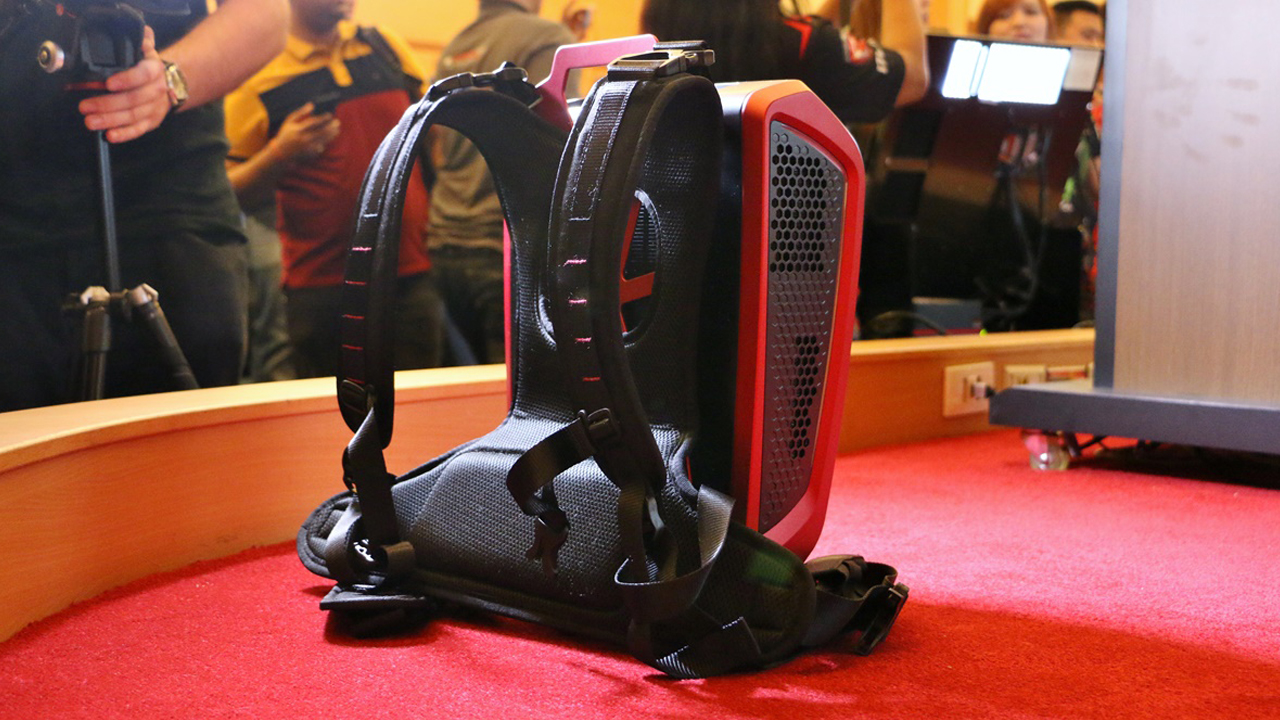
(credit: lowyat.net)

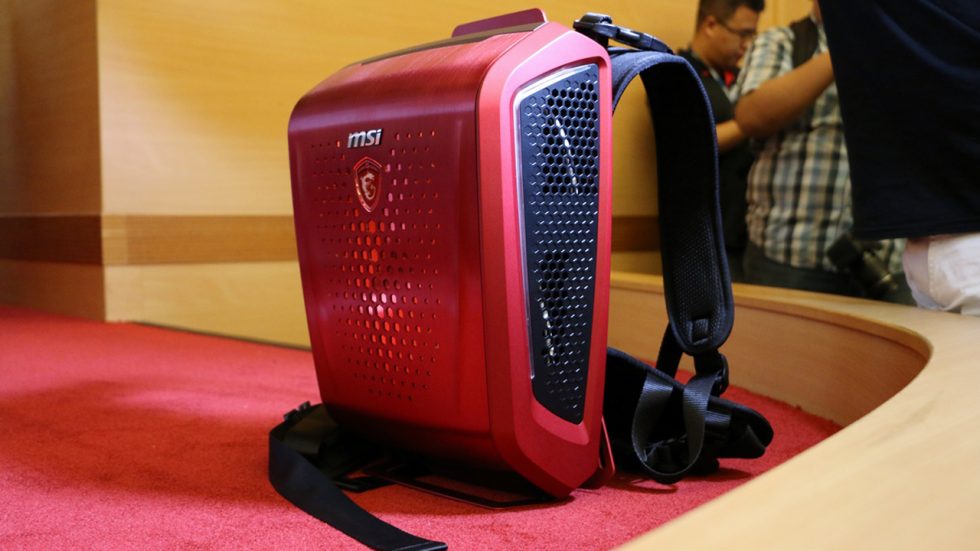
What's the biggest problem with PC-based virtual reality right now? Is it the price? The lack of deep gaming experiences? Or is it that darned cord that keeps you from properly leaping around like a lunatic while playing Space Pirate Trainer? For the PC manufacturers gathered at Computex 2016 in Taiwan, it's very much the latter. Yes, in a weird and quite frankly surprising trend, HP, MSI, Gigabyte, and Zotac are all showing off backpack-based PCs for free-to-roam VR gaming.

Now, I know what you're thinking, and yes, you could just pick up a powerful gaming laptop—one of those GTX 980-based ones should do the trick—stick some shoulder straps on it, and call it a day. Indeed, that's precisely what Gigabyte did with its Aorus X7 DT laptop earlier this year, creating a custom holster for lugging the huge 17.3-inch, 3.44kg (7.6lb) device around. But this brings with it some issues, namely that a laptop's cooling system isn't really designed for being used in a backpack. That's not to the mention that, at least in the case of the Aorus, gaming laptops have terrible battery life.

MSI claims to have solved these problems with its Backpack PC, a wonderfully garish system that packs a 6th-gen (Skylake) Core i7 Intel processor, Nvidia GTX 980 GPU, and a battery rated for up to 90 minutes of gaming into a bright red LED-lit backpack. Weighing in at around 5kg (12lb), the Backpack PC isn't exactly light, but it does offer niceties such as being fully upgradeable (MSI is planning to bump up the GPU to a GTX 1080 in later versions), as well as a user replaceable battery. Ports are mounted at the top of the backpack for hooking up a VR headset (there's a power socket for the Vive's breakout box), and you can use the system as an odd-looking desktop PC too.

Read 7 remaining paragraphs | Comments
This 1996 Sega training video is the most ‘90s thing you’ll see this week

Featuring baggy clothes, Pearl Jam, and a great big pile of classic Sega tech.

This internal Sega video for testers is a wonderful snapshot of the '90s.

If you've ever wondered what Sega was like at the height of its game-making powers, wonder no more. A staff video from the Sega vaults—made in 1996, the same year that the Sony PlayStation would begin to take over the world—has been released by the production company behind it, Green Mill Filmworks. Not only is the video a fascinating behind-the scenes look at game development and game testing, it is also, without doubt, the most '90s thing I've ever seen.

Even excluding the baggy clothes, questionable hair cuts, and horrifying denim, the desks of game testers interviewed—many of whom said they worked up to 90 hours a week squashing bugs—are littered with '90s paraphernalia. My personal favourite, aside from the multiple appearances of the obligatory (for the '90s at least) Jurassic Park merchandise, is the spinning holographic disk that appears 13 minutes in. I had one of those as a kid, and while I still don't quite understand what the appeal was, they were all the rage at school, even over here in the UK.

Of course, there's lots of Sega tech on show too, with testers having access to the Mega Drive (Genesis to our US friends), 32X, Sega CD, Game Gear, Saturn, and even the short-lived Sega Pico, a laptop-like educational system for kids that was powered by Genesis hardware. Each tester was also issued with development cartridges—which you can see being loaded up with memory chips by hand around 18 minutes in—before having to sit and play the game relentlessly, using a VHS recorder (yes really) to record gameplay and identify when and how bugs appeared.

Read 9 remaining paragraphs | Comments

Nokia in phone comeback as Microsoft sells feature phone biz for $350M

Nokia-branded phones and tablets on their way courtesy of Foxconn and HMD.

(credit: Galdor's channel)

Nokia phones are making a comeback thanks to a licensing deal struck between Microsoft, FIH Mobile—a subsidiary of Foxconn—and HMD global Oy.

Microsoft is selling its feature phone business to the two companies for £242 million (~$350 million), and will include some 4,500 employees, as well brands, software and services, care network, and its Vietnam-based manufacturing facility Microsoft Mobile Vietnam.

Those facilities, as well as Microsoft's feature phone technology, will be used to create new Nokia phones as part of an "exclusive global" licensing agreement between HMD global Oy and Nokia Technologies. The deal will allow HMD to produce phones and tablets bearing the Nokia brand name for the next 10 years. While no devices have been announced just yet, HMD plans to invest $500 million into the venture.

Read 6 remaining paragraphs | Comments

Nvidia GTX 1080 review: The new performance king

Nvidia pushes the performance curve once again—but has it gone far enough?

Specs at a glance: Nvidia GTX 1080
CUDA CORES 2560
TEXTURE UNITS 160
ROPS 64
CORE CLOCK 1607MHz
BOOST CLOCK 1733MHz
MEMORY BUS WIDTH 256-bit
MEMORY SPEED 10,000MHz
MEMORY BANDWIDTH 320GB/s
MEMORY SIZE 8GB DDR5X
PRICE Founders Edition (as reviewed): £619, €789, $699; Partner cards priced at $599 (probably £450 in the UK)

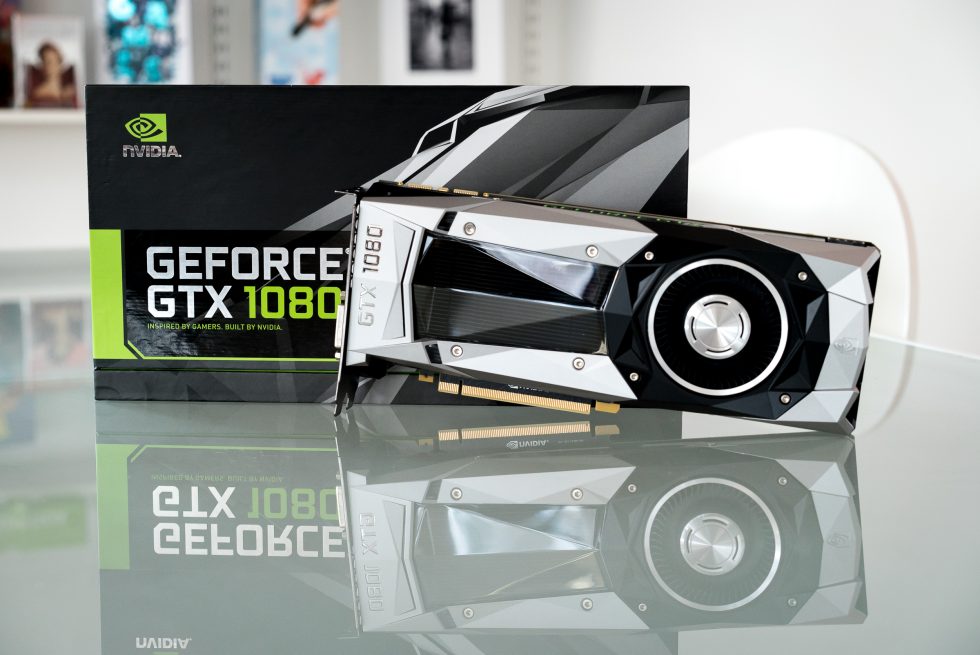
The GTX 1080 should be a generational leap, a moment that, like the Titan before it, redefines consumer graphics card performance—and in many ways, it is. Yes, the GTX 1080 is the new world's fastest graphics card, and yes, it's faster than the likes of the now-redundant GTX 980 Ti and Titan X by as much as 35 percent in real-world use. Compared to the 980, it's faster still, by as much as 62 percent. For those that that want the very best graphics card right now, the 1080 is it.

But it's hard to shake the feeling that the GTX 1080 could have been so much more.

Despite its many innovations—it's the first graphics card based on its new Pascal architecture, the first with GDDR5X memory from Micron, and the first to be manufactured on a smaller, more efficient TSMC 16nm FinFET manufacturing process—the 1080's performance gains aren't entirely unheard of. The 680 was roughly 30 percent faster than the 580, as was the 780 over the 680—and those didn't feature a brand new manufacturing process.

Read 55 remaining paragraphs | Comments

Nvidia’s GTX 1080 and GTX 1070 revealed: Faster than Titan X at half the price

GTX 1080 will cost $599 and launch May 27, with GTX 1070 following June 10 for $379.

AUSTIN, Texas—After numerous rumours and a supposed "several billion dollars" spent on R&D, Nvidia's first consumer graphics cards based on its Pascal architecture are here: the GTX 1080 and GTX 1070. The GTX 1080 will retail for $599 (~£450), $50 more than the GTX 980 cost at launch, while the GTX 1070 will retail for $379 (~£270), again $50 more than the previous generation card. The 1080 launches on May 27, with the 1070 following on June 10.

While it's surprising Nvidia has raised the price of its flagships graphics cards—particularly given AMD's bold claims that its Polaris architecture will offer VR-ready performance at a "mainstream" price point—the company claims that both cards are significantly faster than its current flagships, the GTX Titan X and GTX 980 Ti, which retail for $1000 (£800) and $650 (£550) respectively. In the case of the GTX 1080, Nvidia claims it's twice as fast as the Titan X and three times as energy efficient—it even says it's faster than dual-SLI 980 setup.

The performance boost comes from the combination of a new GPU microarchitecture (Pascal) with a leaner TSMC 16nm FinFET manufacturing process. The GTX 1080 also makes use of faster Micron GDDR5X memory, resulting in an impressive 10Gbps memory clock. Meanwhile, the GTX 1070 will use standard GDDR5 memory.

Read 10 remaining paragraphs | Comments

Nvidia’s stronger, faster Pascal architecture expected to debut Friday

Rumours point to a GTX 1080 and GTX 1070 launch, but when? And how much?

AUSTIN, Texas—Following a string of rumours, teasers, and enterprise exposé, chip-maker Nvidia will unveil consumer graphics cards based on its new Pascal architecture during a live event in Austin on Friday, May 6.

While Nvidia remains tight-lipped about what exactly will be shown—most rumours point towards two graphics cards, the GTX 1080 and 1070—those with quiet weekend plans can tune into the event livestream above at 8pm CDT (6pm PDT, 9pm EDT, or 2am BST on Saturday morning).

For the uninitiated, Pascal is Nvidia's latest and greatest graphics architecture, which promises to be both faster and more power efficient than the previous-generation Maxwell architecture. Exact details on the consumer chips won't appear until Friday, but the P100 enterprise card Nvidia unveiled in April does shed some light on what consumer Pascal might look like.

Read 6 remaining paragraphs | Comments

Warhammer 40,000: Dawn of War 3 is real and in development at Relic

“Base-building, epic heroes, huge battles, it’s all in there,” says Relic.

Seven years after the release of the classic real-time strategy game Warhammer 40,000: Dawn of War II, fans are finally getting a sequel. Warhammer 40,000: Dawn of War III is being developed by series veterans Relic Entertainment and published by Sega, the latter of which picked up the developer and the Warhammer 40K licence for $26.6 million (£18 million) at auction following the collapse of former publisher THQ in 2013.

Details on Dawn of War III are thin on the ground—there's no release date yet, not even a year—but Sega and Relic have dropped a CGI trailer, which shows Space Marines, Eldar, and Orks in the heat of battle. Sega promises that Dawn of War III will combine the large scale battles of Dawn of War with the in-depth customisation of Dawn of War II, although, without any gameplay footage, fans will have to take the publisher's promises with a large pinch of salt.

"Our biggest units ever? Check. Giant orbital lasers? Check. Base-building, epic heroes, huge battles, it's all in there," claimed Relic's Stephen MacDonald in a statement.

Read 3 remaining paragraphs | Comments