AMD slams “biased” and “unreliable” Intel benchmarks

Says SYSmark doesn’t represent true performance, compares to VW emissions scandal.

AMD, a company famous for its subtlety and restraint when dealing with competitors, is once again accusing Intel of unfair business practices, this time around dodgy benchmarks. Rather than provide useful metrics to consumers, AMD says Intel's use of the SYSmark benchmarking tool unfairly favours Intel products by putting too much emphasis on raw CPU performance. It even went as far to compare said practice to the recent VW emissions scandal, in which diesel engines could detect when they were having their emissions tested, changing their performance accordingly to improve results.

"Information provided by even the most established organisations can be misleading," explains AMD's John Hampton in a video titled "Truth or Myth?: Is SYSmark a Reliable Benchmark?" on YouTube. The video, in which a po-faced Hampton and technical sidekick Tony Salinas explain the Intel problem in true 60 Minutes style, shows SYSmark on a pair of PCs, one powered by an Intel Core i5 processor and the other by an AMD FX chip. The Core i5 system scored 987, while a "comparable AMD platform" running an FX processor scored 659. "That's a delta of 50 percent. Quite astonishing and not realistic in what real life performance is like," says Salinas.

To try and prove that AMD's chips are comparable to Intel's in real-world usage scenarios, the pair then boot up PCMark8, which has "activity going on on the CPU, GPU, and video sub-components of the system." The performance delta drops down to around seven percent. To hammer the point home they then load up a custom script, which looks at the time taken to complete a set of tasks within Microsoft Office. The Intel system completed it in 62 seconds, while the AMD system completed it in 64, thus providing the "better representation of real performance" the company is so keen to share.

Read 4 remaining paragraphs | Comments
AMD confirms high-end Polaris GPU will be released in 2016

The overall target is still “console-class gaming on a thin-and-light notebook.”

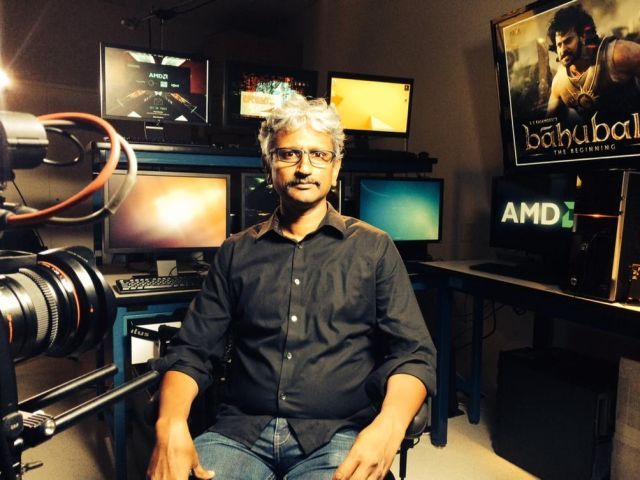
AMD is working on two versions of its upcoming Polaris graphics architecture: Polaris 10 and Polaris 11. In an interview with VentureBeat, graphics chief Raja Koduri explained that one of those GPUs is aimed at thin-and-light laptops and entry-level desktops, while the the other is a larger, high-performance GPU designed to take back the premium graphics card market currently dominated by rival Nvidia. However, the overall target for Polaris is still "console-class gaming on a thin-and-light notebook."

"We have two versions of these FinFET GPUs. Both are extremely power efficient," said Koduri. "This is Polaris 10 and that’s Polaris 11. In terms of what we’ve done at the high level, it's our most revolutionary jump in performance so far. We've redesigned many blocks in our cores. We’ve redesigned the main processor, a new geometry processor, a completely new fourth-generation Graphics Core Next with a very high increase in performance."

A seperate statement issued by AMD's Robert Hallock confirmed that Polaris will use HBM (high bandwidth memory) or GDDR5, depending on the "market segment."

Read 9 remaining paragraphs | Comments

HoloLens battery life will be cut in half under “intensive” use

You get 5.5 hours browsing e-mail, and there’s “no option for a wired connection.”

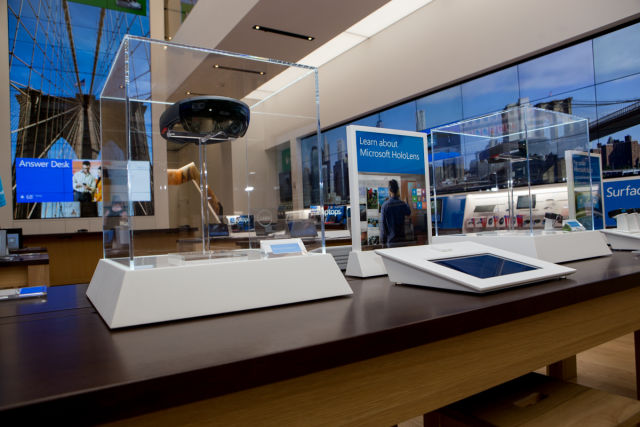
While it's not long until Microsoft's augmented reality headset HoloLens ships to developers, the company has kept surprisingly quiet about its various hardware and software specifications. However, in an evangelist presentation posted to YouTube (now removed), Microsoft's Bruce Harris revealed a few nuggets of info about the headset, including a modest battery life of roughly five hours.

That five hours of battery life only applies when working on Word documents or e-mail. "Intensive" use—which likely refers to the gaming and 3D applications Microsoft has been using to demo the device—results in a far shorter battery life of two and a half hours. Those hoping for extended HoloLens gaming sessions may be disappointed.

It's not yet clear whether the users will be able to charge the HoloLens while using it, but Harris did mention that it has "no option for a wired connection," which likely refers to data transfer. He also noted that any Bluetooth or Wi-Fi device can talk to HoloLens, and that it'll run any universal Windows 10 app. Multiple headsets can also be linked together locally or via the Internet for a shared experience.

Read 3 remaining paragraphs | Comments
Nerds is a stage musical chronicling Steve Jobs vs. Bill Gates

“Dotcomedy” to premier on Broadway in spring, complete with app.

A musical "dot comedy" (see what they did there?) about tech rivals Steve Jobs and Bill Gates will open on Broadway later this year. It will feature, amongst other things, on-stage holograms and projection mapping, and will actively encourage mobile phone use during the show with an app that lets audience members interact with each other and select the show's ending. No, I am not making this up.

The show, cringingly called "Nerds," will chronicle the rise of Jobs and Gates and the subsequent rivalry between their two companies. Jobs famously declared Microsoft had "no taste," of course, and that Gates was "basically unimaginative" and "shamelessly ripped off other people's ideas." So, lots of material to draw from then.

Nerds is penned by Jordan Allen-Dutton and Erik Weiner, both of whom grew up in the tech hubs of Paolo Alto and San Francisco. Their writing credits include the hit Cartoon Network series Robot Chicken, as well as the 1999 play The Bomb-itty of Errors, a hip-hop adaptation of Shakespeare's The Comedy of Errors.

Read 3 remaining paragraphs | Comments

Hitman won’t be the last game Square Enix makes episodic

Publisher’s last-minute switcheroo is the latest in a line of episodic gambles.

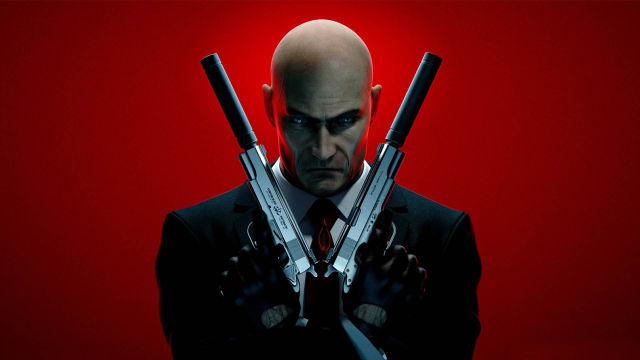
Earlier this week, the upcoming Hitman reboot was quietly removed from the PlayStation Store in Europe, with Square Enix cancelling pre-orders for the PlayStation 4 version. With the game scheduled for release in just a few months, fans were understandably concerned. Was the game being pushed back? Was it being cancelled entirely? The accompanying message, that the "configuration of the product... has changed significantly," didn't help matters.

It turns out that Hitman was pulled because the game will now be released episodically. When it launches on March 11, Hitman will include a prologue mission and just one location, Paris, for the cost of £12/$15. Its next location, Italy, will launch in April, with Morocco following in May. Each additional episode will cost £8/$10, or £37/$50 for a season pass. "Regular monthly content updates" that will include three additional locations—Thailand, the US, and Japan—will arrive later in the year.

Or, players can pay for the whole lot upfront for £45/$60. The complete season will also launch on disc at the end of the year.

Read 7 remaining paragraphs | Comments

Rockstar North boss leaves Grand Theft Auto developer after 17 years

Leslie Benzies was instrumental in the developing the famed crime series.

Leslie Benzies, boss of the Edinburgh-based Rockstar North studio behind the development of the Grand Theft Auto series, has left Rockstar Games. Benzies had been on sabbatical for the past 17 months and decided not to return to work for the company.

Alongside Rockstar co-founders Sam and Dan Houser, Benzies was instrumental in the development of the Grand Theft Auto series—which continues to be developed out of Edinburgh—as well as the likes of Red Dead Redemption, Manhunt 2, LA Noire and Max Payne 3.

Benzies' contributions to the industry were recognised back in 2014 as he was inducted into the Academy of Interactive Arts and Sciences Hall of Fame alongside Dan and Sam Houser.

Read 3 remaining paragraphs | Comments

PC sales drop to levels not seen since 2007

The only company to see any growth? Apple.

(credit: Flickr)

A combination of holiday sales and the launch of Windows 10 weren't enough to slow the decline of PC sales, which have fallen to their lowest levels since 2007. Shipments declined by as much as 10.6 percent year-on-year in the fourth quarter of 2015, according to analyst firm IDC. Fellow analyst Gartner had similarly dire numbers to share: 75.7 million PCs shipped for the quarter, down 8.3 percent on 2014.

Overall sales for the year were just as bad, with IDC estimating shipments fell 10.4 percent to 276.2 million units, and Gartner pushing the slightly less terrifying number of 299.6 million units for an 8 percent fall.

The only manufacturer to show any growth for the year was—you guessed it—Apple, which managed to grow 2.8 percent according to IDC and 5.8 percent according to Gartner. Everyone else's sales shrunk, although Lenovo—the number one PC vendor worldwide—at least managed a mere 3.6 percent fall compared to the 6 percent-or-larger drops seen by HP, Dell, Asus, and Acer.

Read 3 remaining paragraphs | Comments

“I am not a terrorist”: Muslim man barred from playing Paragon beta

Florida professor shows up on government terror watchlist, can’t sign up to play.

Last weekend Muhammad Zakir Khan, an avid gamer and assistant professor at Broward College in Florida, booted up his PC and attempted to sign up for Epic Games' MOBA-inspired Paragon beta. Unbeknownst to Khan, however, was that his name name—along with many others—is on the US government's "Specially Designated Nationals list," and as such was blocked from signing up.

"Your account creation has been blocked as a result of a match against the Specially Designated Nationals list maintained by the United States of America's Office of Foreign Assets control," read the form. "If you have questions, please contact customer service at accounts@epicgames.com."

Understandably perturbed, Khan tweeted a screen grab of the form saying: "@EpicGames My name is Khan and I am not a terrorist. #Islamophobia"

Read 7 remaining paragraphs | Comments

Two years on, Dell shows going private was a smart move

“We’re a little bit late to the party, but what we’ve unveiled today puts us ahead.”

In 2012 Lenovo released the Thinkpad X1 Carbon as part of Intel's Ultrabook initiative. It was thin, it was light, and it boasted Levovo's excellent build quality and reliability. Windows users jealous of the MacBook Air finally had a thin-and-light to call their own. Around about the same time Dell updated to its own business line of notebooks, the best of which was the Dell Latitude E6430s. While it managed to cram a 14-inch screen into a 13-inch chassis, it was hardly a desirable laptop. At 2.68cm thick (it still had an optical drive) and around 2kg when kitted out with a much-needed 6-cell battery, it wasn't exactly a particularly portable one either.

A year later, in September 2013, Dell founder Michael Dell and a group of investors from Silver Lake succeeded in taking the company private in one of the largest corporate privatisations in history. While there's no doubt that a slowing PC market had plenty to do with its falling share prices at the time, it was clear Dell's product range had fallen behind the times, despite some success in the consumer market with the XPS 13. It was a pretty bold move, considering Dell had been a public company for 25 years.

"We find ourselves in a world increasingly afflicted with myopia—governments that can't see beyond the next election, an education system that can't see beyond the next round of standardised tests, and public financial markets that can't see beyond the next trade," wrote Michael Dell in the Wall Street Journal in 2014. "This was what Dell faced as a public company. Shareholders increasingly demanded short-term results to drive returns; innovation and investment too often suffered as a result. Shareholder and customer interests decoupled."

Read 8 remaining paragraphs | Comments

Intel Skylake bug causes PCs to freeze during complex workloads

Bug discovered while using Prime95 to find Mersenne primes.

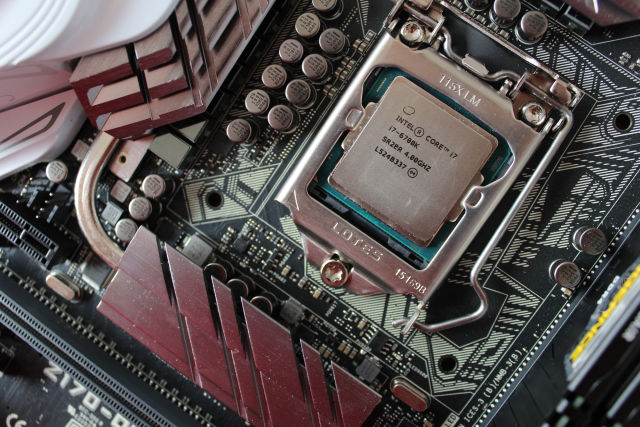
Intel has confirmed that its Skylake processors suffer from a bug that can cause a system to freeze when performing complex workloads. Discovered by mathematicians at the Great Internet Mersenne Prime Search (GIMPS), the bug occurs when using the GIMPS Prime95 application to find Mersenne primes.

"Intel has identified an issue that potentially affects the 6th Gen Intel Core family of products. This issue only occurs under certain complex workload conditions, like those that may be encountered when running applications like Prime95. In those cases, the processor may hang or cause unpredictable system behaviour."

Intel has developed a fix, and is working with hardware partners to distribute it via a BIOS update.

Read 6 remaining paragraphs | Comments