Now that the HTC Vive costs $799, do I still want one?

At that price you have to do some soul searching, or VR has to be really awesome.

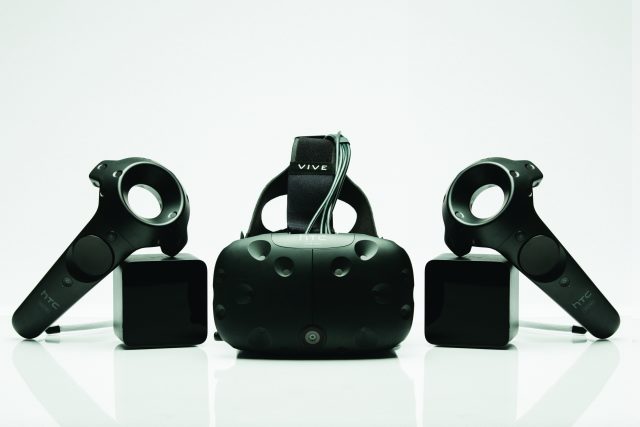
If you'd told me a few months ago that the HTC Vive would cost $799 (about £650) at launch, I'd have spat out my tea, banged my fist on the table, and shouted "you sir, are a buffoon!" Then Oculus announced the price of Rift: £500. Since that day, it was inevitable that HTC would announce a higher price. I mean, at the very least, you get more stuff with the Vive—the wacky doughnut-shaped controllers, and room sensors, and of course the headset itself with its many photosensors, and front facing camera for all those "chaperone" safety visuals.

Justified or not, however, I rarely plunk down £650 on anything without some serious soul-searching, especially when it comes to non-essentials. For me, the Vive is simply priced out of reach.

Having made up my mind that no, I wasn't going to buy a Vive at launch, I had an opportunity to try one again here at MWC—and I couldn't resist. Knowing that the Vive costs £650, and knowing that I wouldn't be buying one at launch I wondered: Would I still think the Vive was worth it? And, more worryingly, would it convince me to buy one?

Read 10 remaining paragraphs | Comments
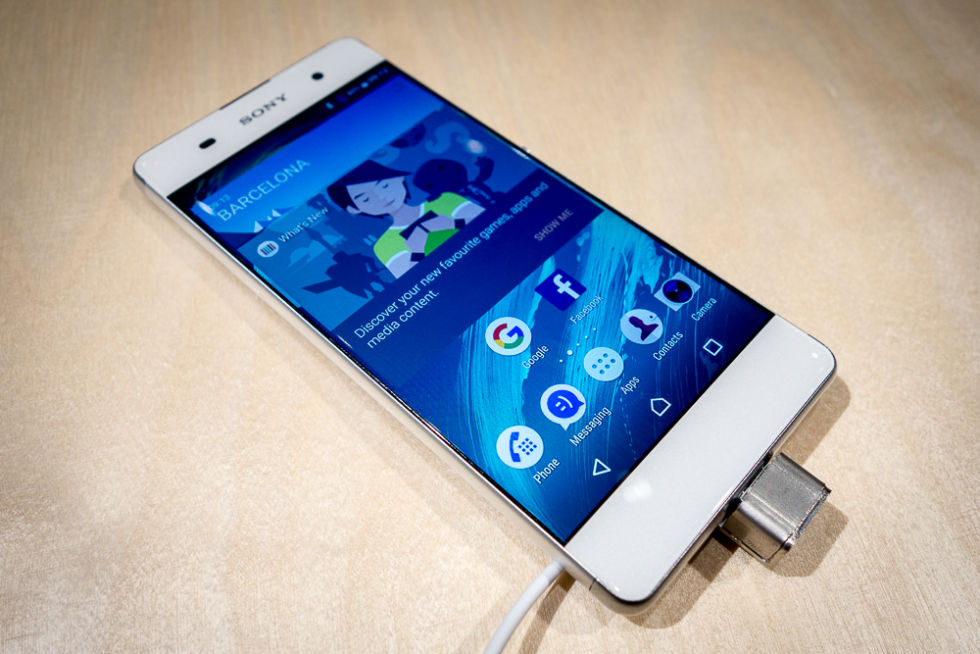
Xperia XA: Sony puts best design into a low-end smartphone

Meanwhile, the Xperia X fills out the mid-range. Does Sony now have enough phones?

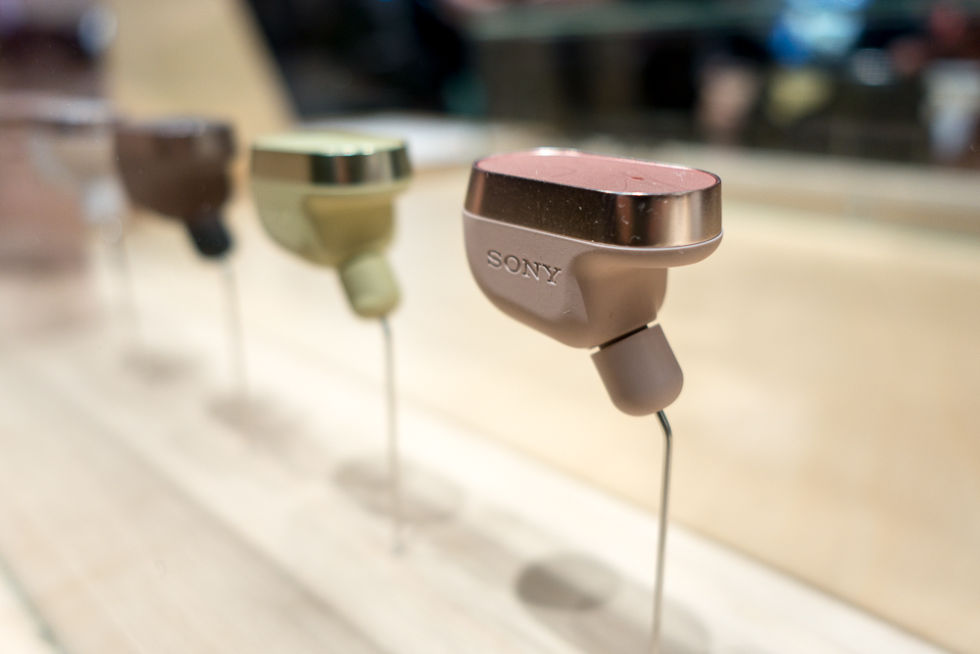
BARCELONA—Monday at MWC has been a weird one for Sony. Aside from announcing its Xperia Ear—a Bluetooth headset-cum-virtual assistant—alongside the likes of a wearable 360-degree camera, and a quirky laser-projecting robot, it also unveiled a new set of Xperia phones, dubbed Xperia X.

Not only do the Xperia XA, Xperia X, and Xperia Performance arrive just six months after the Xperia Z5 series was announced—a lightning quick product cycle I'd hoped Sony would have dropped by now—it's chucked arguably the most beautiful design features into the budget-focused Xperia XA, not its top-tier phones. Like I said, this has been a weird day for Sony.

Still, if you are on a budget and need a new phone, there's nothing else quite like the Xperia XA. It features a polycarbonate body and near edge-to-edge 5-inch display that looks absolutely gorgeous. Coupled with the symmetrical top and bottom sections and light Sony branding, the XA has an austere look that would be right at home on a top-tier handset. Plus, the edge-to-edge screen makes the XA far smaller than your typical 5-inch device. If anything, it's much closer to the feel of Apple's old iPhone 5, which only had a 4-inch screen. It's light, too, at 137 grams, making it effortless to use with one hand.

Read 8 remaining paragraphs | Comments
Sony worms way into Ear with Xperia combo headset-virtual assistant

Plus, a wearable 360-degree camera, a projector, and a robot? Sure thing, Sony.

As it dawns on smartphone makers that—after years of healthy upgrades—consumers are perfectly happy with their existing phone, they've started to pile on the features instead. LG has its wacky upgradable G5, Samsung has its Gear VR headset, and Sony... well, it's got the Xperia Ear, a Bluetooth headset-cum-virtual assistant that it hopes will take away the need for everyone to keep pulling their smartphones out of their pockets.

You can take calls with Xperia Ear, send messages, get the latest traffic updates, and it'll even send you directions using GPS (via the phone it's paired with). None of that is particularly innovative as such, but the Ear's USP is the way its packaged up into a neat, and arguably more reliable package that your traditional virtual assistant along the lines of Siri or Google Now. For instance, when a call comes in and you pick up the Ear, it has a proximity sensor that automatically answers the call and flings it to your earlobe.

If you're stuck for the perfect cupcake recipe or want to know who invented the Burrito (sorry, I have the MWC hunger), the Ear can find that stuff out too via voice activated Internet searches. Again, this is functionality most people already have access to via their phone, but Sony hopes that by removing the need to pull out their phones altogether, and instead reach for the Ear, people will won't be quite as shut out from the outside world.

Read 5 remaining paragraphs | Comments

Galaxy S7 and S7 Edge hands on: So good you can almost forgive TouchWiz

The best Samsung phone yet might just be the best Android phone too.

Specs at a glance: Samsung Galaxy S7/S7 Edge
Screen 2560×1440 5.1-inch/5.5-inch AMOLED
OS Android Marshmallow 6.0 with TouchWiz
CPU Qualcomm Snapdragon 820 4-core SoC / Samsung 8-core Exynos 8890 SoC in international version
RAM 4GB
GPU Adreno 530 GPU
Storage 32GB, 64GB or 128GB
Networking Dual Band 802.11b/g/n/ac, Bluetooth 4.1, GPS
Ports Micro USB 2.0, headphones
Camera 12MP rear camera with OIS, 5MP front camera,
Size 143.4 x 70.5 x 6.8 mm
Weight 138 g
Battery 3000mAh/3600mAh
Starting price €699 (~$700) / €799 (~$800)
Other perks Fingerprint reader, heartrate monitor, RGB notification LED, NFC, Qi and PMA wireless charging, Qualcomm and Samsung quick charging, Samsung Pay

OK Samsung, you got me. After years of resisting Galaxy phones because of TouchWiz, and because they were made of plastic, and because, well, they were ugly as sin, you've gone and made a phone that I really, really want. The S7 Edge and its counterpart the S7 are beautifully designed, expertly constructed, and sport the kind of features I've been clamouring for for years, but could never find in a single device. They're so good, in fact, that I might even be able to forgive TouchWiz. Almost.

At first glance you'd be hard pressed to tell whether you were looking at an S6 Edge or S7 Edge, such is the design language both phones share, but the difference is immediately noticeable when you pick the S7 Edge up. Gone are the awkward camera bulge and the uncomfortable flat back of the S6, replaced instead with an almost flush camera and metal back that gently curves out to fill your hand. Even the increased thickness over the S6 isn't a bad thing. The S7 is easier to pick up off a table, seems like it'll be more comfortable to hold over longer periods of time, and—most importantly for a phone that costs a hefty €799 (~$800)—it feels worthy of its premium price tag.

The improvements to the S7 Edge's design may be small on paper, but such subtle refinements make a world of difference. This is the first Galaxy phone I've used that I can truly say matches up to the premium feel of an iPhone, the sort of thing that I'd fondle all day out of pure joy, and not because of an ever growing (and worrying) Facebook addiction. Those curved edges may be a little superfluous, but they make swiping in from the sides of the phone delightfully smooth, while also having the added benefit of next to no screen bezel along the sides. With its 5.5-inch AMOLED screen, the S7 Edge isn't a small phone by any means, but compared to the likes of Apple's iPhone 6S Plus—which has the same screen size—it's much smaller and easier to use in one hand.

Read 9 remaining paragraphs | Comments

Samsung’s Gear 360 camera lets you take your own VR video

Dual 15-megapixel CMOS sensors and fisheye lenses capture 3840×1920 video.

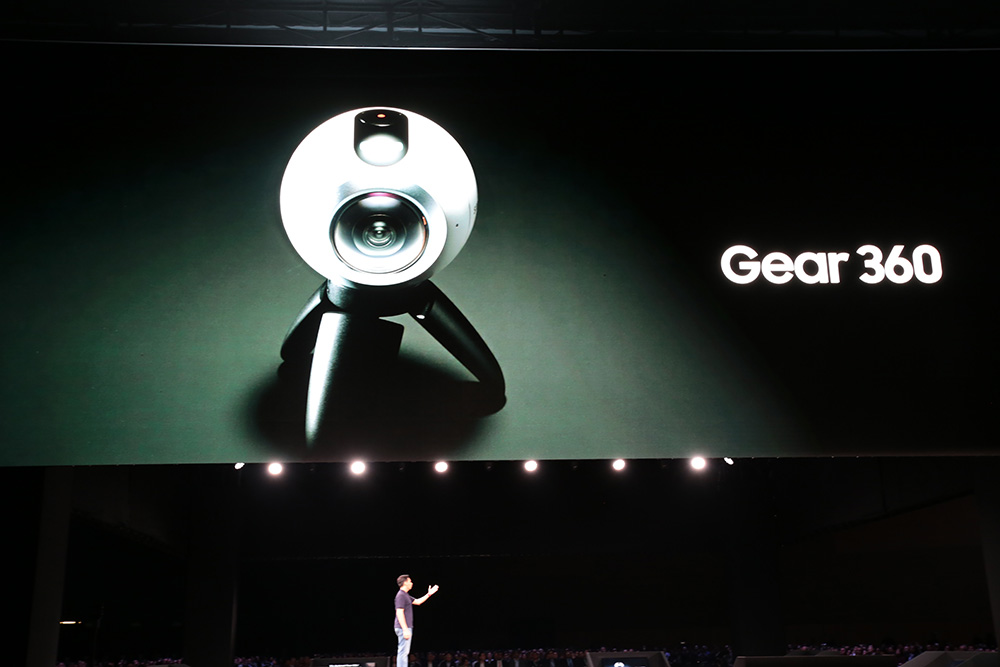
BARCELONA, Spain—While Samsung may have been first to the (consumer) market with its Galaxy Gear VR headset, it's safe to say that compelling content is still thin on the ground. The company hopes to change that with the Galaxy Gear 360, a camera born out Samsung's "Project Beyond" that captures spherical video and images for playback in VR, or in 2D via an Android app. It's due for release in Q2 of this year in "select countries."

The Gear 360 is a small (just shy of a baseball), sphere-shaped camera weighing at 153 grams that sports two fisheye lenses hooked up to two 15-megapixel CMOS sensors, which work together to capture 3840x1920 360-degree video, or 30-megapixel still images. There's also an option to film 180-degree wide angle video by using just one of the lenses. Both lenses offer a relatively fast F/2.0 aperture, which should help in low light, particularly given the small sensor size.

Naturally, the Gear 360 is splash-proof and dust resistant—rated at IP53—for capturing all those extreme sports moments without the need to strap a bunch of GoPros to your head. Indeed, with GoPro not having had the best year in 2015, Samsung's primed to snap up some marketshare.

Read 3 remaining paragraphs | Comments

Samsung Galaxy S7 and S7 Edge: Curvier, faster, micro SD expansion—available March 11

Sports a familiar design, but SD card slot, water resistance, and larger battery are welcome.

Specs at a glance: Samsung Galaxy S7/S7 Edge
Screen 2560×1440 5.1-inch/5.5-inch pressure-sensitive AMOLED
OS Android Marshmallow 6.0 with TouchWiz
CPU Qualcomm Snapdragon 820 8-core SoC/ Samsung 8-core Exynos 8890 SoC in international version
RAM 4GB
GPU Adreno 530 GPU
Storage 32GB, 64GB or 128GB
Networking Dual Band 802.11b/g/n/ac, Bluetooth 4.1, GPS
Ports Micro USB 2.0, headphones
Camera 12MP rear camera with OIS, 5MP front camera,
Size 143.4 x 70.5 x 6.8 mm
Weight 138 g
Battery 3000mAh/3600mAh
Starting price €699 (~$700) / €799 (~$800)
Other perks Fingerprint reader, heartrate monitor, RGB notification LED, IR blaster, NFC, Qi and PMA wireless charging, Qualcomm and Samsung quick charging, Samsung Pay

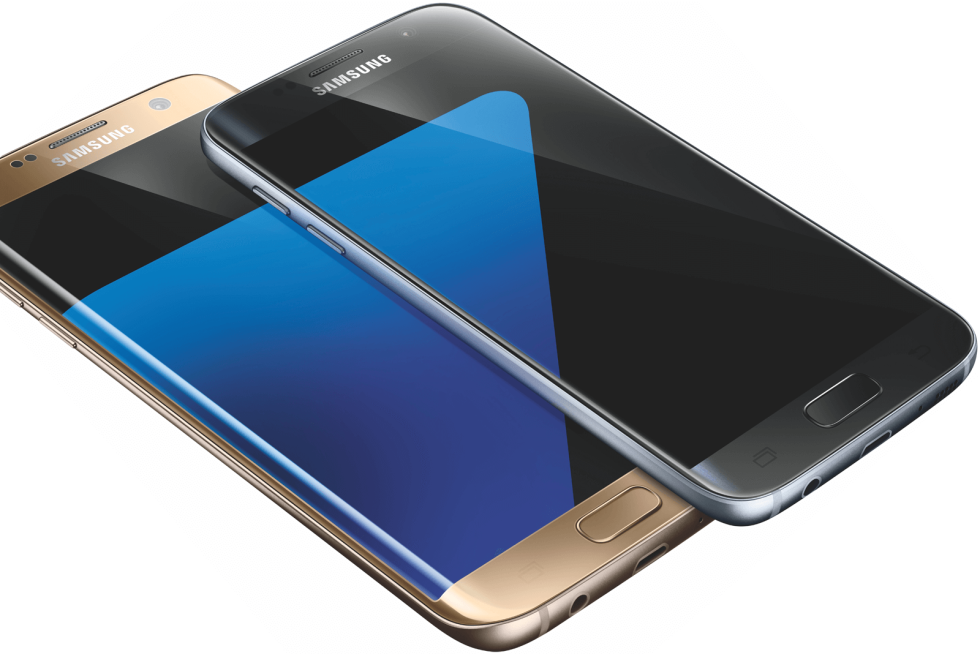
BARCELONA, Spain—After numerous leaks, Samsung has officially revealed the successors to its popular Galaxy S6 and S6 Edge smartphones: the new 5.1-inch Galaxy S7 and 5.5-inch S7 Edge. Headline features include an iPhone-like pressure-sensitive display, a water resistant chassis, the return of the microSD card slot, and a whopping 4GB of RAM. Both are due for release on March 11 in Europe and the US, with preorders beginning on February 23 (Tuesday morning).

At first glance—besides their larger screen sizes—both phones look largely identical to their predecessors, the S7 sporting a flat glass front, and the S7 Edge sporting a curved display that gently folds in at the edges to the meet the aluminium body. Both phones will be available in Black Onyx and Gold Platinum, with the S7 Edge also available in Silver Titanium. Unfortunately for fans of 4K, both the S7 and S7 Edge are rocking 2560×1440 pixel displays. The most noticeable design change comes to the rear of the phone, where the dreaded camera bump has been removed to to make the camera module flush with the body. Surprisingly, this hasn't affected the thickness of the phones, which remain fairly svelte at 7.9mm for the S7 and 7.7mm for the S7 Edge. The regular S7 also gains a curved back like the Galaxy Note 5.

Perhaps more exciting is that the S7 and S7 Edge both feature a microSD card slot, a much requested feature that was removed from the S6. Both phones will ship with Android 6.0 Marshmallow, which allows users to merge the SD card with the internal flash memory to create one large seamless pool of storage, making the SD card slot a welcome addition. Also back is water and dust resistance, which was previously found in the Galaxy S5 but was skipped over for the S6. The Galaxy S7 and S7 Edge are both rated IP68, which equates to "totally dust tight" and prolonged submersion in water (the S5 was IP67, which is only "temporary immersion").

Read 9 remaining paragraphs | Comments

Huawei MateBook hands-on: The iPad Pro and Surface just got served

With a beautiful design and thoughtful features, the MateBook may be the convertible to beat.

(credit: Sebastian Anthony)

BARCELONA, Spain—Where Microsoft's Surface is all about sharp edges and a monolithic look, Huawei's new MateBook—a convertible tablet powered by Intel's Core m processors—is a far more svelte affair. And make no mistake, Huawei is going after Microsoft's premium hardware with the Windows 10 MateBook, as evidenced by the numerous comparisons the company made between the two devices during its MWC press conference.

The good news for Huawei is that its new hardware is more than good enough to take on the Surface. In some ways, it's actually better. The MateBook's slender 6.9mm profile makes it the same thickness as Apple's iPad Pro, while its 640 gram weight makes it lighter than both the the iPad Pro and the Surface. The soft, curved edges also make it much more comfortable to hold, while the all-metal unibody chassis with its sharp chamfered buttons gives it a premium feel. Huawei's been knocking it out of the park of late when it comes to hardware design and construction, thanks in part to devices like the Nexus 6P and Mate S, and the MateBook is no exception.

That extends to the lovely 12-inch IPS LCD that sports a sharp resolution of 2160x1440 pixels, 400 nits of brightness, and covers 85 percent NTSC colour gamut. While I couldn't test Huawei's colour gamut or brightness claims here on the show floor, I can say that the screen is very nice indeed, and easily as good as anything Apple or Microsoft has to offer. Even better is that the MateBook's screen has a far slimmer bezel than both at just 10mm. That helps reduce the overall size, and helps keeps the tablet from feeling unweildly. Indeed, it felt just as comfortable to hold as Apple's iPad Air, which sports a smaller 9.7-inch screen.

Read 9 remaining paragraphs | Comments

Huawei’s MateBook is a convertible PC to take on Microsoft’s Surface

Huawei, not content with being a smartphone giant, is entering the Windows PC market.

BARCELONA, Spain—Huawei, not content with being the third-largest smartphone maker in the world behind Apple and Samsung, is now entering the PC market—and it's going after Microsoft's Surface. The MateBook is a Surface-like Windows 10 convertible laptop/tablet complete with stylus, 12-inch 2160x1440 pixel display, and all-metal unibody design with a range of colourful portfolio keyboard cases.

The MateBook starts at $699/€799 for a 128GB model with 4GB of RAM and Core M3 processor, while the keyboard case goes for $129/€149.

While the MateBook isn't overly exciting on the inside—it's powered by Intel's low power Core M3, Core M5, and Core M7 processors—it sports an extremely attractive design with chamfered edges, a thin 10mm bezel, 6.9mm thickness, and a weight of just 640 grams. It comes in either black or white colour options, along with five different colour options for the portfolio keyboard.

Read 5 remaining paragraphs | Comments

Vulkan benchmarks: A boost for AMD and Nvidia, but there’s work to be done

Unlike DX12, there’s no shocking leap in performance this time.

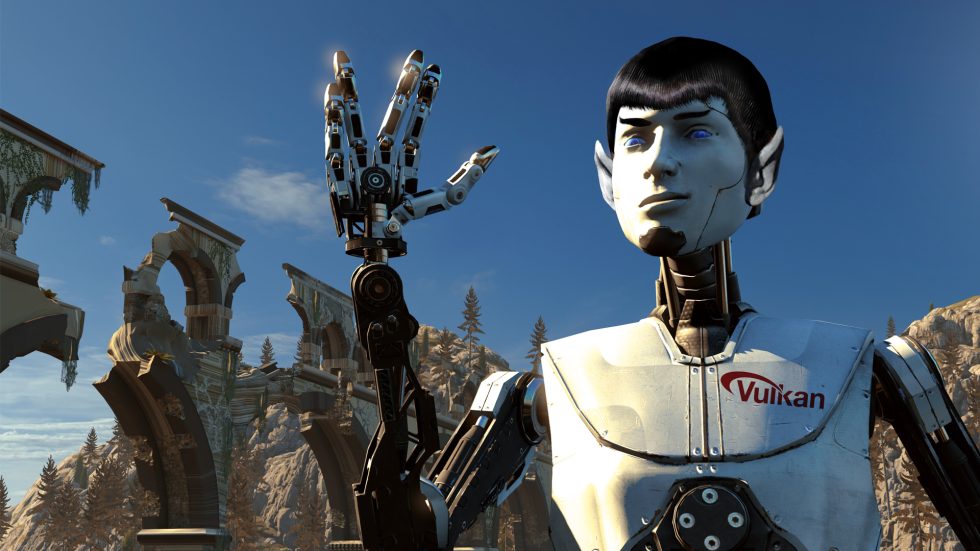
While Microsoft's DirectX 12 may have been the first low-level API to appear on PC (excepting AMD's proprietary Mantle API), its arch-rival Vulkan is potentially more interesting. Vulkan promises to be more widely adopted, thanks to support for Windows, Linux, and Android, and companies like Valve and Epic are firmly behind its development.

With Vulkan now at version 1.0 and drivers from Nvidia and AMD available, we can finally take a crack at answering the big questions: can Vulkan live up to all the low-level API hype? And will AMD see the same huge performance gains that it did in early DirectX 12 benchmarks?

But first, some caveats: The Talos Principle is technically the first game with Vulkan support, but it's in beta testing. The Talos Principle also isn't designed to take advantage of the CPU utilization and draw call improvements that are central to Vulkan, unlike Stardock's Ashes of the Singularity demo does with DX12. Furthermore, the new Vulkan drivers from AMD and Nvidia are also both still in beta.

Read 14 remaining paragraphs | Comments

Original 1977 Star Wars 35mm print has been restored and released online

There’s no Jabba, no CGI, and Han most definitely shoots first.

A restored HD version of the original Star Wars Episode IV: A New Hope 35mm print has appeared online. While this isn't the first time that attempts have been made to restore Star Wars to its original theatrical version—that's the one without the much-maligned CGI effects and edits of later "special" editions—it is the first to have been based entirely on a single 35mm print of the film, rather than cut together from various sources.

The group behind the release, dubbed Team Negative 1, is made up of Star Wars fans and enthusiasts who spent thousands of dollars of their own cash to restore the film without the blessing of creator George Lucus, or franchise owner Disney. Lucas has famously disowned the original theatrical version of Star Wars, telling The Today Show back in 2004:

The special edition, that’s the one I wanted out there. The other movie, it’s on VHS, if anybody wants it. ... I’m not going to spend the—we’re talking millions of dollars here, the money and the time to refurbish that, because to me, it doesn’t really exist anymore. It’s like this is the movie I wanted it to be, and I’m sorry you saw half a completed film and fell in love with it.

Lucasfilm later claimed that the original negatives of Star Wars were permanently altered for the special edition releases, making restoration next to impossible. How Team Negative 1 got its hands on a 35mm print of the 1977 release of the movie is a mystery. But for fans who don't want to see ropey CGI, a pointless Jabba the Hutt scene, and know for a fact that Han shoots first, this restored version of the film—even with some pops, scratches, and colour issues—is the one to watch.

Read 4 remaining paragraphs | Comments