PS4 Slim: A smaller, sexier console with surprisingly few compromises

Aside from the lack of an optical out, you won’t miss the original PS4.

(Re)Introducing the PlayStation 4 Slim. (video link)

Unlike Microsoft's compact console offering, the Xbox One S, the new smaller, slimmer, less glossy PlayStation 4 doesn't support 4K (UHD) resolution. It doesn't have a 4K Blu-ray player, nor does it feature slightly faster graphics processing than its bigger brother. Instead, the new PS4 (which replaces the old one) is much like the PS3 Slim: a leaner version of an existing console.

That's no bad thing. When it goes on sale on September 15 the 500GB version of the new PS4 will retail for £259/$299. That price means the new PS4 costs largely the same as the old one, and some features have been cut despite the lack of price reduction. That said, they're not ones most players will miss. In fact, after a week playing around with the new PS4, I'd even say some of those cuts have made it more attractive.

Read 14 remaining paragraphs | Comments

We will space rock you: Asteroid named after Queen’s Freddie Mercury

Is this the real life? Is this just astronomy?

Enlarge (credit: Paul Natkin/Getty Images)

Today marks the 70th birthday of legendary Queen frontman Freddie Mercury, and to celebrate, an asteroid nearly half a billion kilometers away has been named after the late singer—quite the gift for the man who once sang of himself as "a shooting star leaping through the sky."

Queen guitar hero/astrophysicist Brian May, backed by the International Astronomical Union, announced that asteroid 17473—a 3.5km-wide ball of rubble currently located in the main Asteroid Belt between the orbits of Jupiter and Mars—will now be known as Asteroid 17473 Freddiemercury, in honour of "Freddie's outstanding influence in the world."

Discovered in 1991 by Belgian astronomer Henri Debehogne, the Freddiemercury asteroid loops around the sun at 20km per second. Its elliptical orbit never comes closer than 350 million kilometers to Earth, while its surface only reflects about 30 percent of the light that falls on it, making it difficult to see without the aid of a powerful telescope. "It's just a dot of light," said May in a YouTube video, "but it's a very special dot of light."

Read 4 remaining paragraphs | Comments
New USB Type-C to HDMI spec lets you ditch the dongle

HDMI Alt Mode allows HDMI video to pass along a USB-C cable dongle-free.

Enlarge (credit: Andrew Cunningham)

HDMI Licensing, the outfit that decides what is or what isn't HDMI compatible, is releasing HDMI Alternate Mode (Alt Mode) for USB Type-C devices.

The new spec will finally allow HDMI video signals to pass along a USB Type-C cable without the need to use a pricey dongle or dock to convert the DisplayPort signals that are natively output via the Type-C standard.

Future smartphones, tablets, cameras, and laptops—which will hopefully include Apple's Macbook with its solitary Type-C port—will only need a cheap dumb convertor or simple USB Type-C to HDMI cable in order to work with a HDMI display.

Read 5 remaining paragraphs | Comments
Qualcomm plots cheaper VR with all-in-one headset

Snapdragon VR820 reference platform priced similar to “higher-performance tablets.”

Enlarge

Qualcomm has unveiled a new reference platform for standalone virtual reality headsets, which it hopes will dramatically reduce their cost.

Dubbed the VR820, the reference device pairs the mobile chip maker's now ubiquitous Snapdragon 820 SoC with an eye-tracker, six-axis motion tracker, and a pair of AMOLED displays at resolutions up to 1440x1440 pixels each—a big jump over the 1080x1200 resolution displays of the Oculus Rift and HTC Vive, albeit running at 70Hz rather than 90Hz.

While that might sound expensive—particularly as the VR820 essentially integrates a high-end smartphone into its Galaxy Gear-like shell—Qualcomm hopes that third-party manufacturers will be able to save on R&D costs by using the platform, thus bringing down the overall cost. Qualcomm performed a similar trick with smartphones, putting out a series of reference designs that several manufacturers (particularly those in China) used to produce smartphones at cheaper prices.

Read 4 remaining paragraphs | Comments
Smartphone makers: Go niche or go home (and why I love the Cat S60)

There’s already a perfect smartphone for most people. Time for something different.

Enlarge

The HTC 10 is by far the best phone I've ever owned. It has a colourful, sharp screen that at 5.2-inches is big without verging into unwieldy phablet territory, while the all-metal design gives it a premium feel. It's fast too, thanks to a Snapdragon 820 chip and largely untouched version of Android. Its camera excels in low light, the battery easily gets me through a day (extended Pokémon Go sessions not withstanding), and the powerful headphone amp is the best available on a mainstream device. I even like its slightly portly dimensions.

But would I say the HTC 10 is an exciting device? No. If anything, I'd say it's rather dull.

It's a problem that nearly all the big smartphone manufacturers face. That last great bastion of smartphone quality held by Apple—the camera—was matched, if not beaten by nearly all of this year's flagship devices. Even the OnePlus 3, a phone with a premium design and specs, which costs a mere £330, stands toe-to-toe with phones costing twice as much, if not more. Cameras, screens, batteries, operating systems—they're largely the same across devices, and they're all very good. That's a great thing for consumers, but not so much for smartphone makers used to charging a premium for the basics. It takes a special something to stand out.

Read 12 remaining paragraphs | Comments

I’m still not sure what Scalebound is—but I definitely want it

This month’s tease is a strictly hands-off look at dragon commands and customisation.

Enlarge

COLOGNE, Germany—What is Scalebound? A slick, action-packed Platinum Games (makers of the Bayonetta and Devil May Cry games) combo-fest? A fantasy RPG with dungeons and dragons and magic spells? An epic story-based adventure? Two years after its announcement—and three since development began—I'm still not sure. Heck, I don't think even Microsoft knows.

Scalebound's Gamescom outing is the latest in a long line of short video clips, technical teases, and scripted battles that have been released since E3 2014, where the game was first revealed in spectacular fashion at Microsoft's press conference. Its debut trailer—which introduced a cocky 20-something headphone-wearing hipster named Drew and his hulking great dragon Thuban—drew criticism for the apparent douchbaggery of its lead, but there was no denying the overall appeal. A new Platinum Games title with dragons that fight and breathe fire and four-player co-op? Shut up and take all of my money.

What we know about Scalebound so far is that Drew and Thuban fight alongside each other, rather than with each other, and that it's an open-world game set in "Draconis" with RPG-like elements and real-time combat. The biggest reveal came during Gamescom 2015, when Microsoft dropped a lengthy gameplay trailer showing Drew riding Thuban—complete with light human-to-dragon banter—into battle against a group of heavily armoured soldiers. Cue some sword swinging, crossbow firing, and plenty of random numbers popping up all over the screen. Oh, and a fight against a giant mantis culminating in a fierce fire-breathing attack from Thuban.

Read 9 remaining paragraphs | Comments

HBM3: Cheaper, up to 64GB on-package, and terabytes-per-second bandwidth

Plus, Samsung unveils GDDR6 and “low cost” HBM technologies.

Enlarge

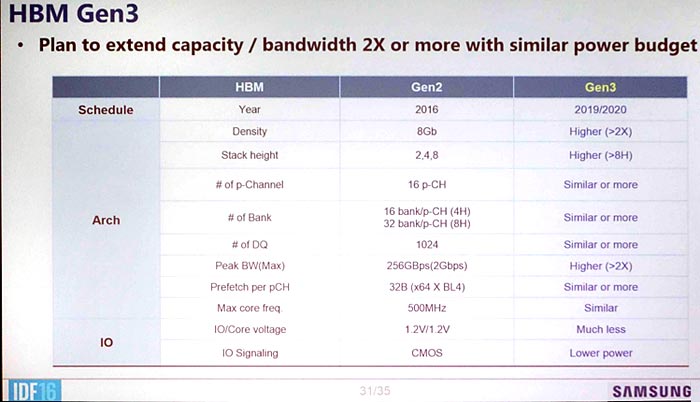
Despite first- and second-generation High Bandwidth Memory having made few appearances in shipping products, Samsung and Hynix are already working on a followup: HBM3. Teased at the Hot Chips symposium in Cupertino, Calfornia, HBM3 will offer improved density, bandwidth, and power efficiency. Perhaps most importantly though, given the high cost of HBM1 and HBM2, HBM3 will be cheaper to produce.

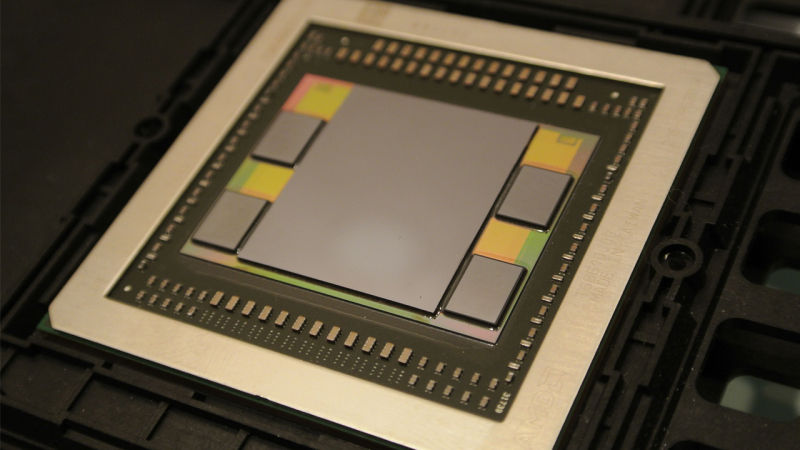
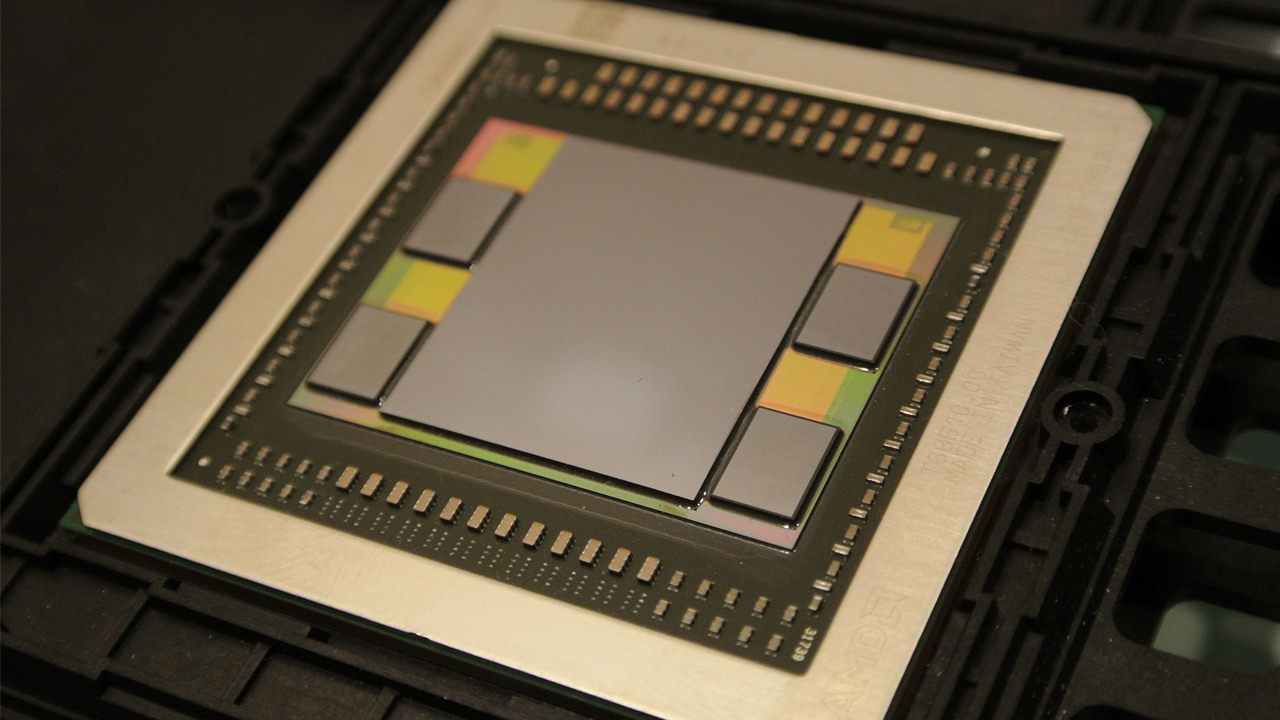
With conventional memory setups, RAM chips are placed next to each other on a circuit board, usually as close as possible to the logic device (CPU or GPU) that needs access to the RAM. HBM, however, stacks a bunch of RAM dies (dice?) on top of each other, connecting them directly with through-silicon vias (TSVs). These stacks of RAM are then placed on the logic chip package, which reduces the surface area of the device (AMD's Fury Nano is a prime example), and potentially provides a massive boost in bandwidth.

The tradeoff, though, as with most fancy packaging techniques, has been price and capacity. HBM1, as used in AMD's Fury graphics cards, was limited to 4GB stacks. HBM2, as used in Nvidia's workstation-only P100 graphics card, features higher density stacks up up to 16GB, but is prohibitively expensive for consumer cards.

Read 6 remaining paragraphs | Comments

PS4 Slim leaks online, looks legit

Thinner, rounder, less glossy PS4 Slim set to appear at Sony’s upcoming PS4 event.

Enlarge (credit: NeoGAF)

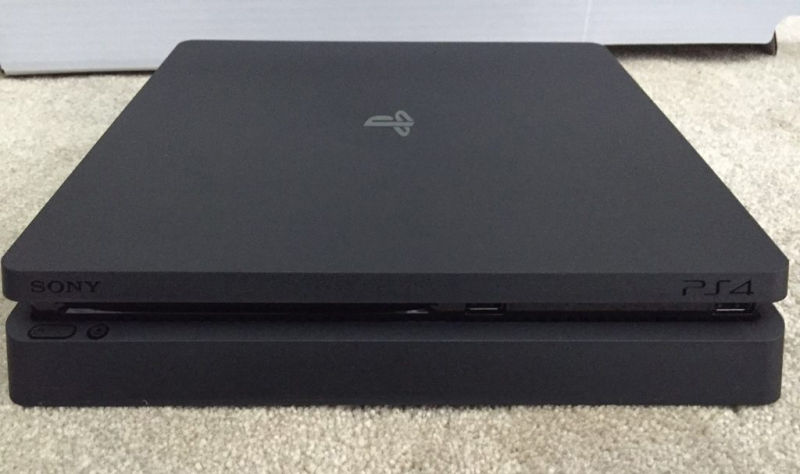
Sony will have not one, but two consoles on show at its upcoming PlayStation Meeting event on September 7—and the first appears to have leaked online. A thinner, rounder PlayStation 4 Slim was spotted for sale on classified listings site Gumtree (now removed) via local retailer, which claimed it was due for release in three weeks. Twitter user shortman82 has since purchased the unit, unboxed it, and slapped a load of photos online.

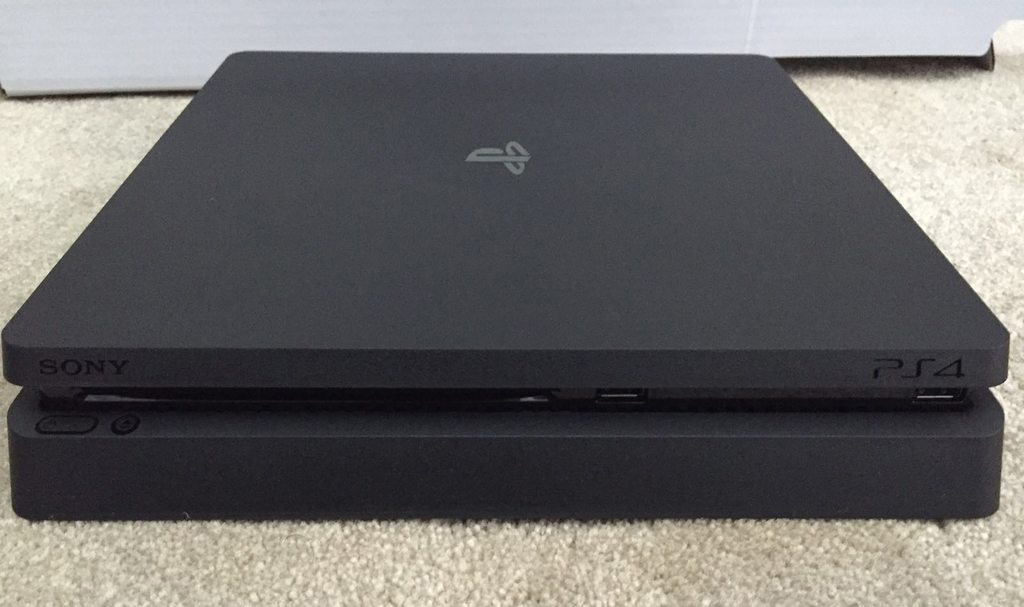
The purported PS4 Slim looks considerably thinner than the original PS4, which was already a small console. The same cleaved-rhombus aesthetic remains, but the corners have been rounded off, while the glossy plastic section that covered the hard drive on the original PS4 has been removed entirely. While that's good for fans of fingerprint-free gadgets, it does raise questions as to whether the hard drive will be replaceable in the PS4 Slim, particularly as the listed model (CUH-2016A) only sports 500GB of storage.

Sony has typically removed features from its consoles to make them cheaper to manufacture and thus cheaper to sell to consumers (remember all the media card slots on the original PlayStation 3?), so such a move wouldn't be unprecedented.

Read 4 remaining paragraphs | Comments

Elite Dangerous: Guardians 2.2: Everything you need to know

Ship-launched fighters, passenger contracts, and “mysterious sites.” This is a big update.

Enlarge

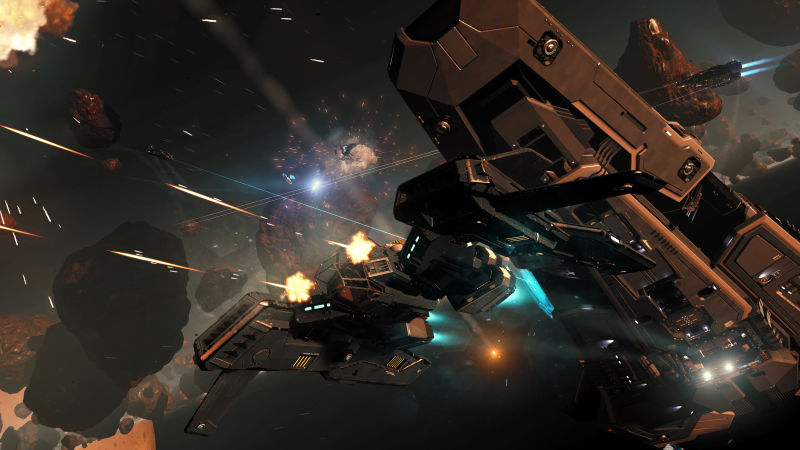
Remember Elite's CQC (close-quarters combat) Championship, its lesser loved multiplayer arena combat mode? While it's not getting the overhaul it arguably needs—nor is the now-postponed £75,000 ($100,000) CQC tournament making a comeback—Frontier is taking some of the best bits of CQC and bringing them to the wider Elite universe as part of the upcoming Elite Dangerous: Guardians 2.2 update in October.

The big news: single-seat, ship-launched fighters based on the CQC fighter designs. The idea is that players will be able to launch one of these fighters and pilot it remotely, issuing commands back to the mothership. You could tell the mothership to stay put, for instance, to keep it out of harm's way, or tell it to follow the fighter and go in all guns blazing. You can hot swap between the two ships too, opening up some particularly devious attack patterns.

There are three fighters available. The F63 Condor federal fighter and GU97 imperial fighter are identical their CQC counterparts, the former sporting the fastest acceleration in exchange for manoeuvrability and hull strength, the latter being more fragile but more manoeuvrable. More exciting is the Taipan fighter, which is new to the game. The most tank-like of the three ships, the Taipan trades speed and manoeuvrability for hull strength and shields, making it a particularly good option for heavy combat. Plus, it has a neat swing-wing design that makes it look far more intimidating than the other fighters.

Read 19 remaining paragraphs | Comments

Yooka-Laylee: The ‘90s 3D platformer is back

Yooka-Laylee is one heck of a nostalgia play—and 12-year-old me couldn’t be happier.

Yooka-Laylee's Gamescom 2016 trailer.

COLOGNE, Germany—It's midnight and my friends and I, intent on staying up all night, have just downed our fifth Coca-Cola of the evening. Laid out in front of us, between a pile of unwashed sleeping bags and half-eaten chocolate bars, are four Nintendo 64 controllers and a copy of GoldenEye and Banjo-Kazooie. Brushing the sleep from my eyes, I pick up Banjo-Kazooie, slide it into the cartridge slot, and stare in awe at a blocky banjo-playing bear. Having never played on a Nintendo 64 before (I was very much s PC gamer), the bright and colourful Banjo-Kazooie was a revelation. And though it would sometimes get swapped out for sporadic bouts of Golden Gun mode, for the next 12 hours, Banjo-Kazooie was all that mattered.

The tiny booths in the back halls of Gamescom's Koelnmesse might not be as cosy as my living room floor, but there's no denying it: Yooka-Laylee is one heck of a nostalgia play, and 12-year-old me couldn't be happier.

Indeed, squint hard enough, and you might just mistake Yooka-Laylee for Banjo-Kazooie. Led by a team of ex-developers from Rare—creator of the Banjo-Kazooie series amongst others—Yooka-Laylee is an unashamed love letter to the colourful '90s platformer. The titular Yooka and Laylee, a lizard and a bat, can double-jump, float, roll, and swim much like their '90s counterparts. The levels they explore, while larger and more like the open worlds of modern games, are similar too, being made up of intricately designed platforms that shine a vibrant green where most games are content with being a dull brown.

Read 7 remaining paragraphs | Comments