The Nürburgring may be the most-simulated location on the planet

Millions know it intimately more from video games than visiting the real thing.

The Nürburgring is a place with few equals. A ribbon of tarmac and concrete a little over 16 miles (just under 23km) long, it snakes its way around the hills surrounding the town (and medieval castle) of Nürburg in Germany's Eifel Mountains. Many people think it's the planet's most challenging race track, a combination of long straights (and therefore high speeds), plenty of blind corners, and an extremely unforgiving nature. And perhaps uniquely, it's a real-life place intimately familiar to tens of millions of people who have never set foot on it thanks to its inclusion in a number of best-selling video games.

It's hard to think of another real place that's featured in so many games and simulated with such depth. Between its inclusion in Gran Turismo (from GT4 onwards) and Forza Motorsport, more than 50 million digital Nürburgrings have been shipped for consoles since the mid-2000s.

It's unlike any track that would be built today—unlike any track that anyone has built for the last half-century, in fact. Opened in 1927, it was the brainchild of Dr Otto Creutz, a local administrator. Car races had been held on closed public roads in the area, but Creutz figured that a purpose-built track would do just as well at drawing in tourists without the annoying road closures and disruption.

Read 8 remaining paragraphs | Comments

Tesla’s inherent safety saves five joyriding teenagers in Germany

The car left the road, flew through the air and rolled into a field.

What's left of the Model S after a teenager crashed and then rolled it into a field. (credit: Sabine Hermsdorf)

Do you have a teenage child that likes to borrow your car and then destroy it in a spectacular crash? We sincerely hope the answer to that question is a resounding "no," but in the off chance that you do, you may want to consider changing your current vehicle for a Tesla Model S. Last week in Germany, the joyriding daughter of a Tesla owner discovered first-hand just how safe the electric vehicle is, after losing control at high speed and rolling into a field.

According to German newspaper Merkur, the 18-year old and four of her friends were messing around in her father's Model S before losing control. The car flew more than 80 feet (25m) into a field before rolling once and coming to a halt. Although three of the occupants had to be helicoptered to hospitals in Munich for treatment, none of their injuries were life-threatening, a testament to the safety of Tesla's skateboard chassis.

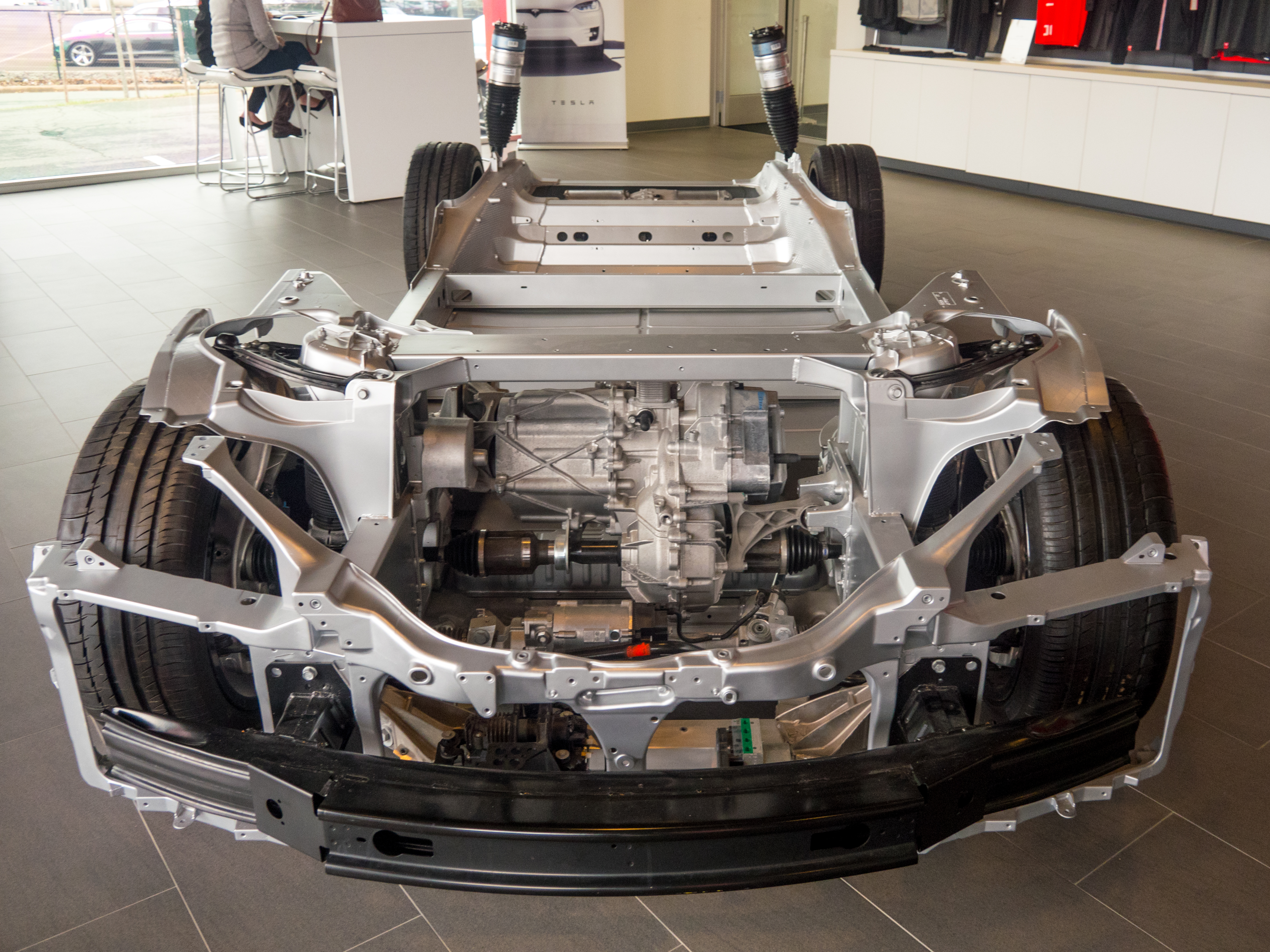
Unlike a conventionally powered car, the Model S (and Model X) have no large engine up front to intrude into the passenger compartment during a collision. This means the front and rear crumple zones can effectively dissipate the kinetic energy of a crash, as seen to good effect in the photographs taken after the accident.

Read 2 remaining paragraphs | Comments

The connected car may be the dumbest idea ever, but it’s not going away

How long before every new car for sale is connected—and hackable?

You might think connecting your car to your phone is the dumbest thing ever, but neither the tech nor auto industries are giving up on it any time soon. (credit: Getty Images | Krisztian Bocsi/Bloomberg)

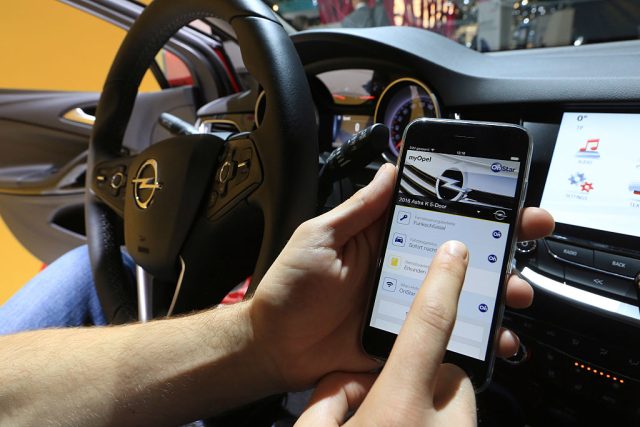
As you might imagine, we at Ars get bombarded with PR pitches about connected cars. Devices that plug into your car's OBDII port. Smartwatch integration with new models direct from the factory. Cars that alert you if you've left your keys behind. These are just the tip of the iceberg, and more ideas like them are coming from both the tech and auto industries. LTE modems are becoming widespread in new models and not just in luxury cars—try buying a Chevrolet without embedded 4G.

There's just one problem: most Ars readers, in my experience, think connecting a car to the internet is the dumbest thing you can do on four wheels. Who can blame them? Last year saw a litany of car hacks that affected aftermarket devices but also security flaws direct from the factory—1.4 million Fiat Chrysler vehicles had to be recalled as a result.

The problem is with the digital nervous system of our cars. Back when automotive network standards were being created, the idea that cars would use the Internet to interface with the outside world was ludicrous. And so, there's little—or none—of the sort of network security in place that you'd take for given if designing things from a clean sheet. As long as you have access to the Connected Area Network (or CAN), your electronic hooks are into the engine, the brakes, and even the steering.

Read 7 remaining paragraphs | Comments
Why the Tesla Model 3 and Chevy Bolt are going to kill the gas station

As more EVs hit our streets, when will people start getting “gas anxiety?”

Closed gas station. Clifton, Texas. (credit: Getty Images | Donovan Reece)

For as many plaudits as Tesla has received for its cars, plenty of its success must lie with that network of Superchargers. The far-sighted idea to build out the recharging infrastructure necessary to make road trips possible in an electric vehicle has surely done much to win friends, particularly among those vocal drivers for whom the inability of a car to drive across several of the smaller states in a day is an instant disqualification.

Outside of Tesla's walled garden, things can be a lot more confusing. There are different kinds of plugs. Some charging stations take all day to top up your battery; others can do it in a handful of hours. Maybe you get to the right charger, but an inconsiderate jerk in a gasoline-powered car is parked in the spot. These are all annoyances in the lives of EV early adopters and things that we'll need to change before those dreams of an all-EV passenger fleet are realized.

Chargepoint is one of the companies that wants to get us there, and on Wednesday it raised another $50 million to help it do so. As most EV drivers will know, Chargepoint's network is pretty extensive, with more than 28,000 charging points here in the US. Unlike other charging networks like NRG EVgo, it doesn't actually own the hardware; think of it more like Uber or AirBnB.

Read 6 remaining paragraphs | Comments

Dunning-Kruger on wheels—road rage leads to tweeting-and-driving

Road deaths may be down, but accidents are on the increase.

(credit: Getty Images | Spencer Platt)

Driving a car is risky business. It's true that deaths on our roads continue to decrease over time, but it's a good thing our cars are getting safer to drive because it looks like we're crashing them more often. In 2014, more than 2.3 million people were injured on the roads in the US, a slight bump from the year before. In total, vehicle crashes actually increased by almost eight percent compared to 2013.

That's because people continue to do stupid things behind the wheel, like Snapchatting their top speed. In fact, drivers who repeatedly engage in stupid behavior behind the wheel—whether that's drinking, speeding, or tweeting—are over-represented in car crashes, suggesting that there's a minority of irresponsible people who are a menace behind the wheel. Researchers at McGill University in Montreal, Canada, have attempted to discern why these subsets of risky drivers continue to misbehave.

The research, published in PLOS ONE, suggests this trend might be a classic case of Dunning-Kruger in action. Or in the words of lead author Thomas Brown, "surprisingly, these drivers usually don't consider themselves as risk takers. If drivers don't believe they are risky, they will not accept the need to change. On the other hand, if we and they don't understand their behaviour, how can they be expected to change it effectively?"

Read 9 remaining paragraphs | Comments

May 7 is a day to celebrate the good side of unmanned flying—even in DC*

* Actually, just outside DC’s 15-mile “no drone zone.”

Did you know that International Drone Day was a thing? It is, and the next one happens on Saturday, May 7. Organized under the slogan "Drones are good," model aeronautics clubs across the country are hosting events to show the world the good side of their hobby. Celebrations are even taking place in the Washington, DC region—home to some of the least-hospitable skies for unmanned aerial vehicles.

Twenty different UAV clubs are holding events on Saturday, including several that were grounded as recently as February. DC's airspace has been subject to a 30-mile "Special Flight Rules Area" ever since 9/11, split into inner and outer zones. All UAVs are banned within the inner 15-mile zone, a restriction that companies are hard-coding into drone firmware. But in December 2015, the FAA closed the entire zone to all drone traffic, effectively shuttering 14 area flying clubs.

However, the clubs and the FAA were able to resolve their differences by February, when revised rules for the region were put into place. Drones and other unmanned aircraft can take to the skies above DC's outer suburbs once again, as long as they weigh under 55lbs (30kg) and remain below 400 feet (121m), among other restrictions.

Read 1 remaining paragraphs | Comments

BMW boosts i3 battery capacity by 50 percent—and it’s retrofitable

Available from this summer the new 33kWh battery will significantly help range.

(credit: BMW)

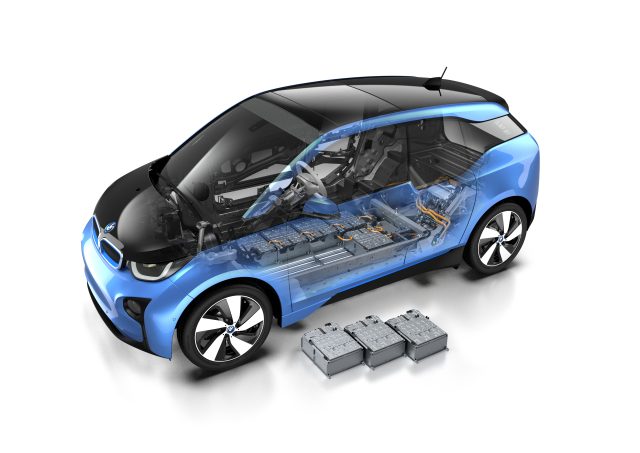
When we reviewed the BMW i3 back in 2014, the little rear-wheel drive city car left us quite impressed. However, the i3 has always had a couple of flaws in comparison with other electric vehicles out there; it costs too much and the range isn't very good, even if you go for the optional two-cylinder range-extending engine. It appears BMW has decided to address the latter issue, because from this summer the i3 will now come with a 33kWh battery in place of the current 22kWh unit.

Battery technology—and the amount of kilowatt-hours a dollar buys—keeps getting better each year. Certainly it improves measurably over the lifespan of a car, and the fact that BMW has seen this and bumped the battery spec for the i3 is a promising sign for the industry. That probably sounds like we're damning with faint praise, but technology now moves too rapidly for OEMs to stick their old cycles of refreshing cars every four years. If BMW wants to sell any i3s once the Chevy Bolt and Tesla Model 3 start shipping, a range boost is the bare minimum it needs to do.

The new battery is 50 percent bigger, so more than 100 miles (160km) should be possible on a full charge. The gas tank for the range extender engine will also grow by 25 percent; expect to stop for gas every 75 miles if you try road-tripping. These range tweaks should help boost the i3's appeal, but before long the Bolt and Model 3 are going to make people expect 200+ miles from their EV as a bare minimum.

Read 2 remaining paragraphs | Comments

Marvelous news: There will be a Punisher series on Netflix

John Bernthal will reprise the role he played in Daredevil.

(credit: Marvel)

For many viewers, the introduction of Frank Castle—aka The Punisher—was the highpoint of Daredevil's second season. Played by John Bernthal, Castle takes a very different approach to ridding Hell's Kitchen of crime, choosing the kill shot over just crippling the bad guys. Evidently Marvel was listening to the chorus of fans calling for a full Punisher series; on Friday Entertainment Weekly reported that the comic empire has ordered just that.

Bernthal is actually the fourth actor to play Frank Castle, after Dolph Lundgren (The Punisher, 1989), Thomas Jane (The Punisher, 2004), and Ray Stevenson (Punisher: War Zone, 2008). The character is one of Marvel's grittiest, and those previous three adaptations did poorly at the box office. But we live in a post-Deadpool age, where comic characters no longer have to be PG-13. Not to mention that a series on Netflix enjoys freedoms denied to tentpole cinema releases.

This will be the sixth Marvel series to run on Netflix. We've already seen Jessica Jones and Daredevil, with Luke Cage, Iron Fist, and The Defenders all in the works. Certainly, Disney's acquisition of Marvel for $4 billion in 2009 continues to look like a clever move, particularly in contrast to how DC's catalogue is being translated into live action. Now if only someone would finally push the button on a Dredd series for Netflix...

Read on Ars Technica | Comments

More than infotainment: Panasonic on self-driving cars and Tesla’s battery factory

The company is working on new human-machine interfaces for the car.

(credit: Getty Images|Akio Kon/Bloomberg )

Everyone wants a slice of the self-driving car market, and we can now add electronics giant Panasonic to that list. Tom Gebhardt, head of Panasonic's US automotive division spelled out the company's plans in an interview with Automotive News. He said that Panasonic has ideas about the way we interact with autonomous cars, which the company will develop out of its expertise with infotainment systems.

The company is also working closely with Tesla on the battery "Gigafactory" in Nevada, which will be key to Tesla's ability to deliver almost 400,000 Model 3 electric vehicles to those in that gigantic queue of preorders. Gebhardt wasn't able to put a number on Panasonic's contribution to the factory—apparently that's down to Tesla—but he said that the company would "do what we need to do to assure supply."

As we've discussed previously, government regulators and the auto industry are hoping for great things from autonomous vehicle technology. In the US, the National Highway Traffic Safety Administration is extremely bullish on self-driving cars, which it sees as the answer to reducing the 33,000 deaths on US roads each year.

Read 3 remaining paragraphs | Comments

Former Top Gear team sets sights on domination of the four-wheeled Internet

DriveTribe: “Richard Hammond said it was like YouPorn, only with cars.”

James May (left), Jeremy Clarkson (middle), and Richard Hammond (right).

You have to hand it to Messrs. Clarkson, May, and Hammond. Together with producer Andy Wilman, they took a moribund BBC show about cars and turned it into a global phenomenon—we are of course talking about Top Gear. Under their revised format, Top Gear dropped the idea of being Consumer Reports for cars, instead opting for comedy banter, insanely impractical road trips, and breathtaking cinematography. When things ended badly with the BBC, Clarkson, May, and Hammond were snapped up by Amazon with a budget reported to be $7 million (£4.5 million) per episode. But they evidently want more. On Monday Variety revealed that the gang, together with a tech entrepreneur called Ernesto Schmitt, want to create a digital home on the Internet for car people.

The site will be called DriveTribe, and will cater to a range of different car enthusiasts—or tribes—with verticals full of written content as well as video. Each tribe will have a different host, including Clarkson, Hammond, and May. According to Hammond, "Gamers have got Twitch, travelers have got TripAdvisor and fashion fans have got, oh, something or other too. But people who are into cars have got nowhere. There’s no grand-scale online motoring community where people can meet and share video, comments, information, and opinion. DriveTribe will change that. And then some."

Clarkson was more succinct: "I didn’t understand DriveTribe until Richard Hammond said it was like YouPorn, only with cars."

Read 5 remaining paragraphs | Comments