From Audi to Volvo, most ‘self-driving’ cars use the same hardware

Companies like Delphi and Mobileye are getting us on the road to autonomous cars.

My actual drive from Washington, DC, to Columbus, Ohio, and back took about 12 hours in total, but thanks to the magic that is time-lapse, you can come with me in a mere 90 seconds. Video edited by Jennifer Hahn. (video link)


On Sunday, my colleague Lee Hutchinson regaled you all with a tale of his semi-autonomous driving adventure in one of Tesla's high-speed electric chariots. But that's not the only semi-autonomous (Level 2 self-driving, according to the National Highway Traffic Safety Administration) road trip we've conducted here at Ars. You can read all about how we got on with Volvo's latest and greatest XC90 SUVs in a week or so. Plus, there's the new Audi A4, which in Dynamic mode really puts the mantra of "trust the machine" to the test as it late-brakes for exits at up to 0.5G. And finally, I was also fortunate enough to have put many miles on an Audi A7 TDI, driving from DC to Columbus, Ohio, and back when I went to visit the Venturi Buckeye Bullet 3.

Much of the technology that underpins these systems is shared among the industry. A handful of companies like Bosch, Delphi, and Mobileye provide sensors, control units, and even algorithms to car makers, who then integrate and refine those systems.

Read 10 remaining paragraphs | Comments

48-volt mild hybrids: A possible cure for diesel emissions cheats?

Much cheaper than a full hybrid system, with 70 percent of the benefits.

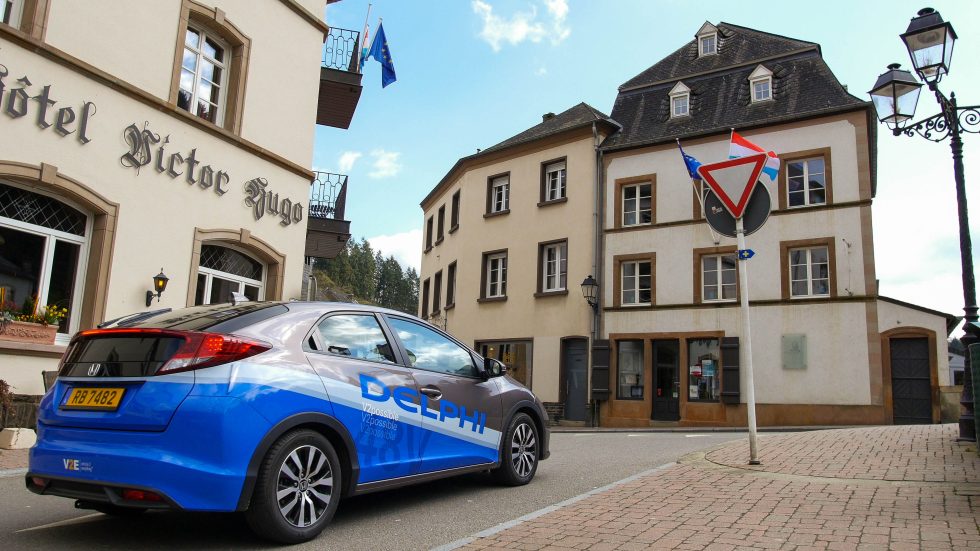
Delphi has been testing its 48V mild hybrid system in this Honda Civic turbodiesel. (credit: Delphi)

It's clear that we need to make our passenger vehicles a lot more efficient if we want to avoid some of the very worst effects of climate change. And it's also becoming increasingly clear that diesel—which was once looked at in places like Europe as a panacea for this problem—might not be quite so groovy, what with rampant emissions cheating in the auto industry. Delphi, a major vehicle component supplier, thinks it has a real solution to help us with this, in the form of 48V "mild hybrids."

Climate change is such a big problem that even Donald Trump (who says he doesn't believe in it, publicly) is spending money to defend his properties from sea level rise. Although passenger vehicle emissions are only part of the carbon emission problem, in the US, Europe, and China regulators are taking the problem seriously, with increasingly strict fuel efficiency targets for all new cars. Here in the US, car makers have until 2025 to double their average fuel economy to 54.5mpg, but things are even tighter abroad. China has set 2020 for its deadline, by which time manufacturer averages have to be down to 117 grams of CO2 per km driven, and the following year the EU requires fleet averages of just 95g/km. And along with those targets come hefty financial penalties for missing them.

Several years ago, we took a deep dive into some of the technologies that automakers are looking at to get themselves out of this bind. These features included variable valve timing, small capacity turbocharged engines, gasoline and diesel direct injection, cylinder deactivation, and stop-start functions. But all of those features are being widely deployed across new vehicle fleets, and it's clear that they won't be enough. Of course, there's also the wide world of electrification, like plug-in hybrid electric vehicles and battery EVs, but adoption of EVs of all stripes remains insufficient to really move the needle—even accounting for Tesla's gigantic Model 3 presales. That's where the 48V mild hybrid comes in.

Read 6 remaining paragraphs | Comments

Gran Turismo Sport coming to the PS4 in November

Photo mode looks stunning, but the racing footage shows off some flaws.

Gran Turismo Sport breaks cover.

Get ready, PS4 racers, because the world's best-selling racing game franchise is finally ready to return to our consoles. At a Thursday evening event in London, Polyphony Digital and Sony announced that Gran Turismo Sport will arrive on the PS4 on November 15th. And the companies released some footage of the new game to whet our appetites.

The game has been a long time coming, what with Gran Turismo 6 being released for the PS3 way back in December 2013. But Gran Turismo fans are probably used to long waits by now given the six long years between GT4 and the lackluster GT5.

The gameplay footage reveals quite a bit about the new game, which has been built to support PlayStation VR from the ground up. There are a ton of new photo locations, and you can stage multiple cars in those settings. There's a livery editor, so complex custom paint schemes are now possible.

Read 2 remaining paragraphs | Comments

Uber to begin testing self-driving cars in Pittsburgh

The ride-sharing company wants to ditch the human element.

(credit: Uber)

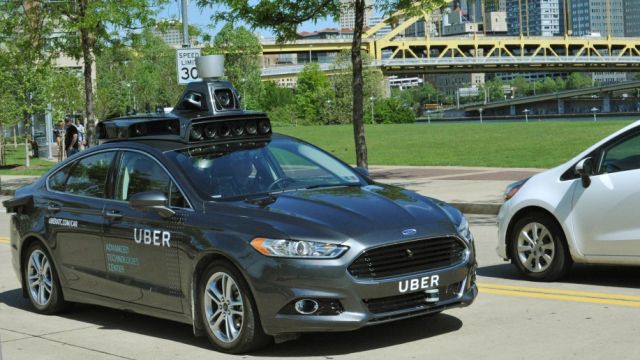
One day, the Uber that comes to fetch you might not have anyone in the driver's seat. On Thursday, Uber announced that it will begin testing an autonomous Ford Fusion hybrid on the streets of Pittsburgh, home to Uber's Advanced Technology Center.

Drivers in Pittsburgh should have no problem spotting the research vehicle—it's carrying an array of sensors on its roof that includes a radar, lidar, and cameras. The Uber test car will actually be mapping its surroundings in addition to testing out autonomous driving—although there will be a human operator in the driver's seat at all times to take over at a moment's notice.

We've known for some time that Uber has had an interest in autonomous vehicles. In the past, the company had been working with Google, but that relationship apparently deteriorated last year. It's not the only ride-sharing service looking to ditch the human aspect, either. In January, we reported that General Motors invested $500 million in Lyft with the goal of developing a network of self-driving taxis.

Read 2 remaining paragraphs | Comments

Turbulent times for Formula 1 engines result in unprecedented efficiency gains

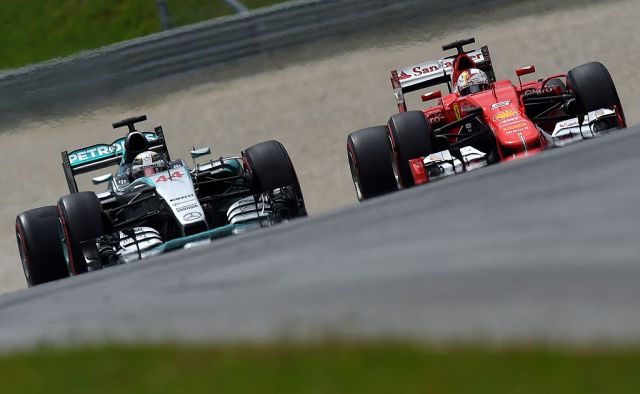
Mercedes’ and Ferrari’s F1 engines are reaching almost 50 percent efficiency.

(credit: Getty Images | Joe Klamar/AFP)

It's no secret that we're fans of using the racetrack to improve road car technology here at Ars. It's also no secret that we believe the discipline of endurance racing (Le Mans and the like) to have far more relevance to making our road cars better than Formula 1. But it would be incorrect to say that no such tech transfer happens within the ultra-specialized world of F1. And a perfect example of that is a clever engine development being used by Mercedes-Benz and Ferrari that's pushing the envelope of energy efficiency. It's called turbulent jet ignition (TJI), and not only does it do wonders for fuel efficiency, it also results in a cleaner exhaust.

As you probably know, gasoline engines combust fuel with air within each cylinder, and that combustion moves the pistons—and therefore the crankshaft, powering the car. But most of the energy released during combustion is wasted as heat. In fact, the average road car engine wastes between 70 to 75 percent, meaning its thermal efficiency is around 25 to 30 percent. That comes down to the way that the fuel combusts after it's injected into the cylinder, which normally happens around the center of the cylinder by the spark plug (the bit that ignites the mixture). If you can control ignition so that it happens more homogeneously throughout the cylinder, with more air per given amount of fuel (i.e. a leaner burn), less energy is wasted as heat and more of it is converted to work.

But this process can be improved. Take Toyota's latest generation of Prius hybrids, for example. These cars use what's known as an Atkinson-cycle (most engines work via the Otto-cycle). The current Prius engine is supposed to have a thermal efficiency of 40 percent, which is quite an achievement. But there are other options, too, like a technology that's already used in some road cars called direct injection. Rather than traditional fuel injection, which squirts fuel into the engine upstream of the cylinder in the intake port (the bit that the air gets sucked through on its way from the outside of the car into the engine), direct injection uses a high-pressure system to add the fuel into the cylinder itself. This makes it possible to more accurately control the fuel-air mix, whether that's to achieve a stoichiometric air-fuel ratio (14.7:1) or even an ultra-lean mix (useful when cruising with the engine under a light load).

Read 6 remaining paragraphs | Comments

Thanks to “3DQ” you can actually see out of the new Acura NSX

Extremely high tensile strength A-pillars are the key.

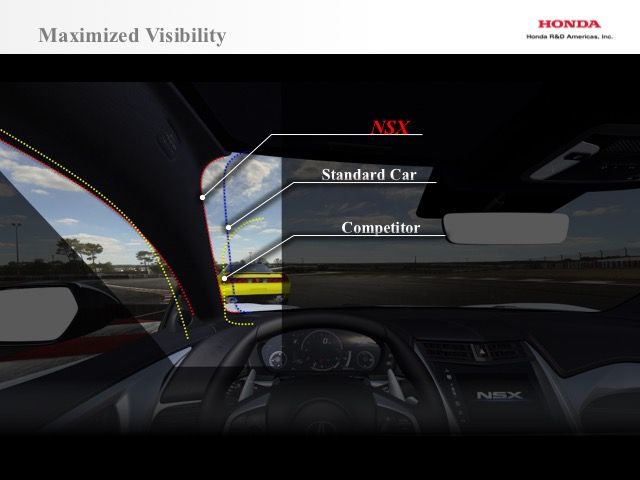
(credit: Honda)

Modern supercars and hypercars are blazingly fast. Ironically, the sensation of speed they generate is often dampened by the fact that you often can't see a thing from the driver's seat.

Blame a combo of safety priorities and style. Over the last decade, crash and rollover regulations have dictated more robust cabin structures characterized by ever thicker, vision-blocking A-pillars. The regulations coincided with an in-vogue design language that gave us "turret-style" cabins from which to peer out.

With the new NSX, then, it's refreshing to see Honda put an emphasis on visibility in the design of its halo car rather than cobbling together a few sensors and a backup camera in the name of "safety." It's also not surprising. Cast your mind back to the 1980s/'90s heyday of Honda/Acura and you'll recall the pride Honda took (and the praise it received) in its airy cabins with low beltlines and superior visibility. The first generation NSX was lauded for its performance, dependability, and functionality, including cockpit visibility.

Read 11 remaining paragraphs | Comments

One in seven new BMWs sold in the US is an electric vehicle

Hybrid and EV sales boom for BMW in April 2016, but overall sales drop in the US.

(credit: BMW)

Electric vehicles are making up an ever-increasing percentage of BMW's sales, both here in the US and worldwide, according to a statement released by the company on Friday. In April in the US, the BMW i3, i8, and X5 xDrive 40e accounted for just under 15 percent of all BMW passenger vehicle sales—a combined 2,572 cars out of a total of 17,786 cars sold last month.

More than half of BMW's EVs have been sold here in the US, which, along with Scandinavia and the UK, is the company's best market for hybrids and EVs. BMW's electrification strategy is a two-fold affair. There's the i sub-brand, which currently features the i3 city car and i8 sports car (two of our favorites here at Ars), and it's believed that a third i model is in the works, a crossover called the i6.

The company is also building hybrid versions of some of its regular vehicles, including the 330e, X5 xDrive40e, and now a 740e as well.

Read 2 remaining paragraphs | Comments

Norway’s gigantic wealth fund will sue Volkswagen over dieselgate

Norway’s sovereign wealth fund is the fourth largest shareholder in VW Group.

According to the Financial Times, Norway's gigantic sovereign wealth fund is planning to join the class-action lawsuit filed against Volkswagen Group in Germany. The lawsuit concerns VW Group's emissions shenanigans—the company was caught falsifying emissions tests for its diesel engines in the US and around the world.

The German class-action lawsuit is just one of a number that VW Group is facing. Here in the US, the automaker is facing more than 600 lawsuits, which are being overseen collectively by US District Judge Charles Breyer in San Francisco. Last month we reported that as part of that legal action, the automaker has agreed to buy back more than 500,000 cars with the affected 2.0L diesel engine.

The scandal hasn't been good for VW Group's bottom line, either. In April, the company released a delayed financial report showing it had lost $6.2 billion in 2015.

Read 2 remaining paragraphs | Comments

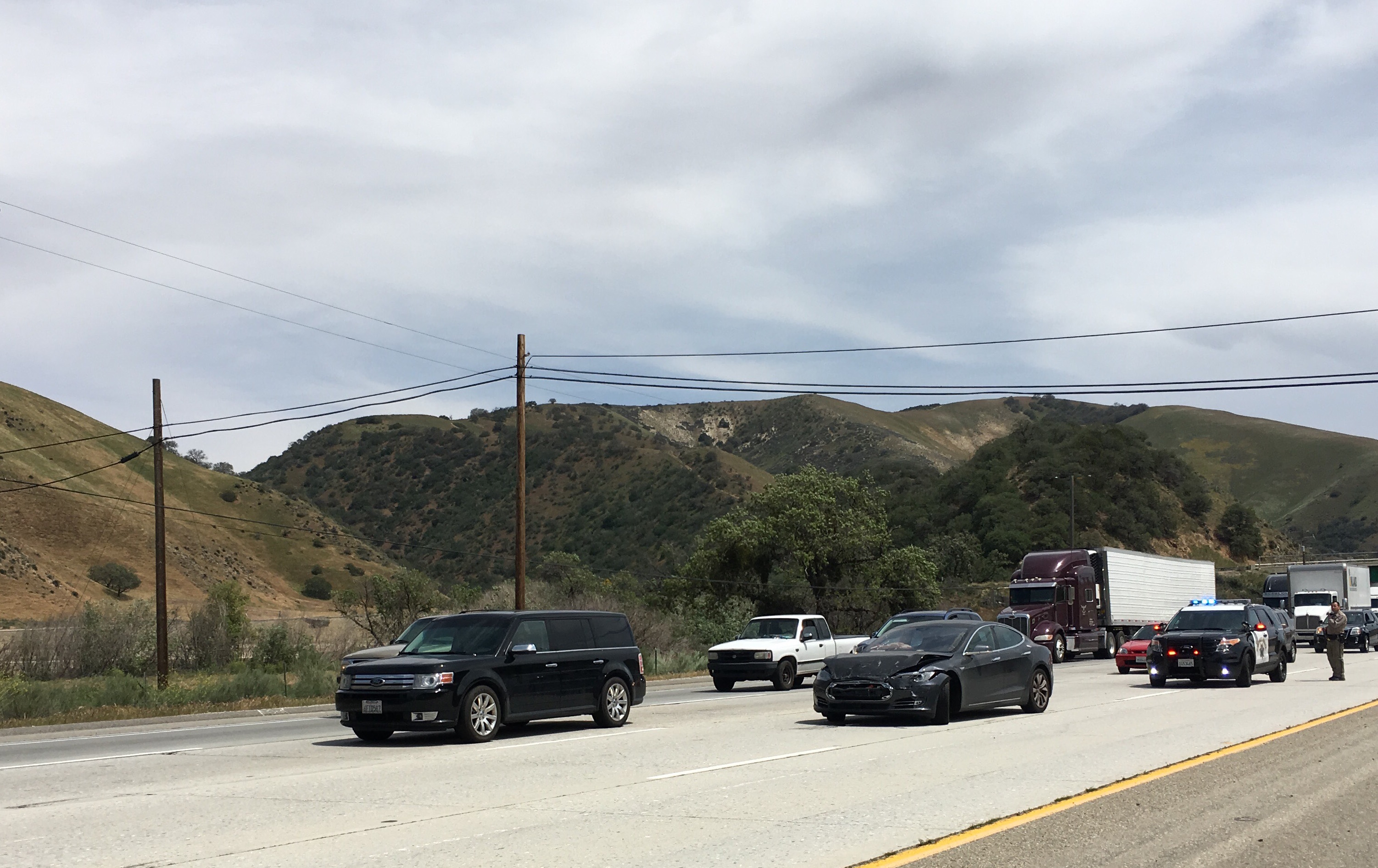
Another driver says Tesla’s autopilot failed to brake; Tesla says otherwise

Second recent autonomous accident is also blamed on driver error.

Arianna Simpson's Model S after the crash outside Lebec, CA. (credit: Arianna Simpson)

For the second time in recent days, Tesla and one of its customers are at odds over a collision. Earlier this week, a Utah-based Tesla owner claimed that his parked Model S decided to crash into parked trailer of its own accord, something Tesla disputes. And now there's Arianna Simpson, who says that the safety features in her Model S did nothing to prevent her crashing into the back of another vehicle at speed. However, like the prior case, Tesla says the vehicle's data logs don't support the story.

On April 26, Simpson was driving north from Los Angeles on I-5, cruising in autopilot mode. "All of a sudden the car ahead of me came to a halt. There was a decent amount of space so I figured that the car was going to brake as it is supposed to and didn't brake immediately. When it became apparent that the car was not slowing down at all, I slammed on the brakes but was probably still going 40 when I collided with the other car," she told Ars.

In contrast, Tesla says that the vehicle logs show that its adaptive cruise control system is not to blame. Data points to Simpson hitting the brake pedal and deactivating autopilot and traffic aware cruise control, returning the car to manual control instantly. (This has been industry-wide practice for cruise control systems for many years.) Simpson's use of the brake also apparently disengaged the automatic emergency braking system, something that's been standard across Tesla's range since it rolled out firmware version 6.2 last year.

Read 5 remaining paragraphs | Comments

Nissan buys into ailing Mitsubishi, enters into a strategic alliance

Mitsubishi is going for a knock-down price, in part because of Nissan whistleblowing.

Even before news broke in April that Mitsubishi Motors had been playing fast and loose with Japanese regulators over fuel economy tests, the company had been struggling to compete in its domestic market and was on life support here in the US. Nissan, on the other hand, has been doing quite well, and on Thursday it announced that the two companies will form a strategic alliance, sharing platforms, technology, and administration. Nissan will also buy 34 percent of Mitsubishi Motors for $2.2 billion (¥237 billion), paid for with profits that are up 14 percent year-on-year.

At ¥487 a share, Mitsubishi is quite the bargain. The company was worth twice that in early April before the efficiency testing bombshell dropped. A bombshell that happened to be dropped by Nissan, as it happened; the affected vehicles are the results of a collaboration between the two OEMs. (Over at Jalopnik they're wondering if this hasn't all been a little too convenient for Nissan.)

This won't be the first such strategic alliance for Nissan. It's been joined up with French automaker Renault since 1999, and both companies (as well as the Renault-Nissan Alliance) are run by the same CEO, Carlos Ghosn. Other brands in the alliance include Infiniti, Dacia—as in James May's favorite, the Sandero—Datsun, and Lada.

"This is a breakthrough transaction and a win-win for both Nissan and Mitsubishi Motors. It creates a dynamic new force in the automotive industry that will cooperate intensively, and generate sizeable synergies," Ghosn said in a statement. "We will be the largest shareholder of MMC, respecting their brand, their history and boosting their growth prospects."

It's easy to see how Mitsubishi benefits from this alliance. Nissan is an industry leader in electrification. Plus, the company has a strong presence in the US. It's a little harder to see Nissan's motivation. Nissan apparently hopes to benefit from Mitsubishi's relative strength in Southeast Asia.

And it does make the Renault-Nissan Alliance one of the biggest global carmakers out there—in 2015 its combined output (including Mitsubishi) was 9.6 million vehicles, almost rivaling the big three of Toyota, General Motors, and Volkswagen.