Tesla’s Autopilot being investigated by the government following fatal crash

A tractor-trailer crossed a divided highway and an Autopiloted Model S drove underneath.

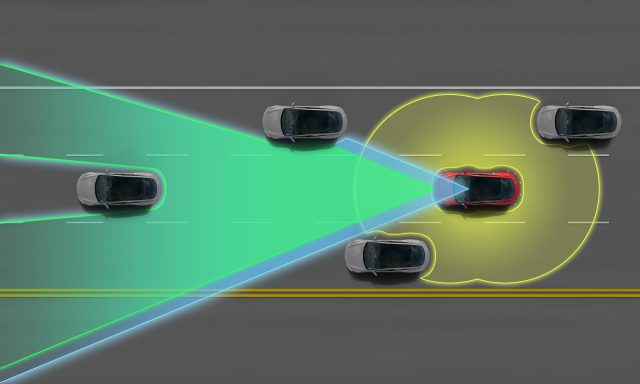
The Model S uses several sets of sensors, from optical to ultrasonic to radar, to maintain awareness of the traffic around you. (credit: Tesla Motors)

The National Highway Traffic Safety Administration is about to take a closer look at Tesla's Autopilot, the company revealed on Thursday. In a blog post, Tesla says that it learned on Wednesday evening that the NHTSA is "opening a preliminary evaluation into the performance of Autopilot" following a fatal crash involving a Model S.

The incident, which happened in May, involved a white tractor-trailer that crossed the divider on a highway, perpendicular to the path of the Tesla, which was cruising on Autopilot. "Neither Autopilot nor the driver noticed the white side of the tractor trailer against a brightly lit sky, so the brake was not applied. The high ride height of the trailer combined with its positioning across the road and the extremely rare circumstances of the impact caused the Model S to pass under the trailer, with the bottom of the trailer impacting the windshield of the Model S," Tesla stated.

The company also stated that in a front-on or rear-end collision with the tractor-trailer, the outcome would not have ended in tragedy. It described the driver as "a friend to Tesla and the broader EV community" and expressed sympathy for his friends and family for their loss.

Read 1 remaining paragraphs | Comments
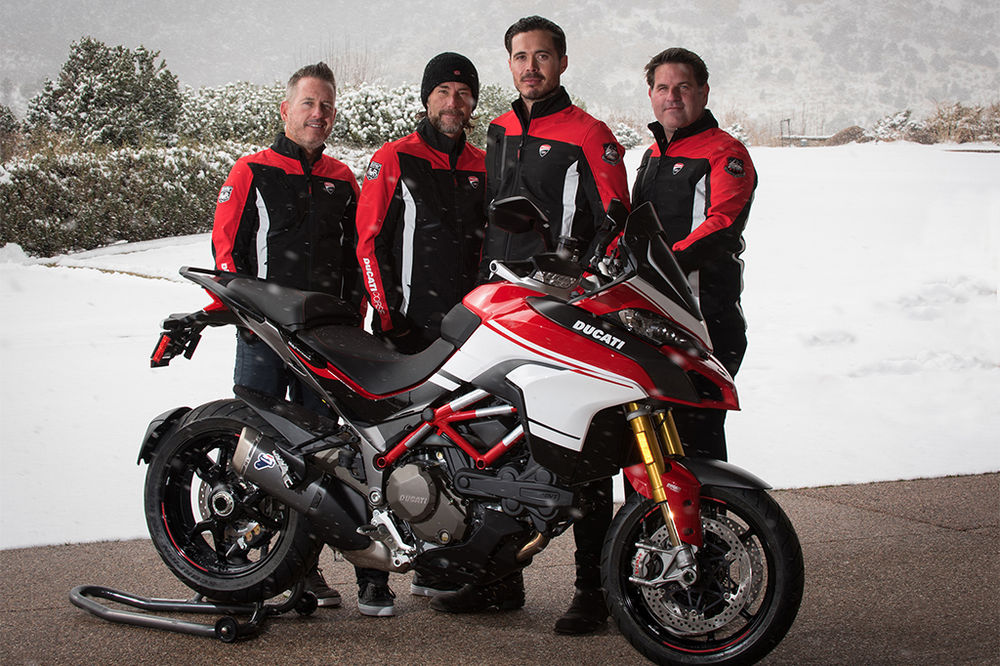
Snow and ice kept an electric motorcycle from winning Pikes Peak this year

We spoke to expert racers Carlin Dunne and Don Canet about the challenge.

COLORADO SPRINGS, Colo.—The Pikes Peak International Hill Climb was an all-car affair for most of its 100 years. But the past few decades have seen motorcycles return to the mountain, getting faster (and more dangerous) since the entire road was paved in 2011. As with their four-wheel-riding cousins, bike racers have started looking at electric motors, which, unlike internal combustion engines, aren't fazed by altitude.

This year, 36 bikes, quads, and sidecars were entered in Sunday's race. They would get first crack at the course; running the cars first creates the risk of dirt or rocks being dragged onto the road, and the 12.4-mile (19.99km) route is already unforgiving enough.

"Unfortunately, now that it's all pavement and the speeds are higher, the risk factor is much greater [and] the future of bikes could be in peril. They've had a death the past two years, unfortunately," explained Don Canet. Canet is road test editor for Cycle World and has competed at Pikes Peak in recent years. To try to manage the risk, all of this year's motorbikes have to have single-piece handlebars, and the fastest liter-class Superbikes are no longer allowed. "Not to say that the bikes we're running now are nearly as fast, but at least it's a move—probably to appease the insurance carrier," Canet said.

Read 9 remaining paragraphs | Comments

Racing with royalty—Behind the scenes with Pikes Peak’s “King of the Mountain”

We embed with the team as it aims to be fastest overall at the event’s 100th anniversary.

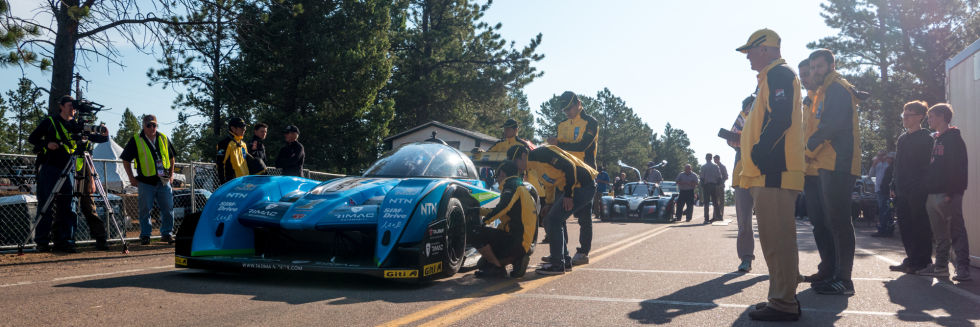
Nobuhiro "Monster" Tajima's team checks over his 2016 Tajima Rimac E-Runner Concept_One at the start line before heading out for a practice run. (credit: Elle Cayabyab Gitlin)

Even as a young man in Japan, Nobuhiro "Monster" Tajima knew he wanted to compete in the annual Pikes Peak International Hill Climb. The race is the second oldest in the United States—2016 marks its 100th anniversary—and this track provides a rare challenge to driver and car in motorsport. Its 12.4 miles (19.9km) have more corners than the Nürburgring. The course rises 4,750 feet (1,440m) from the start line to the summit, finishing at 14,100 feet (4,300m). And forget mental images of mountain roads as nothing but switchbacks; there are plenty of straights and fast corners with nothing but a sharp drop off to one side.

And it's truly a hill climb. Racers set off one after another, and they only get one run. In fact, the first time they're able to drive the full 12.4 miles flat-out is during Sunday's race—practice and qualifying take place on shorter stretches of the route. For most of the race's history, the road to the top of the mountain was dirt. Paving started in 1998 following concerns about erosion, and the race has run on tarmac exclusively since 2012.

The unique setup means both car and driver must call upon different skills to set the fastest time of the day. Perfectly balanced drifts have given way to maximizing corner speed, and the tires are racing slicks with no tread blocks. But there's still that huge climb in altitude, almost 3 miles (4.3km) up to where there's much less air to push down on wings or feed engines and radiators. On top of all that, the weather can give you four different seasons between the starting line and the summit, bringing with it all the associated consequences for track temperature and grip.

Read 22 remaining paragraphs | Comments

A second airbag supplier SNAFU hits Toyota, 1.4 million cars recalled

The problem is with side airbags made by Autoliv.

Airbags in cars have been responsible for saving many a life, but recent news might be tarnishing that reputation. More than 100 million cars worldwide are subject to the most complex automotive recall ever thanks to defective airbags from supplier Takata.

The problem rests with whether or not the airbag uses a chemical drying agent to prevent the ammonium-nitrate propellant charge from taking on moisture. Takata airbags without the drying agent may not work properly in an accident, filling the cabin with shards of metal shrapnel as well as the airbag. The National Highway Traffic Safety Administration (which ordered the recall here in the US) says that 10 people have been killed and more than 100 injured as a result.

If you drive one of the affected models, you may have to wait some time before getting it replaced. Takata has until 2019 to replace all the defective airbags and may well need the time; in the process of trying to have one of our cars fixed in June under the recall notice, we were told the supply chain was empty and that 2017 was more likely. But Takata isn't the only company having problems with prematurely exploding airbags.

Read 2 remaining paragraphs | Comments

Electric Vehicles at the Pikes Peak International Hill Climb: Race report

But a Tesla Model S set a new Electric Production car record.

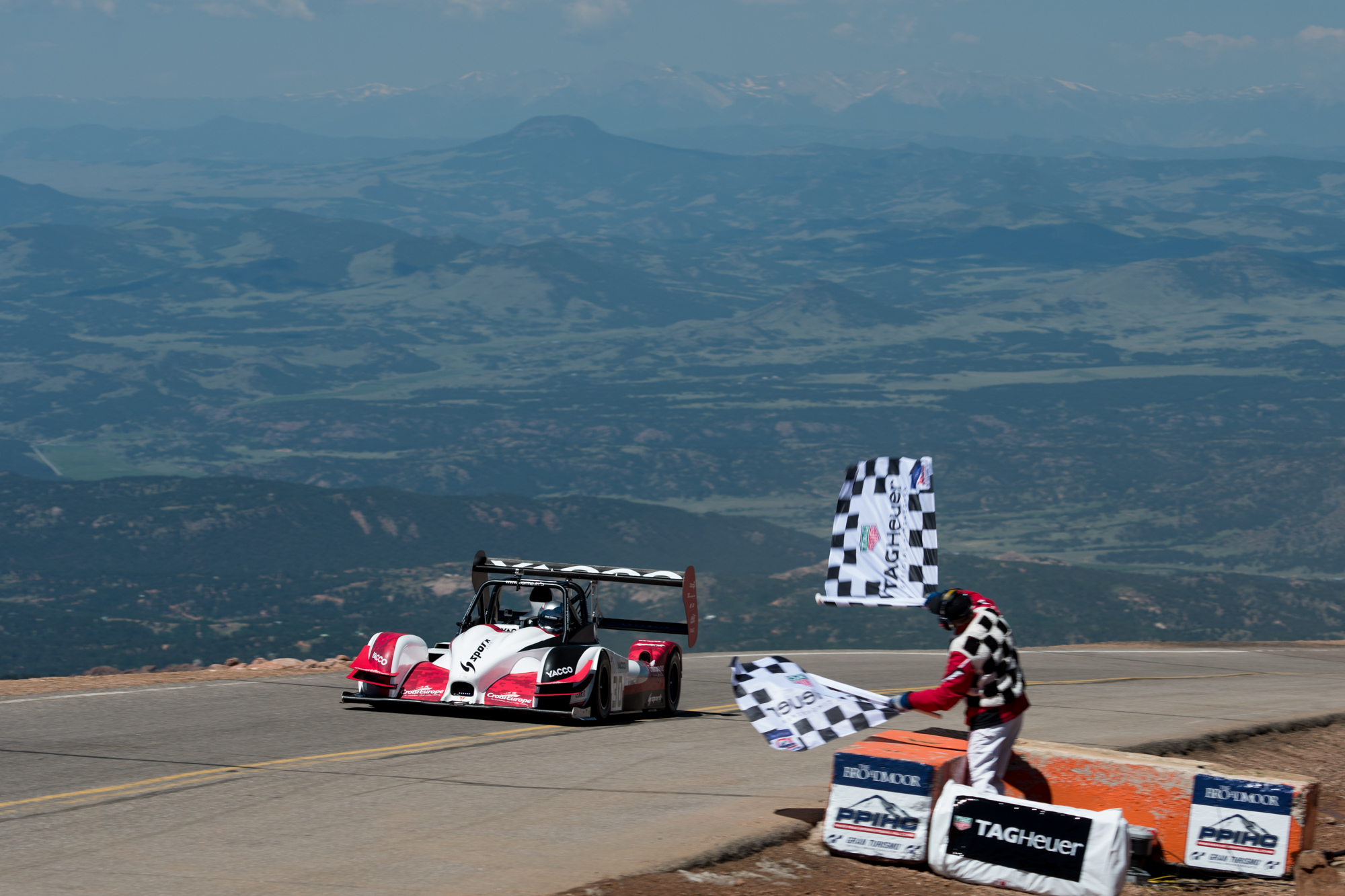
COLORADO SPRINGS, Colo.—The Pikes Peak International Hill Climb turned 100 this year, making it five years younger than the Indianapolis 500. Other than age, the two events have very little in common. The first Indy 500 came about because Carl Fisher wanted to give America's new car builders somewhere to test their creations; by contrast, Spencer Penrose organized the first Pikes Peak Hill Climb in 1916 to help draw tourists to the mountain (and in turn, his hotel the Broadmoor). Ironic then that all these years later it's Pikes Peak—rather than Indianapolis—that's being used to test the cutting edge of automotive technology.

In particular, people have been bringing electric cars and motorbikes (you can read about those later today) to test them on the hill climb. The 12.4-mile (19.99km) course is short enough that they don't need to be overburdened with batteries, for one. And unlike internal combustion engines, electric motors don't care whether they're at sea level, the start line (9.390 feet/2,862m), or the 14,110-foot (4,300m) summit—they make the same amount of power everywhere.

When last we checked in from America's Mountain, Romain Dumas and his Norma M20 RD Limited Spec-2016 were the fastest combination of man and machine, topping the qualifying charts. This somewhat upset the narrative—for the Norma runs in the Unlimited class and does so on gasoline, not electrons. As the fastest overall qualifier, Dumas would be the first of the cars to set off, some two hours later than planned. Below the tree line the weather was perfect, but icy conditions up top saw several motorbikes crash, causing several lengthy delays.

Read 7 remaining paragraphs | Comments

Electric vehicles at altitude: Pikes Peak qualifying day

We get our first look at the electric vehicles that will race on America’s Mountain.

COLORADO SPRINGS, Colo.—Racing at Pikes Peak starts early, really early. At this point I'm no stranger to the fact that a day at the track means leaving the house before dawn. But here at the mountain, the road is reopened for two-way traffic at 8:30am—so 4am it is. We're here because Giti Tires and Team APEV with Monster Sport invited Cars Technica to embed with them as Nobuhiro "Monster" Tajima attempts to become "King of the Mountain" for the eighth time.

Tajima-san runs in the Electric Modified class for purpose-built machines. On Thursday morning, we got our first look at his 1.1MW (1,500hp) Tajima Rimac E-Runner Concept_One as well as some of the cars from other classes. Acura is here with three NSXes. There's an almost-stock NSX in Time Attack 2 Production, a second NSX—minus its AC and some interior trim—running in Time Attack 1 and silhouette NSX with four electric motors and torque vectoring in Electric Modified. There's even a Tesla Model S that is being campaigned by Blake Fuller.

Later in the day, the Pikes Peak International Hill Climb inducted its 2016 Hall of Fame. On the way in we were greeted by Arrow's latest Project SAM—a Corvette Z06 that Sam Schmidt will drive on Sunday after the final race up to the top and back to lead the entire field back to the start line. Between this and Frédéric Sausset at Le Mans, it's inspiring how motorsports is using technology to make itself more accessible, particularly because it's leading to real-world applications.

Read 4 remaining paragraphs | Comments

Tesla wants to buy Solar City, become an integrated sustainable energy business

Musk wants to offer an integrated solution at Tesla stores: Solar to storage to vehicles.

On Tuesday, Tesla announced it intends to acquire the solar power business Solar City, provided shareholders of both companies approve the purchase. In a conference call with reporters, Elon Musk said that Tesla "thinks this is a huge opportunity to have a highly integrated sustainable energy company, from generation to storage to transport." It's a move Musk said he's been thinking about for many years, and that the timing seemed right with Tesla's recent activities in energy storage.

Assuming the shareholders agree, this will add a third product line to Tesla's retail stores, which will be literal one-stop-shops for sustainable energy, from power generation (via solar panels), energy storage (Powerwalls—the battery packs the company announced earlier this year), and electric vehicles. Integrating Tesla's Powerwall storage systems with Solar City's solar panels also promises to remove some duplication—currently both storage and generation systems have to have their own control computers and modems, connecting to different clouds.

"Tesla's goal is to accelerate the advent of sustainable energy. You need energy generation, storage, and electric transport," Musk said. "We need those three ingredients to have a good future. I don't think of us an automotive company; the world doesn't lack automotive companies, it lacks sustainable energy companies. That's the fundamental good Tesla will achieve."

Read 2 remaining paragraphs | Comments

Meet Pearl, a startup full of Apple alums who want to bring tech to your old car

Pearl’s first product is a rather cool wireless, solar-powered backup camera.

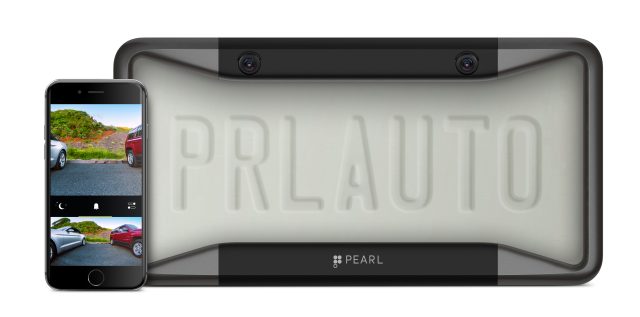
(credit: Pearl)

There have been a lot of rumors over the past year or so about Apple secretly working on a car. While we don't have anything concrete to report on that front, we do know that some former Apple employees have left the mothership to work on car-related tech. Their company is called Pearl, and it just emerged from stealth mode with a rather cool wireless backup camera system, called RearVision.

As you might know, Congress has mandated that all cars from 2019 have a backup camera installed. And indeed, many new cars come with backup cameras already, with varying quality (some of them are truly horrible). But with about 260 million cars already on the road, the vast majority have to rely on old-fashioned mirrors to see behind them. Enter RearVision. We spoke with company cofounder and CEO Bryson Gardner ahead of the launch to find out a bit more.

"At Apple we loved taking the very latest technology and getting it into the hands of the consumer as quickly as possible," Gardner told Ars. "We wanted to find something that was infused with technology but ripe for change—we started looking at how technology gets into cars, and it's quite an extended timeline. There's a long design cycle, and it only appears in some makes and models; it can take 10 to 20 years to appear across the production line. The other challenge is the technology in new cars is designed to be stagnant, so it stays the same throughout the lifetime of the car, which is over 17 years now."

Read 7 remaining paragraphs | Comments

Two of the world’s rarest hypercars compete in real life vs. sim battle

Castrol EDGE pits Koenigsegg One:1 and Aston Martin Vulcan against themselves.

Comparing racing sims to real cars driving on real race tracks has been a thing for a while now. Way back in 2006, Jeremy Clarkson went head-to-head against himself at Laguna Seca in real life versus Gran Turismo 4. And I've been known to use Forza as a way of doing some training ahead of going racing for real. Now, courtesy of Castrol Edge you can watch two of the world's best racing drivers pit themselves against, well, themselves, in a pair of jaw-dropping hypercars at the Ascari Race Resort in Spain.

Darren Turner tries to beat his simulator time in the real Aston Martin Vulcan

If you saw Top Gear this past weekend you'll know about the Aston Martin Vulcan. It's a track-only hypercar (i.e. it's not road-legal), made from beautifully crafted carbon fiber and powered by an 800hp V12 engine. Just 24 Vulcans will ever be built, and if you wanted one you needed to stump up more than $2.6 million. Exclusive stuff!

Darren Turner was behind the wheel of the real and digital Vulcans. Turner has a long background racing for Aston Martin's works team, having won Le Mans twice for the marque. And he's no stranger to simulators either; when he's not racing for Aston Martin, he runs a professional simulator business that racing drivers use to hone their skills away from the track.

Read 4 remaining paragraphs | Comments

A shocking end to the 83rd 24 Hours of Le Mans robs Toyota of victory

Toyota lost a win with three minutes to go, Ford wins class but there’s a scandal.

The 24 Hours of Le Mans holds a special place in our hearts. More than any other race, it's a crucible in which new technology is forged, technology that's directly relevant to the cars you or I drive on the road. And for 23 hours and 57 minutes, this year's race belonged to Toyota Gazoo Racing, which put on a fine show with its pair of TS050 hybrid race cars. But racing can be a cruel, cruel sport—something I know all too well—and this year was crueler than most.

The race got underway on Saturday during torrential rain, with the first 50 minutes or so conducted under a safety car as the ACO (the race organizers) waited for the track to dry sufficiently for things to get going properly. At the front of the field the battle for the overall win was one fought between Porsche and Toyota with their hybrid LMP1 prototypes. Both of Audi Sport Team Joest's R18 hybrids faltered early on, as did the #1 Porsche 919 Hybrid, but the remaining three cars (the #5 and #6 Toyota TS050s and the #2 Porsche) stayed in close contention with multiple lead changes between them throughout the course of the race.

The #5 Toyota of Sebastien Buemi, Anthony Davidson, and Kazuki Nakajima looked set for victory after a strong performance in the final quarter of the race. The Toyotas were able to run for 14 laps between fuel stops—one more than either the Audis or Porsches, and the #5 stretched a lead over the #2 Porsche 919 Hybrid (Neel Jani, Romain Dumas, and Marc Lieb) and its sister TS050 (Mike Conway, Stéphane Sarrazin, and Kamui Kobayashi) until it all went tragically wrong halfway around the penultimate lap. A third of the way down the Mulsanne Straight, with Nakajima at the wheel, the #5 Toyota started losing power. In short order, its 50-second lead over the Porsche evaporated, and the car came to a halt just past the finish line—with three minutes still on the clock.

Read 10 remaining paragraphs | Comments