The Flux Capacitor is now the world’s fastest street-legal electric car

Jonny Smith’s Flux Capacitor just set a sub-10 second 1/4 mile time at the drag strip.

Jonny Smith's Flux Capacitor is one of the quirkiest (but most interesting) electric vehicles on the road today. Smith, a British automotive journalist, took an old Enfield 8000 electric city car (built in small numbers in the 1970s) and has transformed it into something a lot wilder. Out went the array of 12v batteries and 8hp (6kW) electric motor, to be replaced by an altogether more potent powertrain. And on July 16th, Smith and the Flux Capacitor entered the record books as the world's fastest street legal EV, running the quarter-mile in 9.87 seconds.

When last we checked in with Smith, the Flux Capacitor was only Europe's fastest street-legal EV, with a sub-11 second 1/4-mile time under its (bright orange) belt. Since then, the existing 144-cell Hyperdrive Innovation lithium-ion battery pack has been supplemented by an extra 44 cells located in the trunk. That upgrade has boosted the car from 370v to 400v, and together with lower gearing on the differential, the times at Santa Pod Raceway in the UK began to fall.

"The combination of big voltage amps and phenomenal grip gave us early ten-second quarter miles, and when we braved the RPM limit of the motors, we managed a nine [second run]," Smith told Ars. "Despite all of this power and speed, the little Enfield still felt smooth, stable, and happy, which is unbelievable given that it was designed to do 40 miles an hour."

Read 3 remaining paragraphs | Comments
Germany wants black boxes in self-driving cars

Arguably, Tesla has shown the way to go here.

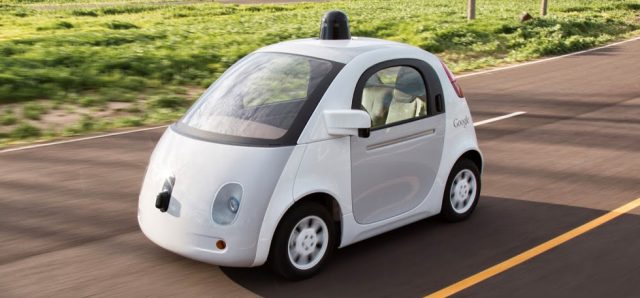
A Google self-driving car. (credit: Google)

As the recent kerfuffle around Tesla's Autopilot has shown, we still have some way to go before everyone is on board with the idea of people being driven by their cars on public roads. Until we get to a point where fully autonomous (level 4) cars are capable of taking us from A to B with no human intervention beyond telling it the destination, self-driving cars are going to need a (relatively) alert human occupant in the driver's seat, ready to take control if necessary.

While it is true that many automakers are pushing for self-driving vehicles, they're not the only ones. Both in the US and elsewhere, governments are also gung-ho for the technology, as it has the potential to make a real dent in the annual death toll on our roads.

Over in Germany, Reuters reports that the country's transport ministry has issued a proposal that would allow for drivers of autonomous cars to relax their guard somewhat. They will have to remain seated behind the controls—so don't expect chairs that swivel out of the way just yet—and there will have to be on-board data recorders that log the car's autonomous behavior.

Read 2 remaining paragraphs | Comments

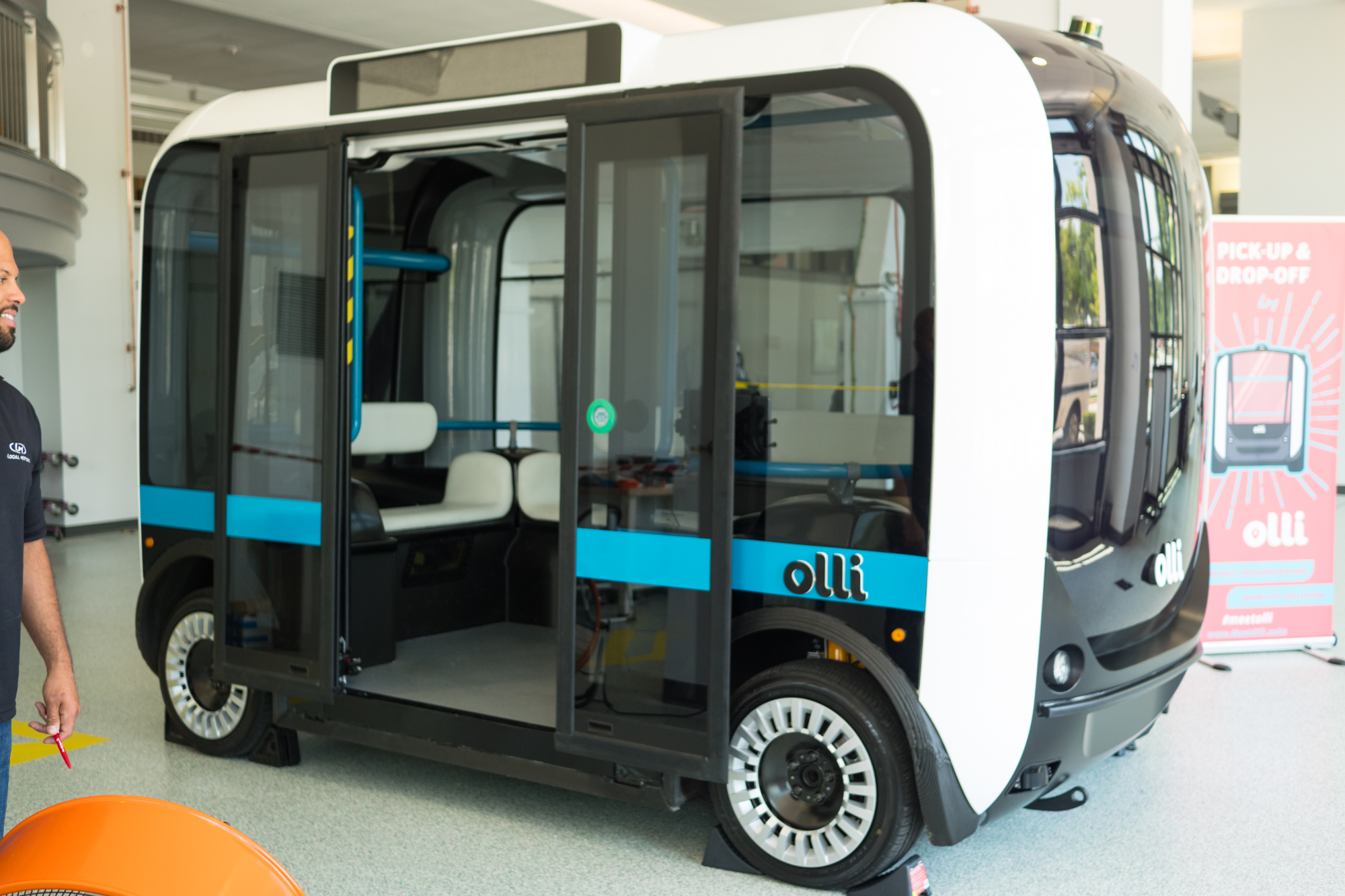
Meet Olli, the autonomous electric people mover from Local Motors

The open source car company has set up shop in National Harbor, Maryland.

Local Motors is not your regular car company. It's been pioneering the use of open source development to design its vehicles, starting with the Rally Fighter off-road sports car and a number of vehicles that have been the result of competitions, including one held in conjunction with the Department of Energy's ARPA-E. Most recently, the company unveiled Olli, its first autonomous vehicle. When we discovered that Olli was just up the road in National Harbor, Maryland, we decided it was time to head over there to find out more.

Local Motors has a large retail location at National Harbor (selling merchandise), along with a test lab complete with a gigantic 3D printer for rapid prototyping. Several of the company's designs were also on display—the Strati, which was the first 3D-printed car, as well as the Swim, which was the winning design from its Project Redacted competition. And of course, Olli the autonomous people mover.

As we looked at the Swim, David Woessner, general manager at Local Motors, explained the ongoing process that's expanding Local Motors' product line up. "We started in July of 2015. In September of that year, we did the first print and revealed the car in November. It's the next iteration in our path to a highway car."

Read 4 remaining paragraphs | Comments
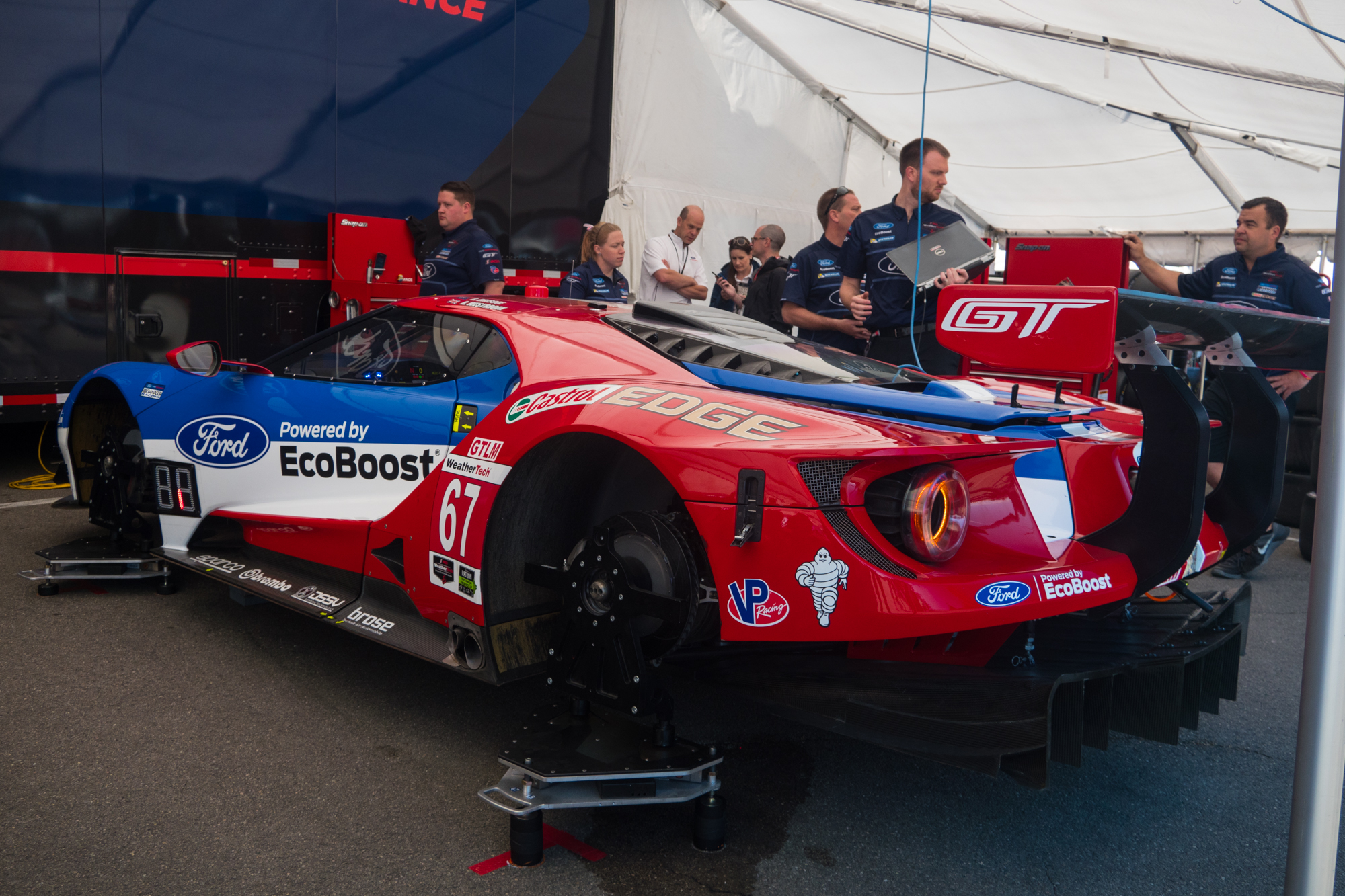
After victory at Le Mans, we catch up with Ford to talk about its GT

There was a notable lack of acrimony between Ford and Ferrari post-Le Mans.

Just as it was 50 years ago, the battle for sports car supremacy on the world's race tracks this year has been between Ford and Ferrari. At this year's 24 Hours of Le Mans, the two marques were head-and-shoulders ahead of their competition in the hotly contested GTE-Pro class (for racing versions of cars that you or I could buy). Ford emerged victorious, but the end of the race was somewhat acrimonious, with protests and counter-protests from both camps. We caught up with both teams at their next match up—the Sahlen's Six Hours of the Glen at Watkins Glen in upstate New York—both to check out their machinery and also to find the hatchet well and truly buried.

Back in 1966, after Henry Ford's attempt to buy the Italian car company was rebuffed, his company built the legendary GT40, beating Ferrari's V12-powered cars at Le Mans and most everywhere else. To celebrate the 50th anniversary of that match up, Ford decided to build (and race) a new mid-engined supercar, the Ford GT. The road-legal Ford GT won't actually appear until 2017, but Ford's rivals all gave their permission for the Blue Oval to start racing the car this year—the rules insist on a minimum of 500 production cars built in order to be eligible to race.

Ford has been running a quartet of GTs on track, a pair in the WeatherTech Sportscar Championship here in the US, and another pair contesting the World Endurance Championship. The cars aren't just racing for glory either; Ford Performance (the division of the company responsible for the GT as well as the Shelby GT350 and Focus RS) is using the experience to develop and improve the road car ahead of production. We met with Mark Rushbrook, motorsports engineering manager at Ford Performance, to find out more.

Read 15 remaining paragraphs | Comments

Consumer Reports has some advice for Tesla

As Musk redefines “beta,” Tesla introduces entry-level Model X priced at $74,000.

In the company's Firmware 7.1 update, Tesla introduced a new maximum speed for Autopilot, which will now not exceed the speed limit by more than 5mph on residential roads or roads without a central divide. Might we see a reduction in the hands-free time in the next update? (credit: Ron Amadeo)

On Tuesday, we took a look at the growing media storm surrounding Tesla's increasingly controversial Autopilot feature, which has been linked to a series of recent crashes. And as we pointed out, very little separates Tesla's system from those offered by other car makers, save for a few small points.

For one, Tesla eschews the industry standard of restricting hands-free operation to 30 seconds or less (apart from traffic jam assists). Second, the name—Autopilot—has very different connotations to the general public than to the small fraction of the population who pilot aircraft and understand the limitations of an actual aviation autopilot. Third, calling Autopilot a "beta," as my colleague Lee Hutchinson remarked, is about as accurate as Google calling Gmail a beta in 2012.

It seems that Lee's take is a common one. Earlier this week, Germany's Federal Office for Motor Vehicles (KBA) told Welt am Sonntag that it would not have allowed Autopilot-enabled Teslas onto its roads were the system truly in beta and therefore not adequately tested. And it appears that Elon Musk is now trying to walk back from the beta designation. In response to KBA's comments, Musk tweeted that, far from the commonly accepted understanding of the word, "beta" actually means something different to Tesla:

Read 4 remaining paragraphs | Comments

Bug bounties and automotive firewalls: Dealing with the car hacker threat

Fiat Chrysler Automobiles wants to know about its bugs.

(credit: Aurich / Getty)

As we have seen in the past couple of years, car hacking is becoming an ever-greater threat. Many of the systems in our vehicles—and the standards to which they were designed—predate the connected car era. And so computerized vehicle systems lack some of the basic kinds of security that we would otherwise expect as default given the ramifications of a hack. The car-hacking problem gained widespread attention in July 2015, when hackers revealed that 1.4 million Chrysler and Dodge vehicles were vulnerable to an exploit—via the car's infotainment system—that could allow a malicious hacker to take over control of the vehicles' throttle, brakes, and even steering.

On Wednesday morning, Fiat Chrysler Automobiles (FCA) announced it has created a bug bounty program, using Bugcrowd's platform to allow the security community to inform it about possible exploits.

"We want to encourage independent security researchers to reach out to us and share what they’ve found so that we can fix potential vulnerabilities before they’re an issue for our consumers," said Titus Melnyk, senior manager of security architecture at FCA. "Exposing or publicizing vulnerabilities for the singular purpose of grabbing headlines or fame does little to protect the consumer. Rather, we want to reward security researchers for the time and effort, which ultimately benefits us all."

Read 6 remaining paragraphs | Comments

Tesla’s no-good rotten couple of weeks see more fingers pointed at Autopilot

Two more Model X crashes see fingers pointed at Autopilot.

It has been a rough couple of weeks for Tesla. Until now, the electric vehicle maker has been a media doyenne, wowing us with EVs that are credible alternatives to the traditional combustion-powered car or SUV—even attractive finally to some drivers for whom not being able to go on a cross-country road trip at a moment's notice is a deal-breaker.

It all started at the end of June, when Tesla revealed in a blog post that the National Highway Traffic Safety Administration had begun an investigation into the company's Autopilot system following a fatal crash in Florida in May. Since then, the Detroit Free Press has reported on another pair of Tesla crashes—a Model X SUV that rolled over on the Pennsylvania Turnpike on July 1, followed by another Model X crash that took place on July 10—calling into doubt the safety of Autopilot. Unlike the May crash, neither of the subsequent incidents involved fatalities.

Tesla has said that it does not have data to support Autopilot being a factor in the July 1 crash, telling the Detroit Free Press in a statement that "We received an automated alert from this vehicle on July 1 indicating air bag deployment, but logs containing detailed information on the state of the vehicle controls at the time of the collision were never received. This is consistent with damage of the severity reported in the press, which can cause the antenna to fail."

Read 7 remaining paragraphs | Comments

There’s a new fast-charging system for electric buses, and the patents are free

Recharging an electric bus can be as fast as refilling a diesel one, apparently.

(credit: Proterra)

As Tesla and its Supercharger network have demonstrated, it's a lot easier for people to make the switch to electric vehicles if there's a robust and rapid charging infrastructure in place. But we have to electrify more than just passenger vehicles if we want to get serious about reducing emissions. EV manufacturer Proterra certainly thinks so, which is why it just opened up the patents for a new fast-charging system it has developed for electric buses.

Not all heavy-duty vehicle applications lend themselves to electric powertrains—think long distance freight trucking, for example. However, buses, garbage trucks, and other vehicles that make frequent stops on urban routes are ripe for battery power, provided they can recharge and get back to work with minimal downtime. Which is where Proterra's charging system comes in.

Proterra's high-voltage overhead charging system uses robotic control (and some autonomous software on the bus) to replenish bus batteries in as little as 10 minutes, depending on the size of the battery pack. Charging at 250-1000V (DC) and up to 1400A, the system is eight times faster than the CHAdeMO fast-charging standard and between three and four times faster than Tesla's Superchargers. And unlike the old-fashioned pantograph, which needs to cover the vehicle's entire route, Proterra's system is static. This means bus operators can install them in terminals or at the same locations they use to refill their diesel tanks.

Read 5 remaining paragraphs | Comments

What happens when Aston Martin and Red Bull Racing build a road car?

Meet the AM-RB 001, F1 legend Adrian Newey’s hypercar for the road

Seemingly, there comes a time in every great Formula 1 car designer's life when he (and sadly they are almost always a he) gets a little bored of the straightjacket of rules that bound creativity. Inevitably, thoughts soon turn to applying some of that race-bred knowledge to "the ultimate road car," sometimes to extremely good effect. Gordon Murray and the McLaren F1 is the best known example, although Ferrari's F50 deserves a mention too. Its V12 is based on an actual Formula 1 engine, and that engine is fully stressed (i.e. rigidly mounted to the carbon fiber tub, with the suspension attached to it). Now Adrian Newey and Red Bull Racing—along with Aston Martin—want to join this club with the AM-RB 001.

Now, Aston Martin is a company that is no stranger to the hypercar, having built the One-77 and more recently the Vulcan. But that car is not street legal. Its racing experience comes from competing against versions of the company's production cars at Le Mans and elsewhere. The AM-RB 001 on the other hand was born in more rarefied air, which is where Newey and Red Bull enter the picture.

Newey is probably the most successful engineer working in Formula 1 right now. His designs have won 10 World Drivers Championships and 10 World Constructors' Championships since 1991 (first at Williams, then McLaren, and with Red Bull Racing since 2006). But Formula 1 recently got a bit boring for Newey. Fears that he would leave (possibly for the challenge of working at Ferrari) earned him a pair of golden handcuffs from the team, with an expanded portfolio (Red Bull Advanced Technologies) giving him some creative freedom outside the sport.

Read 5 remaining paragraphs | Comments

BMW, Intel, and Mobileye will launch an autonomous car in five years

The car will be called the iNEXT and goes on sale in 2021.

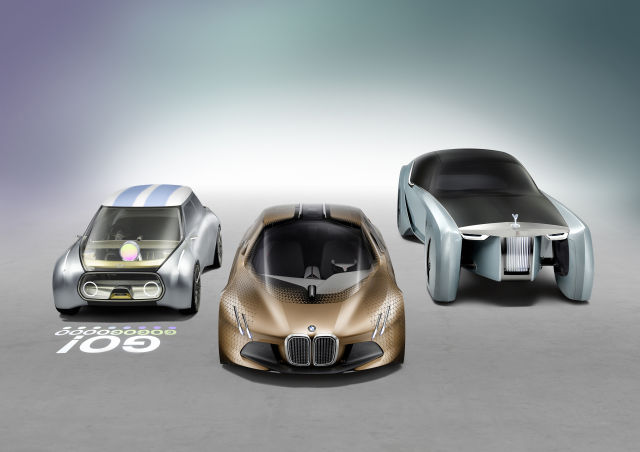
As part of BMW Group's 100th anniversary, the company designed these three concepts for mini, BMW, and Rolls Royce. (credit: BMW)

On Friday morning, BMW, Intel, and Mobileye announced a collaboration that will see a fully autonomous car on sale by 2021. The car will be called the iNEXT, building on BMW's i sub-brand that currently includes a battery electric vehicle city car (the i3) and a hybrid sports car (the i8). What's more, the three companies want to work with other automakers to create an open platform for autonomous driving.

Intel's current processors are already being used by OEMs in their research fleets of self-driving cars, and Mobileye's hardware and algorithms power many of the semi-autonomous cars already on our roads. And even though one of BMW's core values is building "the ultimate driving machine," the Bavarian automaker recognizes that sometimes we don't want to drive ourselves, showing off an autonomous i8 concept at CES in January.

The plan is to develop a platform that will support everything from "level 3" self-driving (where a human driver can be handed back control within several seconds) to "level 5," where the vehicle can complete an entire journey with no human control at all.

Read 2 remaining paragraphs | Comments