Bristol Cars—the thinking person’s car company—is back with a Bullet

A departure from its normal fare—if any Bristol could be called “normal.”

One of my favorite car companies is the quirky UK outfit Bristol Motors. I admit, the styling hasn't always been for everyone, but I adore all their clever aerospace-inspired touches.

Five years ago, things were looking bleak for a company many thought a relic of bygone times. The Fighter—a 200mph GT with the V10 from of a Dodge Viper in the nose—failed to find much of an audience in the 21st century, leading to insolvency. But new owners took over, and the past two years have seen occasional, tantalizing announcements about a new car—Project Pinnacle. Now, the wraps are off: meet the Bristol Bullet.

Before we get to the Bullet, a little history: originally a division of the Bristol Aeroplane Company, merger after merger turned Bristol Cars into some percentage of BAE Systems. Bristol started building cars after World War II—powered by BMW's 328 racing engine thanks to post-war reparations—and spun off the business in 1960 once the UK's aviation industry began to condense on government orders.

Read 3 remaining paragraphs | Comments

Is Elon Musk serious about the Tesla Semi?

Elon Musk’s masterplan part 2 calls for electric semis, but do they make sense?

Out of all of Elon Musk's recent "Master Plan Part Deux," the part that really caught our eye was a short paragraph about a Tesla semi. Much of the rest—solar, autonomous driving, ride-sharing—wasn't exactly unforeseen. But the idea of a heavy duty Tesla electric vehicle took us by surprise and left us scratching our heads. Tesla isn't the only company going after this market; Wrightspeed, Proterra, and BYD are already building heavy duty urban electric vehicles, and Mercedes-Benz is about to enter the fray. The Nikola Motor Company (no connection to Tesla Motors) already has 7,000 orders for a zero-emission heavy duty freight hauler that won't be revealed until December. To find out if our confusion over the Tesla Semi is unwarranted, we spoke to some of the big players in the heavy duty EV market.

Even though heavy duty vehicles only account for about eight percent of US carbon emissions (light duty vehicles make up roughly 20 percent), Wrightspeed CEO Ian Wright says electrifying that sector makes more economic sense. In fact, Wright doesn't think the economics work in favor of electric passenger vehicles. "A Nissan Leaf is twice the price of a Versa and you only save $800 a year," he told Ars, "that's a 20-year payback time."

Wright goes on:

Read 6 remaining paragraphs | Comments
Meet some of the startups trying to take the pain out of buying a new car

One in four 18- to 34-year-olds would rather have a root canal than go to the dealership.

(credit: Getty x Aurich x GITS:SAC)

Regardless of whether you love cars or not, you probably aren't a fan of the process to actually buy one. Visiting a dealership to purchase a car—new or used—is a gigantic hassle. First, you have to persuade them to let you test-drive one, and success usually means 10 minutes on side streets with a salesperson sitting next to you. Then there are the hours of negotiation, full of obfuscation and upselling. The salesdroid often does their best to get you to sign a finance agreement that's most beneficial to them rather than you, the customer. Unsurprisingly, a recent poll found that most of us are deeply unsatisfied with the entire process.

The poll was commissioned by Beepi, one of a number of startups that's trying to use the Internet to change the way we purchase our vehicles in much the same way Amazon revolutionized the book market. According to Beepi, three in five Americans feel like they're being taken advantage of when it comes to buying a car, and the dissatisfaction is greater the younger you are. Tellingly, 34 percent of 18- to 34-year-olds would rather wait in line at the DMV than go to a dealership; 24 percent say they'd even rather have a root canal.

"For decades now people have been buying a car the same way their grandparents did," said Alex Lloyd, Beepi's head of content. "It's not a very pleasant experience."

Read 7 remaining paragraphs | Comments

Automotive ADD: Why Red Bull Global Rallycross might save motorsport

650 horsepower flame-spitting airborne action in Washington, DC.

Nelson Piquet Jr takes me for a ride in his Global Rallycross Ford Fiesta. (video link)

WASHINGTON, DC—Red Bull Global Rallycross (GRC) paid its annual visit to the nation's capital this past weekend. As a form of racing, rallycross has been doing something few other series have managed in recent years—it's growing new fans and appealing to kids who, by and large, are more interested in getting the latest phone than a driver's license. With that in mind, we spent a couple of days at RFK Stadium watching the action and talking to some of the drivers to find out what makes this flavor of the sport so successful.

A brief primer: the cars all start life as regular production cars—Volkswagen Beetles, Ford Fiestas, and so on. They're eventually stripped down and highly modified. Highly turbocharged two-liter engines pump out more than 600hp, driving all four wheels. The tracks are a mix of tarmac and gravel and include dramatic jump over a dirt ramp. And the races are fast and furious, a series of short heats with plenty of opportunity for door-banging and paint-trading.

Read 10 remaining paragraphs | Comments

Formula E gets ready for season three with a striking new look

The all-electric racing series has gone for a bold look.

Formula E—the world's first fully electric racing series—recently wrapped its second season with a close championship fight in London. Ahead of the start of the third season later this year, the series has just unveiled a revised version of the Spark-Renault SRT_01 cars that each of the 10 teams will race in cities around the globe.

In fact, from the wheels back, the cars are basically the same; the big change is a striking new front wing, meant to make the car look more aggressive:

"I like the look of the new front wing—it looks a little bit more futuristic, and from inside the car you can see the top part of the wing, so visually for the driver there is also a small change," said Sebastian Buemi, the Swiss driver and reigning Formula E champion. "We want Formula E to look different and be different, and the new wing is a good way of showing that. I don’t think it will make too big of an impact on aero which isn’t in the ethos of this championship—but it’s a good way to show visual development heading to Hong Kong for the start of season three."

Read 2 remaining paragraphs | Comments

Tesla and Mobileye call it quits; will the car company build its own sensors?

The divorce is probably fallout from May’s fatal Tesla Model S crash.

Mobileye Co-founder, CTO and Chairman Amnon Shashua speaks at a Volkswagen press event at CES 2016. (credit: Getty Images | David Becker)

If you're a carmaker looking to give your vehicles some computer vision, your first port of call is probably the Israeli company Mobileye. As we detailed recently, Mobileye's EyeQ system-on-a-chip can be found inside most semi-autonomous cars on our roads, Tesla included. In fact, Mobileye CTO Amnon Shashua gave a lengthy technical presentation at CES in January on how Mobileye's use of deep neural networks enable Tesla's Autopilot functions. (Here's a deep dive into the tech over at WCCFTech.) But on Tuesday, Shashua announced during a Q2 financial results conference call that the relationship between the two companies will end.

In a statement to Ars, Mobileye said that its work with Tesla will not extend past the EyeQ3, the current system-on-a-chip found in Autopilot-capable Model S and Model X electric vehicles. Mobileye will continue to support current vehicles, including software fixes for crash avoidance and auto-steering.

"Nevertheless, in our view, moving toward more advanced autonomy is a paradigm shift both in terms of function complexity and the need to ensure an extremely high level of safety," the company wrote. "There is much at stake here, to Mobileye’s reputation and to the industry at large.  Mobileye believes that achieving this objective requires partnerships that go beyond the typical OEM / supplier relationship, such as our recently announced collaboration with BMW and Intel.  Mobileye will continue to pursue similar such relationships."

Read 4 remaining paragraphs | Comments

California closes the Steve Jobs license plate loophole

The law goes into effect in 2019 and will provide the state with $19 million a year.

(credit: Aurich Lawson)

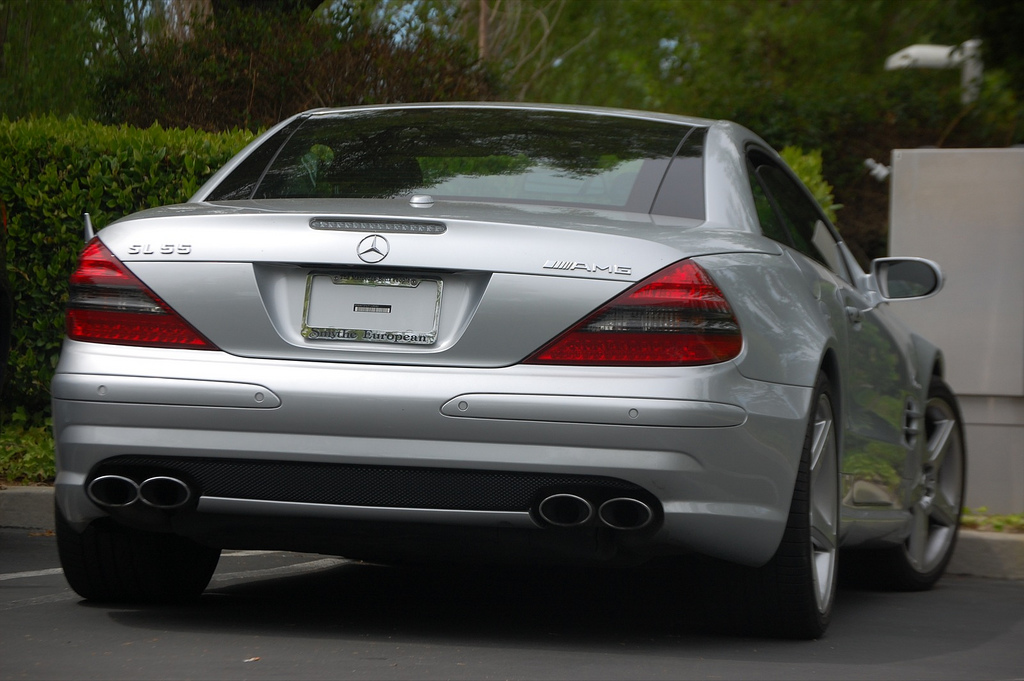
One of the many things Steve Jobs was famous for was his refusal to put a license plate on the back of his car, a Mercedes-Benz SL55 AMG. Jobs—or someone close to him—spotted a loophole in California DMV regulations allowing six months of grace before a license plate had to be attached to a new car. As a result, the Apple supremo maintained a rolling six-month lease on a series of new SL55 AMGs, replacing one with another just before the grace period ran out.

Jobs is no longer with us, but in case any of his disciples were in the habit of copying his phobia of license plates, watch out. On Monday, California Governor Jerry Brown signed a new law that does away with the loophole. From 2019, California joins most of the other states in the nation by requiring newly bought cars to be issued temporary license plates. Additionally, the law will create a system to allow car sellers to report details of the sale to the DMV, including the date of sale and the names and addresses of the dealer and purchaser.

The bill (AB516) was the work of California Speaker pro Tem Kevin Mullin and was inspired by the hit-and-run death of Michael Bonanomi. Bonanomi was killed by a car wearing paper dealer plates in 2013, and no one has ever been identified as the driver. "While this law will not bring Michael back, in the future it will go a long way in making sure that an offending vehicle and its driver are easier to identify and bring to justice," Mullin wrote in a statement.

Read 1 remaining paragraphs | Comments

Chevrolet hits it out of the park with the 2017 Corvette Grand Sport

All the suspension and aero goodies from the Z06 with none of the overheating.

Enlarge (credit: Jonathan Gitlin)

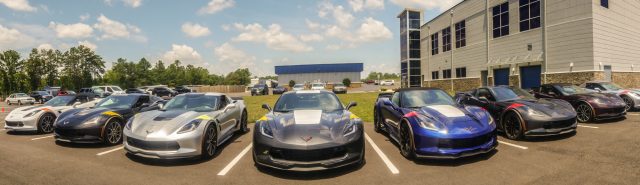
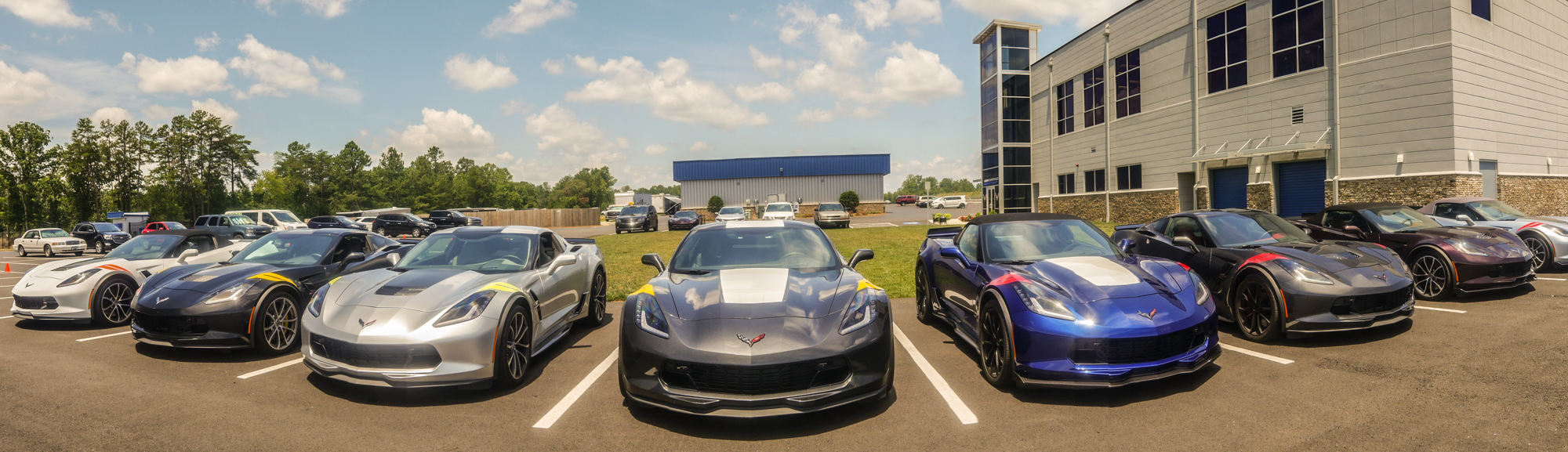
ATLANTA—Well folks, they've done it. With the 2017 Corvette Grand Sport, Chevrolet may well have built the best Corvette ever. That was our take-home message after a day spent driving the car at Atlanta Motorsports Park and on the sinuous nearby mountain roads. The concept behind the car is simple but effective: carry over all the suspension and aerodynamic goodies from the range-topping Z06 without the overheating problems that have beset that model's supercharged 650hp (484kW) engine. Oh, and it's a lot cheaper than the Z06 too—just $66,445 for the coupe.

First, a little history: the Grand Sport name was first attached to the Corvette way back in 1962. The father of the Corvette, Zora Arkus-Duntov, wanted to take the car racing. The plan was to make 125 Grand Sports to race at Le Mans, Sebring, and elsewhere, competing for glory against thoroughbred European machines like Jaguar's Low Drag E-Type and Ferrari's legendary 250 GTO. Sadly, corporate edicts at the time forbade GM from creating a factory racing program, and Arkus-Duntov's plan was rumbled by management. Instead of the planned 125 cars, only five were built in the end.

The Grand Sport moniker showed up again a couple of decades later, this time as a limited edition run-out model for the C4 Corvette (just 1000 were built). The second Grand Sport was distinguishable from lesser 'Vettes by its deep Admiral blue paint. Adorned with a white stripe and a pair of red hash marks on the front fenders, it also featured bulging rear arches and a 330hp (246kW) LT4 V8. After skipping a generation to the C6 Corvette, the next Grand Sport was actually the best-selling variant of that particular car. Released in 2010—and finally available as a convertible as well as a coupe—more than 28,000 were sold. But that was then, and this is now, and you probably want to know about the new car.

Read 14 remaining paragraphs | Comments

The White House hits the accelerator pedal to increase electric vehicle adoption

There’s a coalition of car companies, utilities, and charging networks on board.

(credit: Getty Images | DIMITAR DILKOFF/AFP)

The news earlier this week that the ambitious 54.5mpg Corporate Average Fuel Efficiency target is dead in the water was unwelcome for those worried about the ever-growing problem of climate change. But we can take some cheer from yesterday's announcement from the White House detailing plans to boost the uptake of electric vehicles here in the United States.

The plan involves a concerted effort from the government (the Department of Energy, Department of Transportation, Environmental Protection Agency, US Air Force and US Army) as well as a number of states, utilities companies, automakers, and EV infrastructure companies that is meant to make life a lot easier for EV drivers in the coming years.

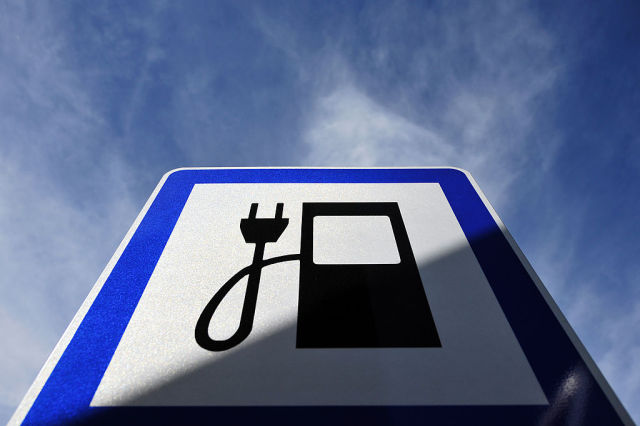
As we've repeatedly noted, it's all well and good being able to buy an electric car, but widespread adoption will require the same kind of infrastructure support that already exists for fossil fueled vehicles. That's where this plan comes in. Among the specific measures announced there is $4.5 billion in loan guarantees for companies building charging facilities, the creation of alternative fuel and zero emissions corridors, more EVs on state and federal government fleets, and a plan for hackathons to find new solutions to topping up EV batteries.

Read 6 remaining paragraphs | Comments

Forget about 54.5 mpg by 2025. Americans love their SUVs too much

With a 50:50 mix of cars to trucks & SUVs, it isn’t possible.

The US love affair with big vehicles hasn't gone away. (credit: RL GNZLZ @ Flickr)

Way back in 2012, the US government released a relatively ambitious plan to increase US passenger fleet average fuel efficiency to 54.5mpg. Back then, we looked at some of the new technologies that automakers were adopting in order to meet this goal, plenty of which can now be found in our cars. But despite lots of hard work by the boffins in automotive research centers in the US and elsewhere, the 54.5mpg Corporate Average Fuel Efficiency (CAFE) goal is dead in the water.

Americans, it seems, are just too in love with their light trucks and SUVs to make it happen. That's according to a new report from the Environmental Protection Agency, the National Highway Traffic Safety Administration, and the California Air Resources Board. The three agencies have published a Draft Technical Assessment Report, "Midterm Evaluation of Light-duty Vehicle GHG Emissions Standards for Model Years 2022-2025" (PDF), that lays out the case for why we could meet the 2012 plan—which would have doubled fleet fuel economy, halved greenhouse gas emissions, and saved 12 billion barrels of oil and prevented 6 billion tonnes of CO2 from entering the atmosphere between now and 2025—but won't.

The report—which stretches out to over 1200 pages—spends plenty of time discussing cool technological advances, including improvements to gasoline internal combustion engines, better transmissions, mild (48v) and high-voltage hybrids, battery electric vehicles, fuel cell EVs, and more, but the bad news gets going in Chapter 12. The report projects that 46.3mpg is where we'll be when it comes to CAFE in 2025, a drop of 15 percent compared to where we'd hoped to be.

Read 4 remaining paragraphs | Comments