Cruising in Manhattan in the Schulich Delta, a solar-powered race car

The slowest car we’ve ridden in this year was also one of the coolest.

We take a ride in the Schulich Delta, a solar race car built by students at the University of Calgary. Video produced by Jennifer Hahn. (video link)


A car doesn't have to be something like a McLaren P1 to push our buttons. One of the most exciting rides we had in 2015 was also the least-powerful: the Schulich Delta, a solar-powered racer designed and built by a team of students at the University of Calgary. The ride was courtesy of National Geographic's Breakthrough, which had brought the University's solar car team to New York as part of the same promotion as the McLaren. The Delta was also made out of carbon fiber composites, but after that it's harder to find similarities with the P1.

Read 10 remaining paragraphs | Comments
Building an archive on the Moon (and doing science, too)

In theory, an extraterrestrial data archive will pay for some unique science.

(credit: Lunar Mission One)

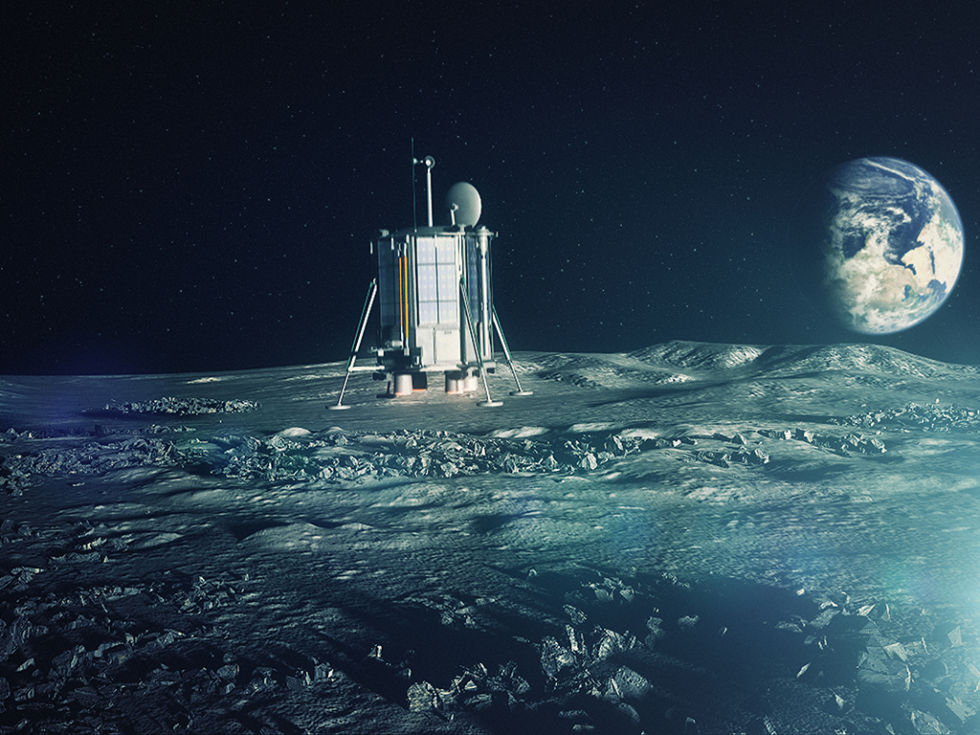
Is there a business case that would support a private, unmanned mission to the moon? The people at Lunar Mission One certainly think so. If they're right, an unmanned lander will touch down on a crater rim near the Moon's south pole in 2024. Part of the lander will be devoted to scientific exploration, drilling through the regolith into the underlying rock and then analyzing the cores.

Once the borehole is drilled, the lander will fill it with what Lunar Mission One calls "the ultimate time capsule." This will actually be a pair of archives—one public, containing a digital record of life on Earth, and a second private archive. The latter, with up to 10 million individual "digital memory boxes," is what's going to pay for the mission. We recently spoke with David Iron, the founder of Lunar Mission One, to find out a bit more.

Iron has a lengthy background in the space industry, and he came up with the idea of crowdfunding a moon landing after the UK government asked him to put together the case for funding space exploration. Iron said he was thinking about how to persuade people to pay to put their stuff on the moon. "Information is OK, but you'll only get a few tens of dollars from each person, which isn't enough," he told Ars. "It wasn't until I realized that we can also store hair, because it's incredibly small and light, that people would pay hundreds of dollars for that, and I realized we had a business case."

Read 22 remaining paragraphs | Comments

Environmental Protection Agency sets new renewable fuel standards for 2016

Renewables will make up 10.1 percent of the fuel supply, mostly from corn.

(credit: Robenalt @ Flickr)

For the first time since 2013, the US Environmental Protection Agency has issued renewable fuel standards for the nation, upping the amount of ethanol in our gasoline supply. In 2016, renewable fuels—mostly corn ethanol—must make up 10.10 percent of the national fuel supply, or 18.1 billion gallons. The EPA also issued final renewable fuel standard for 2014 and 2015, showing that next year's target is a slight increase over the past two years. In 2014—the last year that the Energy Information Administration has calculated total US gasoline consumption (136.8 billion gallons), the total percentage of renewable fuels was 9.2 percent, or 16.3 billion gallons.

Almost all of this ethanol will make its way into our cars in the form of E10 gasoline, which is a blend of 10 percent ethanol and 90 percent gasoline. E10 is widespread throughout the US, and mandated in a number of states (mainly throughout the midwest). The ethanol acts as an oxygenator and anti-knocking agent for the fuel, replacing the groundwater pollutant MTBE (which itself replaced tetraethyl lead). E10 is slightly less energy dense than "regular" gasoline and so cars' fuel economy will be three to four percent lower when using the fuel. This is offset by slight decreases in CO emissions (as well as the intended reduction in greenhouse gases).

In 2016 the overall percentage of renewable fuels will be just over 10 percent, leading to criticism from the oil industry warning about damage to our cars' engines and fuel systems. At higher concentrations, ethanol-gasoline blends can be corrosive to some metals and materials used for hoses, gaskets, and seals; generally blends above E10 (E15 and E85) should only be used by "flex-fuel" vehicles that have been designed to tolerate the increased ethanol levels. Neither have much popularity in the US though, being confined mainly to corn-producing states in the midwest.

Read 3 remaining paragraphs | Comments

Bugatti is back in 2016 with the 1500hp Chiron

The Veyron’s successor survives VW’s scandal.

(credit: Bugatti)

One of the biggest thrillers being written in the car industry right now is what Volkswagen is doing to recover from its cheating diesel scandal. Estimates of the cost to VW Group vary widely, but most agree that $10 billion is probably on the low end. That's a lot of cash, even for one of the world's largest auto manufacturers, and questions abound over which projects, new cars, or even brands might find themselves in for the corporate axe. The latest plot twist will take many by surprise: VW-owned Bugatti will indeed build a replacement for the Veyron.

In October we learned that the new Phaeton—a technological flagship sedan that no one bought—would survive as an electric vehicle. R&D spending would be cut, too; VW was spending around $12.6 billion a year on research, more than any of its competitors. The Bugatti Chiron was thought to be a goner for sure. VW Group is thought to have lost almost $5 million on every Veyron it sold, and continuing to build ornate rocketships for plutocrats could seem at odds with a sober corporate rehabilitation strategy. But more than 100 orders were already on the books, and the car will debut in 2016, the company announced today.

How does one top a Veyron? According to Bugatti boss Wolfgang Dürheimer, "the Chiron will set new standards in every respect. We will continue to produce the world’s most powerful, fastest, most luxurious and most exclusive production super sports car. This is the claim of Bugatti and our customers." The new car will still use a turbocharged 8L W16 engine and all-wheel drive, but power is rumored to be up 50 percent at almost 1500hp (1100kW). Expect a mighty price tag, too.

Read 2 remaining paragraphs | Comments