The unethical superhero: Why science in The Flash needs some oversight

Secret prisons, surreptitious DNA testing, and a disregard of public safety.

This is the view you'd have if you were imprisoned in the Flash's secret extrajudicial detention center. (credit: The CW Network)

Marvel is fast becoming synonymous with the superhero—a pair of blockbusters and two critically praised Netflix shows just this year will have that effect. But they aren't the only game in (cape)town.

DC Comics might not have anything as coherent as a cinematic universe road-mapped out to the end of the decade, and Batman's box office success has yet to rub off on the Green Lantern or a 21st-century Superman. But the company is making a serious go at competent TV series as of late, particularly The CW series The Flash. However, as much as I've found myself enjoying the adventures of Barry Allen and his comrades, it can hold my peace no longer. It's time for someone to say it: Science in Central City is in desperate need of some ethical oversight.

Time and again, the Flash and his team—all trained scientists—ignore fundamental protections of research subjects and a disregard for human rights. That's no small quibble for a tentpole superhero supposedly interested in justice and doing good. But, as I'll explore, there are real-world historical precedents for many of these transgressions.

Read 12 remaining paragraphs | Comments
CGI gives us the first glimpse inside Porsche’s electric Mission E

Mackevision builds virtual cars for commercials and configurators.

Porsche has just greenlit the Mission E electric vehicle for production in the next few years. Video by Mackevision.

Have you ever watched a car commercial that features exploding cutaway views of cars in motion or impossible location shots, then wondered where the CGI cars they used came from?

As it happens, many of them are the same models used in online car configurators—those 3D renders of vehicles that let you play around with different paint or trim options. Since car companies are better at building physical cars than 3D models of cars, they have long partnered with CGI firms like Mackevision (which also does effects work for Game of Thrones) to build these digital models.

It's a job that Mackevision's CEO Armin Pohl described to Ars as "a blend between magic and logic" when we spoke recently. One of the company's most recent efforts was work with Porsche on the Mission E, which Mackevision has shared with us here.

Read 6 remaining paragraphs | Comments

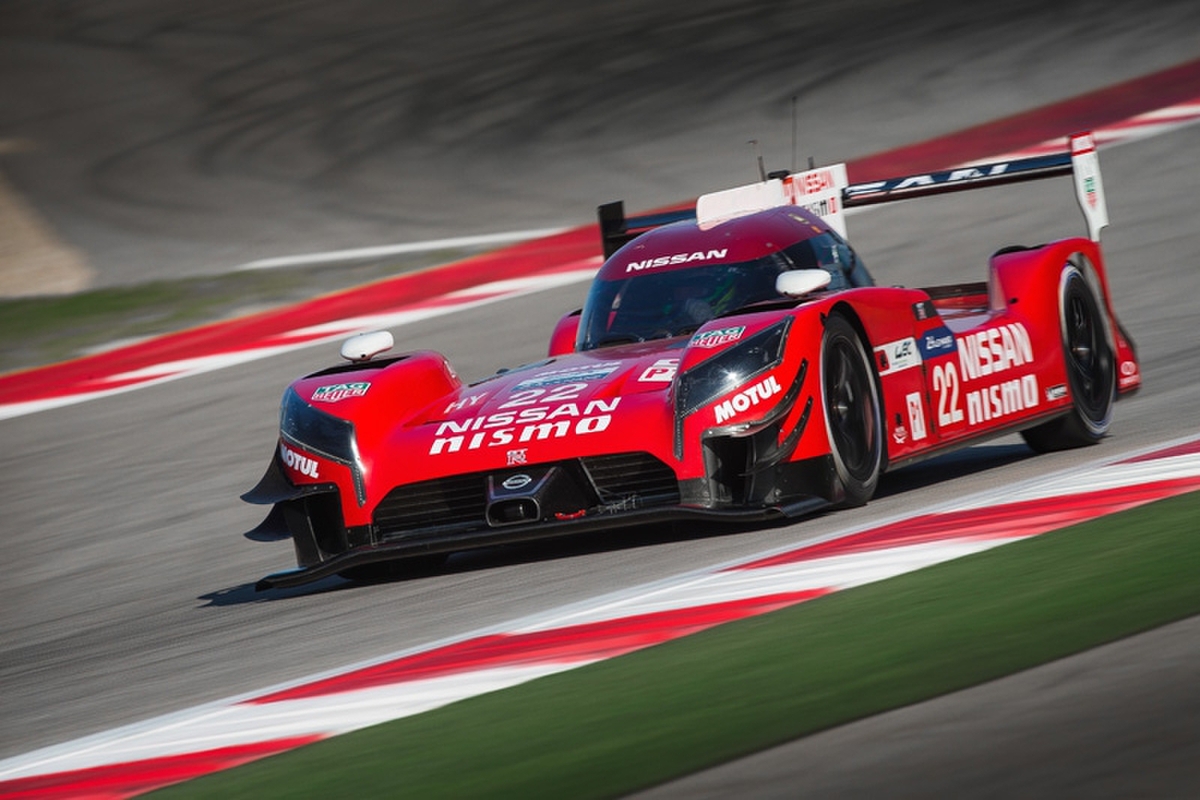
Nissan’s front-engined front-wheel drive hybrid Le Mans car is no more

It was a brave idea, but not a very good one.

One of the most interesting—and certainly one of the most hyped—stories in motorsport this year has been Nissan's GT-R LM. And now that story has come to a close, following an announcement earlier today that the Japanese automaker is pulling the plug on the racer. The GT-R LM was designed to win the 24 Hours of Le Mans (and the other races in the World Endurance Championship), but Nissan will not contest the 2016 season of the WEC. Godzilla has been slain.

The GT-R LM was a brave idea. The car was the brainchild of Bon Bowlby, and it turned its back on everything we've learned about racing cars in the years since John Cooper first moved the engine behind the driver in the 1950s. Bowlby figured that the benefits of a mid-engine car were offset by the large rear wing it needs (necessary since the car's weight is biased toward the rear). Convinced that there was another way, for the GT-R LM he moved the cockpit right to the back of the car, with the engine and hybrid system just behind the front axle.

But the GT-R LM went further. Under the current rules, Le Mans Prototypes have to be hybrids; they can drive one pair of wheels with power from an internal combustion engine and are then allowed two other hybrid systems (motor-generator units on each axle, for example, or on one axle and a turbocharger). The GT-R's turbocharged V6 engine would power the front wheels and recover kinetic energy under braking from all four, storing that energy in a flywheel. But instead of using well-proven electric motor-generators and an electrically driven flywheel—a race-winning combination for Audi—the hybrid system was going to be entirely mechanical, with cogs and gears and driveshafts connecting each corner of the car with the flywheel.

Read 3 remaining paragraphs | Comments

GM might be planning to add electricity to the Corvette’s screaming V8

Trademark filing suggests there could be a Corvette “E-Ray” hybrid in the future.

Just imagine one of these could do 30mpg even driven hard. (credit: Jonathan Gitlin)

Since the 1960s, whether or not General Motors would finally put a mid-engine Corvette into production has been a perennial question for 'Vette-watchers. Now they've got a new puzzle: is a hybrid Corvette on the way? The answer may be yes, based on a trademark that GM filed last week.

In fact, we asked Corvette's product manager, Harlan Charles, exactly that question at the Bowling Green, Kentucky, Corvette plant earlier this year: will we ever see a hybrid 'Vette? Predictably, Charles refused to be drawn into the question and only commented that someone, somewhere within GM R&D was almost certainly looking at the idea.

The idea of a hybrid Corvette makes a lot of sense. If the sports car wants a future in a warming world, the days of single-digit fuel economy for the more muscle-bound members of the class will need to end. BMW's i8 has already shown that's possible. What's more, General Motors has a wealth of electrification know-how now that the Volt is in its second generation.

Read 1 remaining paragraphs | Comments

Hacker hacks off Tesla with claims of self-driving car

George Hotz hacked his Acura to be autonomous, firing shots at Tesla on the way.

Yesterday, Bloomberg Business published a story about a San Francisco hacker who claims to have built his own self-driving car in just a few months. George Hotz, who was the first person to hack the iPhone, has modified his Acura ILX and taught it to drive on freeways around the Bay Area. According to Bloomberg's article, Hotz had been in talks with Elon Musk about replacing that company's supplier of machine vision systems, Mobileye, until Musk offered Hotz a job, something the hacker did not appreciate.

Tesla, it turns out, did not like the way it and Mobileye were characterized in the article. In an online rebuttal, Tesla wrote "[w]e think it is extremely unlikely that a single person or even a small company that lacks extensive engineering validation capability will be able to produce an autonomous driving system that can be deployed to production vehicles." Mobileye's technology is now used by a host of OEMs and is one of the reasons Musk has said that optical sensors alone should be sufficient for autonomous vehicles.

Hotz's Acura ILX has been modified to contain a glovebox full of electronics, including a lidar puck on the roof and a forward-facing optical camera. Speaking to Bloomberg, Hotz said the secret to his car was the AI, which he has plans to refine while working as an Uber driver.

Read 1 remaining paragraphs | Comments

Self-driving Ford Fusions are coming to California next year

Ford is the 11th company to obtain an autonomous driving permit for the state.

Apart from the sensor bar on the roof, this Ford Fusion Hybrid looks just like a normal car. (credit: Jonathan Gitlin)

Even more robots are coming to California's roads next year. Yesterday, Ford announced that it will start testing its autonomous Fusion sedans in the state now that it is officially enrolled in the California Autonomous Vehicle Testing Program. The company opened a new R&D center in Palo Alto at the beginning of the year, which among other projects has been working on virtual simulations of autonomous driving as well as sensor fusion to improve the way its cars perceive the world around them.

Ford is the 11th group to obtain a California driving license for its autonomous cars, joining other OEMs (BMW, Mercedes-Benz, Honda, Nissan, Tesla, and Volkswagen Group), tier one suppliers (Bosch and Delphi), and tech companies (Cruise Automation and Google).

A condition of the self-driving car regulations requires companies to provide California's DMV with a report any time one of their cars is involved in a collision. Since the rules went into effect in September 2014, there have been a total of 10 incidents. The first, in October 2014, involved one of Delphi's test vehicles, although it was being driven by a human at the time. The nine other incidents all involve Google's cars, seven of which were being driven autonomously.

Read 1 remaining paragraphs | Comments

That cat is electric! Jaguar will enter Formula E next season

The company plans to use Formula E to develop its electrification technologies.

(credit: Jaguar Land Rover)

Jaguar has been on quite the roll recently. The company made its name in the 1950s and 1960s with cars like the C-Type (the first use of disc brakes in a car) and the E-Type. But by the mid-1980s, things weren't looking so good. Owned for a time by British Leyland, it suffered from industrial malaise and chronic underinvestment. Things looked better under Ford's ownership for a while, but a foray into Formula 1 proved disastrous, and a misguided reliance on focus groups led to underwhelmingly retro-styled cars like X-Type (built on a Ford platform) and XJ (X350, which under that boring skin was actually quite clever).

Ford sold Jaguar and Land Rover to Tata Motors in 2008. And the Indian parent company has done what many Jaguar fans—your author included—had been crying out for: invested heavily in the brand. Lightweight aluminum chassis have been a focus, but so too has technology. The C-X75 supercar may never have made it to the showroom (although you can see it in Spectre), but the boffins at the company's Gaydon HQ have been working on some rather exciting stuff like remote-control via smartphones and full-windscreen heads-up displays. Today, the company announced that it will return to the racetrack with a full factory effort, competing in Formula E next season (Autumn 2016).

Jaguar will partner with Williams Advanced Engineering (a sister company to the Williams F1 team); the companies collaborated on the C-X75, and Williams currently provides the batteries used by every Formula E car. In a press release, Jaguar Land Rover's engineering director Nick Rogers said, "Electric vehicles will absolutely play a role in Jaguar Land Rover's future product portfolio, and Formula E will give us a unique opportunity to further our development of electrification technologies. The Championship will enable us to engineer and test our advanced technologies under extreme performance conditions."

Read 3 remaining paragraphs | Comments

On the road in the Flux Capacitor, Europe’s fastest street-legal EV

The souped-up electric car from the ’70s will blow the doors off a Tesla Model S.

We got a ride in Jonny Smith's latest labor of love, the Flux Capacitor. Video shot by Elle Cayabyab Gitlin. (video link)

Jonny Smith is a British car journalist (you may know him best from Fifth Gear) with an interesting perspective on all things automotive. His current project—called the Flux Capacitor—is no exception. The idea is simple: take one 1970s electric vehicle—the kind that (fairly or not) gave electric cars a bad name—and replace the running gear and batteries with something much more up-to-date, making Europe's fastest street-legal EV in the process. We've been eagerly following Smith's project for a while now, and while visiting the UK last month finally we got the opportunity to take a closer look and go for a ride.

Is it surprising that we love the Flux Capacitor here at Ars? After all, overclocking older hardware and the color orange are two things intimately associated with this site. The Flux Capacitor started life as an Enfield 8000, an EV commissioned by a Greek tycoon following the oil shock of 1973. It was designed by John Ackroyd—also responsible for the Thrust 2 land speed record car—and featured an aluminum body, eight 12v batteries, and a direct drive 8hp (6kW) electric motor. It had a top speed of 40mph (64km/h), hit 30mph (48km/h) in 12.5 seconds, and had a range of between 35 and 55 miles (56-89km).

Read 8 remaining paragraphs | Comments

Digging into the data: How to make a faster race car driver

We talk data analysis with CJ Wilson’s championship-winning team.

The #3 CJ Wilson Racing Mazda MX-5 leads its sister car through one of the Circuit of the Americas' brightly painted turns. (credit: Sideline Sports Photography)

When it comes to natural talent, racing a car is a lot like most other sports. Innate ability counts, of course, but it's no substitute for hard work. Data also has its role to play, enabled at the race track by rugged devices with embedded processors and GPS. It's something we've delved into at a strictly amateur level in the past, but we've been curious to see how the pros do things. Enter CJ Wilson Racing.

If you're more of a fan of stick-and-ball sports than the four-wheeled kind, you'll probably know CJ Wilson for his day job—pitching for the Anaheim Angels Major League Baseball team. However, Wilson is also a committed gearhead. He likes fast cars—he owns a McLaren P1, an R32 Nismo GTR, and a Dodge Viper ACR among others—and since 2010 he's had his own racing team. The team started off racing in the Playboy Mazda MX5 Cup (a one-make series for Miatas) before graduating to the Continental Tire Sportscar Challenge.

2015 was a good year for CJ Wilson racing. It raced Mazda MX-5s in the Street Tuner (ST) class, for cars that are allowed relatively few modifications from the road car. The #5 car, driven by Steven McAllen and Chad McCumbee, won at Watkins Glen and Lime Rock Park. Coupled with two more podiums (Sebring and Austin) and several other Top 10 finishes, it was enough to win the 2015 ST championship. The team also ran a second car at some of the races, the #3 driven by Marc Miller and Tyler McQuarrie, and we sat down with them—along with team manager Andris Laivins—in the team's transporter at the Circuit of the Americas (COTA) in Austin to learn more about how data helps them succeed.

Read 20 remaining paragraphs | Comments

VW says rulebreaking culture at root of emissions scandal

VW’s top bosses explain the company’s response to the emissions scandal

Earlier today, Volkswagen held a press conference at its headquarters in Wolfsburg, Germany, to update the world about the automaker's ongoing emissions scandal. VW CEO Matthias Müller and chairman Hans Dieter Pötsch discussed the roots of the problem, VW's proposed fixes for some of the affected cars, and the company's reorganization plans.

In fact, VW has two separate emissions problems. The first came to light in September, when the US Environmental Protection Agency sent a notice of violation to VW informing the car maker that 500,000 diesel-engined cars would have to be recalled over "defeat device software" embedded in their engine control units. VW's four-cylinder EA 198 diesel engine contains code that detects when a car undergoes an emissions test and adjusts the engine tuning. This decreases the amount of NOx compounds produced in the exhaust to legal limits, allowing the vehicle to pass the test at the cost of reduced power (and therefore efficiency).

Before long, the scandal had grown beyond the 500,000 cars sold in the US to include up to 11 million vehicles worldwide. More recently, the EPA notified VW group that the 3L V6 diesel used by VW, Audi, and Porsche also has an illegal auxiliary emissions control device.

Read 9 remaining paragraphs | Comments