Uber and Volvo partner up, robot ride-sharing starts this summer

The people of Pittsburgh will ride for free in the autonomous XC90 SUVs.

Enlarge

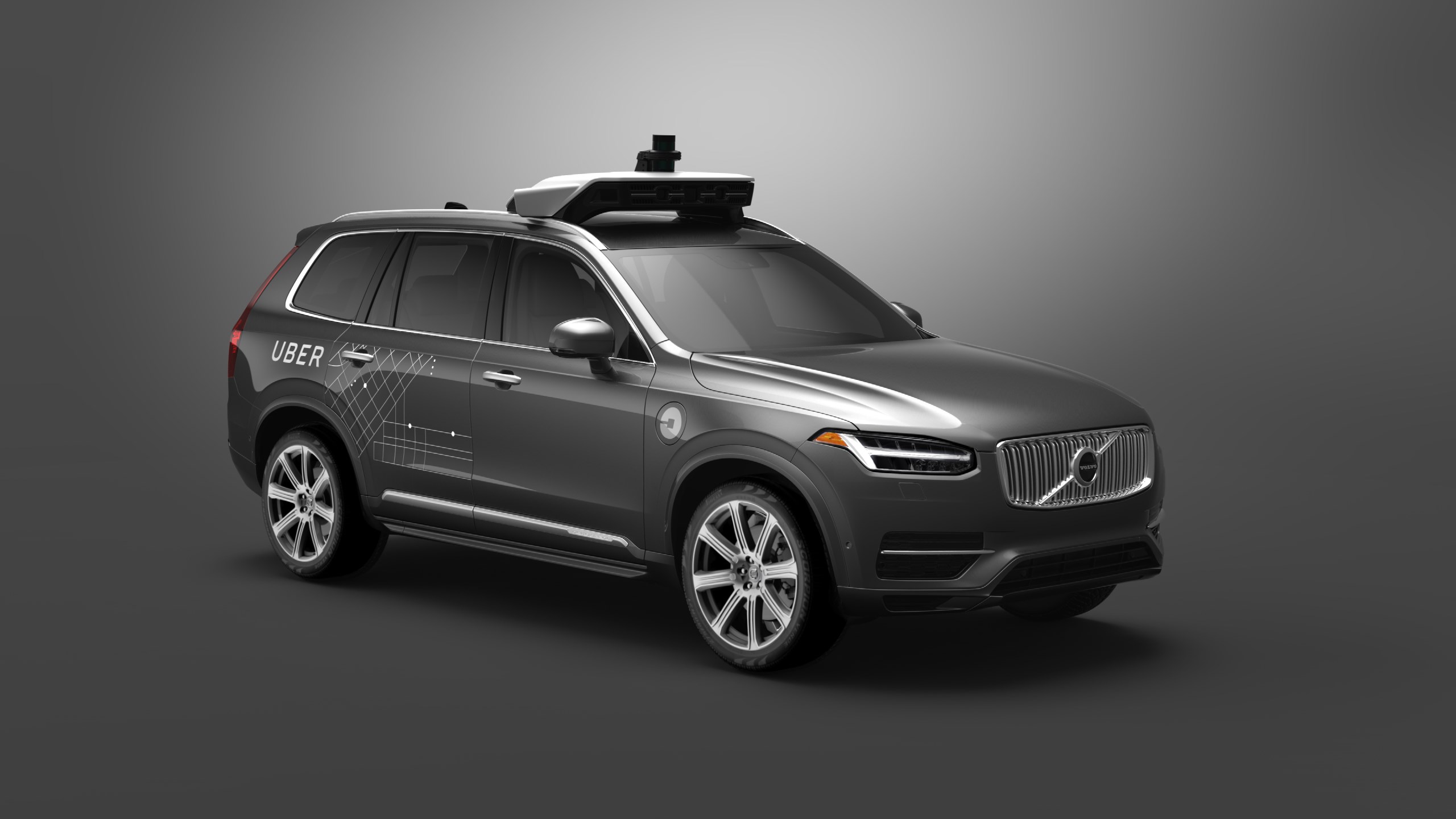
On Monday, the Ford Motor Company made news with the announcement that it will build a fleet of self-driving ride-share vehicles. Whether or not that news had any impact at Uber is unknown, but today Uber and Volvo announced plans to partner on a $300 million program to develop fully autonomous vehicles by 2021, a year that now promises plenty of self-driving vehicles (we're expecting one from BMW as well).

"Volvo is one of the most progressive and contemporary car makers in the world. It is a world leader in the development of active safety and autonomous drive technology and possesses an unrivaled safety credibility. We are very proud to be the partner of choice for Uber, one of the world’s leading technology companies. This alliance places Volvo at the heart of the current technological revolution in the automotive industry," said Håkan Samuelsson, Volvo CEO.

Uber's boss, Travis Kalanick, was similarly upbeat: "Over one million people die in car accidents every year. These are tragedies that self-driving technology can help solve, but we can’t do this alone. That’s why our partnership with a great manufacturer like Volvo is so important. Volvo is a leader in vehicle development and best-in-class when it comes to safety. By combining the capabilities of Uber and Volvo we will get to the future faster, together."

Read 4 remaining paragraphs | Comments
Ford to mass-produce a completely self-driving car within five years

Don’t expect to buy one, though; it’ll be for ride sharing only.

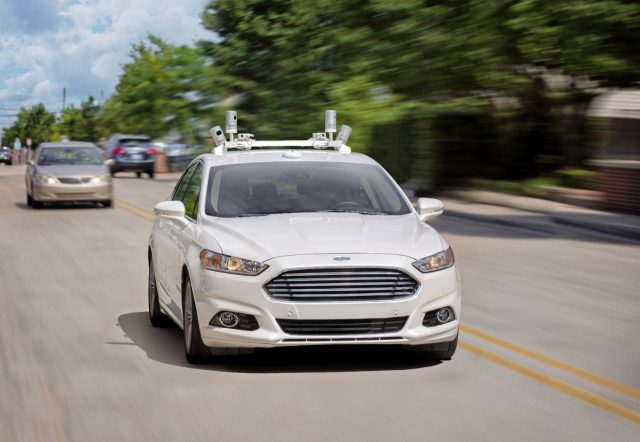
On Tuesday, the Ford Motor Company became the latest car maker committed to putting a fully autonomous car into production in the next five years. "The world is changing, and it's changing very quickly," Ford CEO Mark Fields said. The company intends to build a high-volume car capable of SAE's level 4 autonomy, but the target customer is not regular consumers—it's ride-sharing services. "Starting in 2021, if you want to get around the city without the hassle of driving or parking, Ford's new fully autonomous vehicle will be there for you," Fields said.

The announcement took place in Palo Alto, outside Ford's Silicon Valley Research and Innovation Center. As part of Ford's future plans, that research center will double in size over the next 16 months. Although Fields cited the safety implications of autonomous cars—90 percent of traffic crashes are attributable to human error, after all—he was also enthusiastic about the possibility of making transportation more accessible to the elderly, disabled, and people too young (or too disinterested) to drive themselves.

Ford has designs on being more than an automaker, too; the company's Smart Mobility pilot programs have been showing the way here. "We know there's no such thing as a one-size-fits-all transportation solution," Fields said, adding that ride-sharing would make more efficient use of vehicles, with less time wasted for people and less pollution.

Read 4 remaining paragraphs | Comments
Rimac’s Concept_One electric car drag-races a Tesla Model S and LaFerrari

Even Ludicrous mode is no match for Rimac’s powertrain.

(credit: Rimac Automobili)

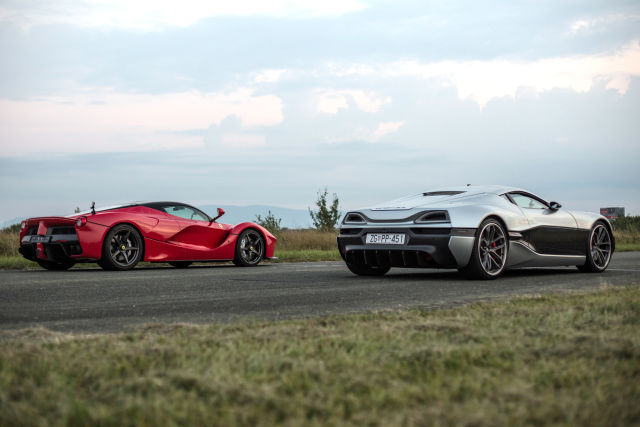
As its legion of online fans never cease to remind us, the Tesla Model S P90D is a fast car. Actually, that's selling the electric vehicle a little short. In Ludicrous mode, it's about as quick in a straight line as a McLaren 650S, no mean feat considering that the McLaren weighs 1,800lbs (815kg) less. Until now, if you wanted to go any faster in an EV, you needed to roll your own, Flux Capacitor-style. But even Jonny Smith's quarter-mile EV record may be under threat, courtesy of Rimac's Concept_One.

You may not have heard of Rimac Automobili, but the Croatian company has been impressing us for a while now. We first saw the Concept_One in the paddock at last year's Formula E race in Miami. More recently, we met up with some of its engineers in Colorado at the Pikes Peak International Hill Climb; the four-wheel torque vectoring powertrain in Nobuhiro "Monster" Tajima's car is a test-bed for the Concept_One. And Rimac has also been working with Konigsegg on the batteries and power distribution units going into the latter's Regera hybrid hypercar.

We always knew the Concept_One would be fast; it's hard to argue with 1072hp (800kW) and 1180ft-lbs (1600Nm) after all. But thanks to British YouTuber Archie Hamilton, we now know just what that means. Hamilton traveled to Rimac in Croatia and brought along a Tesla Model S P90D (yes, with Ludicrous mode) as well as a rather rarer beast—a Ferrari LaFerrari hybrid:

Read 2 remaining paragraphs | Comments

Shorter-range electric cars meet the needs of almost all US drivers

Sub-100 mile range on a single charge is sufficient for the vast majority of us.

(credit: Nissan)

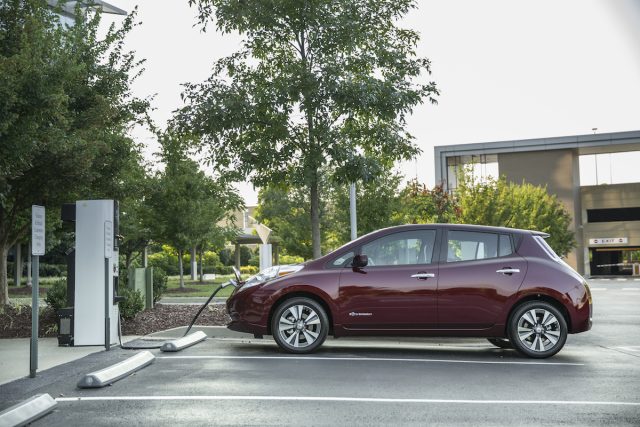
The vast majority of American drivers could switch to battery electric vehicles (BEVs) tomorrow and carry on with their lives unaffected, according to a new study in Nature Energy. What's more, those BEVs need not be a $100,000 Tesla, either. That's the conclusion from a team at MIT and the Santa Fe Institute in New Mexico that looked at the potential for BEV adoption in the US in light of current driving patterns. Perhaps most interestingly, the study found that claim to be true for a wide range of cities with very distinct geography and even per-capita gasoline consumption.

The authors—led by MIT's Zachary Needell—used the Nissan Leaf as their representative vehicle. The Leaf is one of the best-selling BEVs on the market, second only to the Tesla Model S in 2015 (10,990 sold vs 13,300 Teslas). But it's not particularly long-legged; although the vehicle got an optional battery bump from 24kWh to 30kWh for 2016, its quoted range is 107 miles on a full charge. You don't need to spend long browsing comment threads or car forums to discover that many drivers think this is too short a range for their particular use cases. Yet, Needell and colleagues disagree.

The authors use the 24kWh Nissan Leaf as the basis for their calculations, based on a probabilistic model of BEV range based on driving behavior (rather than just looking at average commute distances and BEV range). This involved using information from the National Household Travel Survey, hourly temperature data for 16 US cities, and GPS data from travel surveys in California, Atlanta, and Houston (to calculate second-by-second speed profiles of different trip types).

Read 7 remaining paragraphs | Comments

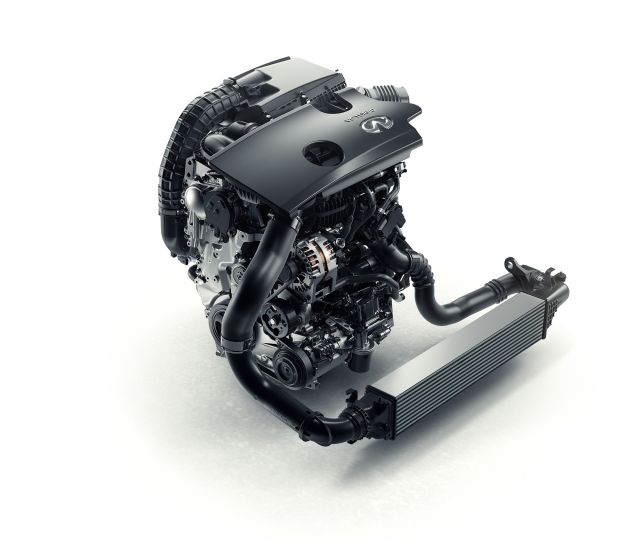
Infiniti’s variable compression engine is a huge technological leap

Clever new tech means changing compression ratios (and displacement) on the fly.

(credit: Infiniti)

One of the key variables for an internal combustion engine is its compression ratio. This is the ratio of the maximum volume within the cylinder (when the piston is at bottom dead center) and the minimum volume within the cylinder (when the piston is at top dead center). Obviously, this ratio is fixed at the point of design—the amount of travel of a piston within a cylinder is determined by the profile of the crankshaft and the length of the connecting rod between the two.

At least that has always been the case. But Infiniti plans to change that with the debut of its new VC-T engine, which is debuting at next month's Paris Motor Show.

The higher an engine's compression ratio is, the more mechanical energy it converts from the combustion of a given amount of fuel mixed with a given amount of air. But too high a ratio causes knocking—premature detonation of fuel-air mixture during the engine's compression stroke caused by high cylinder temperatures.

Read 5 remaining paragraphs | Comments

There’s a new Rogue One: A Star Wars Story trailer, and it’s awesome

Things are looking good for the first Star Wars spinoff movie.

(credit: Disney)

Are you getting excited about December? We are—and not because of the presents. Disney just dropped the official trailer for Rogue One: A Star Wars Story, which hits theaters December 16th. The film is the studio's first foray outside the adventures of the characters we've grown up with, taking place shortly before the events depicted in Episode IV. The Empire is completing work on the Death Star, and the Rebellion needs to find its weakness; it recruits Jyn Erso (played by Felicity Jones) to do so.

This isn't our first look at Rogue One. Disney released a trailer early in April replete with visuals of AT-ATs storming tropical beaches set to a melancholy piano riff of John Williams' "Force theme" punctuated by a wailing siren riff guaranteed to light up anyone's secondary somatosensory cortex. But this new trailer takes a slightly different tone, perhaps the result of studio displeasure which led to several weeks of reshoots earlier this summer.

It does give us a better look at several characters, though. There's Chirrup Imew (played by Donnie Yen), a blind warrior living on Jedha—a planet that's the source of those little crystals that make lightsabers work. And Casein Andor (Diego Luna), a captain in the Rebellion working with Erso to steal the plans to the Death Star, accompanied by a laconic droid, K2SO (Alan Tudyk). Oh, and we also get another peek at Saw Gerrera (Forest Whitaker) looking a lot like a pirate in power armor.

Read 1 remaining paragraphs | Comments

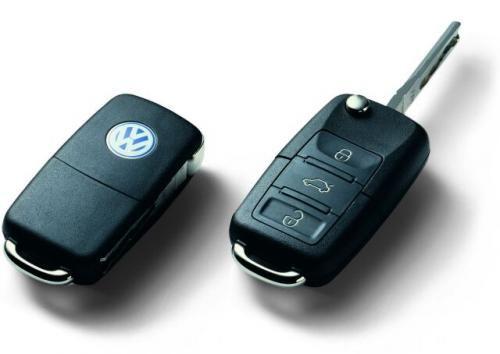
Almost every Volkswagen sold since 1995 can be unlocked with an Arduino

It’s not easy, but it is possible.

(credit: Frank Derks)

Over at Wired, Andy Greenberg reports that security researchers have discovered how to use software defined radio (SDR) to remotely unlock hundreds of millions of cars. The findings are to be presented at a security conference later this week, and detail two different vulnerabilities.

The first affects almost every car Volkswagen has sold since 1995, with only the latest Golf-based models in the clear. Led by Flavio Garcia at the University of Birmingham in the UK, the group of hackers reverse-engineered an undisclosed Volkswagen component to extract a cryptographic key value that is common to many of the company's vehicles.

Alone, the value won't do anything, but when combined with the unique value encoded on an individual vehicle's remote key fob—obtained with a little electronic eavesdropping, say—you have a functional clone that will lock or unlock that car.

Read 4 remaining paragraphs | Comments
Running hot and cold with the 2017 Chevrolet Volt

The weeks we spent testing the Volt were the hottest and coldest of the year.

tktktk

If all had gone to plan, you'd have read this article five months ago. After a short ride in Chevrolet's new Volt at CES, I was curious to see how the plug-in hybrid electric vehicle fared on the day-to-day grind. There's only so much you can learn on a few laps of a test track in Las Vegas, after all. Matching—or even bettering—the published economy figures during carefully managed events is one thing, but would the car live up to the promise of a triple-digit MPGe (miles per gallon equivalent) in practice, away from the PR people?

The second generation Volt has benefited greatly from Chevy's experience with the first car. Plenty of weight was taken out of the car, including the battery pack and motor/generator unit (MGU). It's quieter and the interior quality is a step up. It's even more parsimonious energy-wise; the official EPA numbers are 106MPGe (and 42MPG on gasoline) compared to 98MPGe (and 37MPG) for the first-gen Volt.

Read 14 remaining paragraphs | Comments

Data center disaster disrupts Delta Airlines

The airline was forced to ground all flights early this morning due to IT problems.

Long lines for Delta passengers at Logan Airport earlier this morning. (credit: Getty Images | Dina Rudick/The Boston Globe)

Chaos hit Delta Airlines early on Monday morning as a loss of power at its Atlanta data center resulted in the airline grounding all its flights worldwide for several hours. Although the company's planes are now taking to the air, Delta informed customers flying today to expect delays and cancellations.

The problem completely crippled the airline, knocking out flight operations and bookings. Although it is yet to be confirmed by Delta, a member of the FlyerTalk forums was told by the captain of their flight that the cause was a fire in the data center:

According to the flight captain of JFK-SLC this morning, a routine scheduled switch to the backup generator this morning at 2:30am caused a fire that destroyed both the backup and the primary. Firefighters took a while to extinguish the fire. Power is now back up and 400 out of the 500 servers rebooted, still waiting for the last 100 to have the whole system fully functional

This is the second severe IT-induced travel disruption in recent weeks. On July 20, Southwest Airlines lost a router in its Dallas data center, which resulted in 2,300 flight cancellations. Southwest's CEO Gary Kelly described that event as a "once-in-thousand-year flood."

Read 1 remaining paragraphs | Comments
Beauty, brawn, and brains? The 2016 Ferrari California T

Ferrari’s added turbochargers and heavily revised the car—it’s a winner.

Video shot/edited by Jennifer Hahn. (video link)

It was often said that when buying a Ferrari, one bought the engine and got the car for free. For most of Ferrari's existence, those engines were screaming naturally aspirated ones. With the exceptions of the 288 GTO, F40, and a couple of models only sold in Italy (which heavily taxed cars over two liters), that was always the case. But times are changing, and most car manufacturers are finding the only way to get great hearings of horsepower while still meeting CO2 and efficiency targets is through forced induction. Welcome, then, to Ferrari's first turbocharged car since the mighty F40: the California T.

When Ferrari first revived the California moniker in 2008, the car was met with a lukewarm reception in the press. The suspension was too ponderous. People didn't like the seats. It was ungainly, particularly from the rear haunches back—necessary it was thought to provide space for the retractable hard top.

Read 28 remaining paragraphs | Comments