Ars talks car design with Faraday Future at CES

We didn’t get to see the promised “Tesla killer,” but there was a neat concept.

(video link)

LAS VEGAS—On the Monday night before CES kicked off properly, several hundred journalists and VIPs assembled under a purple-lit tent in a vacant lot to witness the reveal of a new electric vehicle from a startup called Faraday Future. The company, flush with cash thanks to the owner of LeTV (think Chinese Netflix) had touted the event for some time, promising to show us what it called a "Tesla-killer."

As it turned out, the car underneath the sheet wasn't actually a Model S rival, nor will it be going into production. Rather, we saw a race-inspired concept called the FF Zero 1, a 1000-hp electric vehicle that the company chose to show instead. As you can see in the video above, the following day we sat down with Richard Kim, Faraday Future's head of design, to talk about the car.

Read 4 remaining paragraphs | Comments

Test-driving the new Chevrolet Volt at CES

And the car’s chief engineer comes along for the ride.

Jonathan test drives a Chevy Volt. Video shot/edited by Jennifer Hahn, additional camera by Nathan Fitch. (video link)

LAS VEGAS—Yesterday at CES Chevrolet formally unveiled the Bolt, its new, battery-powered electric vehicle. But the Bolt wasn't the only EV that the company brought to Las Vegas. Joining the pre-production prototypes at the little test track it laid on for journalists were a pair of Volts—plug-in hybrid EVs that are now on their second generation. We got our first drive of the new Volt back in October of last year when Tiffany Kelly checked it out in the Bay Area, but as the cars were on hand, taking a second look (and the opportunity to drive it a bit) seemed like a wise idea.

The first-generation Volt taught Chevrolet quite a lot about electric vehicles, and its enthusiastic fan base provided the company with a lot of feedback that has been incorporated into the new car. The interior is much-improved, as is the powertrain, which is both lighter and more powerful than before. The car combines an electric motor and 18.4 kWh battery with a 1.5L direct-injection gasoline engine that exists mainly to charge the batteries but which also sends power to the front wheels when it makes sense to do so.

Read 2 remaining paragraphs | Comments

Chevrolet’s Bolt is an electric vehicle for the masses—and we’ve driven it

200-mile range, sub-$30,000 price tag, and production begins this year.

Jonathan test drives a pre-production Chevy Bolt. Video shot/edited by Jennifer Hahn, additional camera by Nathan Fitch. (video link)


LAS VEGAS—Today at CES, General Motors' CEO Mary Barra will formally unveil one of the most significant new cars in the company's history. It's called the Chevrolet Bolt, and when it goes on sale later this year it will be the first long-range battery electric vehicle that's truly affordable. In fact, GM says that after the $7500 IRS EV tax credit, the Bolt will cost under $30,000, making it cheaper than the average new-car price ($33,560 in 2015, according to Kelley Blue Book). Not bad at all for an EV with a 200-mile range.

Read 6 remaining paragraphs | Comments

CarPlay and Android Auto coming to all 2017 Ford Sync 3 cars

2016 vehicles with Sync 3 will get an upgrade later this year.

Android Auto and Apple CarPlay are both going to show up in new Fords this year. On the eve of CES, Ford announced that every 2017 model year car equipped with Sync 3 (its latest infotainment system) will have both smartphone connectivity platforms preinstalled. And if you have a 2016 Ford with Sync 3, there's no need to think any less of it—a software upgrade will be available later this year to bring your car up-to-date.

In addition to adding CarPlay and Android Auto, Sync 3 also supports native apps though a platform called AppLink. The first of these will also arrive this year. Apps include one from the American and Canadian Automobile Associations (AAA and CAA), as well as Glimpse. AppLink is built on an open source program called SmartDeviceLink, and the company also announced today that Toyota, QNX, and UIEvolution are adopting the technology.

SmartDeviceLink is a bridge that allows for easy voice control of smartphone apps, something car companies and regulators are extremely keen on compared to the alternative, where thousands of distracted drivers fumble for touchscreen controls while at the wheel. That it's being adopted by another extremely large OEM as well as the company behind a lot of OEM infotainment systems (QNX) may be a promising development. An infotainment system with true portability and platform agnosticism needs standards, preferably as few competing ones as possible.

Read on Ars Technica | Comments

The McLaren 650S Spider becomes your favorite car—and hits 100mph—in 6.3 seconds

A supercar so clever it should have a PhD.

We test the McLaren 650S Spider. Cinematography by Ivan Flores, editing by Jennifer Hahn. (video link)

OK, we'll admit it—there was a lot of excitement in the office leading up to our time with the McLaren 650S Spider. And why not? This is a proper carbon fiber supercar, built in the same factory as one of the most successful and storied Formula 1 teams. It's from the same company that built the legendary McLaren F1, a 240mph three-seater that to many—including yours truly—remains the greatest car ever to turn a wheel. We were the first publication to get any time with McLaren's latest press car, fresh off a boat from the UK with a mere 350 miles on the digital odometer. The following few days were extremely memorable, and the Volcano Red convertible earned its position as our favorite car of 2015.

McLaren has been building road cars for more than 20 years now. We shan't bore you too much with talk of the F1, save to say it was the first completely carbon fiber road car, and it came with a fantastic 6L BMW V12 engine, three seats, and a top speed that wasn't equalled until the Bugatti Veyron appeared with another 400hp. Sadly, just over 100 were ever built (the plan was to make 300), and today you'll need quite a lot of money to buy one. Recently, one sold for $12 million—not bad for a car that was selling for less than list price in the late 1990s.

Read 29 remaining paragraphs | Comments

The Ars 2015 pictorial year in review

As an end-of-year treat, we’ve put together some galleries of our favorite images.

Not all that long ago, Ars was the rare outlet where your 5,000-word-plus treatise on some scientific techniques or operating system would be scant (or completely devoid) on images. In fact, it was only 2013 when a redesign required a new focus on visuals for all staff. In the years since, we like to think the pictures have slowly but surely caught up to the rest of the work done around the Orbital HQ. And while we can't all be Aurich Lawsons (or Jennifer Hahns, to say nothing of our growing video cache), 2015 gave staff plenty of opportunity to flex their artistic muscles.

So to celebrate "the year that was" one final time, we've compiled a collection of our favorite pictures and images from 2015. You'll find links to the relevant stories embedded in the image captions (and hopefully the sizes will be acceptable for all your Pinterest/Instagram/wallpaper/etc. needs). Let us know if we overlooked a particular looker in the comments, otherwise enjoy some of what stands out to the staff below.

Ars Visits...

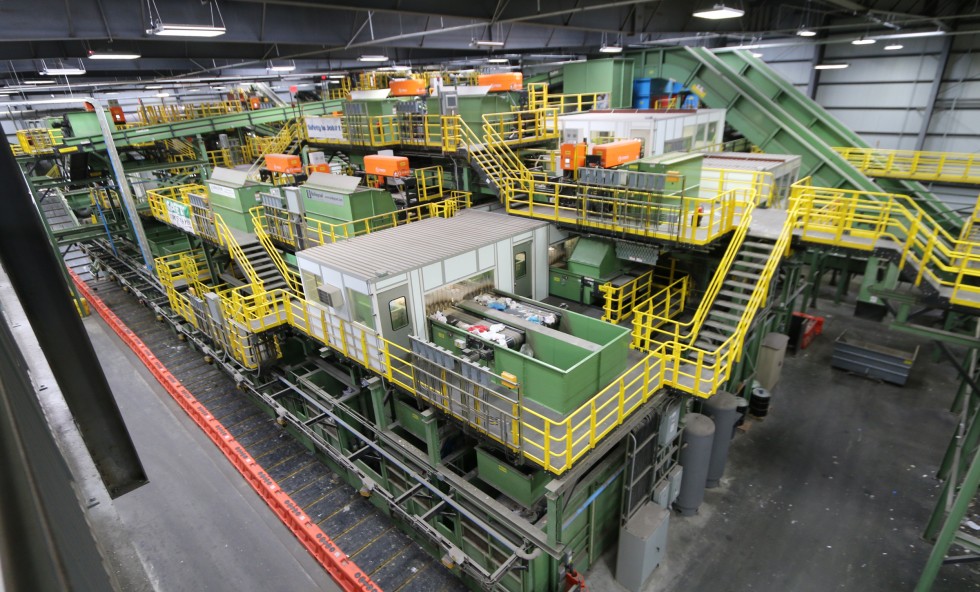
If it wasn't already evident, 2015 was a busy year here at Ars. We visited movie sets and fallout bunkers, poured molten lava, and toured a recycling plant among our many excursions. (No rest for the weary, however, as staff are set to attend CES this month.)

Read 4 remaining paragraphs | Comments
20 minutes behind the scenes with the new X-Files

If you’re a fan this should whet your appetite for the show’s return next month.

Warning: This post will contain mild spoilers about the new X-Files series.

Fox has released a 20-minute look behind the scenes of The X-Files.


We've had our closest look yet at the returning X-Files, thanks to a new video from Fox. It heralds the start of the new six-part series, which begins on January 24. There's more than 20 minutes of behind-the-scenes footage and interviews with show creator Chris Carter, as well as Gillian Anderson, David Duchovny, Mitch Pileggi, and new faces like Annet Mahendru (The Americans) and Joel McHenry (Community).

Read 4 remaining paragraphs | Comments

Ars talks about the future of electric powertrains with Audi

Two rear motors means massive potential for torque vectoring.

The Audi e-tron quattro concept paves the way for a forthcoming battery electric vehicle from the German marque. (credit: Jonathan Gitlin)

It's rumored that Audi will use next month's Detroit auto show to unveil a sister car to the e-tron quattro that we saw up close in Los Angeles last month. Dubbed the Q6 h-tron by Autocar, the new alternative fuel SUV will use a hydrogen fuel cell. Audi has registered h-tron as a trademark and some journalists have sampled an A7 h-tron. Whether or not the fuel cell rumors pan out for Detroit remains to be seen. But what is certain is that electrification is going to be a significant theme for Audi in the coming years, as we found out recently when we sat down with Filip Brabec, director of product management for Audi of America, and Siegfried Pint, head of Audi's electric vehicle powertrain development.

Although it's tempting to see Audi's push towards electrification as a response to the diesel emissions scandal plaguing it and Volkswagen Group stablemates, it's actually been in the works for quite a long time, Brabec told Ars. And it goes beyond just developing EVs—it requires an investment in infrastructure, something that Tesla and its network of superchargers has made quite evident. Brabec was bullish about the his company's progress here: "fewer than 10 [Audi] dealers across the United States have signed up to the E-ready program" of installing EV chargers, he said.

The next step will be to offer customers a compelling product, Brabec said. "We wanted to go into a volume segment, and develop a car with mainstream appeal. An SUV is the right place, and the C-segment [for mid-size SUVs] is the right place. We're not looking to sell five cars in an obscure state. What we want is a car that's marketable, that's desirable, that people want to buy," he told us. What's more, don't expect radically styled EVs that look nothing like conventional cars. "Developing an EV isn't the easiest or cheapest, so you want mainstream appeal," he said, possibly signaling an end to the "Prius effect."

Read 11 remaining paragraphs | Comments

BMW thinks the future of car UI is gesture control

AirTouch will appear in an i8 convertible at CES next week.


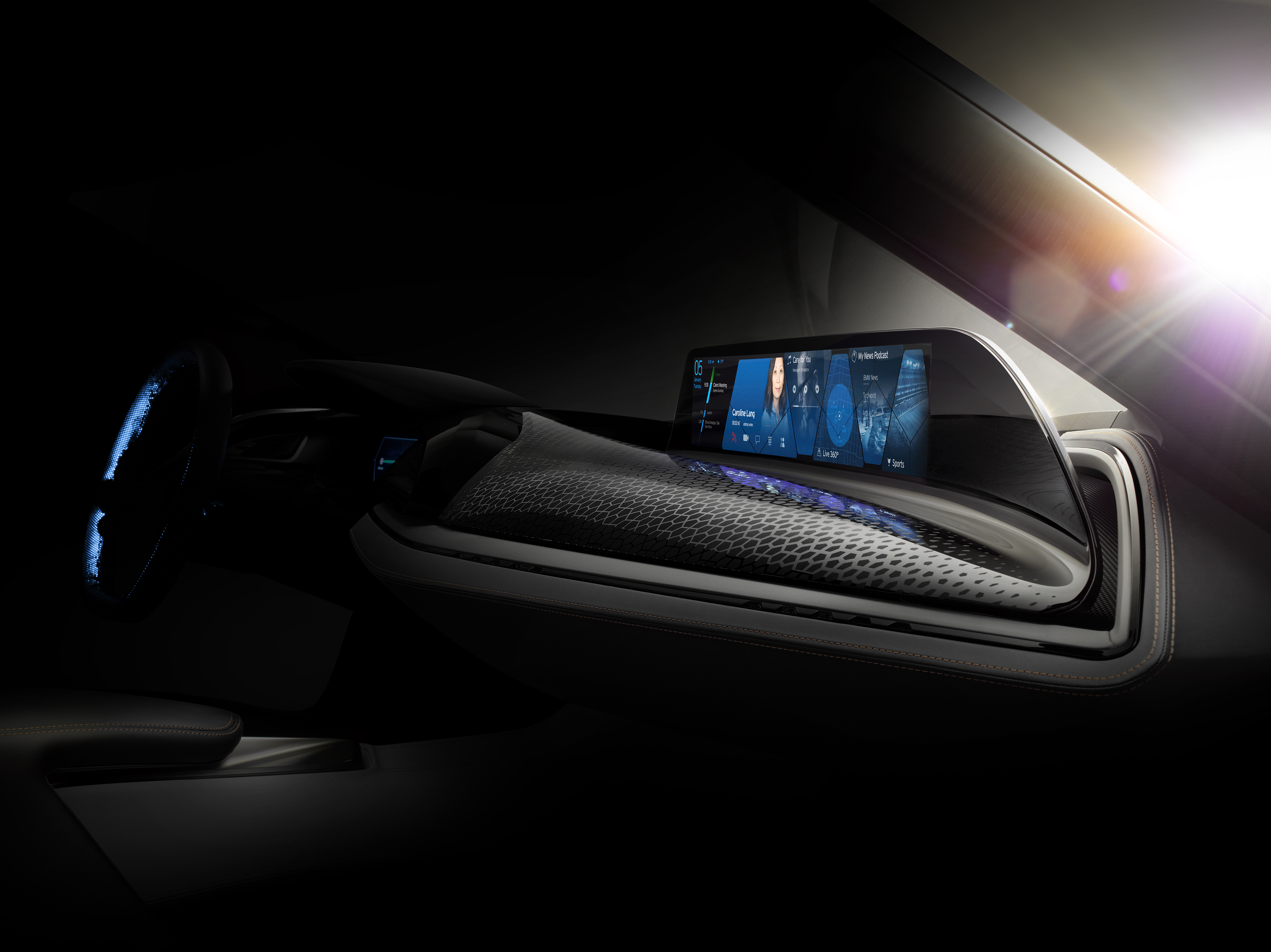
BMW has just given us a brief teaser ahead of CES next week. The German automaker will be bringing a new concept car that shows off the company's latest thinking when it comes to interior design and the future of the car user interface.

The car, a convertible variant of the extremely clever i8 hybrid sports car, uses an evolution of the gesture control that we first saw this year in the new 7 Series. Called AirTouch, it uses sensors embedded in the dash near the car's main information display that pick up three-dimensional hand movements, allowing the driver to interact with the infotainment system as if it were a touchscreen—without ever leaving their fingerprints on the LCD.

Read 1 remaining paragraphs | Comments

Ars Technica’s (virtual) Performance Car of the Year

Unable to arrange a track test in 2015, we’ve done the next best thing.


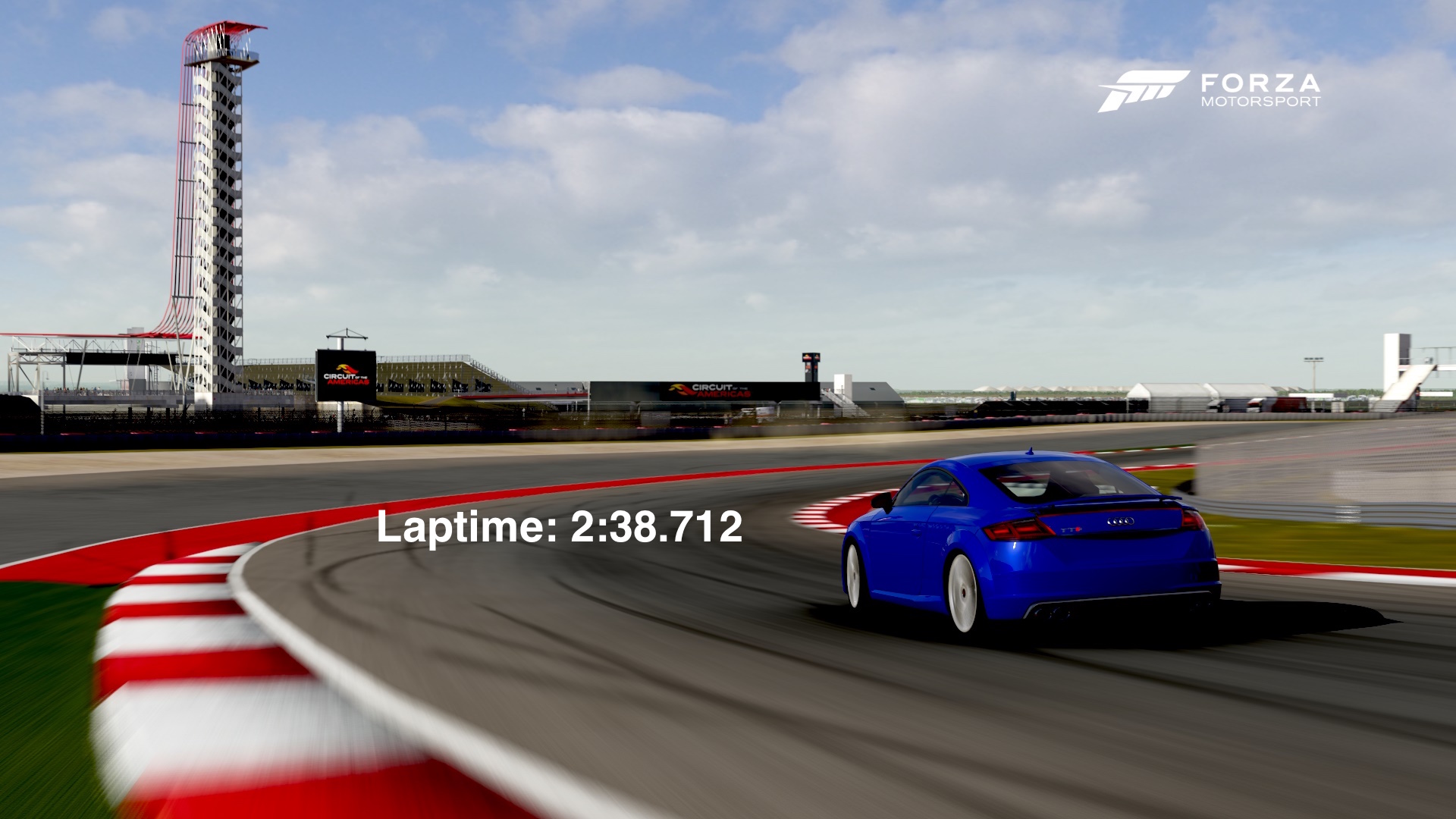
2015 has been the year of the performance car here at Ars. We've spent some time behind the wheel of some quite powerful and exotic machines, from high-powered luxury sedans like the Tesla Model S P90D and Audi RS7 to mid-engined supercars from McLaren and Lamborghini. With a couple of exceptions though, we've had to be content with driving all of these cars on the road. That's been both informative and fun, but if you want to really get to know a car there's only one place to push it to its limits: the race track. Unfortunately we weren't able to arrange a big track test this year, so we've done the next best thing—we conducted it virtually at the Circuit of the Americas (COTA), using Forza Motorsport 6.

Almost all of the cars we drove in meatspace are digitally recreated in Forza 6, although we are missing the Porsche 991S, Volvo XC90 T8, and BMW i8. For a couple of other models we've had to substitute slightly—Audi's more track-focused TTS stands in for the regular TT, and the Model S P85D represents Tesla, since there's no Forza P90D yet. And finally, we've used two coupes (Chevrolet's Corvette Z06 and the McLaren 650S) where the convertible versions were unavailable.

Read 2 remaining paragraphs | Comments