DeLorean Motor Company will start building new DMC-12s

Changes to federal low-volume manufacturing laws allow for 325 replicas a year.

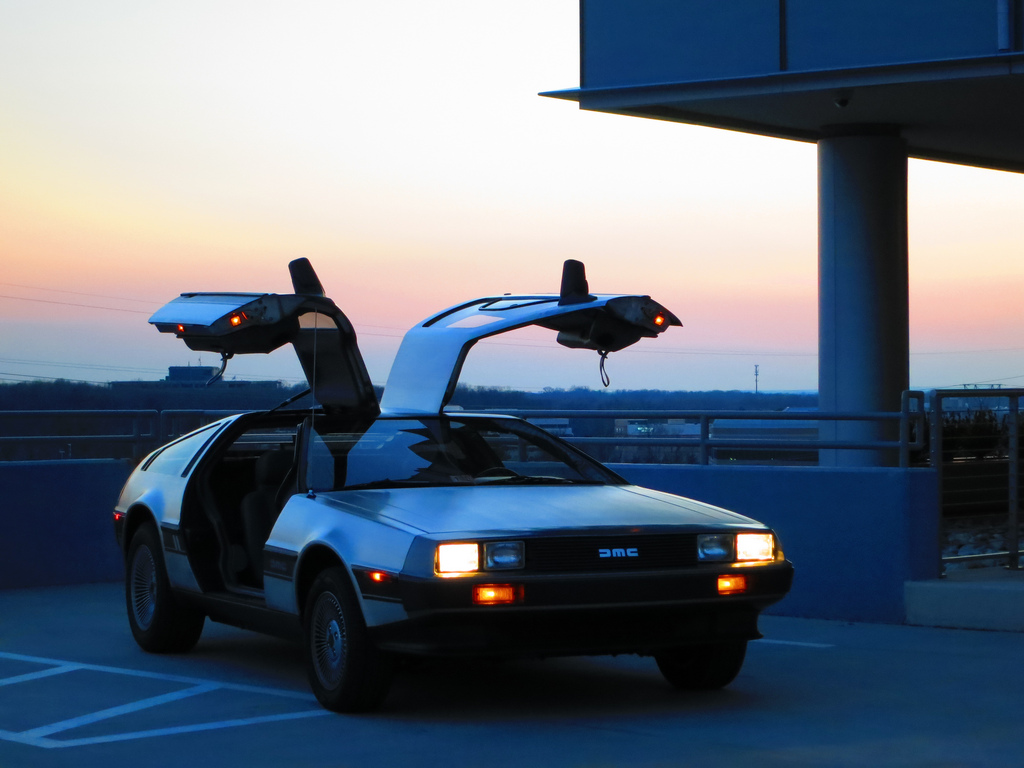
The DeLorean DMC-12 might have been destined to pass quietly into obscurity, that is until its starring role in 1985's Back to the Future. A little more than 8,500 DMC-12s left DeLorean's factory in Northern Ireland between 1981 and 1983, until it all fell apart following founder John DeLorean's arrest by the FBI on charges of drug trafficking. But Doc Brown souped up his DeLorean with a flux capacitor, imbuing the DMC-12 with iconic status in the nerd canon. Soon, you'll be able to buy a brand new one—production is about to resume on this side of the Atlantic, in Humble, Texas.

The Texas-based DeLorean Motor Company—not directly related to its defunct predecessor—has been supplying parts and rebuilding or restoring DMC-12s for many years. Now it is able to build new cars as well, following changes to the laws governing low-volume auto manufacturers. The 2015 Surface Transportation Reauthorization and Reform Act of 2015 rolled up a lot of different transportation-related bills, including one that now allows companies to build replica vehicles without having to satisfy modern safety regulations, as long as fewer than 325 are made each year.

Replica cars still have to meet current Environmental Protection Agency standards for emissions, so the DMC-12's old Peugeot-Renault-Volvo V6 is out. DMC's CEO told Houston's KPRC2 that the final price will depend upon whichever engine replaces the old unit, although new cars should still cost less than $100,000 (£70,000) There could even be an electric variant, although little has been heard about this version for some time now.

Read on Ars Technica | Comments
Uber tests out using smartphones to monitor driver behavior

The phone’s sensors can detect phone use or other bad habits while driving.

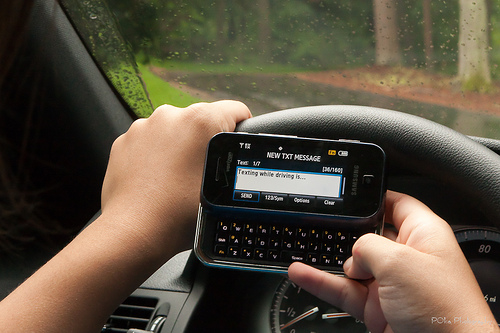
(credit: VCU CNS @ Flickr)

Uber announced today that it will monitor some of its drivers' behavior for things like excessive speeding or distracted driving. Starting with a trial in Houston, the program will use Uber drivers' own smartphones to provide data to the company.

The company will use a phone's gyroscopes, accelerometers, and GPS to record whether drivers break speed limits or play with their phone while the vehicle is in motion. But in this trial, Uber will only access that data if a customer has a complaint about driving standards.

Always-on monitoring of driving standards may come later, according to Uber Chief Security Officer Joe Sullivan. For now, the initiative is about being able to fact-check complaints and keep the company's rating system on the rails.

Read 1 remaining paragraphs | Comments

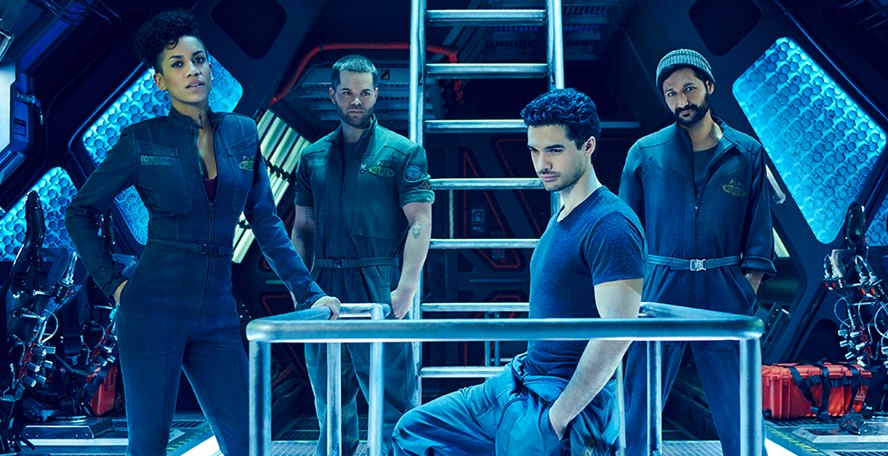
What changed when The Expanse went from book series to television

Or, how I dealt with canon shock.

There will be spoilers ahead—you have been warned!


The current king of the space opera genre is James SA Corey. Corey—a pseudonym for Daniel Abraham and Ty Franck—first appeared in 2011 with the critically acclaimed novel Leviathan Wakes, the first installment in an increasingly epic series called The Expanse, about war and solar system colonization. The books have recently been translated into a TV show on Syfy, and my colleague Annalee Newitz is spot on when says it's the best thing in years. But having just reread the books, seeing the story come to life on the screen has given me a little "canon shock." Even so, working through this reaction has helped me think more about how the writers on the TV series have tweaked the story to work better in a visual medium.

Read 10 remaining paragraphs | Comments

BMW says yes to the i6, an electric crossover with a 300-mile range

Due in 2020, the plan is to build 60,000 a year.


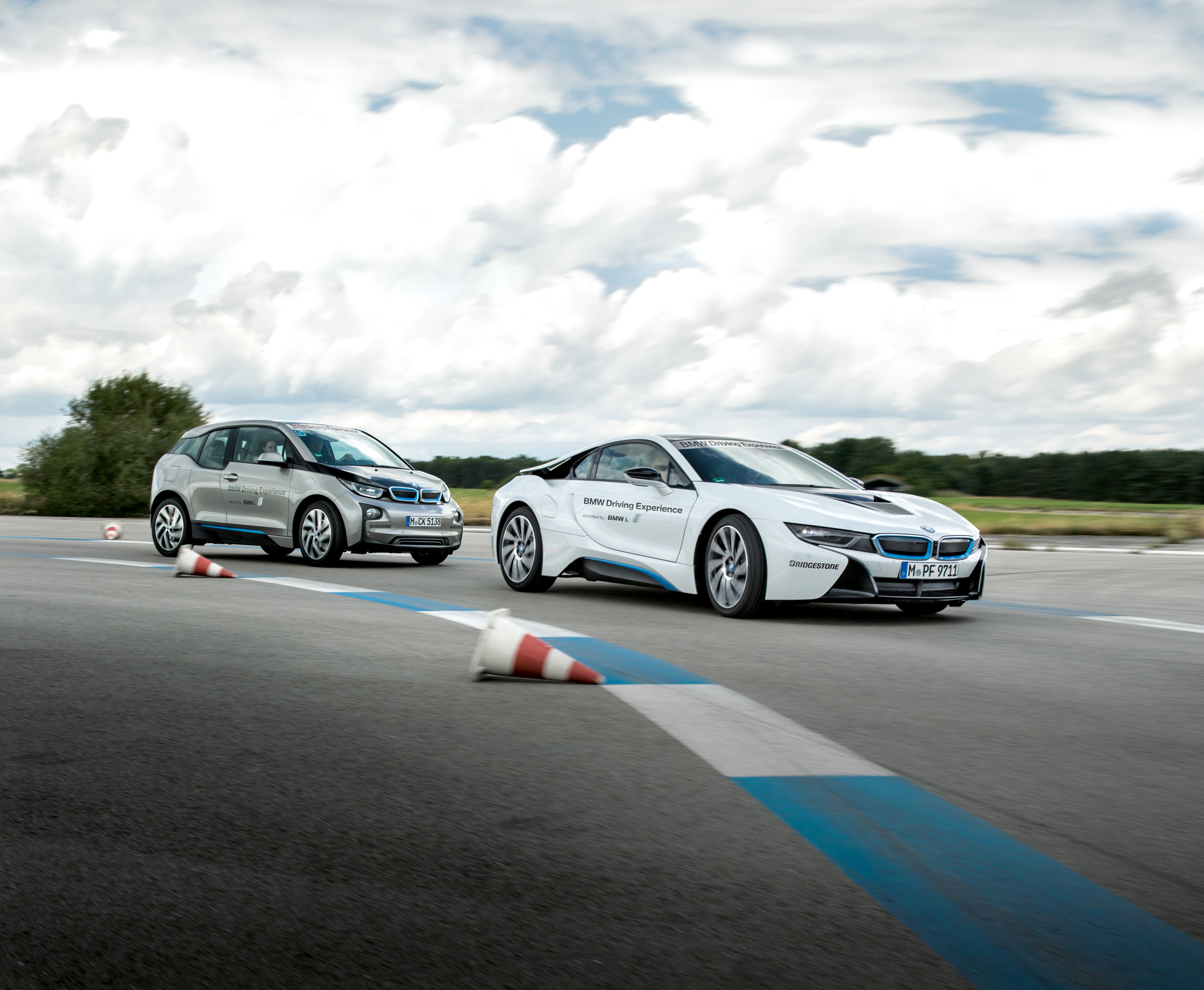
Over in the UK, Car reports that BMW is going to expand its innovative i brand in 2020. According to Car's Georg Kacher, the i3 and i8 are to be joined in 2020 by the i6. The new car will be a crossover with a 300-mile range, although BMW hasn't decided whether to make the i6 a battery electric vehicle, fuel cell EV, or hybrid.

The plan is to use lithium polymer batteries, with the idea that the technology will have matured sufficiently to make 500kWh batteries cheap enough. As with the i3 and i8, the focus will be on making the car as light as possible. However, BMW wants to sell many more i6s—Kacher says 60,000 a year—so we ought not to expect quite as much carbon fiber.

Styling is said to be something like Citroën's DS5, which makes the i6 name slightly odd. BMW's naming convention seems to have broken down recently, but even numbers are usually reserved for coupes (except when they're not, like the 2 Series hatchback, X6, or 6 Series Gran Coupe).

Read 1 remaining paragraphs | Comments

Electric vehicle puts in solid performance in the world’s toughest rally

The Acciona 100% EcoPowered put in a strong showing at this year’s Dakar rally.

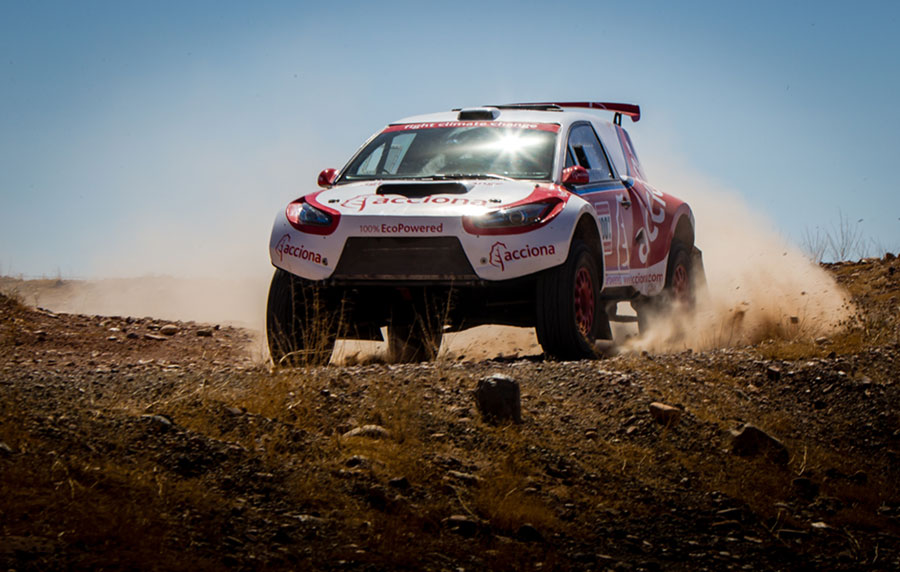
Motorsport is never easy, but races don't come any tougher than the annual Dakar rally. Originally, the race used to run from Paris to Dakar, Senegal but security concerns about crossing North Africa in 2008 saw the race moved to South America the following year, where it has found a new home ever since. Cars, trucks, bikes, and quads all compete in the two-week long, 5,700-mile (9200km) race, through stunning but remote and arduous terrain. And this year an electric vehicle called the Acciona 100% EcoPowered put in an extremely credible performance.

The car in question is a technology demonstrator project from Acciona, a renewable energy multinational. It's a purpose-built machine (i.e., not based on an existing road car), powered by eight lithium-ion battery packs (that may well have come from Tesla road cars) to give it a total 150kWh. Those cells feed a 335hp/250kW electric motor, and Acciona say the car uses between 20 and 45kWh per 100km. Recharging takes an hour using a fast charging system, something the team was able to do at various checkpoints along the route with the help of a support truck.

Between the need to recharge for an hour at a checkpoint during the stages and the EV's limited top speed of 93mph (150km/h) the Acciona 100% EcoPowered was never going to trouble the factory-backed Peugeot and Mini teams for the win. But Ariel Jaton and his codriver Gaston Scazzuso put in a decent showing and were in 71st place by the end of the 10th day.

Read 3 remaining paragraphs | Comments

German car makers are getting hyped about hydrogen

Audi and Mercedes-Benz are the latest to jump on the H2 train.

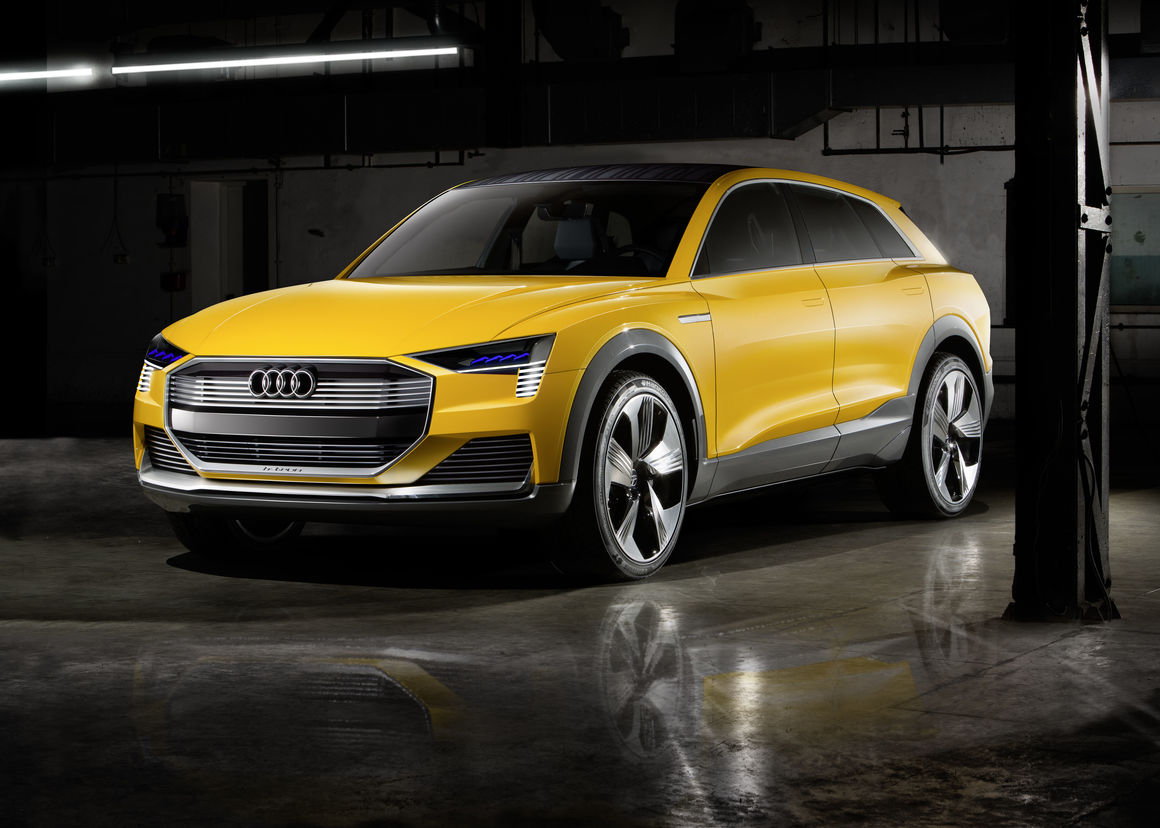
It seems like most of the auto industry is getting hydrogen fever, and we can now add Audi and Mercedes-Benz to that list. Audi used last week's North American International Auto Show in Detroit to debut its h-tron Quattro fuel cell SUV concept, and the UK's Autocar is reporting that Mercedes-Benz has green-lit for production a fuel cell version of its GLC SUV.

Audi's h-tron Quattro looks fairly similar to the e-tron Quattro concept we saw in Los Angeles, and it presumably uses a lot of the same EV powertrain know-how. A full tank of H2 gives it a range of 373 miles (600km), and the on-board lithium-ion batteries can also be topped up by the gigantic solar panel on the roof.

Meanwhile, Mercedes-Benz told Autocar at the Detroit show that it was in the middle of rolling out the fuel cell-powered GLC, which should be revealed to the world at next year's Frankfurt Auto Show. Mercedes-Benz had previously ventured into the world of H2 with a fuel-cell version of the B-Class, called the F-Cell. Several years ago, Mercedes-Benz leased 50 F-Cells to environmentalists in California.

Read 3 remaining paragraphs | Comments

Department of Transportation going full speed ahead on self-driving cars

Secretary Foxx wants to develop consistent autonomous car policies across the US.

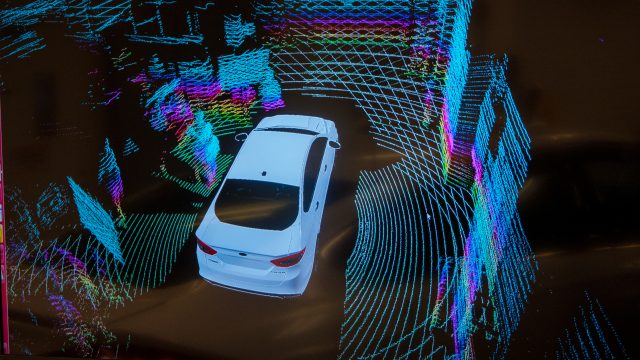
The world as seen by a self-driving car. (credit: Jonathan Gitlin)

We've been hitting the tech of self-driving cars pretty heavily this week, taking a look at what companies like Audi, BMW, Ford, QNX, and Tesla are doing in the field. But it's looking more and more likely that it's not going to be the technology itself that determines when we'll be able to buy a self-driving car for that morning commute. Instead, all the other stuff—regulations, laws, insurance questions, and society's comfort level—appear ready to own the issue of timing.

At this week's North American International Auto Show in Detroit, Transportation Secretary Anthony Foxx announced that "in 2016, we are going to do everything we can to promote safe, smart and sustainable, vehicles. We are bullish on automated vehicles." Still, working out how to regulate self-driving cars is far from settled. Each state (well, OK maybe every state but Maryland) has a pretty good idea of how to test young drivers to determine whether they're ready to mix it with the rest of us in traffic. Figuring out how to apply that to a car itself is proving to be more of a challenge. California, for instance, is about to hold a couple of public workshops to get input into its draft regulations on the the matter, and DMVs in other states are being told by their respective legislatures to start working on the problem. Today, there's a real fear in the industry that we could end up with a patchwork of different state laws (something Cars Technica even talked about on the radio yesterday).

Then there's the federal government, where crafting policies, regulations, and guidances can be slow work. Take recent advances in headlight technology for example. Over in Europe, you can now buy cars that use LED lasers to supplement their high-beams. Those lights are intelligent enough to avoid blinding other cars on the road, and they represent a significant safety advantage. But the Federal Motor Vehicle Safety Standards for headlights in the US went into effect in 1968 and haven't been updated since. And because they don't make any allowances for anything other than a high beam and a low beam, such systems are illegal here in the US.

Read 4 remaining paragraphs | Comments

Dear Mr. President: Please stop with these science “moonshots”

Science needs steady sustainable boring growth, not flashy ill-formed initiatives.

During this week's State of the Union address, President Obama announced that his Vice President Joe Biden will lead a new science "moonshot" to put an end to cancer. According to an article on Medium posted by the Vice President, this will do two things: increase resources devoted to fighting cancer and break down barriers that prevent sharing of information among cancer researchers.

The announcement drew a lot of praise from pundits—the snarkier Twitter commentators out there pointed out that Speaker Paul Ryan (R-WI) failed to clap at this, marking him as heartless. More funding for cancer research sounds like a total no-brainer, doesn't it? There's just one problem—it's a terrible idea.

At this point, let me give you a little background on where this editorial is coming from. It might be hard to understand why the car editor at a technology website is whining about science funding, but before moving to Ars full-time in June last year, I spent six years working in a policy office at the National Institutes of Health. It's a job that gave me a front row seat into how science policy actually works in the United States. Before that, I spent another six years as a research scientist, during which time I served in a couple of leadership roles with the National Postdoctoral Association (I also used to write science content for Ars, starting back in 2004).

Read 16 remaining paragraphs | Comments

Assists, autopilot, and more: Ars talks about autonomous driving with Audi

We sat down with its head of autonomous driving to find out how it all works.

Audi's Thomas Müller discusses self-driving technology with Ars at CES. Video shot/edited by Jennifer Hahn. (video link)

LAS VEGAS—Have we mentioned that self-driving cars were a big thing at CES this year? Among all the drones and connected fridges and 8K TVs, companies like Ford and BMW and Audi were all on hand to update us about their respective visions for autonomous driving. We were fortunate enough to sit down with Audi's Thomas Müller, who heads up autonomous technology at the company, to pick his brain about where the Ingolstadt-based OEM is going with its robot cars.

Read 14 remaining paragraphs | Comments

QNX’s in-car communications may solve the turn-and-yell to backseat kids issue

Parents, hearing kids in the back of an SUV or minivan will no longer be a problem.

A rather effusive Jonathan gets a demo of Hyundai's augmented reality owner's manual. Video shot/edited by Jennifer Hahn. (video link)

LAS VEGAS—Several years ago, Blackberry bought QNX, a company known for its real-time automotive operating systems. The idea was to leverage that for Blackberry's smartphones, but that didn't last since the latest handheld from the company now runs Android. While Blackberry has fallen from prominence in the smartphone market, QNX is still going strong over in the car world. At CES last week, we caught up with the company to see its latest advances firsthand.

Read 5 remaining paragraphs | Comments