McLaren’s new 570GT is the most refined car the company has ever made

Porsche 911-rivaling luggage space and a ride optimized for road trips.

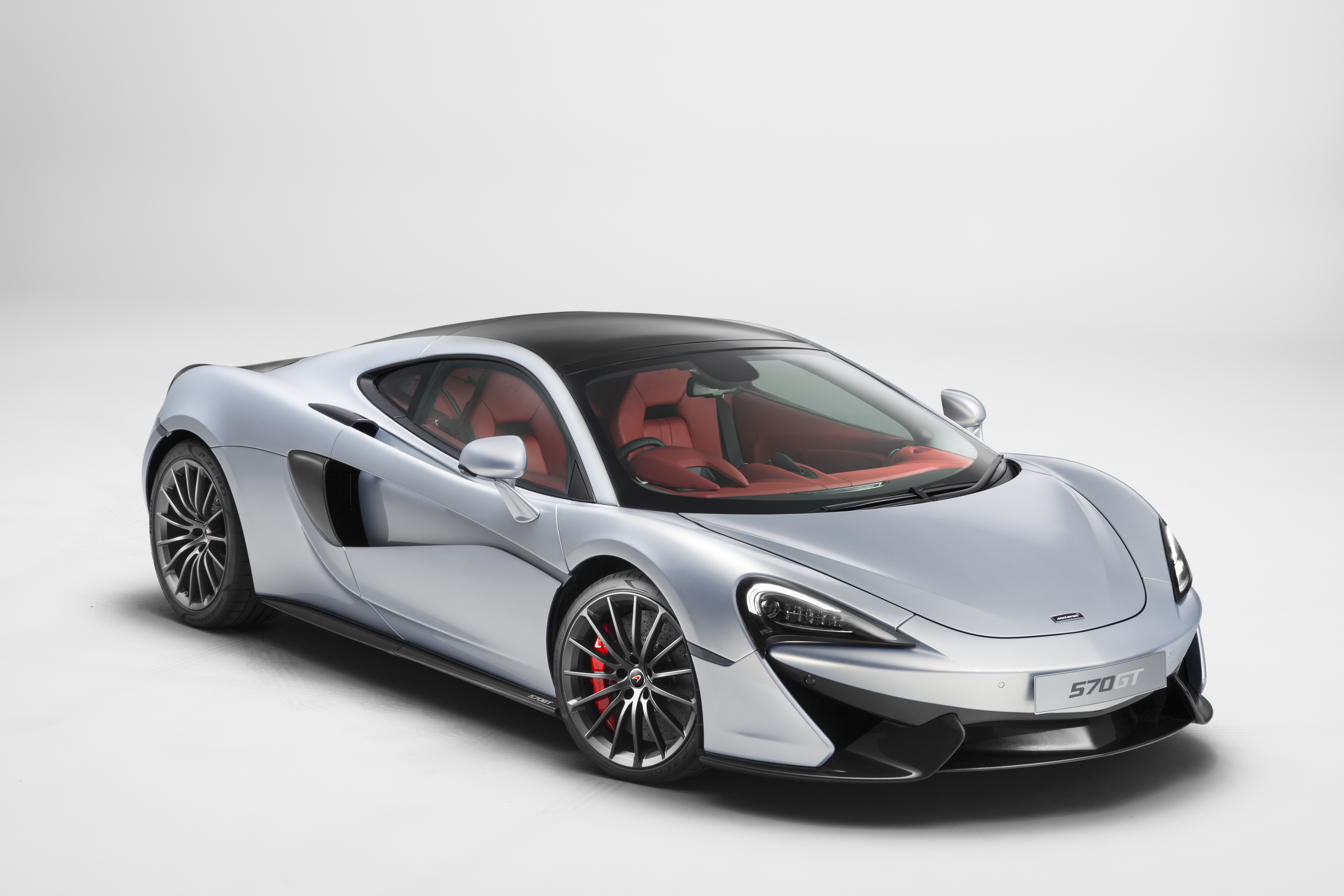
We are unashamed fans of McLaren's road cars. The 650S blew our socks off last year, and we're eagerly awaiting a visit from the 570S later this year once outside temperatures have risen some and McLaren's press fleet migrates back east. Yesterday, the company released information about a companion to the 570S, called the 570GT. McLaren describe the 570GT as the most practical car it has ever built, "targeted towards longer journeys and weekends away."

As with all McLaren road cars, the 570GT is built around a carbon fiber "MonoCell" tub; in this case the second iteration MonoCell with redesigned sills that make getting into and out of the car a lot easier. Changes from the more hardcore 570S include revised spring rates and some other suspension tweaks that improve the ride quality, a slightly quieter exhaust, and bespoke Pirelli tires that cut road noise by 3dB. And instead of an exposed engine bay, there's a glass hatch that gives the car an extra 7.8 cubic feet (220L) of luggage space.

Weight is up 81lbs (37kg) compared to the 570S—2,976 lbs (1,350kg) without any fluids. That's still comparatively little mass for the 562hp/419kW 3.8L turbocharged V8 to move, so a more refined McLaren does not necessarily mean a slower one.

Read 1 remaining paragraphs | Comments
Nissan’s connected car app offline after shocking vulnerability revealed

Anonymous requests only required a VIN to control a car remotely.

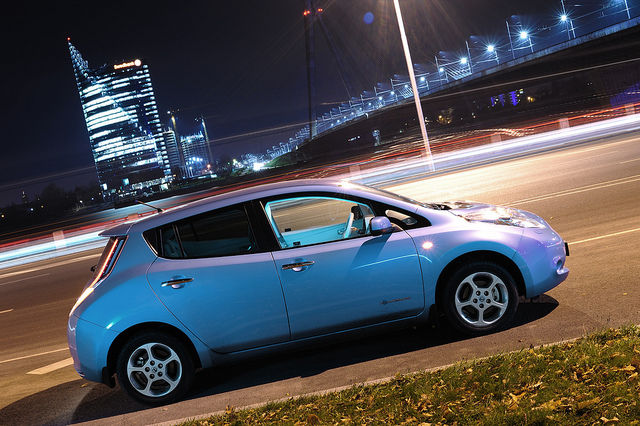
Want another reason to be skeptical about the idea of connected cars? Here's one: when Nissan put together the companion app for its Leaf electric vehicle—the app will turn the climate control on or off—it decided not to bother requiring any kind of authentication. When a Leaf owner connects to their car via a smartphone, the only information that Nissan's APIs use to target the car is its VIN—the requests are all anonymous. Those are the findings of Troy Hunt and Scott Helme, who published their findings on Wednesday. Thursday, Nissan took the service offline.

Hunt started poking into NissanConnect after running a workshop in Norway in January. Norway is overflowing with EVs, and one of them belonged to an attendee. "What the workshop attendee ultimately discovered was that not only could he connect to his LEAF over the internet and control features independently of how Nissan had designed the app, he could control other people’s LEAFs." Upon discovering that his friend Helme also owned a Leaf, the pair began to investigate just how insecure NissanConnect was.

In a lengthy post describing the details of the security flaw, Hunt also lays out a timeline as well as the ethical justification for doing so. He first contacted Nissan to alert it to the problem on January 23rd, describing the company as "receptive" and their behavior as "exemplary" during the process. But it didn't move with sufficient speed for Hunt, as he received an e-mail from a Canadian Leaf owner last week about the issue last week. He let Nissan know he was planning on going public, doing so on Wednesday.

Read 2 remaining paragraphs | Comments

The real silly season: Formula 1’s new rules

We like better head protection, but cars will be even harder to overtake in 2017.

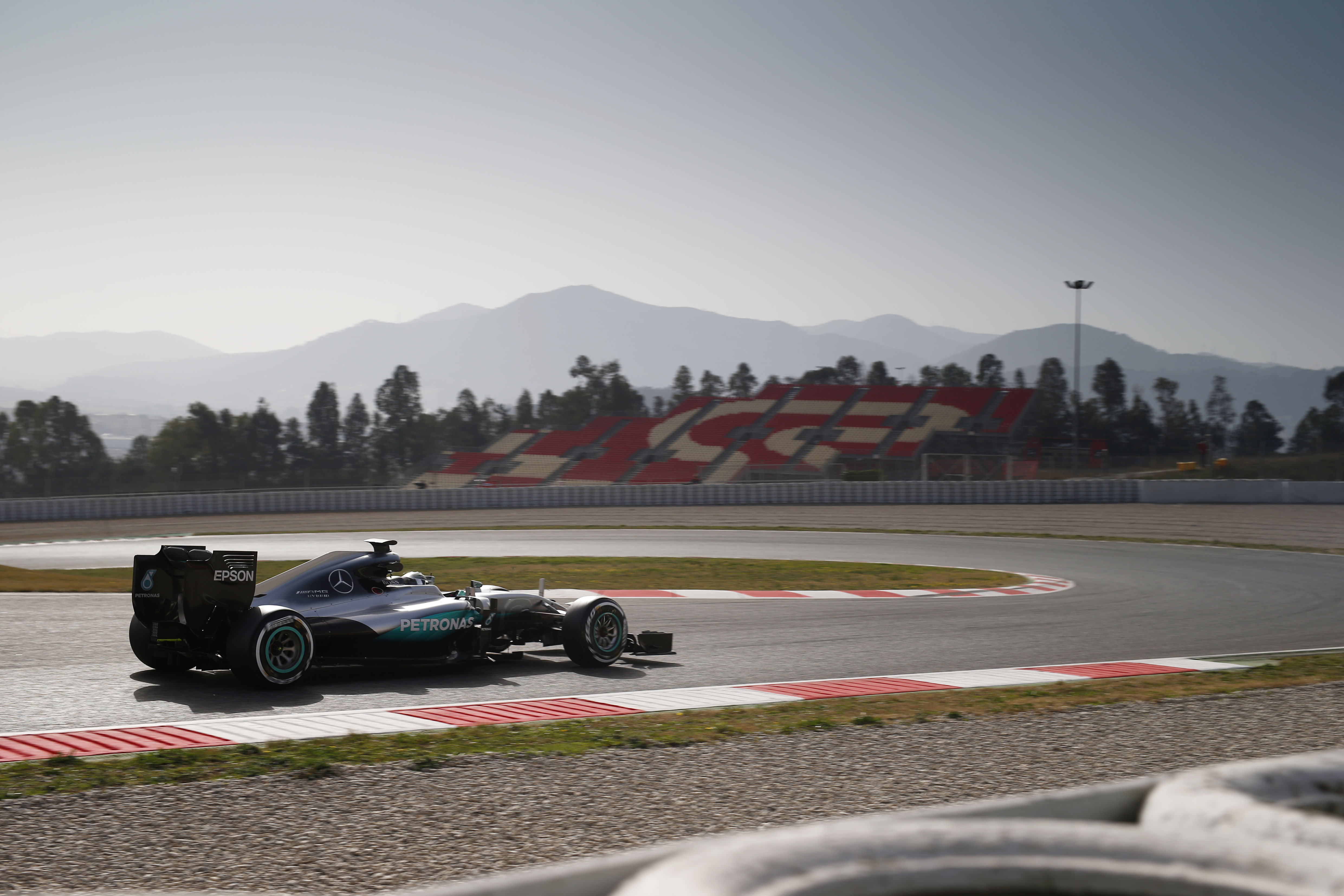
This week, the people that control Formula 1 racing got together in Geneva, Switzerland, to come up with some ideas to fix the sport. At first glance, it appears they might instead have broken the one bit of the show—qualifying on Saturday afternoons—that still holds any real excitement for fans. Changes to 2017's technical rules are also coming. The introduction of better head protection for drivers is welcome, but the rest of the tweaks appear—to almost everyone outside of the F1 Strategy Group and the F1 Commission—to be exactly what the doctor didn't order.

Silly season is a name often given to that time of year in sports calendars when news is slow and so, to fill pages or screens, the media reports on stories that wouldn't otherwise merit the attention. In the racing world that normally coincides with late summer, there are gaps in the schedules, people take vacations, and the media is left to speculate on rumors about who's changing teams and the like. You normally wouldn't think of F1's preseason ramp-up in this way. After all, the new-for-2016 cars are currently being unveiled, and some of the teams are testing in Barcelona this week—that stuff actually matters.

However, "silly" accurately describes the proposed changes to the qualifying process this year.

Read 19 remaining paragraphs | Comments

Could more electric cars mean greater fleet emissions and fuel consumption?

There might be near-term unintended consequences of emissions standards.

Individual tax credits and rebates aren't the only policy levers we use to try and increase the adoption of electric cars and other alternative fuel vehicles. The Environmental Protection Agency and the National Highway Traffic Safety Administration both have quite a lot to say about the matter as well, especially through rules that set fleet-wide standards for both fuel efficiency (the Corporate Average Fuel Efficiency, or CAFE standards) and an associated Greenhouse Gas Emission standard. But a new paper from Jeremy Michalek and colleagues suggests that the incentives built into those standards—meant to encourage the uptake of alternative fuel vehicles—might actually increase fuel consumption and CO2 emissions.

New CAFE standards that get stricter over time were announced by the NHTSA in 2015. CAFE mandates fleet-wide targets for car makers, with a formula that takes into account the footprint of each model. Bigger cars or light trucks are allowed to get lower fuel efficiency than smaller models, and a car maker's total sales are taken into account to calculate the average across their model range.

At the same time, the EPA has another set of standards for the amount of greenhouse gas emissions across a manufacturer's range (this is separate from the EPA fuel efficiency rating that new cars get, which also differs quite a bit from the CAFE numbers). Failing to meet these targets comes with a set of different consequences. OEMs that don't meet their CAFE target have to pay a fine ($5.50 per 0.1mpg per vehicle sold), which several car makers have historically chosen to accept as cheaper than the alternative. The EPA's emissions standards aren't quite as lenient, however; it's within the agency's power to revoke one's license to sell vehicles inside the US.

Read 6 remaining paragraphs | Comments

World’s fastest snow sledge is being built in Germany

Toyota Motorsport’s gravity-powered sledge aims to break records at 155mph.

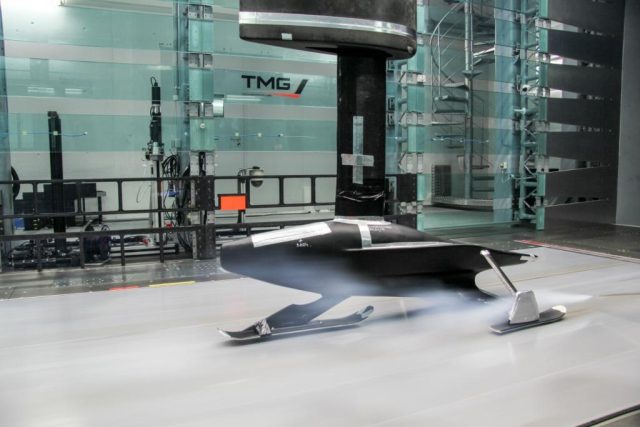
A 50-percent model of Snowspeed in Toyota Motorsport's wind tunnel. (credit: Toyota Motorsport GmbH)

Did you know there's a speed record for gravity-powered snow sledges? It's currently held by bike racer Guy Martin at 83.5mph (134.36km/h). But perhaps not for long: over in Germany, Norwegian-based Snowspeed and Toyota Motorsport are working on a carbon fiber sledge that hopes to smash Martin's record by hitting at least 155mph (250km/h).

Based in Cologne, Germany, Toyota Motorsport GmbH is best known for its World Endurance Championship-winning race team, which took the 2014 crown in a dominant fashion with the 1000-horsepower hybrid TS040. Unfortunately, 2015 wasn't such a great year for the team. Although its revised car was a couple of seconds per lap quicker than the year before, both Audi and Porsche found even more speed, and the team had to settle for third place.

TMG is developing the new TS050 for this year's WEC, but the company does a lot more than build race cars. One of the ways it spends its considerable engineering and aerodynamics experience is on the Snowspeed, a gravity-powered sledge that looks like a Formula 1 car minus the wheels and wings.

Read 3 remaining paragraphs | Comments

Ever wanted an electric VW Beetle? Zelectric Motors has you covered

The San Diego company is electrifying air-cooled VWs.

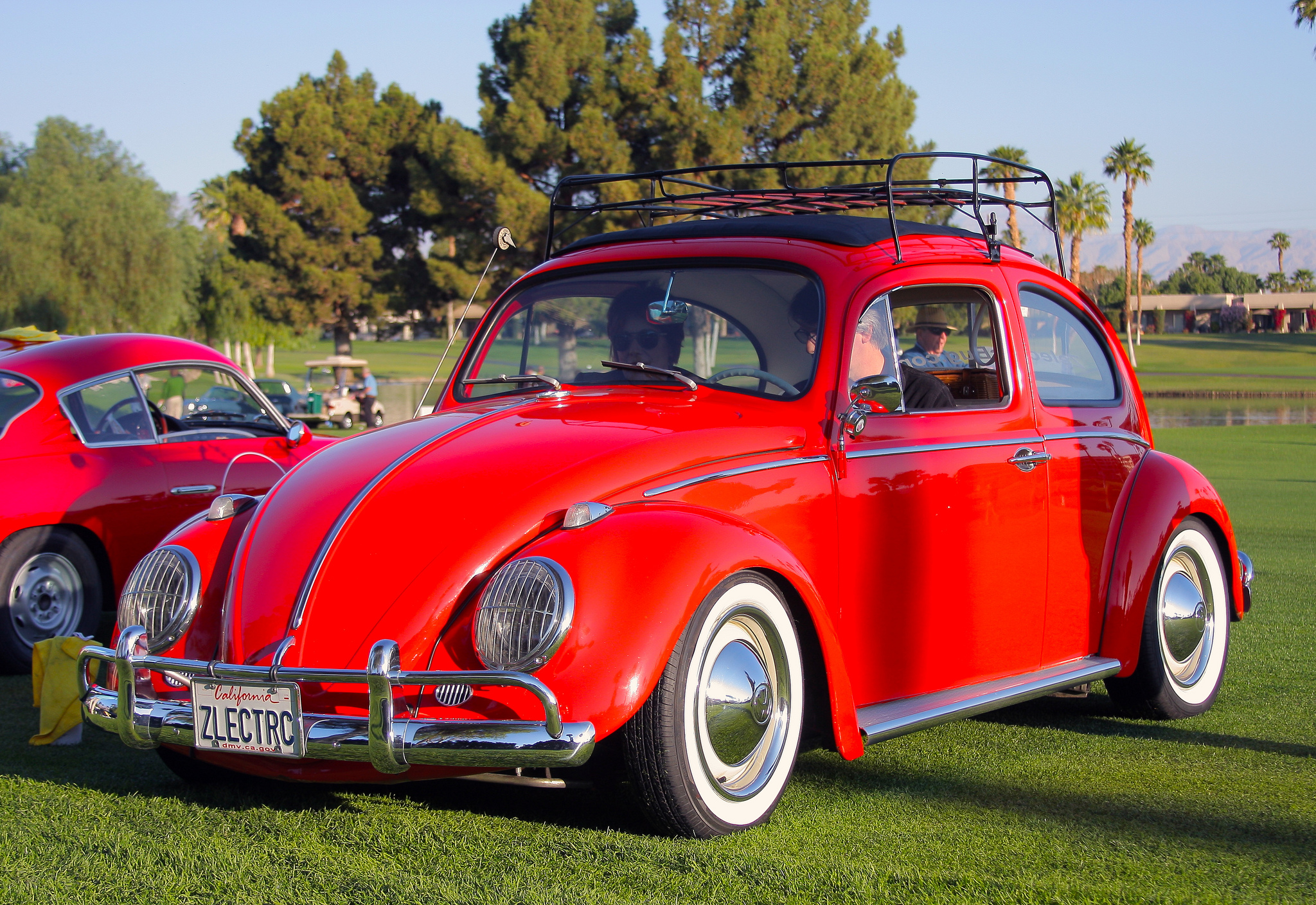
Was your first car a Volkswagen Beetle? Do you pine after it while simultaneously wanting something a little more environmentally friendly than the old, air-cooled, flat four engine? Good news! Zelectric Motors in San Diego is here to save the day. The company is in the business of restoring old VW Beetles, Microbuses, Karmann Ghias, and Things, updating them with fully electric powertrains.

Nostalgia is a powerful thing in the car world. Car makers will happily dust off an old classic and use it as the base for a concept car, safe in the knowledge that it will grab headlines and the attention of potential customers with fond memories of the originals. Volkswagen is particularly good at this tactic, selling thousands upon thousands of modern Beetles that call back to the rear-engined classic.

But modern interpretations aren't everyone's cup of tea, so there's a growing industry of companies ready to update your beloved classic for you. Porschephiles can spend big bucks with Magnus or Singer, Jaguar E-type fanatics have Eagle, and you can now even buy a brand new Delorean DMC. But if your taste runs to the original people's car, you need to speak to Zelectric.

Read 2 remaining paragraphs | Comments

Space combat is cheaper than ever with Elite Dangerous: Arena

Standalone combat version of the galaxy’s best space game now out for the PC.

Do you like piloting spaceships? Do you like blowing other spaceships out of the heavens? If the answer to those questions is yes and you still haven't got a copy of Elite Dangerous, then good news! Elite Dangerous: Arena is now available for the PC, and it's just $7.49.

Elite Dangerous: Arena will be familiar to those of you who've played the full game as CQC (Close Quarters Combat). You get four different ships, four different arenas, and three different match types (free for all, team deathmatch, and capture the flag), and best of all, it's fully compatible with the full versions of the game.

"Elite Dangerous: Arena is a different kind of multiplayer shooter, offering competitive gamers the chance to jump into thrilling space combat and challenge the world." Frontier CEO David Braben said. Players of Arena or CQC in the full game are also eligible to enter a $100,000 championship tournament to be held later this year.

Read 1 remaining paragraphs | Comments
Robots: Destroying jobs, our economy, and possibly the world

Ethicists and computer engineers discuss the dark side of AI.

The past decade or so has seen some spectacular advances in artificial intelligence. But—as is so often the case with emerging technologies—is there a dark side to this brave new world? That was the topic for discussion by a panel of computer scientists and ethicists at this year's meeting of the American Association for the Advancement of Science.

There is no denying the impact of the information technology revolution on our economy. From the time that personal computers started infiltrating the workplace there have been impressive gains in productivity. But at the same time there's been an uncoupling of the traditional link between productivity and employment; unlike in years past, the benefits derived have not been felt by many—or even most—in society. That was the central message from Moshe Vardi's talk.

A professor of computational engineering at Rice University, Vardi said that technology has been destroying jobs since the industrial revolution—one only needs to look at the role of horses in transportation as an example. But in the past those jobs have been taken by machines designed to do a specific thing, like weaving cotton. Now, Vardi argued, we're facing the possibility of machines that may be better than humans at nearly everything.

Read 8 remaining paragraphs | Comments
A week with BMW’s unexpectedly charming X5 Hybrid SUV

A fun-to-drive, fuel efficient SUV? We put it to the test.

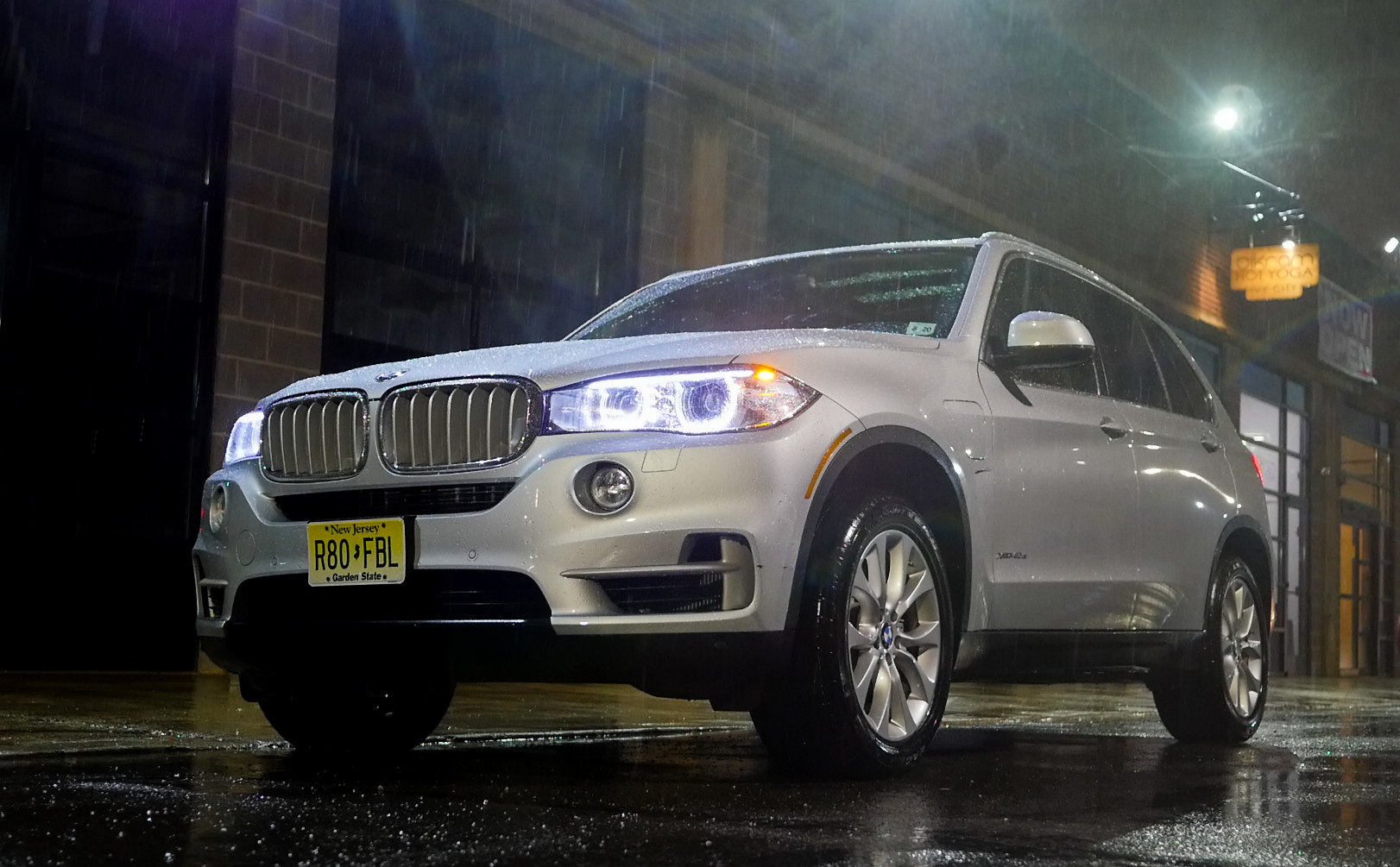
It's no secret that we're big fans of BMW's i3 and i8 hybrids here at Ars. Now the Bavarian company is starting to apply that same technology to the models in its regular production range, starting with the (deep breath) BMW X5 xDrive40e. There's no more funky styling and carbon fiber to distract you, just a good-old X5 with an up-to-date powertrain. The idea is to maintain the BMW driving experience but with an added dose of efficiency. So we put an X5 through its paces for a week to find out if that's the case.

BMW's decision to choose the X5 as its first "regular" model to hybridize was a smart one. The SUV is its second-best seller here in the US, and it stands to benefit from the electric vehicle treatment more than the cheaper, lighter 3 Series (although a plug-in hybrid version is coming, too). Under the hood is a 2.0 L, four-cylinder turbocharged gasoline internal combustion engine (ICE) and an electric motor, which together give the X5 a respectable 308ph (230kW) and 332lb-ft (450Nm). The batteries—9kWh of lithium-ion cells—live underneath the luggage compartment, an added bonus of the SUV's size and shape.

That power and torque gets fed to the road through the same eight-speed automatic gearbox as the rest of the X5 range. As with the i3 and i8, the X5 gives you three different modes: Comfort, Sport, and Eco Pro. You pick your mood and the electronic control units and their clever software does the rest. Eco Pro is a bit of a hair shirt. It limits the energy drain from the climate control and seat heaters and lets the car coast with the ICE turned off. Both Eco Pro and Comfort let you drive on electric power alone as long as there's sufficient battery, with the ICE firing up and kicking in as needed (or above 75mph/120km/h).

Read 9 remaining paragraphs | Comments

No, the EPA isn’t making it illegal to turn an old car into a race car

Buried in a 629-page report, the EPA raises dander, but racers need not worry.

Rest assured, the EPA is not coming for your racing car. Besides, it was already illegal to remove the emissions equipment in the first place. (credit: Alex Bellus)

The Environmental Protection Agency is at the center of another controversy, this time with automotive racers and enthusiasts. At issue is a proposed rule that sounds to some like the EPA wants to ban anyone from turning a road car into a track-only toy or race car.

Last July, the EPA published a lengthy 629-page proposed rule called "Greenhouse Gas Emissions and Fuel Efficiency Standards for Medium- and Heavy-Duty Engines and Vehicles—Phase 2." Buried within the text was an amendment to an existing federal rule that reiterated Clean Air Act policy on road vehicles equipped with emissions controls. According to that rule, owners, operators, aftermarket companies, and service businesses may not tamper with or remove emissions equipment on vehicles so fitted, be they dedicated race cars or not.

The two-month window for public comments on the proposed rule came and went (closing on September 11, 2015) with little notice or fuss. But earlier this week, the Specialty Equipment Manufacturer's Association (SEMA) circulated a press release claiming that the "EPA Seeks to Prohibit Conversion of Vehicles Into Racecars." While this headline correctly assesses the EPA's position, it overstates the notion that anything has changed. Regardless, it inflamed passions in the racing and car enthusiast world in no time.

Read 9 remaining paragraphs | Comments