Man hacks Tesla firmware, finds new model, has car remotely downgraded

But Elon Musk says not on his orders; “Good hacking is a gift.”

The image that hacker Jason Hughes found hidden in Tesla's latest Model S firmware. (credit: Jason Hughes)

It seems Tesla is set to bump the battery capacity of its Model S sedan up to a hefty 100kWh some time in the near future. We know this thanks to the work of a white-hat hacker and Tesla P85D owner named Jason Hughes. Hughes—who previously turned the battery pack from a wrecked Tesla into a storage array for his solar panels—was poking around in the latest firmware of his Model S (version 2.13.77) and discovered an image of the new car's badge, the P100D.

Hughes let the world know via a cryptic tweet:

That message was soon decrypted by enthusiasts on the Tesla Motors Club forum, at which time Hughes posted a copy of the picture:

Read 3 remaining paragraphs | Comments

Kelly’s Heroes: Lockheed’s five finest airplanes

Featuring Its top hits: the Blackbird, U-2, F-104, P-80, and P-38.

Update: It's Memorial Day weekend here in the US, and the Ars staff has a long weekend accordingly. As we all reflect on the sacrifice of the people bravely serving in the Armed Forces, we thought resurfacing this piece—an homage to some of the finest aviation ever deployed by the US—would be a welcomed accompaniment. This story originally ran on March 4, 2016, and it appears unchanged below.

Roughly 110 years ago, one of the world's greatest aircraft designers—Clarence "Kelly" Johnson—was born in Ishpeming, Michigan. And since we're gigantic aviation nerds here at Ars Technica, the week of his birthday (February 27) is as good a reason as any to celebrate some of his legendary designs. Johnson spent 44 years working at Lockheed, where he was responsible for world-changing aircraft including the high-flying U-2, the "missile with a man in it" F-104 Starfighter, and the almost-otherworldly Blackbird family of jets.

In his career at Lockheed, Johnson's engineering acumen won him two Collier trophies, the most prestigious award one can win in the field of aeronautics (Lockheed chief engineer Hall Hibbard once famously said about Johnson, "That damn Swede can see air!"). In addition to being an excellent engineer, Johnson was also a powerfully effective manager; his practices running Lockheed's Advanced Design Projects unit are commonly regarded now as a master-class on how small focused groups should communicate and manage projects.

Read 23 remaining paragraphs | Comments
A big week for Forza: Porsche is back, and Lamborghini is the new cover star

911s make a welcome return, as does Virginia International Raceway.

On Tuesday, we reported that Microsoft is porting Forza to Windows with Forza Motorsport 6 Apex. That wasn't the only big Forza news this week, though. Tuesday also saw the release of the long-awaited Porsche expansion pack. A $19.99/£15.99 add-on to the Xbox One game, the Porsche pack adds 21 new cars and a new track—Virginia International Raceway—to Forza 6. Lamborghini also got in on the action with the announcement that its Centenario hypercar will be the cover star of the next installment of the franchise. And to celebrate that, there's a new Lamborghini Super Trofeo eSports series underway.

The selection of new Porsches is pretty good, although it's not as rich as the 2012 addition to Forza Motorsport 4that one featured 30 models. Sadly, we've been told not to expect any further Porsches appearing as DLC in the coming months, so bad luck if you were holding out hope for the 993 GT2 or 917.

The return of Porsche to the Forza franchise has been much-awaited by fans, although if Internet comments are anything to go by, many of them are of the opinion that the marque should have been included from the get-go. That wasn't possible, as Electronic Arts still has an exclusive license with the German car maker. We think that exclusive license expires at some point this year, although an enquiry with Porsche regarding the exact date hasn't been answered at the time of writing.

Read 4 remaining paragraphs | Comments

My brain made me do it: Neuroscience and behavioral genetics in court

A new study attempts to determine just how neurobiology is being used in court.

Several years ago, Ars looked at the role of neuroscience in crime. Since then, the scientific community has continued to learn about how brain abnormalities or dysfunctions can affect reasoning and behavioral traits, and certain gene variants like monoamine oxidase have been linked to violent behavior.

But correlation isn't the same as causation, and many of those correlations fall well short of 100 percent linkage. So, while biologically reductionist arguments like "my brain made me do it" can be appealing, scientists know that in the real world things are a lot more complex.

Nevertheless, neuroscience is increasingly being used as evidence in the criminal justice system. Nita Farahany, a professor of law and philosophy at Duke University, has now conducted a systematic study of how neuroscience ends up being used in the courthouse.

Read 10 remaining paragraphs | Comments

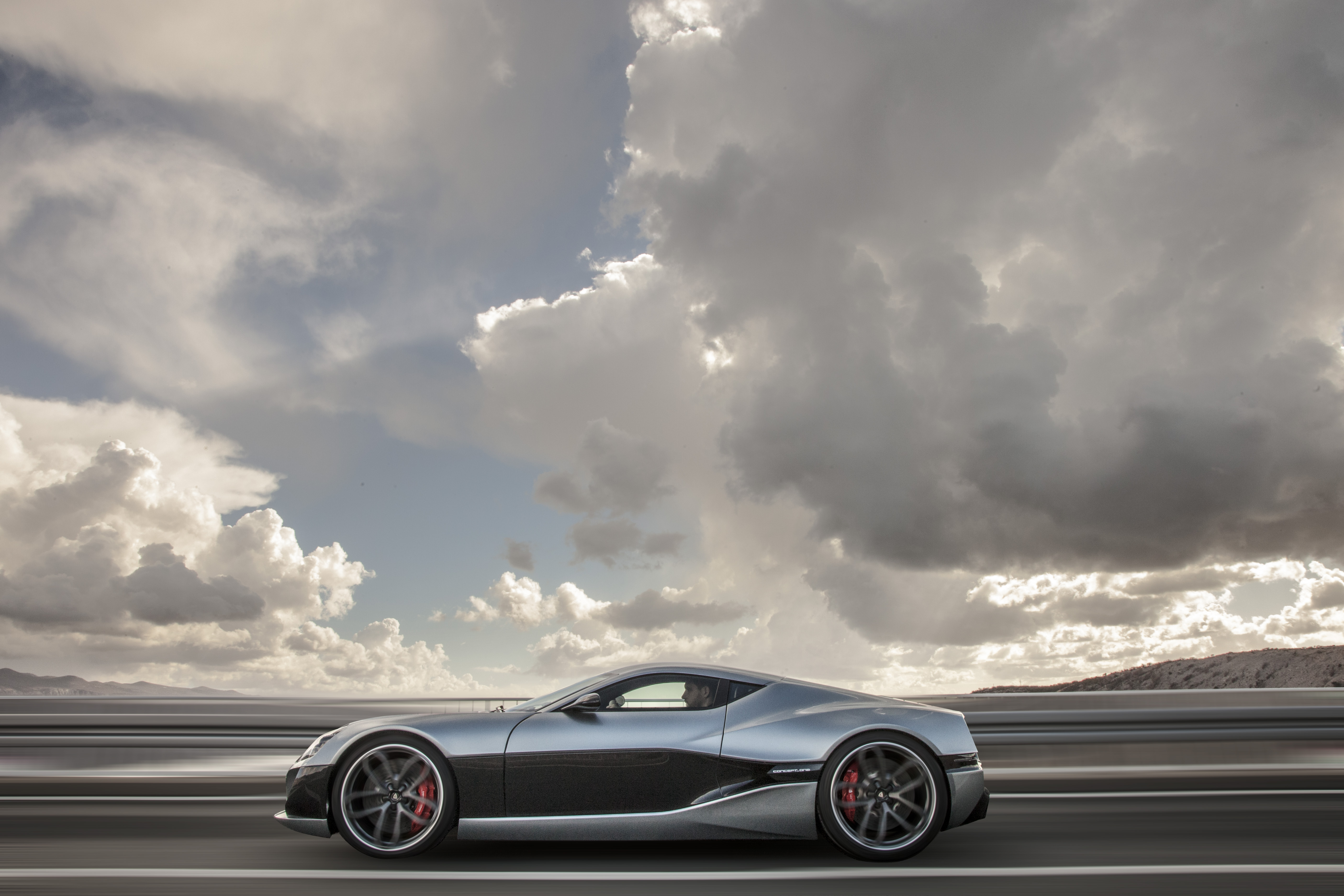
The Rimac Concept_One electric car will do 0-186mph in 14.1 seconds

Bugatti-rivaling speed without the gasoline bill.

If yesterday's Bugatti Chiron reveal had you realizing you need a hypercar, but old-fashioned internal combustion is too uncool for school, never fear: Rimac Automobili has you covered. The Croatian electric vehicle maker has been showing off the Concept_One for a while now—we first saw it at last year's Formula E race in Miami, but the production version broke cover at the Geneva auto show this week. How does 1072hp (800kW) and 1180ft-lbs (1600Nm) sound?

The Concept_One uses a pair of electric motors fed by an 82kWh lithium-ion battery pack and all-wheel torque vectoring that Rimac says provides the functions of traction control, stability control, and antilock braking by constantly calculating the optimum torque for each of the four wheels. 0-62mph (0-100km/h) is said to be dispatched in 2.6 seconds, and it should hit 186mph (300km/h) in just 14.2. Top speed won't rival the Bugatti, though—it's limited to 220mph (355km/h).

And if the Concept_One isn't enough for you, it now has an evil twin, called the Concept_S. This version drops some weight (110lb/50kg) and gains an additional 296hp (200kW) and 147 lb-ft (200 Nm). That drops 0.1 seconds off the 0-62mph time and more than a second from the dash to 186mph.

Read 2 remaining paragraphs | Comments

Hi-tech, lo-fi, 3-wheel electric vehicle thrills: Morgan’s new EV3

The British sports car firm reveals its first electric vehicle in Geneva.

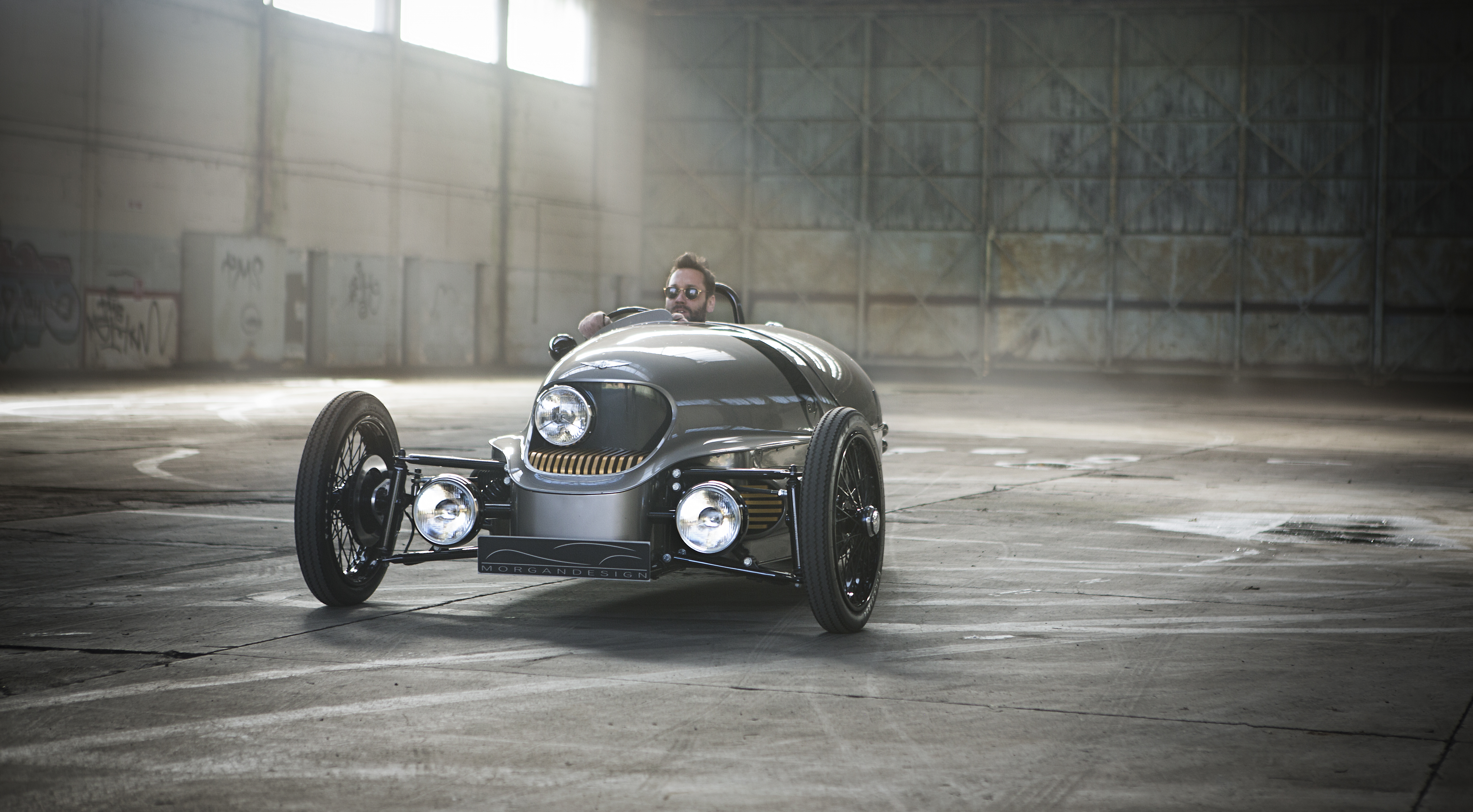
Last month we revealed that the Morgan Motor Company, maker of classic-looking (and in some cases classically built) sports cars plans to electrify its line up. At the Geneva auto show it took the wraps off the first of those electric vehicles, called the EV3.

It's based on the company's 3 Wheeler, a fun and back-to-basics sports car that normally gets its power from a two-cylinder bike engine. Instead of the motor from S&S, the EV3 has a 61hp/46kW electric motor and a 20kWh lithium ion battery pack.

That gives the EV3 a quite respectable range of 150 miles (241km). Top speed is said to be over 90 mph (144km/h) and 0-62 mph (0-100 km/h) takes about nine seconds. That might not seem like much but given the bare-bones nature of the EV3, we're pretty sure it's more than sufficient for back road thrills.

Read 2 remaining paragraphs | Comments

Q&A: Ford’s futurist knows kids today see status in their smartphones, not cars

Her job? “Be a polite contrarian. If I haven’t made it plain, I can’t predict the future.”

Sheryl Connelly, Ford's in-house futurist. (credit: Ford Motor Company)

There can't be many job titles out there cooler than "futurist." And earlier this week, I sat down with Sheryl Connelly, who holds that position at the Ford Motor Company.

Connelly has been with Ford for two decades now, spending a few years in marketing before moving on to cover global trends and futuring 12 years ago. Her job isn't to think about the cars and trucks of tomorrow, though. "The company has no shortage of subject matter experts in that area," she told me. Rather, it's her job to look beyond the industry, identifying how patterns and forces in the wider world will influence consumer behavior. "Those are typically slow-moving, deeply societal-rooted trends, things like aging population, increasing urbanization. But we also try to engage more with the public about micro trends (that last two to five years rather than two to five decades)."

Ford recently released its 2016 trends, a list built after a series of workshops and consultations with experts around the world. Connelly said that when work began on the current collection last year, she saw there was a lot of disillusionment out there—the economy, a rise in global violence, widespread attention to police misconduct here in the US, and so on.

Read 30 remaining paragraphs | Comments

1479 horsepower, 261mph, $2.6 million: The new Bugatti Chiron

The wraps are off the successor to the Veyron.

As we reported late last year, the scandal plaguing Volkswagen over its emissions-cheating hasn't had negative consequences for the group's halo brand Bugatti. It was widely expected that the scandal and its possible $40 billion impact on VW Group would result in the cancellation of the replacement for the Bugatti Veyron. Thankfully, its replacement, the Chiron, was unveiled formally to the world Monday in Geneva.

Named after a prewar Monegasque racing driver, Louis Chiron (pronounced shi'ron), the new car will cost about $2.6 million (£1.9 million) before tax. Behind the cockpit is a reworked version of the 8L turbocharged W16 engine (four banks of four cylinders with two common crankshafts), which will propel the all-wheel drive monster to 261mph (420km/h).

But it's no stripped-out racer—as you might expect for a marque renowned for building the ultimate in four-wheel excess, the interior is a riot of leather and machined aluminum. Expect it to be as easy to drive at regular speeds as the old car, too—it's said the Veyron was an easy drive even for one's grandmother as long as she didn't floor it.

Read 1 remaining paragraphs | Comments

Pics of Porsches and Aston Martins leaked ahead of Geneva Auto Show

See what the 911R and DB11 will look like.

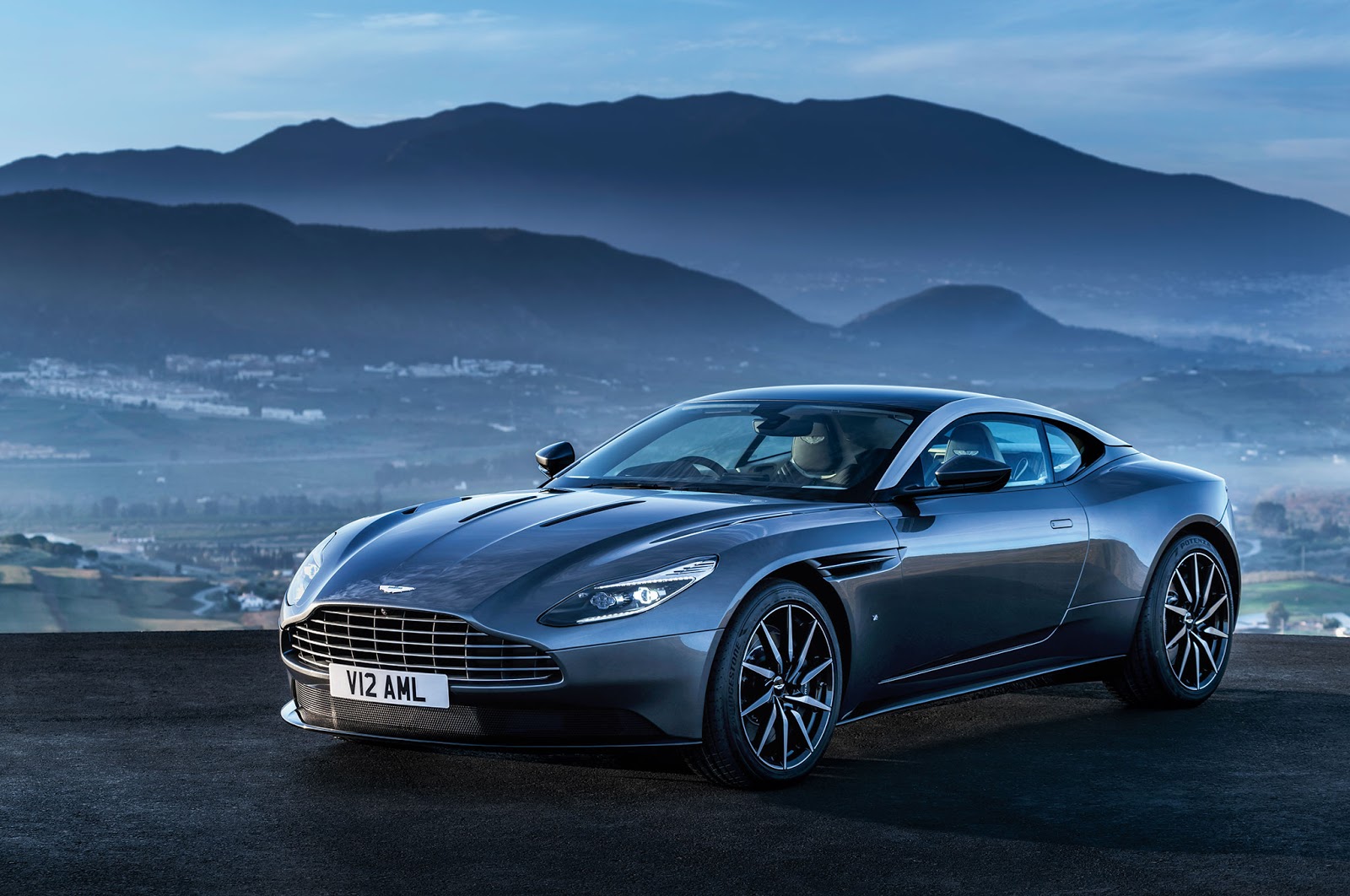
The Geneva Auto Show has just gotten underway in Europe, and we should have a full report on all the stars of the show later this week. But ahead of the show, images have leaked of two of its expected stars, Porsche's new 911R, and Aston Martin's DB11.

First up is the "new" Porsche, which is actually new version of an existing model. When the latest 911 GT3 debuted in 2014, it drew a bit of criticism from purists because it meant the loss of a manual gearbox. Even though racing Porsches have been semi-automatic for years, many driving enthusiasts want nothing to do with flappy paddles. The 911R should satisfy them—or at least it will if it becomes a regular model in the lineup. If recent history is anything to go by, though, it will more likely be a limited edition that sells out instantly and then commands a hefty premium on the used car market.

Underneath that sloping rear deck—bereft of wings or spoilers other than the retractable one fitted to the regular 911—is a 4L naturally aspirated flat-six engine from the GT3 RS, giving the 911R almost 500hp. Compared to the bewigged GT3 and GT3 RS, the 911R—named for an old Porsche road-legal racer—is meant to be focused on driver enjoyment rather than all-out lap times.

Read 2 remaining paragraphs | Comments

400mph or bust: Meet the VBB-3, the world’s fastest electric car

This electric record machine is built by students at the Ohio State University.

The Venturi Buckeye Bullet-3 combines two things we love here at Ars Technica: land speed records and electric vehicles. It's a collaboration between Venturi—a Monegasque electric car company—and the Ohio State University that aims to break 400mph (644km/h) on the Bonneville salt flats while simultaneously acting as a testbed for future electric vehicles and the young engineers who work on it. Fortunately Columbus, Ohio, is less than a day's drive from Washington, DC, so I took advantage and paid the land speed car a visit.

VBB-3—its nickname—is the third land speed car to come from the Center for Automotive Research (CAR) in Columbus. Its long, thin shape has been dictated by aerodynamics, unencumbered by the draggy intakes required to feed air-breathing engines. It has a pair of electric motors, each good for 1,500 horsepower (1,119kW) and powered by eight large lithium-ion battery packs. Earlier VBBs set records in 2009 and 2010, but last summer terrible salt conditions prevented VBB-3 from running a proper test program to 400mph and beyond.

Each axle is powered by its own electric motor. The starting point is the same EV motor Venturi builds for its sports cars, running here at a much higher voltage. In fact, there are actually two EV motors in each unit. "It's two motors sharing a cooling system and a common shaft," team leader (and former graduate student) David Cooke told us. "It makes more manufacturing sense to build smaller motors and couple them together than trying to build one big motor. Today that motor is putting out about 1,000 horsepower in the dyno, but it's capable of 1,500." The team is continuing to develop the powertrain—particularly the inverter control—to give VBB-3 the 3,000hp it needs.

Read 20 remaining paragraphs | Comments