Sim racing enthusiasts ordered to take down unlicensed Formula 1 mods

F1’s commercial rights holder is notoriously protective of its intellectual property.

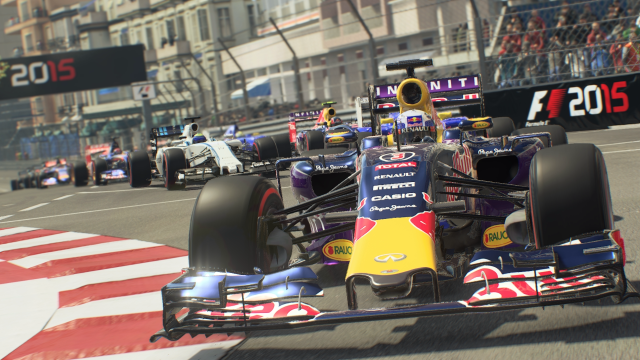
This image is from Codemasters' F1 2015, which is has the official license for the sport. Alter this game at your peril! (credit: Codemasters)

There's a bit of a fuss going on in the sim racing community right now. A website called RaceDeparment—which serves as a hub for many a sim racing game—took down many pages of content containing mods for a pair of Codemasters Formula 1 games as well as Reiza Studio’s Automobilista following a cease and desist from the sport's commercial rights holder.

RaceDepartment was hosting mods for F1 2013, F1 2014, and Automobilista that let players update their games so that the cars look like this year's machines (rather than several years out of date). But those mods were unlicensed by Formula One World Championships Ltd, which owns the commercial rights to all things F1 (including TV broadcasts, online videos, and video games). That's riled a few people up, if this hyperbolic (and sometimes-profane) rant at Pretend Race Cars is anything to go by.

However one feels about unlicensed game mods, it ought not to be too surprising that the content has been removed. For one thing, RaceDepartment's terms of service unambiguously state that copyright- and trademark infringement isn't cool, and even tells users that "When creating or uploading free to use mods, car skins, helmets, cars, tracks etc users should seek official permission first from the copyright or trademark holders," something that didn't happen here, since Codemasters is the only organization with an official license for Formula 1. And being able to update a two- or three-year old game to the 2016 season isn't exactly helpful to Codemasters either, giving gamers one less reason to pay for this year's game.

Read 5 remaining paragraphs | Comments
Buick has high hopes for its new Encore SUV

The small SUV is expected to be its best-selling model in the US.

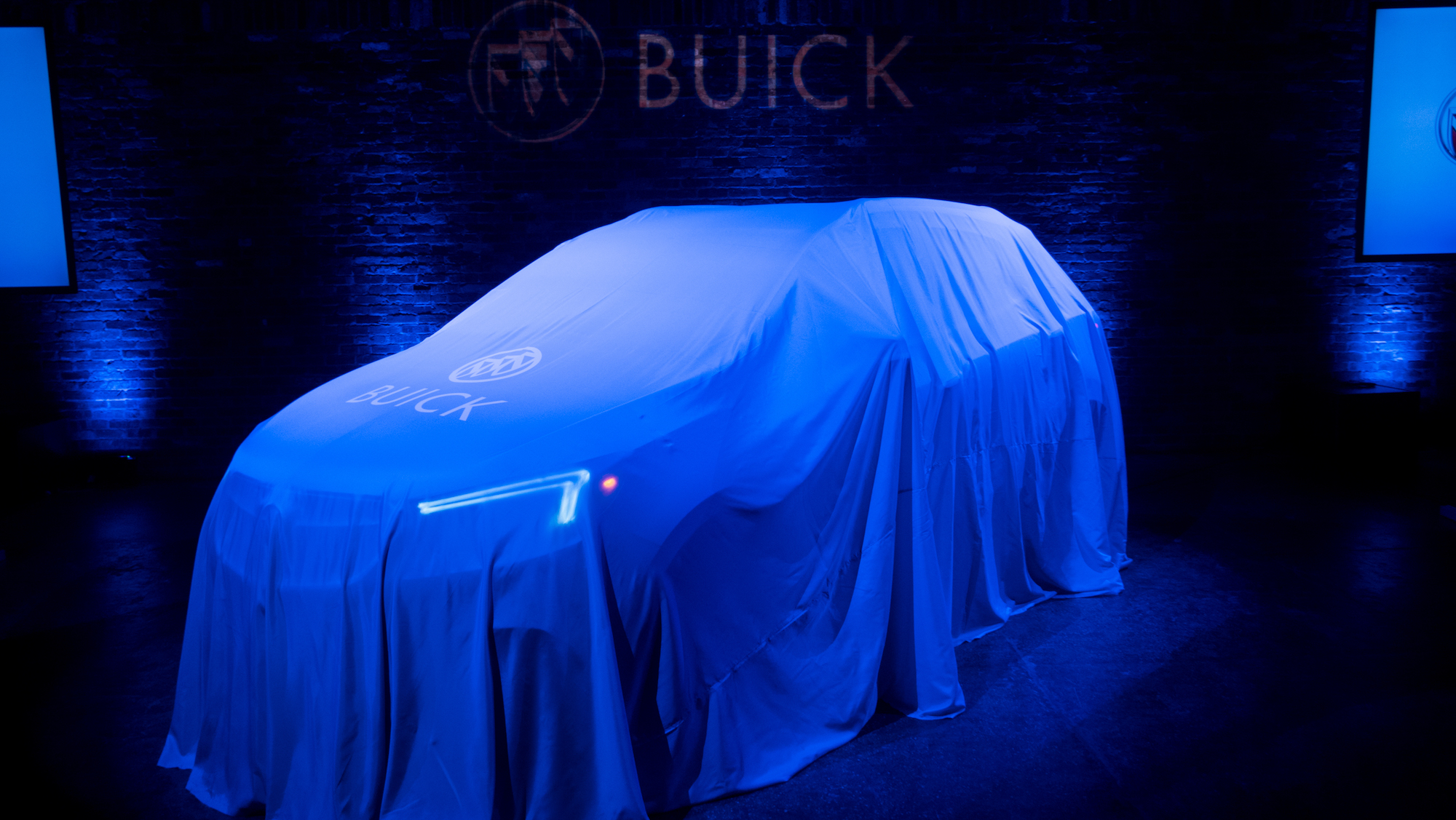
NEW YORK—Buick is so excited about its new Encore that it couldn't wait for the New York International Auto Show, choosing instead to unveil the new small SUV/crossover the day before the show opens to the media. It's an important car for the company—last year it sold more than 66,000 Encores in the US, accounting for a third of all new Buicks sold here.

"The Buick Encore created the premium small SUV segment and remains the top choice for customers seeking premium features and dependability coupled with timeless design," said Duncan Aldred, vice president of Buick Sales, Service and Marketing. "In a rapidly evolving segment, the Encore continues to lead with smart, purposeful updates and a new level of technology-infused elegance and refinement."

As befits the current trend of small-capacity forced induction power units, the Encore gets a pair of turbocharged 1.4L 4-cylinder engines. The cheaper option is capable of 25mpg in town and 33mpg on the highway, and there's a more advanced unit with direct injection that not only produces more power but also does so with more efficiency—28mpg in town and 34mpg on the highway. (Exact power and torque outputs were not available at press time.) Those figures are for the front-wheel drive versions; all-wheel drive will be an option, with an electronic clutch controlling just how much torque gets redirected to the rear wheels depending upon driving conditions.

Read 2 remaining paragraphs | Comments

Chevrolet Bolts are about to start rolling off the production line

The electric car has 200-mile range and will cost under $30,000 after tax credits.

One of our highlights at CES this year was an opportunity to get behind the wheel of Chevrolet's Bolt electric vehicle. Priced at under $30,000 after a $7,500 IRS tax credit, it's set to be the first mass-market EV on sale in the US with a battery big enough to take you 200 miles (321km) between charges.

Chevrolet promised that the Bolt would go on sale later this year, and the company looks set to meet that goal—pre-production vehicles are already working their way through the production line in Orion Township, Michigan.

"We’re at another critical and important point in the development of the Bolt EV,” said Josh Tavel, Bolt EV chief engineer. "We’ve moved from working in math and building cars by hand to building Bolt EVs on the line. We’re now testing the tooling used in the plant so that we deliver high-quality, 200-plus-mile EVs that our customers are eagerly anticipating."

Read 1 remaining paragraphs | Comments

Saving the Willow Run bomber factory

Rosie the Riveter’s factory to get a new lease of life as the Yankee Air Museum.

OK, this one isn't strictly car news, but we were alerted to the story by our friends at Chevrolet, and we know most of you enjoy a bit of vintage plane content as much as we do. A restoration effort is underway in Michigan, not of a car or even a famous warbird, but the Willow Run bomber factory, where the actual "Rosie the Riveter" (Rose Will Monroe) worked during World War II. Last month, three historic aircraft—a PB4Y-2 Privateer, an RB-57 Canberra, and a DHC-4 Caribou—were brought inside the Willow Run plant for the first time in many decades.

During WWII the nation's car makers joined the war effort, building planes, tanks, and other material. Willow Run was originally a farm, which Henry Ford bought in 1931 with the idea of using it to give kids from the city exposure to a more rural way of life.

In 1941, Ford transformed the site into a factory and airfield. At first Willow Run just made parts for the Consolidated B-24s, which were assembled elsewhere. But in 1942, the first Ford-built B-24 Liberator rolled out of the factory's doors, the first of almost 7,000.

Read 6 remaining paragraphs | Comments

KTM brings the service manual into the 21st century with augmented reality

The Austrian bike maker is paving the way for enterprise AR.

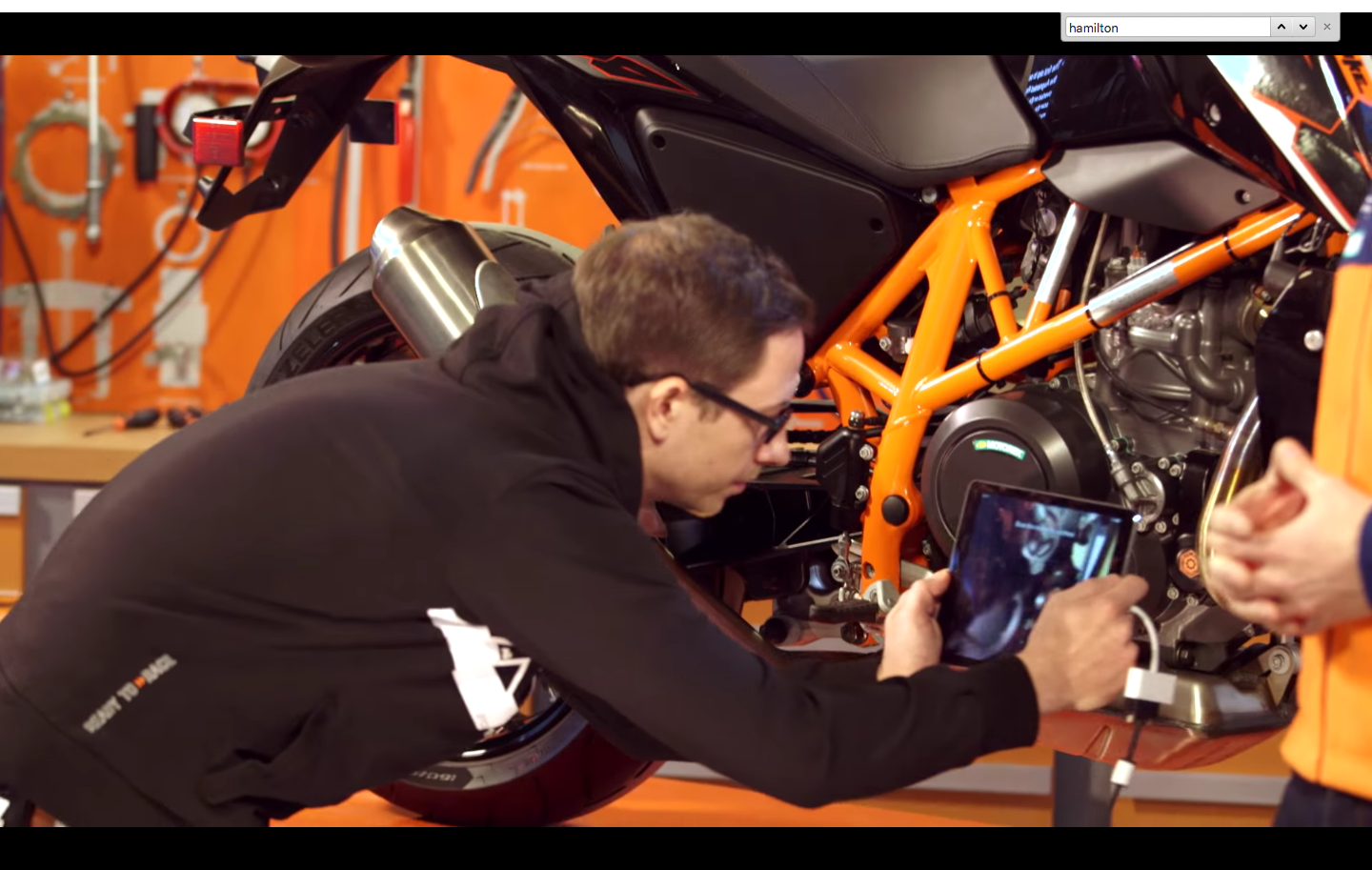
Hyundai's use of augmented reality to create a 21st century owner's manual remains one of our favorite—and most practical—implementations of AR tech to date. However, it's not the only cool use of AR in the automotive industry. Motorbike firm KTM is getting in on the action with an AR workshop manual that also demonstrates the utility of this burgeoning technology. KTM's app recognizes different serviceable elements on its bikes and then walks the technician through the necessary steps to fix them.

To find out a little bit more about how KTM went about creating the AR app, we spoke with Vuforia's Jay Wright (Vuforia is an AR firm that was bought from Qualcomm last year by PTC). Wright told us that there are now more than 25,000 Vuforia-built AR applications in Google Play and Apple's App Store, but most of them are consumer-facing—largely marketing-oriented—apps. (You can find a great automotive example at McLaren Cars.) This will soon change. "We're about to see serious traction in enterprise [applications]," Wright said.

Building an AR app requires several steps. The first—which is relatively simple, according to Wright—is telling the app what it's seeing. "You'll notice the content appears 'stuck' to something," Wright told us. "The application has to recognize the environment or the target." These targets can be images, objects, or surfaces. "It can be as simple as taking a picture or using a little scanning tool that we have that runs on your phone."

Read 6 remaining paragraphs | Comments

10 more OEMs pledge to make auto-braking standard in new cars

A total of 20 car makers have now committed to making it happen by 2022.

(credit: Ford)

The number of car makers committed to making automatic emergency braking (AEB) a standard feature on all new cars has doubled this week. On Thursday, the National Highway Traffic Safety Administration and the Insurance Institute for Highway Safety announced that 20 manufacturers are now on board with the plan, which will see AEB systems installed throughout their model ranges by 2022. In September of last year, we reported that 10 OEMs had already made the pledge.

In the past, government mandates were needed to spread advanced driver safety aids like airbags or electronic stability control systems beyond the luxury cars in which they first appeared. In this case, the auto industry has gotten ahead of possible NHTSA regulation and looks set to implement AEB itself.

Speaking at an event last fall, NHTSA Administrator Mark Rosekind said that the agency wanted to see OEMs implement AEB as quickly as possible. "Safety," he said, "should not be a luxury item. Its an obligation for all of us." Whether 2022 qualifies as "quickly" is a matter of opinion, but the time frame may be reasonable given the long product development lifecycles of new vehicles.

Read 1 remaining paragraphs | Comments

Tesla Model X first impressions: This could be the best SUV we’ve driven

We only had a short 10-minute window, but this might be better than the Model S.

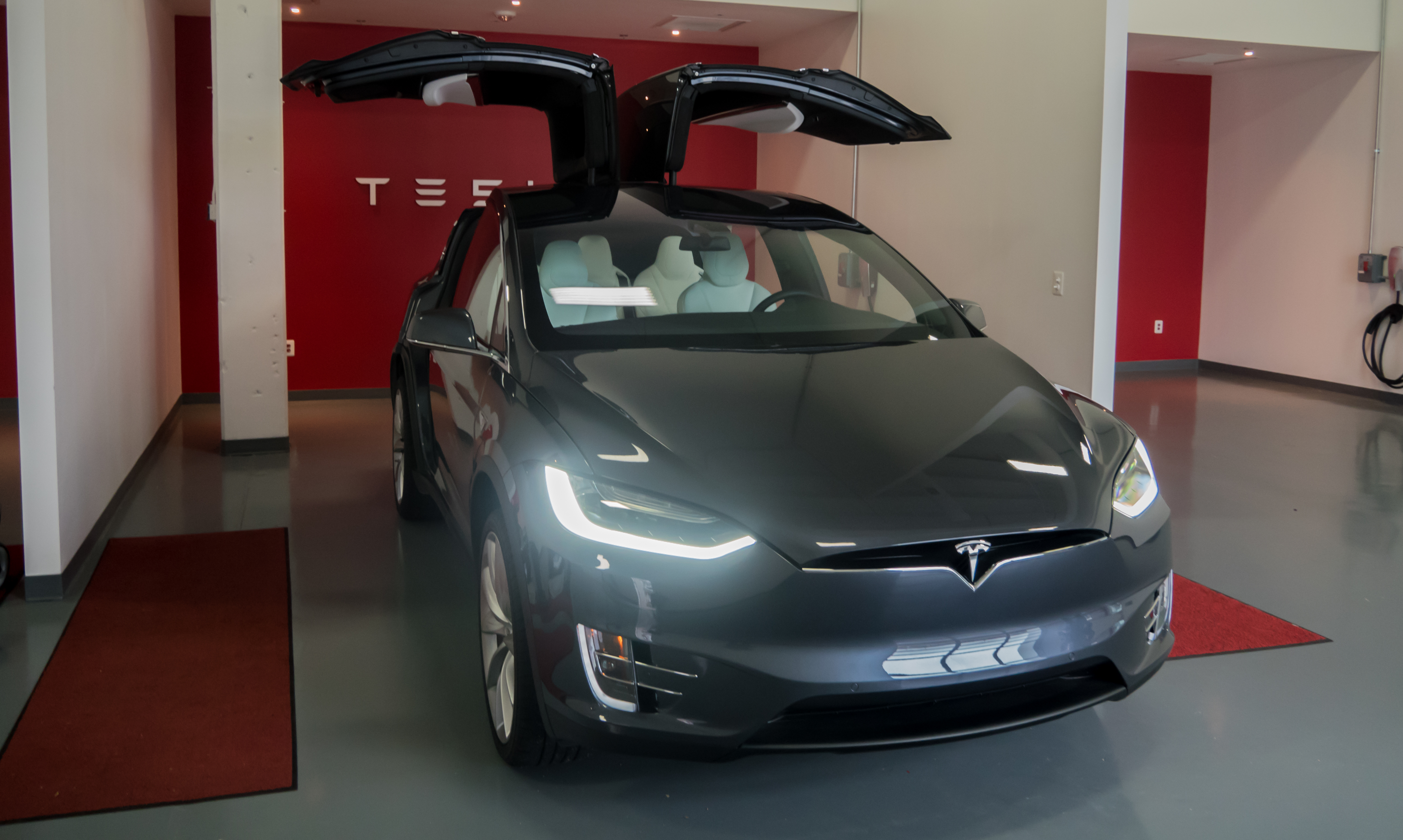
Later this month, Tesla is going to unveil its long-awaited Model 3 electric vehicle. We're all eager to see the new EV, which will retail for half the cost of Tesla's current cheapest model while retaining the company's signature long-range capability. But there's another Tesla we're yet to know well, one that's just starting to appear on our roads: the Model X SUV. Tesla is currently taking the Model X on a tour around the country to give customers with reservations a chance to get behind the wheel, and the company was kind enough to invite us to check it out earlier this week in Washington, DC.

A proper review will have to wait until Tesla has a spare Model X they can set aside for the media, which we hope happens some time later this year. The company is currently working to meet order books that are overflowing regardless of glowing road tests, so it's hard to blame this approach. In the meantime, the 10 minutes your author spent behind the wheel on the roads of Tyson's Corner, Virginia, will have to suffice.

If that time is anything to go by, the Model X is one of the very best SUVs I've driven. The Model X shares its platform—if not its ride height—with the Model S sedan, which means there's a skateboard chassis with the battery packs between the axles. With such a low center of gravity, there's none of the usual SUV body roll. Instead you get all the benefits of a lofty driving position without the principal drawback. Combined with the panoramic windscreen (it has clever magnetic sunshades), the result is an expansive view of the world in front of you.

Read 4 remaining paragraphs | Comments

Chevrolet’s new fire-spitting 640hp Camaro ZL1 breaks cover

Company takes a quick break from electric cars to drop a pair of track beasts on us.

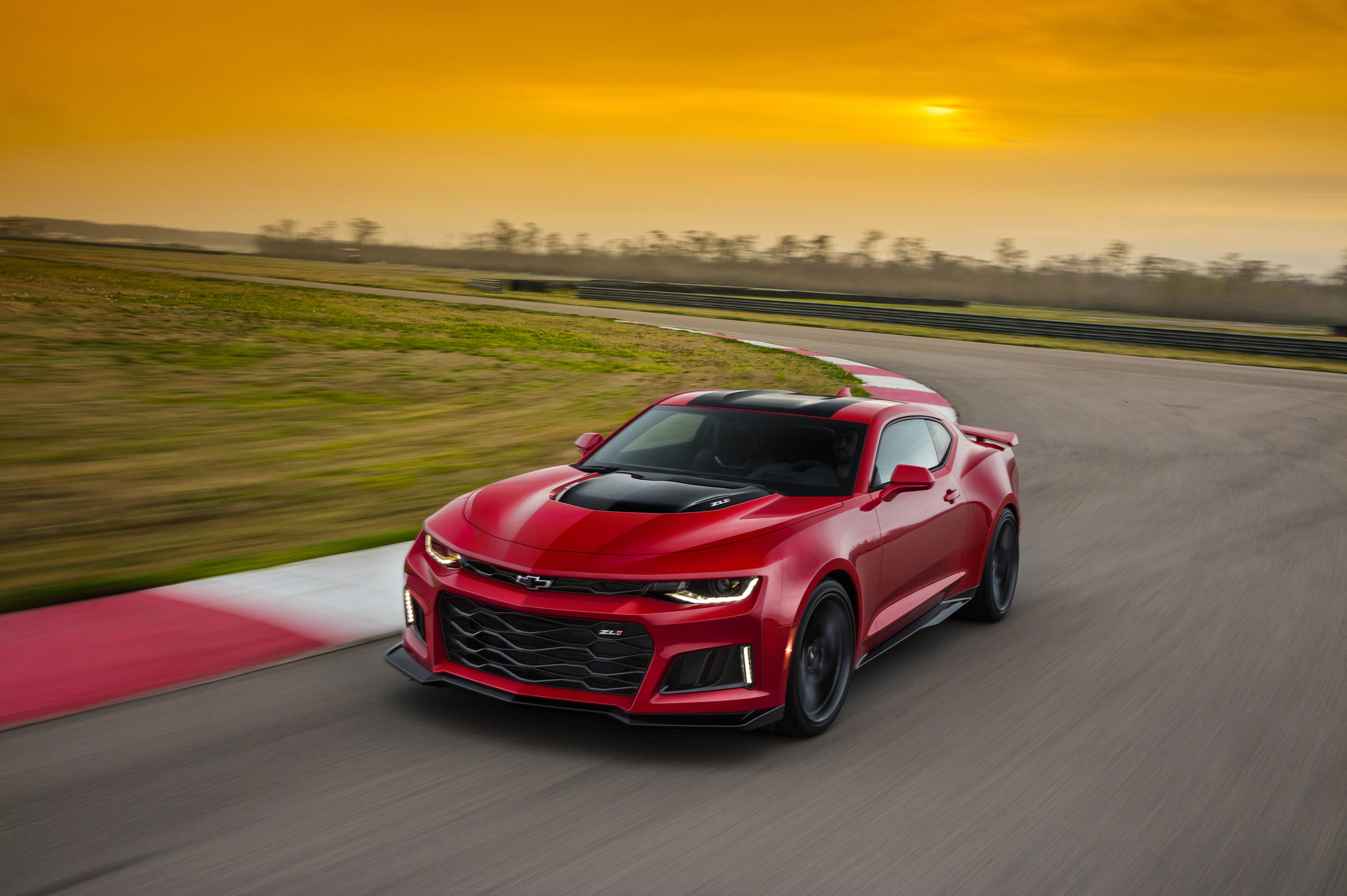
2017 is a big year for Chevrolet when it comes to electric vehicles. Between the second-generation Volt and the forthcoming Bolt, the company is in a race with Tesla to see which manufacturer will be the first to sell 200,000 EVs and lose the IRS tax credit. But lest you think that GM only cares about efficiency and being kind to the environment, think again. Today, it took the wraps off a new track monster—the 2017 Camaro ZL1. Under the hood is a supercharged V8 (the 640hp/477kW 6.2L LT4) and General Motors' all-new 10-speed automatic transmission.

The ZL1 has also been on a significant weight loss program. It's 200lbs (91kg) lighter than the previous ZL1, but the new car has an extra 60hp (45kW) and 80ft-lbs (109Nm) to play with. Although you can get the ZL1 with a conventional six-speed, the new automatic gearbox sounds rather interesting. Several years ago, Ford and GM decided to collaborate on a new generation of automatic transmissions for rear-wheel drive cars and trucks—this is the first application of that project to come from Chevrolet, although with some parts and software unique to the ZL1.

The car has also had an aerodynamic facelift to distinguish it from lesser Camaros—but more importantly, to aid high-speed stability and improve cooling. Chevrolet's Corvette Z06 supercar has faced criticism that it overheats too quickly on track—a shame given that it's so ludicrously fast that the track is the only real place it has to stretch its legs. GM will be hoping the same isn't true for the ZL1, which uses the same engine.

Read 5 remaining paragraphs | Comments

First impressions of Acura’s new NSX hybrid have hit the street

Three electric motor/generators and a twin-turbo V6 mean 573 horsepower.

Press impressions of Acura's long-awaited second-generation NSX are starting to show up online. We've seen the two-seat, mid-engined hybrid at a couple of auto shows now, but a couple of weeks ago Honda and Acura started giving out a bit of seat time in production cars. (Ars wasn't at the event, but you can read impressions from Roadshow and SlashGear.)

The original NSX was built from 1990-2005, and it showed the world that Honda could build a better mid-engined sports car than Ferrari. Extensive use of aluminum and other lightweight materials kept the weight down, and its naturally aspirated engine was a gem of a power plant. The handling was reportedly honed by Ayrton Senna, who benefited from Honda power in his McLaren Formula 1 car. Automotive purists made it something of a cult car, especially the more focused Type R.

The new NSX is much more complex under the skin than the previous model. It still has a mounted V6 between the cockpit and the rear wheels (longitudinally rather than transversely), but the V6 has a pair of turbochargers—and 500hp (373kW). There are three electric motor/generator units; one for each front wheel (36hp/27kW) and third (47hp/35kW) that feeds into the same 9-speed dual-clutch transmission as the engine.

Read 4 remaining paragraphs | Comments
Audi’s new 2017 A4 is for nerds, by nerds

Audi sells more A4s than any other car, and the new one comes packed with tech.

(credit: Jonathan Gitlin)

The A4 is an important car for Audi. Last year more people took home a new A4 than bought any kind of Audi just five years ago—it was literally the company's bread and butter, even if the bread was getting a little stale. Enter the 2017 A4, packed full of clever electronics and driver assists that inspired the tag line "intelligence is king." Make no mistake, Audi wants you—dear Ars reader—to buy this car.

The new A4 is a little wider and longer than the outgoing model, shedding some unwanted weight in the process. There's an entirely new five-link suspension front and rear, and it's available as front- or all-wheel drive. For now the entire line gets the same 4-cylinder 2.0L turbocharged direct injection gasoline engine and seven-speed dual clutch gearbox, which means 252hp (185kW), 273lb-ft (370Nm) and 0-60mph in 5.7 seconds. And it's priced aggressively to take on rivals from BMW and Mercedes-Benz, starting at $37,900—although expect your invoice to start with a four if you want some bells and whistles.

Design

Read 16 remaining paragraphs | Comments