The best of the rest at the 2016 New York International Auto Show

We can’t review every car at NYIAS, but there are a ton of interesting ideas to see.

Come along with us as we explore this year's New York International Auto Show—and don't miss Audi's spectacular trolling of its German rivals. (video link)

This year's New York International Auto Show (NYIAS) is currently underway at the Jacob H. Javits Center in Manhattan, and in recent years New York has become an increasingly important event for the auto industry. NYIAS is almost at the point of rivaling Detroit as the premiere US show. We spent a couple of days pounding the floors to find out what's new and interesting, and we've already reported on some of the more significant debuts—like Mazda's MX-5 RF and Porsche's 718 Boxster. There are simply too many noteworthy vehicles and technologies on display these days to give the fuller review treatment to all, so what follows is our "best of the rest," in alphabetical order, because we don't want to play favorites.

A is for Acura, and that means the Acura NSX GT3. This is a racing version of the company's new hybrid supercar, built on the same production line in Marysville, Ohio. It's shorn of the road car's hybrid system, however. We hope to see some of these competing in the IMSA WeatherTech Sportscar Championship next year.

Read 14 remaining paragraphs | Comments
2016’s WEC hybrids: This year’s coolest racing cars take to the track

Meet the new Audi R18, Porsche 919 Hybrid, and Toyota TS050.

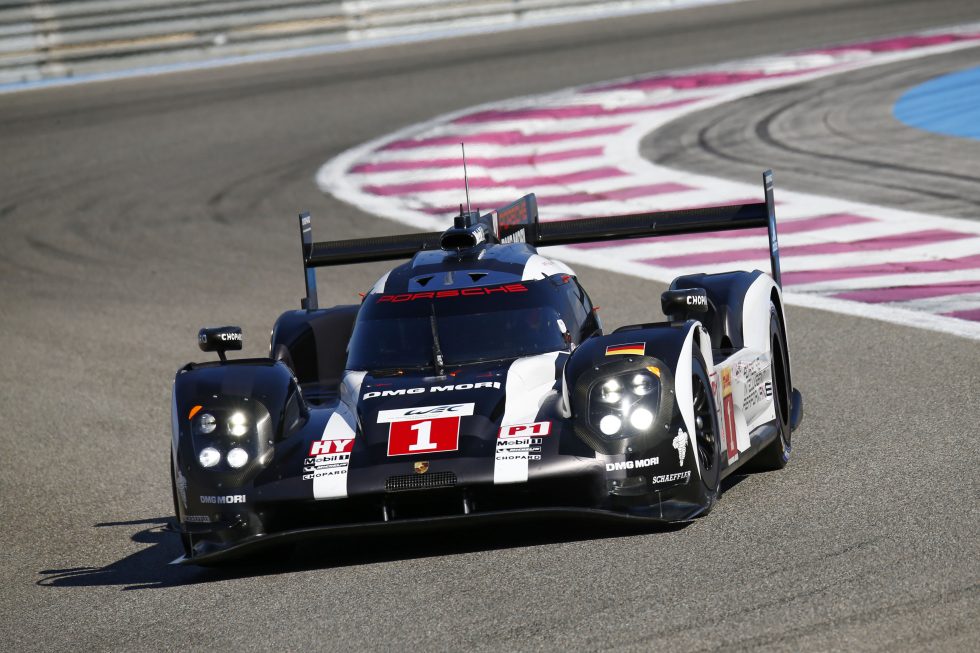
This year it looks like Porsche's 919 Hybrid will once more be the car to beat. (credit: Porsche)

2016's most technologically exciting racing cars have revved up in Europe this month. Of course, we're referring to the hybrid prototypes from Audi, Porsche, and Toyota that will compete in this year's World Endurance Championship. It's no secret that we're gigantic fans of the WEC here at Ars. And we especially love that these carbon fiber testbeds use the crucible of long-distance racing to develop new technology that has a direct impact on the cars we drive on the roads.

The cars were revealed to the world in the days leading up to the WEC's Prologue test at the Paul Ricard circuit in the South of France, which was held on March 25 to 26. There have been a few changes compared to last year's cars, and these tweaks are aimed at making the hybrids even more efficient than 2015. (Bear with us, this may get a little complicated to explain.)

Each car is allowed up to two hybrid systems in addition to their internal combustion engine. These can be motor-generator units that harvest and then deploy kinetic energy to the front or rear wheels, but other systems are also allowed (i.e. a motor-generator unit connected to an engine's turbocharger). Gasoline and diesel engines are allowed, and they can be naturally aspirated or turbocharged.

Read 20 remaining paragraphs | Comments

Behind the scenes with DiRT Rally’s punishingly realistic road physics

Driving up accurate gravel-filled mountains isn’t easy, but it’s oh-so-rewarding.

(credit: Codemasters)

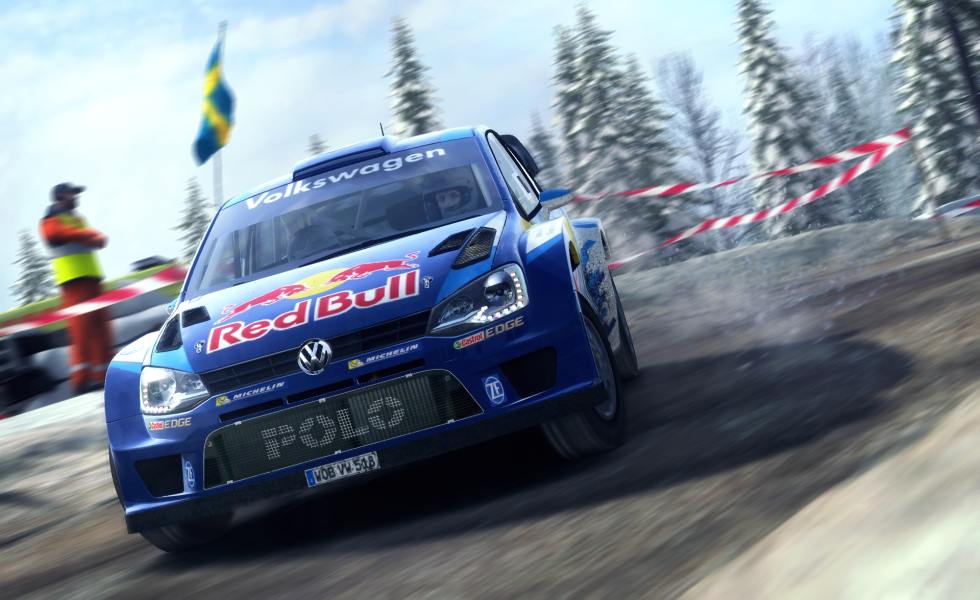
Formula 1 might be known as the pinnacle of motorsport, but surely the most challenging discipline in racing has to be rallying. Now, in the form of Codemaster's DiRT Rally—available now for the PC on Steam Early Access and arriving on the PS4 and Xbox One on April 5th—there's a video game that finally does justice to this sport. More of a simulation than anything that's come before, DiRT Rally may just be one of the hardest racing games we've ever played. It's also one of the very best.

For the uninitiated, rallies are point-to-point races run against the clock. They're run on "stages"—public roads or tracks closed for the occasion, one car after another in series. Each car has a driver and co-driver. Before the event, they will prepare pace notes—a shorthand list of the route with information about the various corners and hazards—and during each stage, the co-driver handles the navigation duties, calling out that information for the driver.

Those of us who race on purpose-built racetracks quickly memorize the layout, safe in the knowledge that the same corner will be in the same place lap after lap. Rally drivers? Not so much. Not only do they have to race across stages that can be tens of miles long, they do so on dirt or gravel roads where the amount of grip varies from corner to corner. Oh, and they have to run in all weather. Rain, of course, but also snow and ice, depending on the event. As we say—challenging stuff!

Read 13 remaining paragraphs | Comments

Nothing but a number? Meet the new Porsche 718 Boxster

Trading six cylinders for four, Porsche bets that less is more.

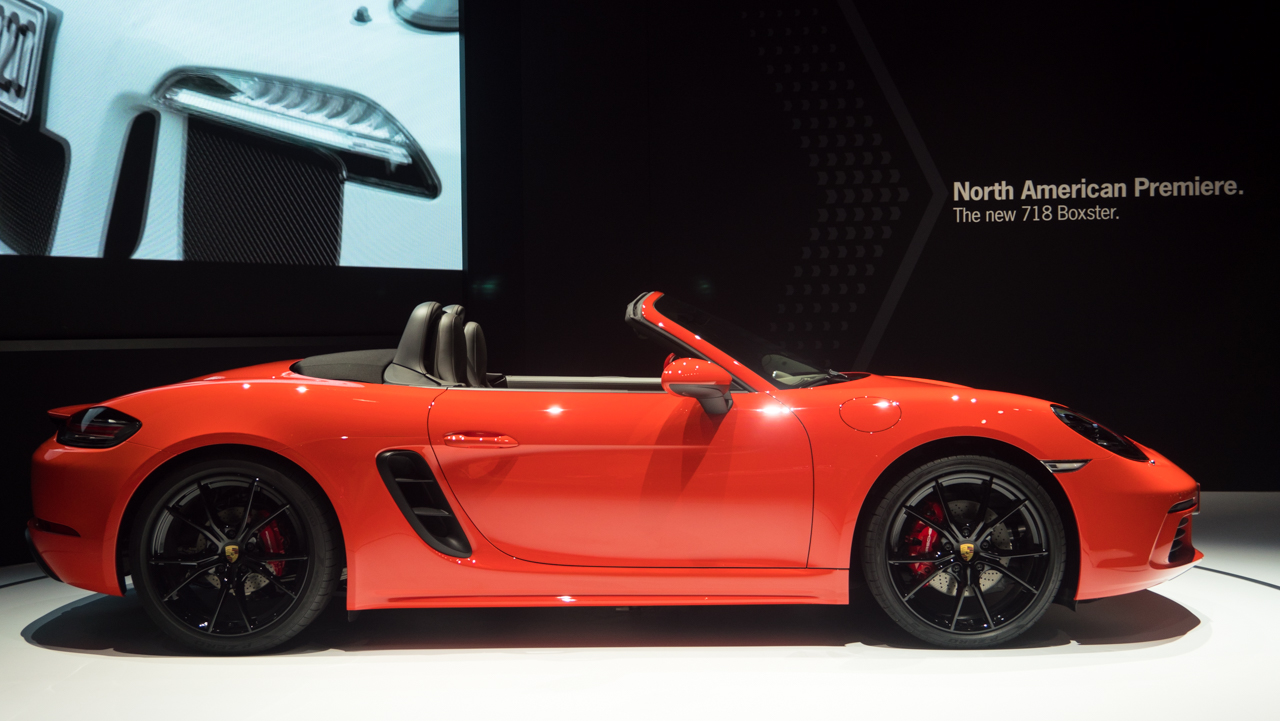
Porsches have long been a living dichotomy. No sports car manufacturer wears its engineering sobriety so blatantly on its sleeve. Yet, the human result is a clear polar opposite. Porsche fans are nearly as rabid as those that feverishly wave the Ferrari flag. After all, this is the company that made the rear-engine 911 not only live, but thrive through multiple generations despite air cooling and a rearward weight bias with the flawed nature of highly polar momentousness. Overcome fundamental deficiencies, find a way to turn them into advantages, then ring the cash register. For Porsche, this has worked for decades. The latest in that thinking are the two 718 Boxsters going on sale this June, in both a $58,000 standard and $64,800 S configuration.

One central argument of the 718 is that less is more. The Boxster convertible (as well as the Cayman coupes) move away from six-cylinder engines to a paltry four cylinders. And though nobody can drive a specifications table and should therefore not judge equipment based solely on stats, many do. So, Porsche purists are concerned. At the most aural level, six cylinders firing every 720 degrees of crank rotation sound better than four. Or so many people think. But no one should judge a book by its cover.

There is some historical precedent for the engine choice, however. Porsche's first cars had four cylinders. Porsche's first racing engine—the Ernst Fuhrmann-designed four-cam boxer—had four cylinders. The latter also had a complex camshaft drive system with multiple shafts and required frequent rebuilds, but that was then and this is now.

Read 8 remaining paragraphs | Comments

Alfa Romeo’s Giulia: Italian good looks and lashings of technology

The best bit? It starts at just $40,000.

Meet the Giulia—Alfa Romeo's credible return to the US small luxury sedan segment. Video shot and edited by Jennifer Hahn. (video link)

Was it Top Gear that issued an edict saying one could only be a real car enthusiast if they'd owned an Alfa Romeo? That would have disqualified most Americans from earning that title for many years; Alfa Romeo pulled out of the US market in the mid-'90s. But this summer, the brand returns to these shores with the arrival of the Giulia sedan.

Read 4 remaining paragraphs | Comments

The Audi R8 goes topless in Manhattan, wins 2016 World Performance Car

We take a closer look at the second generation Audi R8.

Take a closer look at the new Audi R8 with us at the New York International Auto Show. Video shot and edited by Jennifer Hanh. (video link)

Audi had quite a few new R8s on display at this year's New York International Auto Show. The big reveal was the world premiere of the R8 Spyder—a roofless version of the V10 supercar that looked rather good under the lights in its bright yellow paint. The Spyder was joined by three other R8s: a couple of the souped-up R8 V10 Plus models (identifiable via the naked carbon fiber rear wing and other carbon fiber addenda) and a "regular" R8 V10—if any car with 540 hp (397kW) capable of 199mph (320km/h) can be said to be regular. And the R8 took home some honors, winning the title of 2016's World Performance Car .

Read 4 remaining paragraphs | Comments

Porsche’s 911R makes its American debut in New York

We talk to the car’s creator, Porsche’s Andreas Preuninger.

We speak to Porsche's Andreas Preuninger about the new 911R—this year's must-have 911. Video shot and edited by Jennifer Hahn. (video link)

Porsche's long-rumored new 911R broke cover at the Geneva International Motor Show earlier in the year. Happily for those of us on this side of the Atlantic, Porsche brought the 911R to New York for the auto show, even though the 911R's entire production run—limited to just nine hundred and eleven cars—has already been completely sold out. More happily for us, we also got to speak to Andreas Preuninger, the driving force behind the 911R (make sure to watch the video above).

The 911R is a response to customer feedback about the most recent motorsports-infused 911 GT3 RS. Until now, Preuninger told us, previous generations of GT3 RS had satisfied both the track addict and those drivers looking for out-and-out road-driving enjoyment. But the current generation GT3 RS (known as the 991) is so capable—and has so much grip—that to all intents and purposes its limit is out of reach on the street.

Read 6 remaining paragraphs | Comments

The 2017 Nissan GT-R is Godzilla Redux

Nissan’s better, faster, more comfortable supercar slayer

Everyone from car enthusiasts to gamers to RC joystick jockeys knows the Nissan GT-R, but it wasn't always thus. For most of its life, the car that many now call "Godzilla" toiled away in relative obscurity, at least in the West. Yet its performance cred has never been questioned. To emphasize the GT-R's distinguished lineage, Nissan surrounded the 2017 model at the New York International Auto Show with an inspired display of its fathers, grandfathers, and great-grandfathers.

The new GT-R boasts better-quality interior materials, additional sound deadening, revised rear bodywork, and a "V Motion" grille in matte chrome. With its hand-built 3.8L twin-turbo engine, it also cranks out 20hp (15kW) more than last year's model, for a total of 565hp (421kW). Nissan declares that the 2017 GT-R has the most standard horsepower among all of its competitors, though no performance figures are cited. (The previous GT-R does 0-60 mph in just 2.7 seconds, however.)

For the New York Auto Show, Nissan had four of its five master craftsmen, or Takumi, demonstrate engine building for the gathered press. Even with all that, the new car had to compete for attention with the classic Skyline GT-Rs parked next to it.

Read 8 remaining paragraphs | Comments

Mazda Morphs The Miata: meet the MX-5 RF

The retractable hardtop Miata debuts at the New York International Auto Show.

Mazda walks us through the new MX-5 RF and its folding hardtop. Video shot and edited by Jennifer Hahn. (video link)

If cars were food, Mazda’s MX-5 Miata would be all hot fudge sundae on flavor but all broccoli on nutrition. In other words, if you can’t make a satisfying meal out of the Miata, you’ve got some DNA gone seriously wrong.

As inevitable as night following day, the latest generation Miata takes a page from its parents with the new Miata RF ("Retractable Fastback"), employing a folding roof aimed at those who dare to be a bit different.

Read 15 remaining paragraphs | Comments

BMW and Alpina go all out with the 7 Series in New York

Not one but two supersedans with 600hp, and there’s also a hybrid version too.

BMW and Alpina show us around their new flagship performance sedans, and we check out some more connectivity options and the hybrid 740e. Video shot and edited by Jennifer Hahn. (video link)

NEW YORK—There are a number of new supersedans on display at BMW's stand at the New York International Auto Show this year. For the performance-oriented driver, there are two to choose from, both with mighty 600hp (447kW) engines. One has been tweaked by BMW's M Division; the other is from Alpina, a factory-linked tuning house that has been making fast-but-subtle versions of BMWs for 50 years now. And if your tastes are more "save the planet" than "how fast can I lap the Nürburgring," then good news—there's also a hybrid available.

Read 7 remaining paragraphs | Comments