Car makers can’t “drive their way to safety” with self-driving cars

It’s a matter of statistics and confidence levels.

(credit: Ford)

The push for self-driving cars—at least here in the US—is happening mostly in the name of increasing road safety. More than 33,000 people die on US roads each year, and the National Highway Traffic Safety Administration says its data shows that "in an estimated 94 percent of crashes, the critical cause is a human factor."

Advanced driver-assistance systems (think Tesla's autopilot or the semiautonomous mode on Audi's A4) are already a boon to drivers, reducing fatigue and keeping an ever-vigilant watch out for hazards, but the RAND Corporation has just published a study that suggests we may never be able to prove the safety of a self-driving car.

"Under even aggressive testing assumptions," the authors write, "existing fleets would take tens and sometimes hundreds of years to drive these miles—an impossible proposition if the aim is to demonstrate their performance prior to releasing them on the roads for consumer use. These results demonstrate that developers of this technology and third-party testers cannot simply drive their way to safety. Instead, they will need to develop innovative methods of demonstrating safety and reliability."

Read 5 remaining paragraphs | Comments

The lucky 500: applications open for the Ford GT supercar

We spoke to Henry Ford III about the Ford GT program.

So far, we've seen the new Ford GT in Forza, at auto shows, and on the track at Daytona. Deliveries of the 600hp (447kW) supercar begin later in the year, but with just 500 cars planned, many have wondered how they will be allocated. On Wednesday morning, the Blue Oval revealed its plan; customers will be chosen from online applicants, and if you have $400,000 and want a GT in your garage, you have until May 12th to apply.

On Tuesday afternoon, we spoke to Henry Ford III about the program. He told us there had been plenty of internal discussion on how to allocate 500 GTs across the 10,000 Ford dealers in the US and 18 other countries. "We want to put the car in the hands of people who are true brand ambassadors for Ford," he told us. That means people who will drive their GTs—to track days, to Cars and Coffee, and the like—rather than lock it away, or worse, flip it for a quick buck.

Senior management at Ford will review the applicant pool and make some hard choices after the May deadline. The lucky few will be guided through the ordering process by a concierge service that will liaise between the local Ford dealer and Ford Performance, the new division that is responsible for developing and building the GT (as well as some of Ford's other more interesting vehicles).

Read 3 remaining paragraphs | Comments
Tesla finds faulty hinge in early Model X SUVs

Owners of affected vehicles asked not to use third row of seats until fixed.

The middle row of seats is fine. (credit: Jonathan Gitlin)

Some early owners of Tesla's Model X will need to hold off using the SUV's third row of seats for the next few weeks. On Monday night, Tesla sent out a safety notification to about 2,700 Model X owners after discovering a faulty hinge during testing. The company has issued a voluntary recall to replace the part and has asked affected owners to refrain from using their third row of seats until their car has visited a service center for the fix.

According to the e-mail sent to Model X owners, "…during an internal seat strength test that was conducted prior to the start of Model X deliveries in Europe, the recliner in a third row Model X seat unexpectedly slipped. The recliner, which is provided to us by an outside supplier, is the locking hinge that allows the third row seat back to fold forward, and if a recliner were to slip during a crash, the seat back could move forward."

Tesla also sent e-mails to Model X owners who were unaffected by the issue, letting them know that a revised locking hinge has been in use for production cars since March 26th.

Read 2 remaining paragraphs | Comments

Pitch black: Ford’s autonomous cars don’t care whether it’s day or night

Night testing in the desert goes surprisingly well, the company says.

(credit: Ford)

As we reported on Sunday, some car makers are unhappy with the National Highway Traffic Safety Administration's push for coherent nationwide self-driving car regulations. This is partially because optical sensors can't always cope with adverse weather. But lest we forget, the intent—both of regulators and the OEMs that driving this technology—is to save many of the 33,000 lives lost on US roads each year. One of those companies, Ford, has just released the results of recent night testing that it says proves the effectiveness of the company's approach to autonomous driving.

The semi-autonomous cars we've been driving recently from Audi, Tesla, and Volvo all depend mainly on optical sensors to detect their environment. And the critics are correct—these sensors can't always read the lines on the road and can be susceptible to poor weather. Like Google, Ford uses lidar as the car's primary sensor. And after testing in the desert at night, Ford says that the tech far surpasses anything a human could do.

Wayne Williams—who we talked to at CES in January—was one of Ford's researchers who went for a nighttime ride in the autonomous Fusions. “Inside the car, I could feel it moving, but when I looked out the window, I only saw darkness. As I rode in the back seat, I was following the car’s progression in real time using computer monitoring. Sure enough, it stayed precisely on track along those winding roads,” he said.

Read 2 remaining paragraphs | Comments

Ford just made spotting its police SUV a lot harder

The Police Interceptor Utility can now hide its flashing lights in the roof liner.

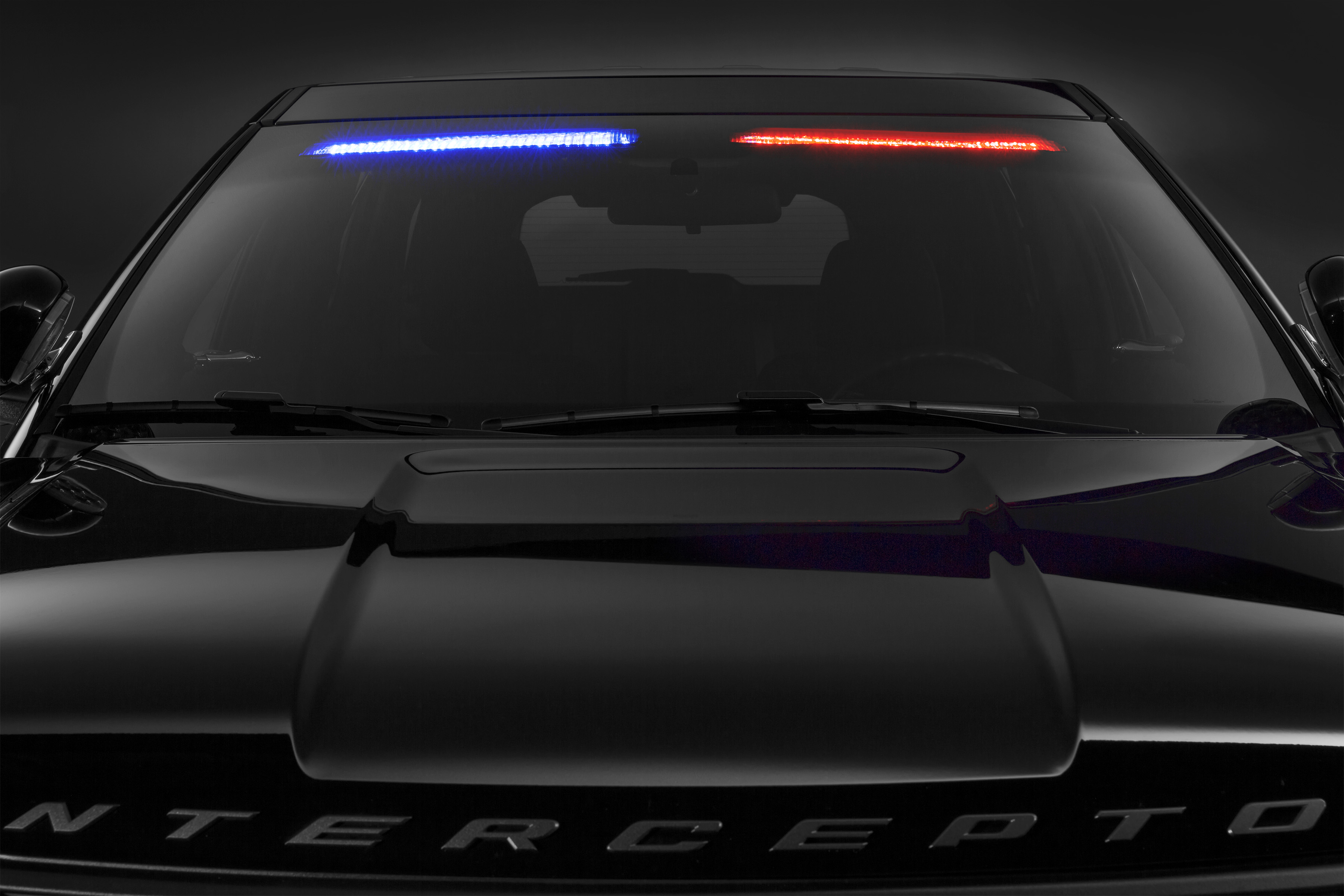
Scofflaw drivers beware: spotting police vehicles is about to get more challenging. Ford has designed a new lightbar for its Police Interceptor Utility, the big SUV many police departments now drive. Unless its red and blue lights are flashing, the Interceptor is basically invisible.

Life used to be simple. We knew where we stood with the Ford Crown Victoria—unless painted bright yellow it was always a cop car. But the Crown Vic was pretty ancient tech even in the early 1990s, and by 2011 Ford had called time on this rear-wheel drive dinosaur. Based on the Ford Explorer SUV, the Police Interceptor Utility is fast becoming a favorite of law enforcement. With this new lightbar it's going to be even harder to tell whether the big Ford is simply a soccer mom with a penchant for black or John Q. Law.

“Today, agencies typically use aftermarket interior visor light bars that are somewhat bulky and can obstruct the field of vision–especially for taller officers,” said Stephen Tyler, Ford police marketing manager for North American fleet, lease, and remarketing operations. “This extremely low-profile unit is fully integrated where the headliner and top of the windshield meet, for tremendously improved driver visibility versus aftermarket alternatives.”

Read 1 remaining paragraphs | Comments

No more two-lane highway headaches? Europe demos semi-autonomous truck platoon

Wi-Fi-connected trucks travel in tight convoys, saving fuel and increasing safety.

When people talk about self-driving vehicles, it's usually in reference to passenger cars that will whisk us to and from work while we recline in comfort, reading a book or catching up on Netflix. This is understandable; the car makers, technology companies, and other autonomous advocates want to raise public awareness and acceptance of self-driving technology, and linking it to a frustration-free commute is certainly a way of doing that.

But it's not just passenger vehicles that are going to go hands-free—the implications for road haulage and the freight sector are going to be massive. Over in Europe, a demonstration of semi-autonomous trucking called the European Truck Platooning Challenge wrapped up successfully on Wednesday. Organized by the Dutch Ministry of Infrastructure and the Environment, it involved trucks from six different European manufacturers (DAF Trucks, Daimler, IVECO, MAN, Scania, and Volvo).

A video of the truck platoons arriving in Rotterdam on April 6th.

Several trucks from each company left their home bases and traveled in platoons to the Dutch port of Rotterdam, arriving en masse on April 6. The trucks in each platoon were connected via Wi-Fi, which enabled them to be synchronized and therefore driven much closer to each other than would possible with just human drivers on board. Of course, we're not talking about completely autonomous (level 4) vehicles here—there was a driver on board each vehicle. But the trucks were equipped with radar and optical sensors, making them at least as smart as the semi-autonomous Teslas, Audis, and other cars we've been driving here at Ars recently.

Read 3 remaining paragraphs | Comments

Two-wheeled domination: Yamaha’s YZF-R1 MotoAmerica racing bike

We take a look at what makes the road-derived R1 such a fearsome package.

2015 MotoAmerica Superbike champion Cameron Beaubier testing at the Circuit of the Americas in Austin, Texas. (credit: Brian J. Nelson)

It's not just car manufacturers that take their products racing—motorbike makers do it too. MotoGP is perhaps analogous to Formula 1. It's bikes are purpose-built for the racetrack, highly specialized to the task at hand, and not at all street-legal. Superbikes, on the other hand, can be thought of more like touring car or sports car racing. Yes, the machines are adapted for track use, but they start life as motorbikes that you or I could ride on the street. Currently, Yamaha's YZF-R1 is king of the hill in Superbike racing. With the first MotoAmerica race of 2016 just around the corner (April 8-10 at the Circuit of the Americas in Texas), we decided to take a closer look at what goes into a championship winning machine.

Yamaha has dominated Superbike racing for some time now. The previous-generation R1 managed to win the championship for five consecutive seasons between 2009 and 2014. And its successor proved just as capable in 2015—the Monster Energy/Graves Yamaha team won every single race, with Cameron Beaubier taking the championship over his teammate Josh Hayes.

MotoAmerica's rulebook for Superbikes requires teams to start off with a production road bike with a 1.0L engine. In this case, that's a Yamaha YZF-R1, a two-wheeled rocket that in some ways blurs the line between road bikes and those ultra-specialized MotoGP machines. Keith McCarty, racing division manager for Yamaha Motorsports, told us that there actually aren't that many changes required to take the R1 racing. "The standard bikes are so good with regards to horsepower, handling, braking, electronics that it's tough to make big improvements. We focus on detail improvement."

Read 14 remaining paragraphs | Comments

God hates climate scientists: Ars meets the Westboro Baptist Church

The infamous hate group thinks studying climate science is interfering in God’s plan.

We went to interview the Westboro Baptist Church, who was visiting New York to protest NASA's climate research. Video shot and edited by Jennifer Hahn. (video link)

NEW YORK—On Friday, the infamous Westboro Baptist Church could be found—offensive signs in hand—on the Upper West Side, protesting the NASA Goddard Institute for Space Studies. According to members of the church, they wanted to inform the scientists within (who study the effect of climate change) that "when God starts pouring out his wrath—and one of the ways he does that is by using the weather—there's not one thing they're going to be able to do to stop it."

Read 3 remaining paragraphs | Comments

Meet the Robocar, an autonomous racing car

Yes, it does look like something straight out of Hollywood.

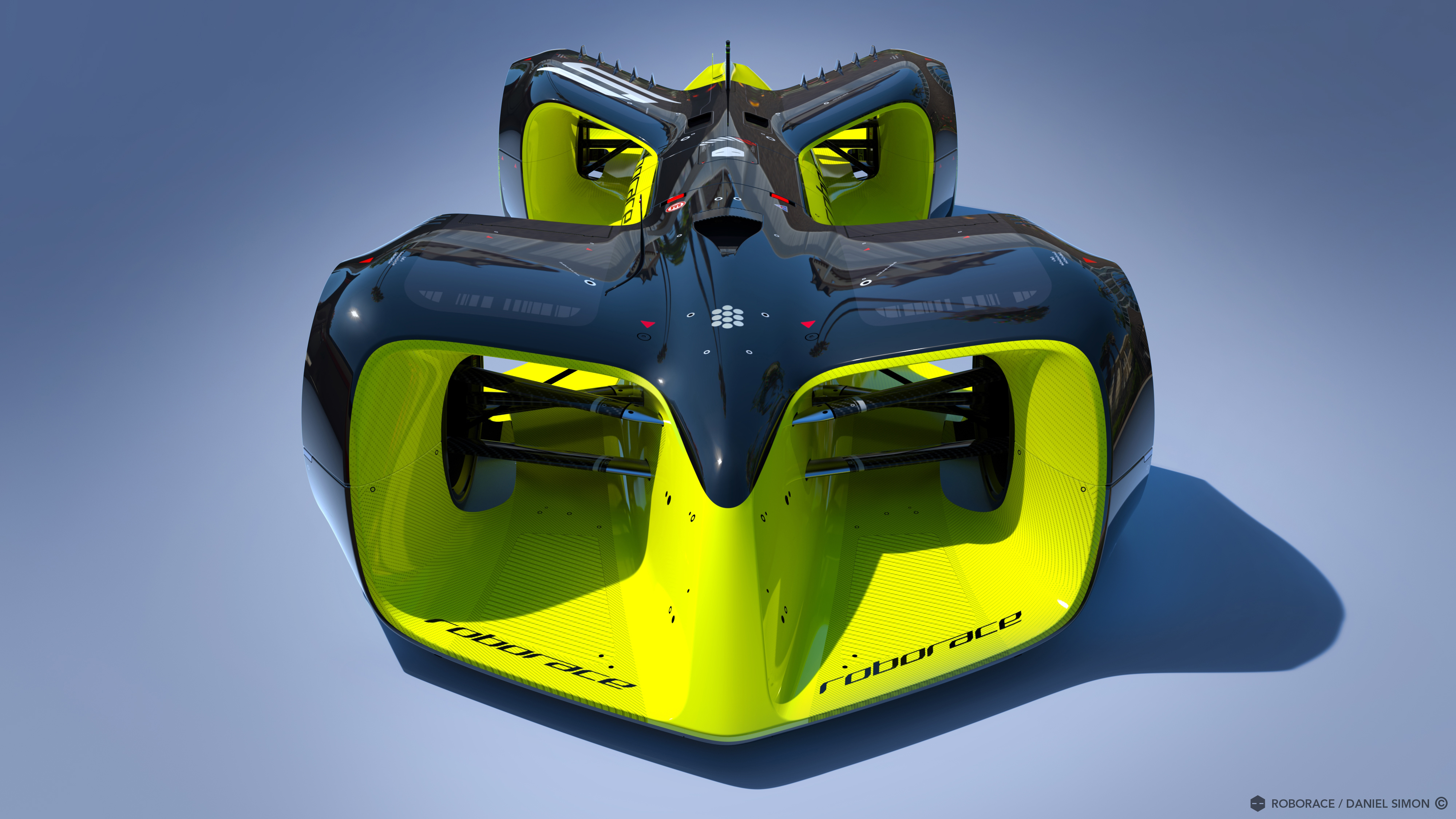
As we discovered last November, an autonomous car racing series is in the works. Roborace is a partnership between Kinetik (an investment fund that is backing electric vehicle development) and Formula E, the EV racing series that has now entered its third season. Roborace is going to support Formula E next season (starting in late 2016), using identical machinery—each team will write its own algorithms though. This week, Roborace unveiled the first pictures of the AI-controlled cars that will contest the series.

If you think they look like something out of a sci-fi film, you may be on to something. They're the work of Daniel Simon, who in addition to a stint at Bugatti also designed the vehicles in Tron: Legacy and Oblivion.

“My goal was to create a vehicle that takes full advantage of the unusual opportunities of having no driver without ever compromising on beauty. Racing engineers and aerodynamicists have worked with me from the beginning to strike that balance," Simon said. "The Roborace is as much about competition as it is entertainment. Therefore—and quite unusual in today’s racing world—beauty was very high on our agenda and we work hard to merge the best performance with stunning styling."

Read 3 remaining paragraphs | Comments

Watch out, Waze: INRIX’s new Traffic app is coming for you

The traffic data company has a revised iOS and Android app with some cool features.

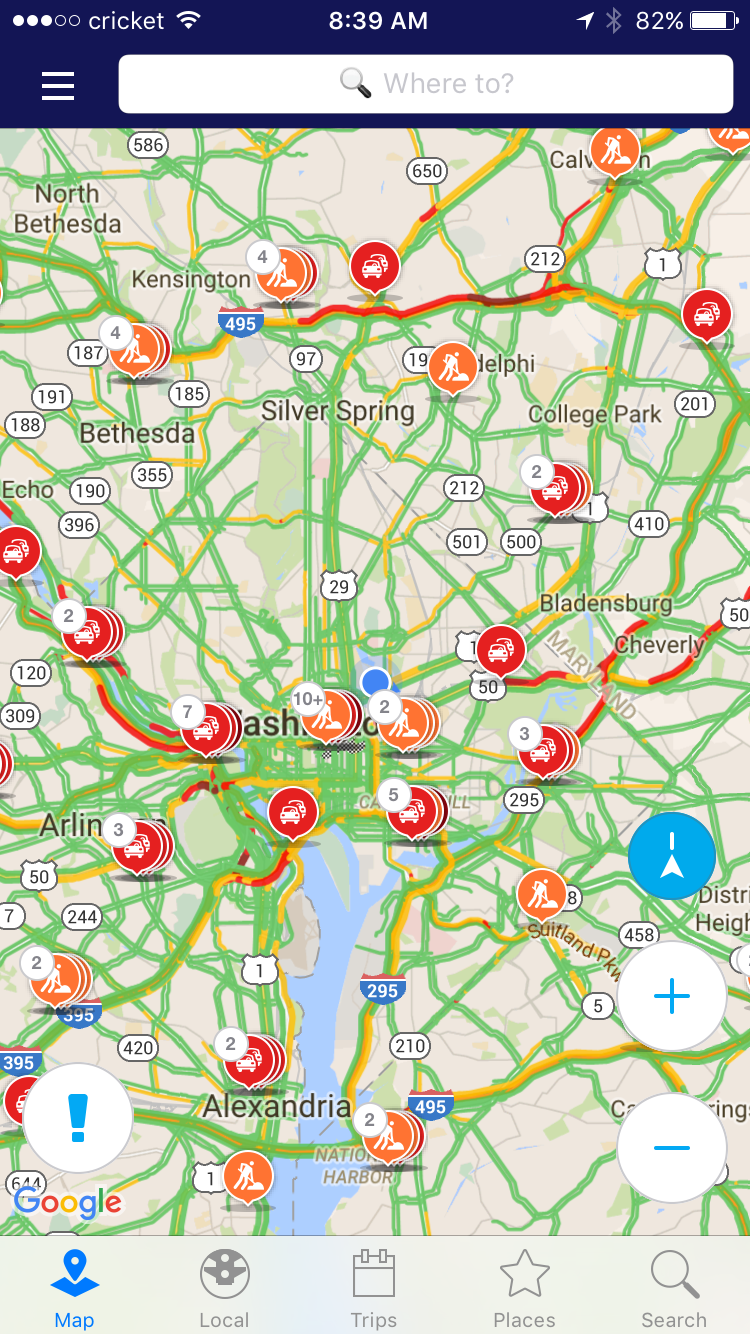
You may not have heard of INRIX, a traffic data company based in Kirkland, Washington. But if your car's navigation system has real-time traffic data, there's a good chance you've been using its services. For example, the Audi A4 and Telsa Model X we drove earlier this month get real-time traffic data from INRIX. In the BMW i3 and i8, INRIX provides the range finder service that lets you know how far you can go before needing to recharge (and where you can do that).

Today, the company is taking aim at the mighty Waze with a new smartphone app that leverages its vast crowdsourced traffic database.

Do you remember what it was like trying to navigate in days of old? Back when some of us started driving, if you didn't want to get lost, you needed a map. (Remember them?) In 2000, then-President Clinton opened up the US' GPS network, and consumer navigation systems started to proliferate, first as standalone devices, then as installed infotainment systems in our cars, and finally on the screens of our smartphones.

Read 7 remaining paragraphs | Comments