Mitsubishi outdoes VW, admits 25 years of falsified economy tests

But the problem only affects 600,000 cars sold in Japan.

The cars in question are tiny Japanese-market "Kei" cars. (credit: Wikimedia)

We've written extensively about Volkswagen Group and its attempt to pull a fast one with regard to diesel emissions here in the US and elsewhere. But VW isn't the only car maker to play fast and loose with regulators when it comes to emissions. VW's diesel scandal has resulted in increased scrutiny abroad; French authorities raided Renault in January and PSA Peugeot Citroen in April as part of ongoing investigations into diesel emissions. But the most breathtaking example must belong to Mitsubishi.

On April 21, we learned that the Japanese car maker had been falsifying fuel economy tests in its home market. This came to light after Nissan (which rebadges some Mitsubishi cars) discovered the engines couldn't match Mitsubishi's numbers. That alone would have been bad enough—indeed, it wiped out a third of Mitsubishi's share price—but it seems it was just the tip of the iceberg.

On Tuesday, Mitsubishi revealed it had been using the wrong fuel economy tests for "Kei" cars—small 0.6L cars made just for the Japanese domestic market—since 1991. More than 600,000 affected cars have been sold in Japan during that time.

Read 1 remaining paragraphs | Comments

Entering the matrix: CJ Wilson Racing launches a virtual racing series

The team has recreated its car in Forza and is holding an e-racing championship.

If you're an up-and-coming racing team, and you want to make new fans, what better way than to set up an e-sports series featuring a digital version of your real race car? The team in question is CJ Wilson Racing, which has partnered with Logitech and The Online Racing Association (TORA) to run the CJ Wilson Racing Cayman Cup—a 10-race series that gets underway on April 27th. We spoke to some of the people involved in order to find out more, particularly about how they arrived at their Forza Motorsport 6 version of the real race car.

The e-racing community might not have the same following—or prize fund—as something like Dota 2. But e-sports are being taken more and more seriously by the people that run real-word racing. As far back as 2008, Nissan and Sony in Europe were using Gran Turismo tournaments to find promising young racing drivers. TORA was officially recognized by the UK's Motor Sports Association in 2010, and even the FIA (which runs international motorsport) recently announced it would sanction a new series in the next Gran Turismo game.

How accurately racing games recreate the experience of driving the real thing is a topic we've tackled a few times. For 2016, CJ Wilson Racing switched cars, from the Mazda MX-5s it had been running in the Continental Tire Sportscar Challenge to a pair of Porsche Cayman GT4s. The Cayman GTS just came back to Forza 6, but there isn't actually a Cayman GT4 in the game. So, we wondered, how did the team recreate it?

Read 5 remaining paragraphs | Comments

Long after his accident, Sam Schmidt takes the wheel again thanks to Project SAM

Sam Schmidt was paralyzed in a testing accident in 2000. Now he can drive again.

Sam Schmidt smiles from the driver's seat of Project SAM, the Corvette Stingray that's been modified to let him drive it, despite being paralyzed from the neck down. (credit: Arrow)

In the late 90s, Sam Schmidt had a promising career as an IndyCar driver, finishing fifth in the championship in 1999 after taking his first win in Las Vegas. In off-season, however, his ascension in the sport was derailed. During testing that following January, an accident at Walt Disney World Speedway in Florida left Schmidt a quadriplegic.

In the years since, Schmidt has continued to go racing but as a team owner. He's watched from the pit as drivers like Simon Pagenaud and James Hinchcliffe brought home glory for Schmidt Peterson Motorsport. But recently a collaboration with his team's title sponsor, Arrow Electronics, has placed Schmidt back where he belongs—behind the wheel of a car on track.

The car is a 2014 Chevrolet Corvette Stingray, and the initiative is called Project SAM for "Semi-Autonomous Motorcar." However, don't be fooled into thinking this is a self-driving vehicle. Instead, the core of Project SAM is about mapping the dynamic range of the car's inputs—steering, throttle, brake—and translating them to a different control format, in this case one suitable for a quadriplegic driver. "We needed to be able to control any feature of the car by using electronic signals and software," said Chakib Loucif, Arrow's VP of engineering.

Read 13 remaining paragraphs | Comments

Announcing the world’s first autonomous track day

The first event of its kind will take place at Thunderhill Raceway, May 28-29.

Audi has tested a number of autonomous cars at the race track. There was Shelley, a TTS it built with the Revs program at Stanford. And a pair of autonomous RS7s have given demos and passenger rides at Hockenheim in Germany and Sonoma Raceway in the US. (credit: Audi)

Taking a vehicle to the race track to improve it has been a thing almost as long as we've had cars. Henry Ford built his brand's name on his early racing exploits, and so have countless others. So it's natural that some of the people interested in self-driving cars have been thinking about how the track can benefit this new technology. Joshua Schachter is one such person, and he's organizing the first autonomous track day, to be held on May 28th-29th at Thunderhill Raceway in Willow, California.

Self-driving cars and racing are two of my favorite things, so I spoke to Schachter to find out more. The idea is to create a venue where you can "run what you brung," whether it's a fully autonomous car (or kart), a set of sensors, or maybe some control software. "If you squint at it, and it's automotive, come try it on the track," he said.

Interest in autonomous race cars is starting to build. Later this year, a series called Roborace will support Formula E in 2016-2017, for example. But Roborace will provide all the teams with identical cars; the job of the teams will be to write algorithms to make their car the fastest on the track.

Read 4 remaining paragraphs | Comments

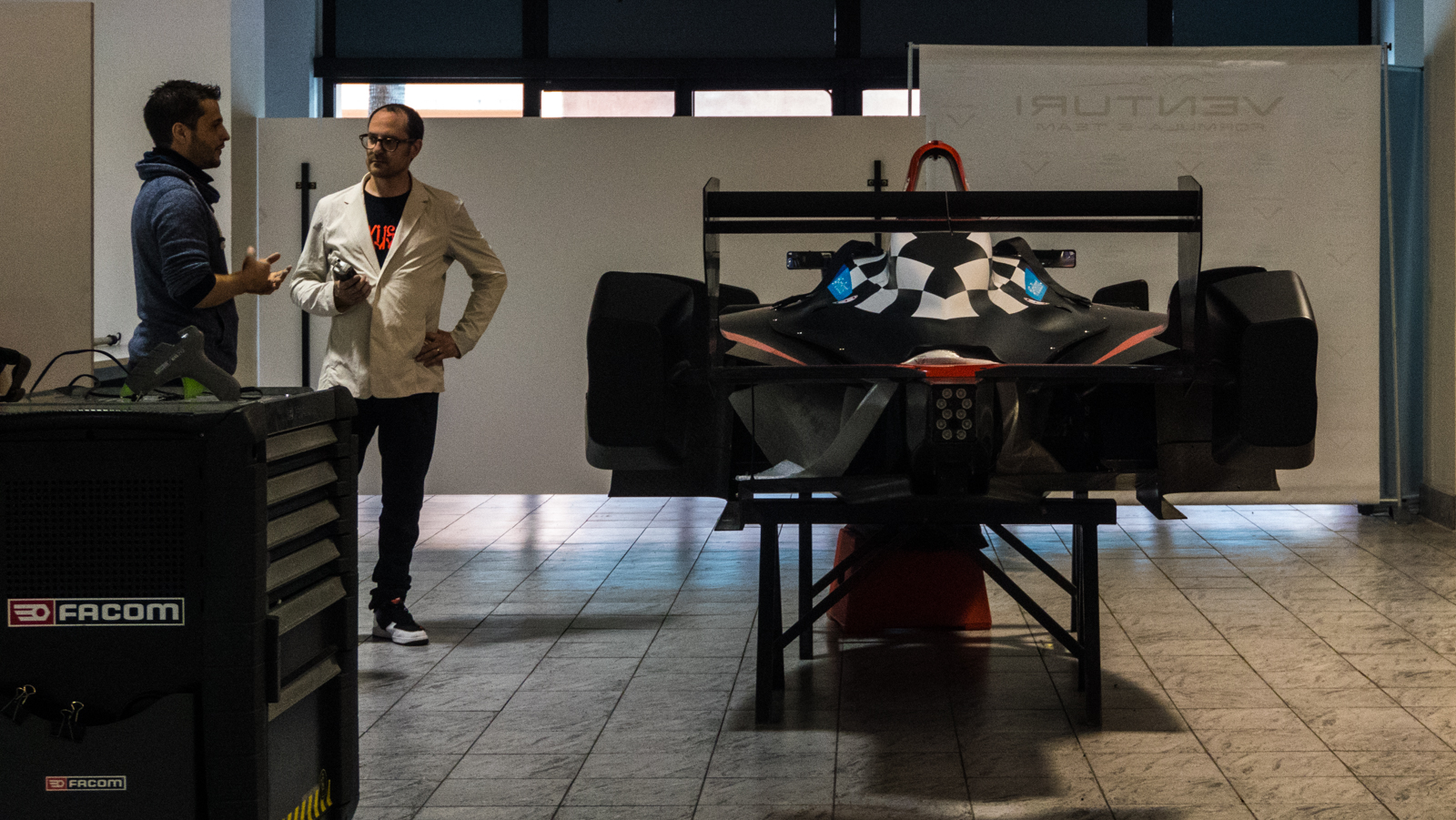
How do you make an electric racecar faster? We visit Venturi’s Formula E team

The more energy you can recover on track, the further you’ll go.

When we last met up with Venturi, it was in the Buckeye state. We'd gone to meet VBB-3, the electric land speed record car it's built with the Ohio State University. Meanwhile, back at the company's Monegasque HQ, work has been underway on next season's Formula E electric race car. Since we were in that neck of the woods, we popped over to the company's home base to find out what it has in store.

These days it's better to think of Venturi as an engineering and design firm for electric powertrains, rather than a low volume sportscar producer. It will still make you a road-going (or maybe even off-road) EV sports car, but you'd have to ask nicely and you may have to wait a few months to take delivery. The company is now focused on ever-better electric powertrains, and it does this by testing them in some of the most extreme ways possible.

There's the Antarctica, an eight-wheel EV for transporting French scientists around the South Pole. At the opposite end of the temperature and speed dials is VBB-3, designed to eclipse the internal combustion engine's top speed on sun-baked salt flats. And then there's Formula E. The organizers want the sport to be directly relevant for road-going EV development, says Venturi's Thierry Apparu. "It's why the races are on the streets." The lessons learned in all these environments funnel back into know-how that can be applied to EV powertrains that people will drive in the future.

Read 9 remaining paragraphs | Comments

Consumer Reports and the Wall Street Journal let rip on the Tesla Model X

The electric SUV’s quality control problems continue.

There's a lot of attention on Tesla Motors now that it has attracted almost 400,000 preorders for its forthcoming Model 3 electric vehicle. Delivering those cars is going to be quite a feat for the company, and the vast majority of those 400,000 customers may have to wait a while to accept delivery. But that might not be such a bad thing if Tesla's continuing troubles with the Model X SUV are any predictor of future performance.

The Wall Street Journal and Consumer Reports both published reports on Tuesday featuring early Model X customers experiencing a litany of QC problems. In addition to the recall Tesla issued recently for the EV's rear seats, owners have been plagued with problems relating to those signature Falcon wing doors.

Sometimes they don't open properly. Other times the sensors that are meant to detect obstructions malfunction, allowing the doors to bang into things. But it's not just the doors. Consumer Reports' article reports that one particularly affected owner is not happy with the car's heating system, autopilot, or panoramic windscreen. And Tesla forums are ripe with stories of interior QC issues, paint quality problems, and other concerns.

Read 1 remaining paragraphs | Comments
Packing a “voodoo” engine, the Shelby GT350 is Ford’s best-ever Mustang

A special engine with a stratospheric redline and brakes to take your breath away.

We drive the new Ford Shelby Mustang GT350, the Blue Oval's most exciting road car for some time. Video edited by Jennifer Hahn. (video link)

When Ford introduced the Mustang to a salivating public in 1964, it was quite the game-changer. It offered rakish, sports car styling at a highly attainable price—less than $2,400 at the time. But the Mustang had a dirty secret. Keeping costs down meant Ford raided its parts bin quite heavily. While the Mustang might have looked like it was going flat-out even when parked, it wasn't actually much of a performance car. At least, it wasn't until Caroll Shelby came along and turned it into the Shelby GT350.

The Mustang is now in its fifth generation, yet again looking like a million bucks. And 50 years since the original Shelby GT350s first took to the track in anger, the most exciting variant still wears the GT350 badge. The suspension is optimized for track work. There's extensive use of lightweight components. It has special brakes and custom tires. The six-speed manual transmission is unique to the car. It's not just lighter than a regular Mustang, it's also stiffer. Oh, and under the hood is a very, very special engine.

Read 26 remaining paragraphs | Comments

How much tech is too much tech in our cars? Analog vs. digital driving.

A weekend at the track with a new Corvette and an old GTI has me questioning things.

Over the past few months I've driven some technically clever cars. But a weekend at the track behind the wheel of a modern classic leaves me wondering if I've committing some deep heresy.

If you haven't driven the most recent Audis, Teslas, and Volvos, you'd be surprised how smart these vehicles have become and how rapidly previous generations become dated. Driver assistance systems aren't quite fully autonomous yet, but if a car's sensors can read the lines on the road, it will do almost everything for you. Got a turn coming up, or approaching a bend too fast? The navigation system can spot either of those and slow the car down for you. Stuck in traffic? You can go hands- and feet-free up to 37mph (60km/h, the legal maximum such systems are allowed to work over in Europe).

As a driver, this leaves you more mental bandwidth to do other things, like looking at the scenery on long and boring road trips. The benefits to driver fatigue are undeniable. For long distance cruising—day or night, rain or shine—this future enabled by Velodyne and Mobileye and Nvidia and Qualcomm is already promising to be a bright one.

Read 8 remaining paragraphs | Comments

A car show just for the one percenters? Welcome to Top Marques

Need a hypercar made of unobtainium? This auto show in Monaco has you covered.

Top Marques in Monaco is probably the least conventional car show we've been to in some time. Video shot by Elle Cayabyab Gitlin, edited by Jennifer Hahn. (video link)

MONTE CARLO, MONACO—From time to time we have reason to visit this odd little principality nestled between France and Italy on the Mediterranean. This year our trip happened to coincide with Top Marques, a fittingly Monegasque take on the car show—almost nothing but wall-to-wall supercars.

Read 13 remaining paragraphs | Comments

Science proves that Fangio was the greatest F1 driver of all time

Mathematical modeling confirms most subjective lists, he really was that good.

September 11, 1957: World champion Argentinian racing driver Juan Manuel Fangio in action driving a Maserati at the 1957 Italian Grand Prix at Monza. He finished second behind Stirling Moss in a Vanwall. (credit: Central Press/Getty Images)

We're pretty sure fans of all sports love a good argument over who is "the greatest of all time." Will Stephen Curry soar higher than Michael Jordan at his mid-'90s apogee? Will Tom Brady eclipse Johnny Unitas? This is the stuff of countless hours of barroom banter. Formula 1 is no different. But given how much cars have changed over the years, is it even possible to compare different eras?

Andrew Bell and his colleagues at the University of Sheffield think so, and this team has just published a paper in the Journal of Quantitative Analysis in Sports offering proof that Juan Manuel Fangio owns the crown.

Most sports change over time, but the Formula 1 World Championship—first held in 1950—has changed a great deal over the past six-and-a-half decades. A 1950s F1 car looked like a cigar tube with wheels. The engine was in front of the driver, and there were no wings or spoilers. (Or seat belts, for that matter.) In the early 1960s, front-engined cars were made obsolete when John Cooper put the driver ahead of the power unit. Later that decade Colin Chapman at Lotus was responsible for a string of innovations, from fully stressed engines (bolted to the monocoque and carrying the rear suspension) to aerodynamics. Then we got ground effects, carbon composite construction, an ever-increasing regard for safety, and finally hybrid powertrains.

Read 9 remaining paragraphs | Comments