F1 in Las Vegas: This sport is a 200 mph soap opera

Yet another twist in the championship with two more weekends to go.

LAS VEGAS—Formula 1 held the third annual Las Vegas Grand Prix this past weekend in the Nevada city. The race is an outlier in so many ways, and a divisive one at that. Some love the bright lights that make it appear to be set in Mega-City One or F-Zero. Others resent the rampant commercialism of F1 at its most excessive. And this time, Ars was on the ground, making one of our periodic visits to the series. The race we saw was something of a damp squib, seemingly leaving McLaren’s Lando Norris in control of the championship.

At least that’s how it looked when I left the track on Saturday night. Within a few hours, Norris and his teammate (and one of his two title rivals) Oscar Piastri were both disqualified for having worn away too much of the “legality plank” underneath the car—more on that in a while.
 

Read full article

Comments

Data-driven sport: How Red Bull and AT&T move terabytes of F1 info

Since the last time we spoke to Red Bull, its cars have 3 times as many sensors on them.

LAS VEGAS—A Formula 1 car runs on soon-to-be-synthetic gasoline, but an F1 team runs on data. It’s always been an engineering-driven sport, and while you can make decisions based on a hunch, the kinds of people who become good engineers prefer something a little more convincing. And the volumes of data just continue to get bigger and bigger each season. A few years ago we spoke to Red Bull Racing about how it stayed on top of the task, but a lot has changed in F1 since 2017, as we found out at this year’s Las Vegas Grand Prix.

It’s hugely popular now, for one thing, even in the United States: a 200 mph soap opera now with 24 episodes a season. Superficially the cars look the same—exposed wheels, front and rear wings, the driver in between some side pods. And the hybrid powertrains that make the cars move are still the same format: 1.6 L turbocharged V6 engines that recover energy from the rear wheels under braking as well as the turbine as it gets spun by hot exhaust gases.

But the cars are actually fundamentally different, particularly the way they generate their aerodynamic grip mostly via ground effect generated by the specially sculpted underside of their floors rather than the front and rear wings. A bigger change lurks in everyone’s accounts. The days where teams were free to spend as much money as they could find are gone.

Read full article

Comments

“Hey Google, did you upgrade your AI in my Android Auto?”

Conversational AI from your phone cast to your car should be about to get better.

Google’s platform for casting audio and navigation apps from a smartphone to a car’s infotainment system beat Apple’s to market by a good while, but that headstart has not always kept Android Auto in the lead ahead of CarPlay. But an upgrade rolls out today—provided you already have Gemini on your phone, now it can interact with you while you drive.

What has sometimes felt like a hands-off approach by Google toward Android Auto didn’t reflect an indifference to making inroads into the automotive world. Apple might have its flashy CarPlay Ultra that lets Cupertino take over the look and feel of a car’s digital UI, but outside of an Aston Martin, where will any of us encounter that?

Meanwhile the confusingly similarly named Android Automotive OS—a version of Android developed to run with the kind of stability required in a vehicle as opposed to a handheld—has made solid inroads with automakers, and you’ll find AAOS running in dozens of makes from OEMs like General Motors, Volkswagen Group, Stellantis, Geely, and more, although not always with the Google Automotive Services—Google Maps, Google Play, and Google Assistant—that impressed us back in 2021 when we drove the original Polestar 2.

Read full article

Comments

Twin suction turbines and 3-Gs in slow corners? Meet the DRG-Lola.

The concept is meant to inspire the next generation of electric single-seaters.

We’re in something of a purple patch if you’re a fan of clever new technology in single-seat race cars. Out in the Middle East, the autonomous A2RL crew held another race at Yas Marina, one that by all accounts was a lot more impressive than the last time the self-driving race cars competed against a human. Formula E teams are getting ready for the debut next year of their Gen4 era, which sees cars with real downforce and almost twice as much power. Meanwhile we only have a few months left before we see the results of F1’s new technical rules change, as the sport adopts far more powerful electrical propulsion and active aerodynamics. But what if there was an electric single-seater that was faster around a track than any of these?

That’s the idea behind the DRG-Lola, a racing concept designed from the ground up by Lola Cars, the storied-now-reborn British race car manufacturer, and Lucas di Grassi, veteran of the hybrid LMP1 sportscar days and FIA Formula E champion. Di Grassi is one of the more thoughtful racing drivers out there and is a passionate advocate of clean technologies in racing—in 2020 he shared his earlier thoughts on where Formula E could take its technical direction.

The DRG-Lola is much closer to reality than that 2020 concept; di Grassi has relied on existing battery and motor technology, rather than some uninvented unobtanium to make it all work. It generates 804 hp (600 kW) from a pair of electric motors driving the front and rear axles and is powered by a 60 kWh battery pack that’s arranged in modules on either side of the driver’s cockpit.

Read full article

Comments

Tesla safety driver falls asleep during passenger’s robotaxi ride

A Reddit user posted video of his safety driver sleeping at the wheel in San Fransisco.

As Tesla’s profits shrink and its model lineup continues to age, the company remains focused on establishing new lines of business. Tesla CEO Elon Musk says there’s not much his Optimus robots won’t be able to do in the future—following people around to prevent them from committing crimes is the latest—despite the technology not quite existing yet.

Musk’s robotaxis are a little closer to reality, with a kind of limited service being offered in Austin, Texas, as well as parts of San Francisco. But Tesla might need to rethink its approach to safety drivers after a Tesla rideshare passenger in San Francisco took to Reddit to share a video of the operator asleep in the driver’s seat.

In fact, the safety driver fell asleep three times during the ride, which took place a little over a week ago, according to Reddit user ohmichael. In his post, which contains a 12-second clip of a man sleeping and then waking in the front seat of a moving Tesla, the poster says he contacted Tesla to report this behavior but never heard back.

Read full article

Comments

When recreating a famous SUV stunt in China goes wrong

The EV failed to match the 2018 stunt, damaging the stairway in the process.

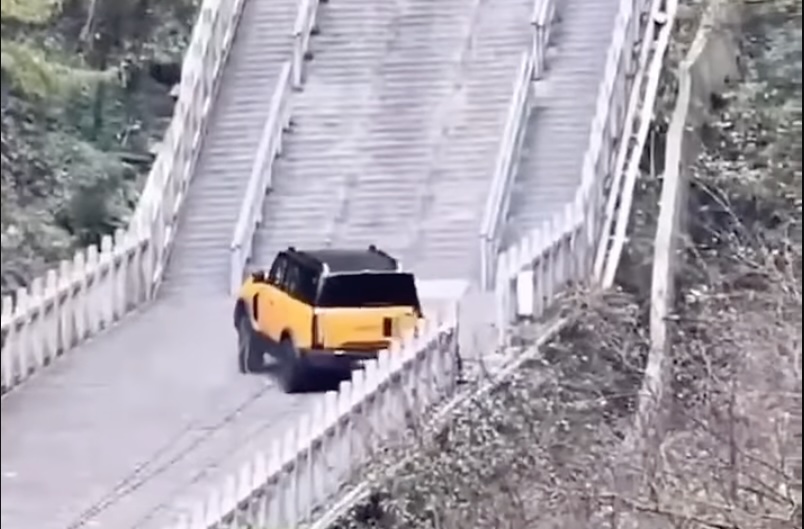
Be careful with your marketing stunts around national landmarks. That should be the take-home message from Chery Automobile’s recent attempt to measure itself up against Land Rover, an attempt that went sadly wrong.

In 2018, Land Rover and Chinese racing driver Ho-Pin Tung drove a Range Rover Sport up the 999 steps that make up the “Stairway to Heaven” that climb China’s Tianmen mountain. It was a dazzling stunt, for driving up a staircase that ranges between 45–60 degrees is no simple task, and one that’s certain to have left an impression with any acrophobics out there.

A YouTube screenshot of an SUV sliding backwards into some railings A screenshot of the attempt gone wrong. Credit: Youtube
Chery certainly remembered it. The brand—which in fact is a long-time collaborator with Jaguar Land Rover and next year even takes over the Freelander brand from the British marque—has a new electric SUV called the Fulwin X3L and decided that it, too, was made of the right stuff. The SUV, which costs between $16,500–$22,000 in China, features a plug-in hybrid powertrain, boxy looks, and a whole bunch of off-roading features, including the ability to do tank turns.

Read full article

Comments

How two Nissan Leafs help make a regional airport more resilient

We’ve seen schoolbuses and big pickups do V2G; how about a smaller car?

Not everything about the future sucks. Like electric cars. Sure, there’s one thing that dinosaur-burners do better—short refueling stops—but even the least efficient EV is still multiple times better than its gas equivalent. So much better in fact that it offsets all the extra energy needed to make the battery within a year or two. They’re quieter, and easy to drive. And in a pinch, they can power your house from the garage. Or how about an airport?

OK, we’re not talking about a major international airport (although I really need to talk to someone at Dulles International Airport about my idea to electrify those Space 1999-esque mobile lounges at some point). But up in Humboldt County, California, there’s a microgrid at the Redwood Coast Airport that has now integrated bidirectional charging, and a pair of Nissan Leaf EVs, into its operation.

The microgrid has been operating since 2021 with a 2.2 MW solar array, 8.9 MWh of battery storage, and a 300 KW net-metered solar system. It can feed excess power back into PG&E’s local grid and draw power from the same, but in an outage, the microgrid can keep the airport up and operational.

Read full article

Comments

After years of saying no, Tesla reportedly adding Apple CarPlay to its cars

Almost half of US car buyers won’t consider a car without Apple CarPlay.

Apple CarPlay, the interface that lets you cast your phone to your car’s infotainment screen, may finally be coming to Tesla’s electric vehicles. CarPlay is nearly a decade old at this point, and it has become so popular that almost half of car buyers have said they won’t consider a car without the feature, and the overwhelming majority of automakers have included CarPlay in their vehicles.

Until now, that hasn’t included Tesla. CEO Elon Musk doesn’t appear to have opined on the omission, though he has frequently criticized Apple. In the past, Musk has said the goal of Tesla infotainment is to be “the most amount of fun you can have in a car.” Tesla has regularly added purile features like fart noises to the system, and it has also integrated video games that drivers can play while they charge.

For customers who want to stream music, Tesla has instead offered Spotify, Tidal, and even Apple Music apps.

Read full article

Comments

After years of saying no, Tesla reportedly adding Apple CarPlay to its cars

Almost half of US car buyers won’t consider a car without Apple CarPlay.

Apple CarPlay, the interface that lets you cast your phone to your car’s infotainment screen, may finally be coming to Tesla’s electric vehicles. CarPlay is nearly a decade old at this point, and it has become so popular that almost half of car buyers have said they won’t consider a car without the feature, and the overwhelming majority of automakers have included CarPlay in their vehicles.

Until now, that hasn’t included Tesla. CEO Elon Musk doesn’t appear to have opined on the omission, though he has frequently criticized Apple. In the past, Musk has said the goal of Tesla infotainment is to be “the most amount of fun you can have in a car.” Tesla has regularly added purile features like fart noises to the system, and it has also integrated video games that drivers can play while they charge.

For customers who want to stream music, Tesla has instead offered Spotify, Tidal, and even Apple Music apps.

Read full article

Comments

Audi goes full minimalism for its first-ever Formula 1 livery

Audi says it wants to be an F1 title contender by 2030.

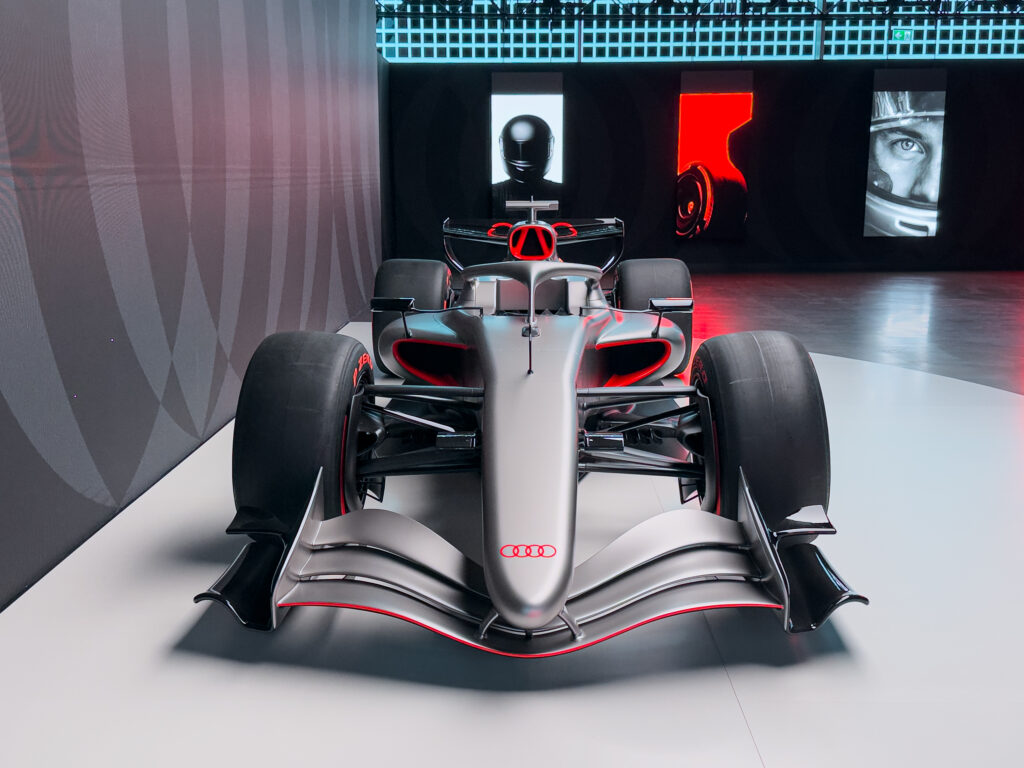
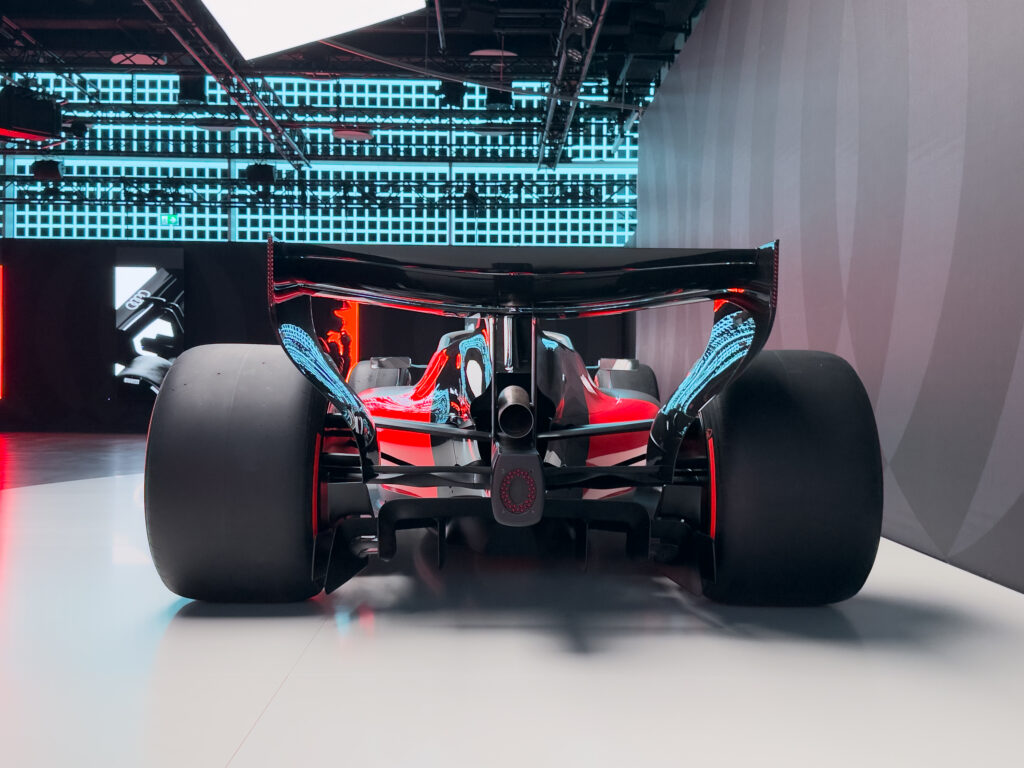
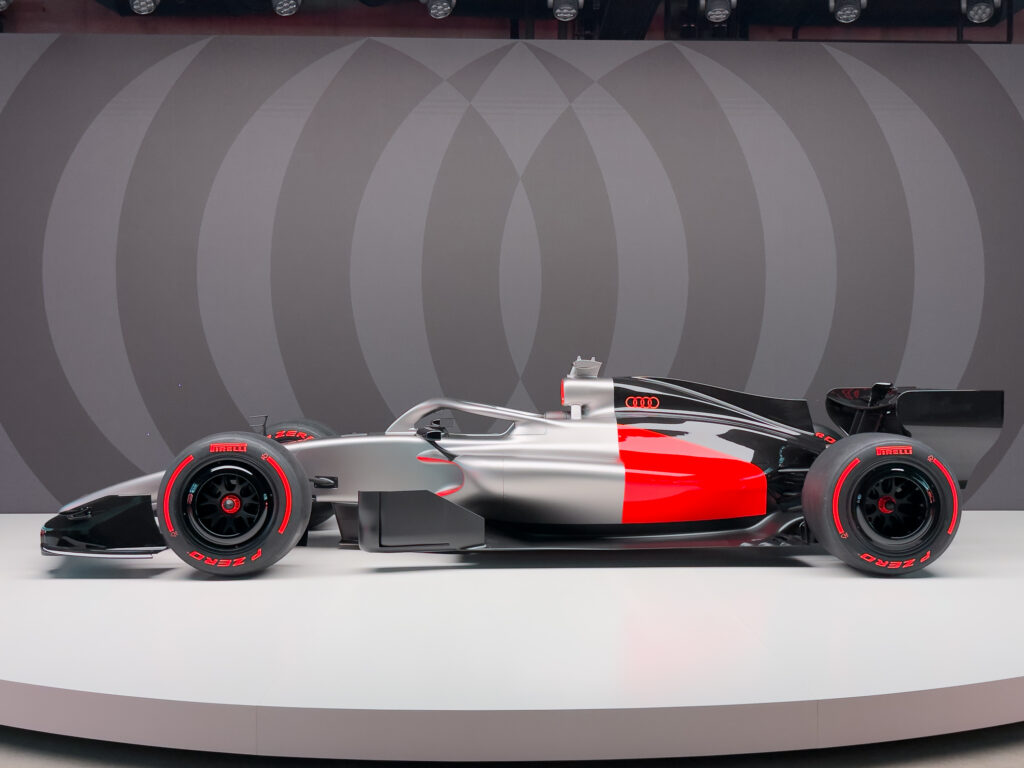
MUNICH, Germany—Audi’s long-awaited Formula 1 team gave the world its first look at what the Audi R26 will look like when it takes to the track next year. Well, sort of—the car you see here is a generic show car for the 2026 aero regulations, but the livery you see, plus the sponsors’ logos, will race next year.

“By entering the pinnacle of motorsport, Audi is making a clear, ambitious statement. It is the next chapter in the company’s renewal. Formula 1 will be a catalyst for the change towards a leaner, faster, and more innovative Audi,” said Gernot Döllner, Audi’s CEO. “We are not entering Formula 1 just to be there. We want to win. At the same time, we know that you don’t become a top team in Formula 1 overnight. It takes time, perseverance, and tireless questioning of the status quo. By 2030, we want to fight for the World Championship title,” Döllner said.

Audi's 2026 F1 livery on a show car, seen in profile
After the complicated liveries of cars like the R18 or Audi's Formula E program, the R26 is refreshingly simple. Credit: Jonathan Gitlin
Audi's 2026 F1 livery on a show car, seen head-on
None of the sponsors have been announced yet, so the car is bare for now. Credit: Jonathan Gitlin
Audi's 2026 F1 livery on a show car, seen from the rear
The view Audi hopes its rivals get next year. Credit: Jonathan Gitlin


Read full article

Comments