VR goggles and giant touchscreen tables: How Audi explains new car technology

The company is using VR the way you might think, as well as some novel applications.

Although we usually cover our own travel costs, in this case that was not an option; flights and accommodation on this trip to Munich was paid for by Audi.

MUNICH, GERMANY—The transformation of our cars over the past few years has been rapid. They used to be autonomous vehicles—in the truest sense—unconnected to the wider world, save by their tires. Now the average new car is a wearable computer with seats for four, clustered with sensors and screens and wireless datalinks. Some of this progress could be considered digital frippery; casting one's music via Android Auto or CarPlay isn't that much of an advance over Bluetooth, after all. But some efforts from automakers, like the latest advanced driver assistance systems (ADAS), are our stepping stone into a world where our cars drive us.


As the automobile continues to evolve subject to the white heat of technology, spare a thought for the poor automakers. Many of these safety systems are invisible to the driver until their time of need. Others are merely complicated and new. But all of them need to be explained, for how else will a customer see the point in opening their wallet? It's a problem that Audi has been giving a lot of thought, and the company brought us to Munich recently to take a look at some of the solutions it's working on.

Read 11 remaining paragraphs | Comments
Tesla investigates another fatal crash, unclear whether autopilot involved

Car hit a tree at high speed and part of the battery pack caught on fire.

Questions regarding the safety of Tesla's electric vehicles—and their ability to drive semi-autonomously—are being raised once again, following reports of a fatal crash on Wednesday morning in the town of Baarn, in the Netherlands. However there's no evidence as yet that Autopilot was involved when a Model S left the road at high speed and hit a tree.

The impact was sufficient to damage the Model S' battery pack enough that part of it ended up alight on the road surface. There are some reports in Dutch media that rescue attempts by the emergency services were hampered by this blaze, although it may just have been due to the nature of the wreck.

Tesla sent a representative to the crash site. The carmaker has said it will launch an investigation and that "[o]nce the outcome is known, Tesla will share with the audience," something it has done for other high-profile crashes. Wednesday's crash isn't the first to make news in the Netherlands, and in July the Dutch vehicle approval authority was reportedly looking into differences between European and US implementations of Autopilot.

Read 2 remaining paragraphs | Comments

Wheel support finally comes to Forza Motorsport 6 Apex and Windows 10

Logitech and Thrustmaster models work, but Fanatec compatibility comes in September.

High speed, high-resolution.

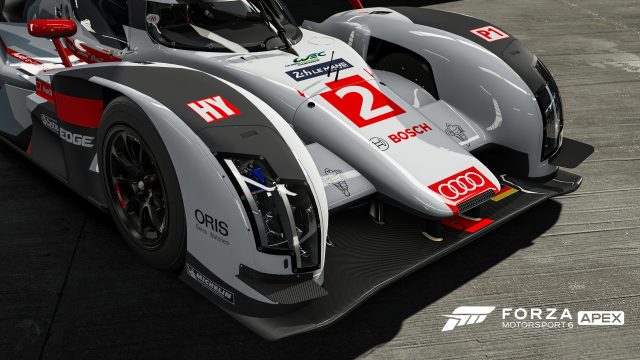
After more than four months as an open beta, Forza Motorsport 6 Apex will finally offer steering wheel support. On Tuesday, Microsoft announced an update to the much-heralded PC version of its in-house racing franchise. As a result, racing wheels from Logitech and Thrustmaster are now supported by the game—but if you've got a fancy Fanatec rig, you might have to be patient a little while longer.

The list of supported wheels includes the extremely popular Logitech G25 and G27, as well as the latest G29 and G920 models. Plenty of Thrustmaster products will also now work with Apex, including most of the company's Xbox One-compatible offerings. But it will be late September before updates to both Windows 10 and Apex allow Fanatec wheels to work with the game, according to Microsoft.

Racers planning on using an H-pattern shifter may also have a wait on their hands. Although there's already support for these peripherals if they come from Logitech (other than the G29), owners of other brands will need yet another update to the game before they function.

Read 1 remaining paragraphs | Comments

Ford Focus RS not extreme enough? Meet the Focus RS RX

Ford’s newest hot hatch is the starting point for the Hoonigan’s current race car.

Earlier this week we reviewed the Focus RS, Ford's hottest hatch and the best performance car to come from the Blue Oval in quite some time. Unlike RS Fords past, the Focus RS wasn't built to satisfy the homologation requirements of a particular racing series. But it turns out there is a competition version, developed in a partnership between Ford Performance, the UK's M-Sport, and Ken Block's Hoonigan Racing outfit. Meet the Ford Focus RS RX.

The Focus RS RX competes in the FIA World Rallycross Championship, a series similar to the Red Bull Global Rallycross, although the former is concentrated in Europe as opposed to the US. To find out more about the Focus RS RX, we spoke with Ford Performance Motorsports Supervisor Brian Novak, who happens to be a huge old-school computer nerd and Ars reader.

Ford has been competing in Global Rallycross with a Ford Fiesta—the car we rode in back in July at Red Bull's round in Washington, DC. But the Focus RS RX is all-new. Novak told us:

Read 9 remaining paragraphs | Comments

Gallery: the highlights of BMW’s museum in Munich

Got downtime in Munich? Then visit the BMW Museum.

Although we usually cover our own travel costs, in this case that was not an option; flights and accommodation on this trip to Munich was paid for by Audi.

MUNICH—During some downtime on a recent visit to Munich—the reasons for which you'll be able to read about shortly—we got a chance to check out BMW's excellent museum. Located next to the company's iconic "Four Cylinder" office building (which will be familiar to those of you who remember the original Rollerball movie), the museum is currently celebrating BMW's centenary.

Although the Vision Next 100 concept wasn't on display, the museum was full of significant production cars, concepts, and racing machines, along with plenty of motorbikes, engines, and other goodies. Space constraints preclude us from showing you everything on display, but the gallery above contains the highlights.

Read 1 remaining paragraphs | Comments

The Ford Focus RS: The Blue Oval’s best is a performance car for the people

Ford finally brings its hottest hatch to the US, and it was worth the wait.

Getting to know the Ford Focus RS at Monticello Motor Club, NY. Video shot and edited by Jennifer Hahn. (video link)

Don't let the familiar name fool you—the new Ford Focus RS is no mere shopping hatchback. Behind that gaping front grill is a turbocharged 2.3L engine with 350hp (261kW) and 350lb-ft (475Nm) torque-vectored to the road via all four wheels. The wheel arches are blistered. There's a great big wing at the back; there's a diffuser, too. And if that doesn't already sound like a very special Focus, the new RS even has a "Drift" mode.

Despite all the fancy carbon fiber supercars Cars Technica spends time with, I'd been looking forward to getting behind the wheel of this vehicle more than just about any other. From auto shows to race weekends to other Ford track events, the car has taunted me, sitting static but resplendent in that eye-catching Nitrous Blue paint. Our first drive was originally slated for July, but scheduling conflicts at the Blue Oval saw that opportunity bumped into late August. That's delay is now a minor blip; the RS was more than worth the wait.

Read 20 remaining paragraphs | Comments

Man and machine driving together in harmony: The 2017 Volvo S90

Pilot Assist II comes as standard, offers digital driving fun with plenty of safety.

Volvo is on somewhat of a roll right now. Under Chinese ownership since 2010, the Swedish car maker has invested $11 billion in all-new vehicle and engine architectures, and the results have been impressive. First out of the gate was the XC90 SUV, one of the best in class, complete with an extremely good infotainment system and plenty of semi-autonomous driver assists. Now, Volvo has followed it up with the S90, a low-slung sedan built on the same Scalable Product Architecture. After spending some time with the S90 on the traffic-filled lanes of Long Island, we can report that the Swedes offer an intriguing alternative to the mid-range luxury offerings from BMW or Mercedes.

Under the skin, the S90 shares a lot with its high-riding SUV sibling. The chassis makes use of lots of high-strength boron steel. The four-cylinder engines are carried over, from the 250hp (187kW) turbocharged T5 to the 316hp (236kW) turbo- and supercharged T6, with a plug-in hybrid T8 version due later this year. You get the same (excellent) Sensus infotainment system and an interior that shares a lot with the SUV, but for a few welcome improvements.

As befits a company investing heavily in autonomous and semi-autonomous driving, the 2017 S90 comes with Volvo's very latest consumer-ready system, called Pilot Assist II. It's installed as standard across the range, and it's extremely good, even compared to the version found in the 2016 XC90s we drove earlier this year. The limitations of the previous iteration are gone—you no longer need a car in front of you for the system to work, and it no longer shuts off at 37mph (60km/h). Combined with a lane keeping assist that no longer bounces you from one side of your lane to the other, this is a Volvo that drives with you.

Read 8 remaining paragraphs | Comments

Meet DevBot, a self-driving electric racing car

DevBot is a test mule for Roborace, the first driverless racing series.

There are less than two months to go until the start of Formula E's third season, which kicks off in Hong Kong on October 9. One of the more interesting things about Formula E's upcoming season is the new support series, Roborace. As the name suggests, it's a series for self-driving race cars, and the organizers have just unveiled the mule—called DevBot—that teams will use to develop their control software.

All of the Roborace teams will use identical Robocars, but each will develop its own control algorithms. The race cars are fully electric—in keeping with the ethos of Formula E—and have more than a little Speed Racer about them. But DevBot will look much more familiar to fans of sports car racing; it's a Le Mans-style prototype coupe, shown in the test photos without the front and rear bodywork.

DevBot also has a cockpit for a human driver, unlike the Robocars, but it does have the same powertrain, sensor suite, processors, and communication systems as the forthcoming autonomous race cars. DevBot is also fully electric, suggesting the handiwork of Drayson Racing Technologies. Several years ago, Drayson converted its Lola B10 Le Mans Prototype racer from internal combustion to electric power and has been involved in developing the technology used by Formula E.

Read 1 remaining paragraphs | Comments

Concepts ahoy at the Pebble Beach Concours d‘Elegance

Automakers show off their finery at one of the most exclusive car shows on the planet.

The Pebble Beach Concours d'Elegance—which took place on August 21st—is one of the automotive world's swankiest events. For well-heeled car collectors, the Concours is a way to one-up each other with rare vintage cars. But automakers—particularly those targeting the one percent—use the Pebble Beach Concours to show off their latest concepts and special editions. This year was no different, with concept cars from Acura, BMW, Bugatti, and Cadillac, as well as exclusive new machines from Aston Martin, Lamborghini, and McLaren.

Acura's Precision Concept was first seen at the North American International Auto Show at the beginning of the year. The concept features Acura's new grille—hastily bolted on to the new MDX—as well as some interesting human-machine interface ideas.

BMW's 2002 Hommage was resplendent in its Jaegermeister-inspired racing livery. Squint carefully and you can see plenty of influence from the 2 Series.

Read 5 remaining paragraphs | Comments

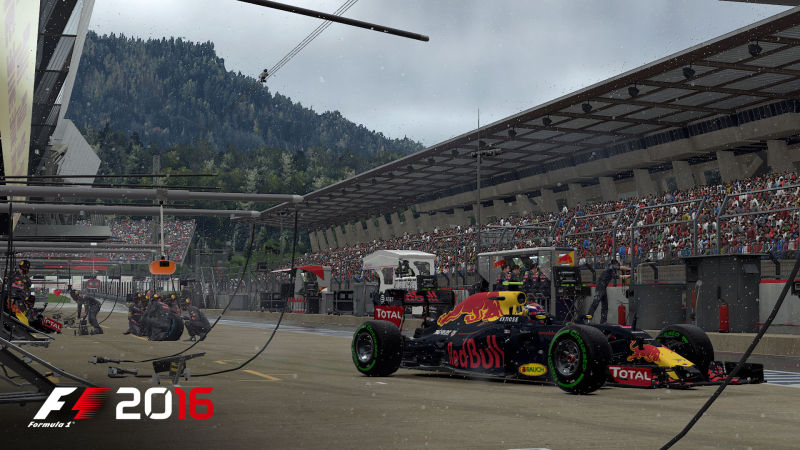
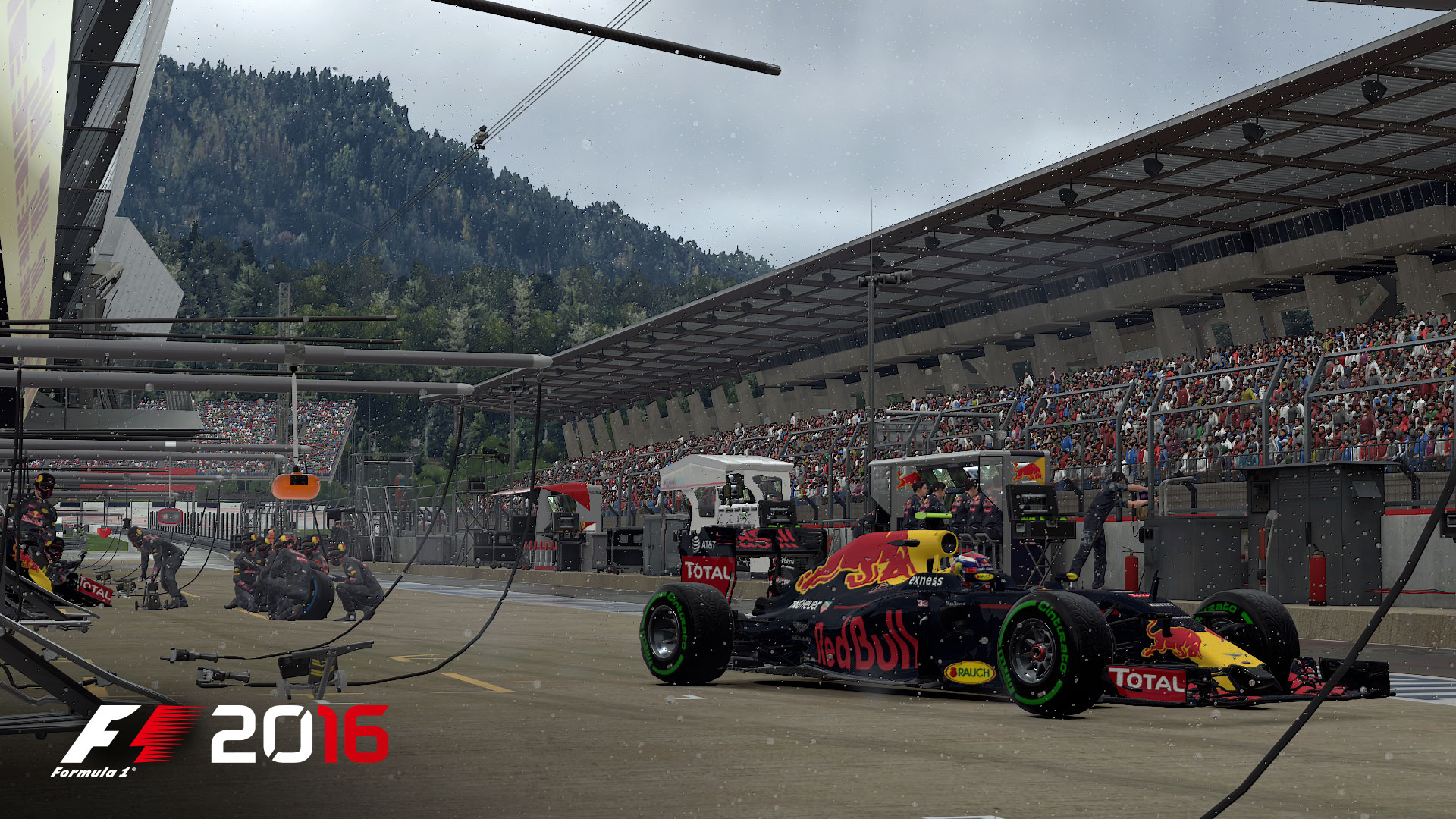
F1 2016 review: just like the real thing, except not boring

The easiest way to watch an exciting season of F1 this year is to enter it yourself.

Enlarge

It's been quite some time since we last reviewed a Formula 1 game here at Ars. Since then, the sport itself has undergone a whole raft of changes. Naturally aspirated V8s screaming away to 18,000 RPM have given way to muted turbocharged V6s muzzled by fuel flow regulations. There are artificial aids to overtaking like the drag reduction system, or DRS. And the now cars race on tires that were purposely designed to degrade quickly, preventing drivers from racing flat-out to the checkered flag. Combined with two years of total dominance from Mercedes-Benz and the results has been pretty lackluster, certainly to this long-time fan of the sport. Happily I can report that the latest installment of Codemasters' official franchise manages to faithfully replicate real Formula 1, with one giant exception: it's actually exciting.

Much of that success can be attributed to F1 2016's new career mode. You're free to choose any of the 11 teams as your starting point—different long-term objectives separate the more successful teams from the back markers—and work your way through the 21-race F1 season. But it's not just a question of turning up on race day and mashing the throttle when the red lights go out. Each race weekend involves three practice sessions and a qualifying attempt, just like the real thing. And to keep players invested in the proceedings, you'll be given a number of different objectives during each session.

These can be fiendishly tricky! For example, the tire management program, where the goal is to complete several laps without over-stressing your rubber. That means very gentle inputs on the throttle, steering, and especially brakes, but beware: you can't dawdle as your engineer has also set you a minimum lap time. Complete the objectives and you gain points to use developing upgrades for your car. All that practice running will stand in you in good stead come race day, which conveys well just how demanding the job of racing an F1 car can be.

Read 9 remaining paragraphs | Comments