Verizon to disconnect unlimited data customers who use over 100GB/month

Customers using more than 100GB must move to limited data plans by August 31.

(credit: Mike Mozart)

Verizon Wireless customers who have held on to unlimited data plans and use significantly more than 100GB a month will be disconnected from the network on August 31 unless they agree to move to limited data packages that require payment of overage fees.

Verizon stopped offering unlimited data to new smartphone customers a few years ago, but some customers have been able to hang on to the old plans instead of switching to ones with monthly data limits. Verizon has tried to convert the holdouts by raising the price $20 a month and occasionally throttling heavy users but stopped that practice after net neutrality rules took effect. Now Verizon is implementing a formal policy for disconnecting the heaviest users.

The news was reported by Droid Life yesterday, and Verizon confirmed the changes to Ars this morning.

Read 7 remaining paragraphs | Comments
Verizon creates monthly “maintenance” fee for customers with old routers

$2.80 monthly fee boosts broadband bill for FiOS customers with old equipment.

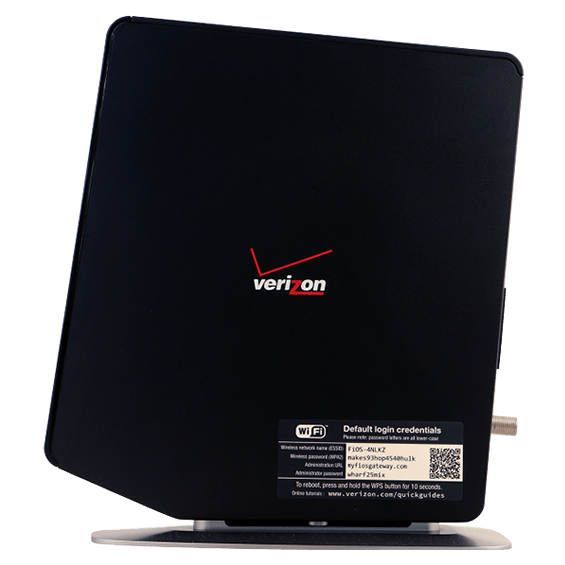
The Verizon FiOS Quantum Gateway (no maintenance fee required). (credit: Verizon)

Verizon FiOS customers using one of the company's older routers are being told they must pay a new monthly "maintenance charge" of $2.80 to cover the cost of supporting the apparently outdated equipment. Customers also have the option of buying one of the company's newer routers, though some report being able to convince Verizon to give them a new one for free.

"Our records indicate that you have an older model router that is being discontinued," says an e-mail to customers published today by DSLReports. "If you do plan to keep using your current router, we will begin billing, on 9.29.16, a monthly Router Maintenance Charge of $2.80 (plus taxes), to ensure we deliver the best support."

Verizon confirmed the change to DSLReports, saying that the notice was sent to customers using the BHR1 and BHR2 routers. "Many of these routers have been in use for nearly ten years and have required more frequent repairs, so we’re trying to reduce that maintenance load and expense," Verizon said.

Read 5 remaining paragraphs | Comments

CenturyLink charges data overage fees, may disconnect “excessive” users

Users over 300GB a month can be charged extra $50—or even lose their service.

(credit: Getty Images | Jonathan Nackstrand)

CenturyLink next week will begin charging data overage fees very similar to the ones that Comcast has implemented.

Like Comcast, CenturyLink is charging the fees in part of its territory as a "trial" designed to gauge customer response before a wider rollout. The fees are also $10 for every 50GB of additional data, the same as Comcast.

While Comcast is limiting monthly overage charges to $200, CenturyLink's overage fees will not exceed $50 per month. But CenturyLink hasn't announced any option for residential customers to purchase unlimited data, and even paying the overage fees doesn't guarantee that customers can use the Internet as much as they like. Customers who don't reduce their usage or switch to a pricier package that allows more data usage could be disconnected entirely, CenturyLink says.

Read 11 remaining paragraphs | Comments

Cable blackouts of “free” TV channels won’t be stopped by FCC

FCC won’t expand oversight of contract disputes that cause TV blackouts.

(credit: Tony Young)

The Federal Communications Commission has decided not to step up its oversight of contract disputes that sometimes take free, over-the-air channels off cable systems.

Broadcast stations can demand carriage fees from cable TV operators even if the channels are otherwise available for free to consumers with an antenna. When cable TV companies and broadcasters don't agree on a price, customers are sometimes deprived of channels.

The FCC can already intervene in contract disputes when it deems it necessary, but a lobby group for small and medium-sized cable TV providers wanted the commission to do a lot more. When FCC Chairman Tom Wheeler announced the decision to maintain the status quo last week, the American Cable Association (ACA) lobby group said it was "appalled."

Read 15 remaining paragraphs | Comments

Slow Verizon Internet prevents two doctors from viewing X-rays online

Verizon to face customers’ wrath in public hearing as gov’t studies complaints.

(credit: Getty Images | BSIP)

Two family doctors who are stuck with Verizon DSL say their Internet service is so slow and unreliable that they often can't view online medical records and are having trouble complying with federal guidelines.

Doctors Lori Talbot and Christopher Ballas run a practice in Fairfield, New Jersey, and are among numerous people complaining that Verizon hasn't properly maintained its old copper lines or upgraded its network to fiber in South Jersey. Officials in 16 cities and towns petitioned the state to investigate Verizon last December, and the New Jersey Board of Public Utilities (BPU) has scheduled a public hearing for August 4 to let residents and businesses detail the network's failings.

Talbot and Ballas described their office's problems in a letter to local officials and were profiled last week by The Philadelphia InquirerComcast lines stop about a mile from the doctors' office, leaving them without high-speed cable Internet. Since Verizon hasn't wired up the area with fiber, they must make do with Verizon DSL.

Read 9 remaining paragraphs | Comments

Verizon apes T-Mobile again with unlimited but throttled prepaid data

Verizon follows postpaid changes with prepaid update; no rollover data, though.

Verizon's new prepaid plans. Customers enrolled in auto-pay get an extra 1GB per month. (credit: Verizon Wireless)

Verizon Wireless recently unveiled some new postpaid data plans with features popularized by T-Mobile USA, including rollover data and unlimited data that lets customers stay connected at slower speeds after using up their high-speed allotments.

Verizon today announced similar changes to its prepaid offerings with "Always-On Data" that throttles speeds to 128kbps after customers have used up all their high-speed data. While throttled data is less pleasant to use, it's a good alternative to automatic overage fees. Instead of automatically being charged extra after exceeding a data cap, customers can choose whether slow speeds are good enough for the rest of the month or whether they'll purchase more high-speed data. 

While the Always-On Data feature costs an extra $5 a month for most postpaid plans, it will be included at no extra charge in the standard prepaid prices. While Verizon raised its postpaid prices and data allotments earlier this month, the prices and data allotments of the prepaid plans are staying the same after today's announcement. It'll remain $60 a month for 6GB of data (or 5GB if customers don't enable auto-pay) and $45 for 3GB (or 2GB without automatic monthly payments enabled). The prices include mobile hotspot usage and unlimited talk and text. But unlike postpaid plans, prepaid still doesn't have rollover data.

Read 3 remaining paragraphs | Comments

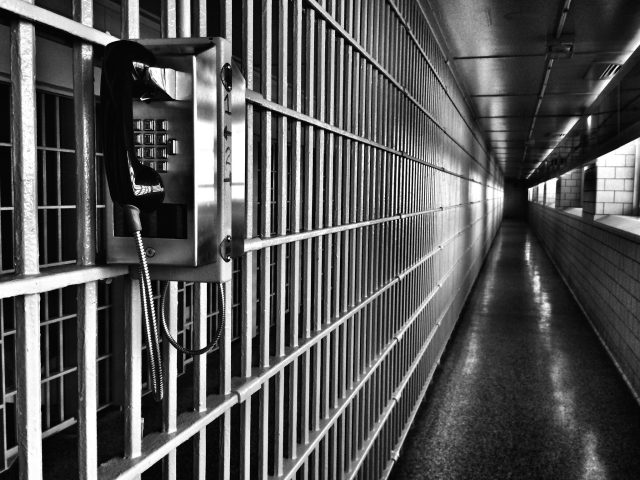
FCC will let jails charge inmates more for phone calls

Court rejects rate caps of 11¢ to 22¢ per minute.

(credit: Jason Farrar)

The Federal Communications Commission is trying once again to limit the prices prisoners and their families pay for phone calls, proposing a new, higher set of caps in response to the commission's latest court loss.

A March 2016 federal appeals court ruling stayed new rate caps of 11¢ to 22¢ per minute on both interstate and intrastate calls from prisons. The stay remains in place while appeals from prison phone companies are considered, but FCC Chairman Tom Wheeler and Commissioner Mignon Clyburn last week proposed new caps of 13¢ to 31¢ per minute in an apparent attempt to satisfy prison phone companies and the courts.

Prison phone companies Global Tel*Link (GTL) and Securus Technologies had argued that the FCC's limits fell short of what the companies are contractually obligated to pay in "site commissions" to correctional facilities. The new Wheeler and Clyburn proposal still wouldn't ban the commissions or limit what prisons can charge companies for site access. However, they say that the caps of 13¢ to 31¢ per minute account "for the possibility that jails and prisons bear legitimate costs in providing access to ICS [inmate calling services]."

Read 4 remaining paragraphs | Comments

Comcast joins top mobile carriers in 600MHz spectrum auction

AT&T, Verizon, T-Mobile, and Comcast make FCC’s list of qualified bidders.

(credit: Comcast)

Comcast is getting ready to bid on spectrum as it prepares a move into the mobile broadband business.

Bidding under the name "CC Wireless Investment, LLC," Comcast submitted its application a few months ago and is now one of 62 qualified bidders announced by the Federal Communications Commission on Friday. These bidders have submitted down payments and met all the necessary requirements to participate in the auction, which is shifting 600MHz airwaves from TV broadcasters to wireless carriers. Bidding is scheduled to begin on August 16.

Comcast has said it will only buy spectrum if the price is right, but there are ample signs that it is planning a mobile data service. Comcast has activated a Mobile Virtual Network Operator agreement with Verizon Wireless that will let Comcast resell the carrier's service, and it has created a new mobile division, Multichannel News reported. Comcast has also been developing a large network of Wi-Fi hotspots, in part by turning its cable Internet customers' home modems into hotspots.

Read 2 remaining paragraphs | Comments

Mobile carriers aren’t doing enough to fight robocalls, senators say

Republican and Democrat ask CTIA to prevent robocalls to reassigned numbers.

Two US senators are urging the mobile phone industry to fight robocalls and texts by creating a database of phone numbers that have been reassigned from one customer to another.

Reassigned numbers are one of the major contributors to unwanted calls and texts, and carriers haven't done enough to fight the problem, said US Senators John Thune (R-S.D.) and Ed Markey (D-Mass.). The lawmakers wrote a letter today to CEO Meredith Attwell Baker of CTIA–The Wireless Association, a lobby group that represents AT&T, Verizon Wireless, T-Mobile USA, Sprint, and other mobile carriers.

Thune and Markey "believe wireless carriers may have an opportunity to provide consumers and businesses more needed relief by establishing a reassigned numbers database, containing a list of cell phone numbers that have changed ownership," they wrote. "Periodically, consumers receive unwanted robocalls and robotexts because the previous holder of the phone number provided consent. Not only are robocalls and robotexts to reassigned numbers a nuisance to consumers, but they also create liabilities for calling parties."

Read 4 remaining paragraphs | Comments

Comcast expands $10 low-income Internet plan

Low-income adults without kids can now buy $10, 10Mbps broadband from Comcast.

(credit: Comcast)

Comcast's Internet Essentials program that provides $10-per-month Internet service to low-income families has been expanded to make about 1.3 million additional households eligible.

Comcast created Internet Essentials in order to secure approval of its acquisition of NBCUniversal in 2011 and has decided to continue it indefinitely even though the requirement expired in 2014. Comcast says the 10Mbps plan has connected more than 600,000 low-income families since 2011, for a total of 2.4 million adults and children, and provided 47,000 subsidized computers for less than $150 each.

Advocates for the poor have complained that the Internet Essentials service is too hard to sign up for, in part because of problems with the application process but also because it's usually only available to families with kids in school. That latter issue is what Comcast addressed today, announcing that "adults without a child eligible for the National School Lunch Program will be eligible to apply for Internet Essentials." Previously, pilot programs gave access to some low-income seniors and low-income community college students, but this is the first time that Internet Essentials will be available to adults without children nationwide.

Read 6 remaining paragraphs | Comments