Wow cable promises gigabit Internet service in five cities by year-end

ISP promises “competitive” price, will compete against Google Fiber, AT&T.

(credit: Virginia Tech)

Wow, a cable company, is the latest ISP to announce gigabit Internet plans. By the end of this year, Wow promises to offer gigabit speeds to "thousands of residential and business customers" in Huntsville and Auburn, Alabama; Evansville, Indiana; Knoxville, Tennessee; and Grosse Pointe Shores, Michigan.

Wow will offer symmetrical gigabit using fiber-to-the-home in Grosse Point, but the other cities may end up with cable. Using newer DOCSIS technology, Wow can offer gigabit download speeds over cable. But cable upload speeds will be just 50Mbps, a Wow spokesperson told Ars today.

The spokesperson declined to provide specific launch dates and prices, saying, "As we turn up each market later this year we will be announcing our very competitive pricing." Pricing may have to be as low as $70 a month for gigabit service to be competitive against Google Fiber and AT&T. Google hasn't turned on service in any of Wow's announced markets, but it has plans for Huntsville, Alabama. AT&T also plans to launch gigabit Internet in Huntsville by the end of 2016.

Read 2 remaining paragraphs | Comments

Google Fiber re-thinks plans as it considers wireless alternative

Wireless could help Google Fiber avoid fights with incumbents over pole access.

Webpass radios on top of a San Francisco building. (credit: Webpass)

Google Fiber was planning to install fiber lines in San Jose starting last month, but has delayed the project while it considers a wireless alternative, according to a report today in the San Jose Mercury News.

Google Fiber recently announced plans to purchase Webpass, a company that uses point-to-point wireless technology to offer speeds up to 1Gbps, the same as Google's fiber-to-the-home network. San Jose may not be the only city where Google Fiber re-thinks current plans as a result of its newfound wireless capabilities. The Webpass purchase is expected to be completed this summer.

"Google Fiber is already up and running in seven other major cities, outside California, but a source familiar with the project says the company is putting additional fiber locations on the back burner to reassess the technology and explore a cheaper alternative—wireless service that does not require expensive, capital-intensive and time-consuming installation of fiber cables under the ground," the Mercury News reported. "The source said Google is now focusing more on aerial installation."

Read 7 remaining paragraphs | Comments
AT&T to pay $8M in refunds and fines for letting scammers bill customers

AT&T must issue refunds for cramming charges after DEA and FCC investigation.

(credit: Getty / Aurich)

AT&T has agreed to pay $7.75 million after a Drug Enforcement Administration (DEA) investigation uncovered a cramming scam in which AT&T customers were billed $9 a month for a non-existent directory assistance service.

When the DEA investigated two Cleveland-area companies for drug-related crimes and money laundering, the agency seized the companies' "cars, jewelry, gold, and computers." In the process, the feds "discovered financial documents related to a scheme to defraud telephone customers," according to a Federal Communications Commission announcement today.

"The key participants in the scheme told DEA agents that the companies were set up to bill thousands of consumers (mostly small businesses) for a monthly directory assistance service on their local AT&T landline telephone bills," the FCC said. "The DEA referred this investigation to the FCC’s Enforcement Bureau in 2015." The FCC investigated further and convinced AT&T to agree to today's settlement.

Read 6 remaining paragraphs | Comments

Hulu will soon end its free streaming options

ABC, NBC, and Fox shows will move to Yahoo.

(credit: Hulu)

Hulu will reportedly stop offering free video, but that streaming service's users still be able to find some of Hulu's free shows thanks to a new business partnership with Yahoo.

In the next few days, Hulu will begin notifying customers of a plan to "shutter its offering of no-cost, ad-supported television and movies," The Hollywood Reporter wrote today. Hulu has already de-emphasized its free offerings, attempting to push customers toward subscription plans that cost $8 to $12 a month.

"For the past couple years, we've been focused on building a subscription service that provides the deepest, most personalized content experience possible to our viewers," Hulu Senior VP Ben Smith was quoted as saying. "As we have continued to enhance that offering with new originals, exclusive acquisitions, and movies, the free service became very limited and no longer aligned with the Hulu experience or content strategy."

Read 3 remaining paragraphs | Comments

Verizon faces customers’ wrath over poor Internet and phone service

Verizon disputes complaints, says it isn’t abandoning copper network in Jersey.

(credit: Matt Reinbold)

Yesterday, Verizon faced complaints from customers and government officials about maintenance of its copper network in areas of New Jersey. Hearings were held yesterday by the state Board of Public Utilities (BPU) on Verizon service in rural parts of South Jersey, where the company hasn't upgraded its networks to fiber. About 200 "frustrated residents" attended and nearly 80 signed up to speak, airing their complaints for hours, according to a story on NJ.com.

Theresa Duffy-Diamond of Cedarville owns three businesses but complained that she has trouble running them because of how hard it is to make phone calls. She played a voicemail that she received—it contained "nothing but crackling sounds," the article said.

63-year-old John Dowling of Estell Manor, who suffers from a chronic lung disease and needs frequent medical attention, reported not being able to make phone calls from his landline when it rains. When he complains to Verizon, "four days later they would come out on a sunny day and say the lines are all clear," he said.

Read 7 remaining paragraphs | Comments

US Copyright Office sides with cable companies against FCC’s set top rules

Set-top box rules could enable piracy, copyright official warns.

(credit: Iain Watson)

The United States Copyright Office has sided with cable companies in their fight against a Federal Communications Commission plan to boost competition in the TV set-top box market.

The FCC proposal would force pay-TV providers to make channels and on-demand content available to third parties, who could then build their own devices and apps that could replace rented set-top boxes. Comcast and other cable companies complain that this will open the door to copyright violations, and US Register of Copyrights Maria Pallante agrees with them. The Copyright Office provided advice to the FCC at the FCC's request, and Pallante yesterday detailed the concerns her office raised in a letter to members of Congress who asked her to weigh in.

"In its most basic form, the rule contemplated by the FCC would seem to take a valuable good—bundled video programming created through private effort and agreement under the protections of the Copyright Act—and deliver it to third parties who are not in privity with the copyright owners, but who may nevertheless exploit the content for profit," Pallante wrote. "Under the Proposed Rule, this would be accomplished without compensation to the creators or licensees of the copyrighted programming, and without requiring the third party to adhere to agreed-upon license terms."

Read 10 remaining paragraphs | Comments

Comcast supports higher prices for customers who want Web privacy

Comcast: FCC rules shouldn’t determine whether customers make “good choices.”

(credit: Illustration by Sean MacEntee)

As the Federal Communications Commission debates new privacy rules for Internet service providers, Comcast has urged the commission to let ISPs offer different prices based on whether customers opt into systems that share their data and deliver personalized ads.

Comcast executives met with FCC officials last week, and "urged that the Commission allow business models offering discounts or other value to consumers in exchange for allowing ISPs to use their data," Comcast wrote in an ex parte filing that describes the meeting. (MediaPost covered the filing yesterday.)

AT&T is the biggest Internet provider offering such a plan. AT&T's "Internet Preferences" program reroutes customers' Web browsing to an in-house traffic scanning platform, analyzes the customers' search and browsing history, and then uses the results to deliver personalized ads to websites. With Internet Preferences enabled, AT&T customers can pay as little as $70 per month for 1Gbps fiber-to-the-home service, but those who don't opt into Internet Preferences must pay at least $29 a month extra.

Read 5 remaining paragraphs | Comments

How Comcast convinced customers to buy “near-worthless” service plans

Lawsuit details Comcast sales script for unnecessary service plans.

(credit: Mike Mozart)

The Washington state attorney general's $100 million lawsuit against Comcast, filed yesterday, uses a sales script and transcripts of chats with customers to make the case that Comcast deceived subscribers when marketing what the state calls "near-worthless" service plans.

Since January 2011, Comcast made $73 million selling Service Protection Plans (SPP) for up to $5 a month to 500,000 customers in Washington. But the service plans were sold to customers under false pretenses, with Comcast describing the plans as being far more comprehensive and useful than they were, Attorney General Bob Ferguson alleged.

Comcast's service plan revenue was mostly profit. Between January 2013 and July 2015, Washington customers paid Comcast $41.6 million for service plans that helped them avoid only about $5 million in service call charges. That's a $36.6 million profit gained largely because of deceptive advertising, the lawsuit said.

Read 15 remaining paragraphs | Comments

FCC forces TP-Link to support open source firmware on routers

TP-Link settles with FCC after blocking open source and violating power rules.

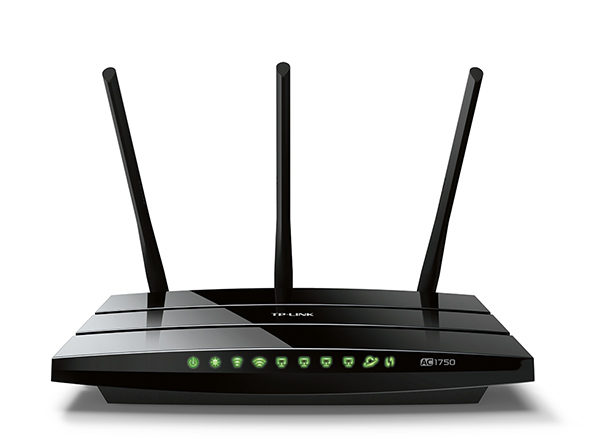
A TP-Link router. (credit: TP-Link.)

Networking hardware vendor TP-Link today admitted violating US radio frequency rules by selling routers that could operate at power levels higher than their approved limits. In a settlement with the Federal Communications Commission, TP-Link agreed to pay a $200,000 fine, comply with the rules going forward, and to let customers install open source firmware on routers.

The open source requirement is a unique one, as it isn't directly related to TP-Link's violation. Moreover, FCC rules don't require router makers to allow loading of third-party, open source firmware. In fact, recent changes to FCC rules made it more difficult for router makers to allow open source software.

The TP-Link settlement was announced in the midst of a controversy spurred by those new FCC rules. The new rules for the 5GHz band require router makers to prevent third-party firmware from changing radio frequency parameters in ways that could cause interference with other devices, such as FAA Doppler weather radar systems.

Read 6 remaining paragraphs | Comments

Washington state sues Comcast, says it sold near-worthless service plans

Comcast defends $5-per-month service plans, will fight $100 million lawsuit.

Washington State Attorney General Bob Ferguson today announced a $100 million consumer protection lawsuit against Comcast, alleging that the nation's biggest cable company "engag[ed] in a pattern of deceptive practices constituting more than 1.8 million individual violations of the Washington Consumer Protection Act." Comcast's conduct affected about 500,000 customers who purchased service protection plans in Washington, Ferguson said.

State officials filed the lawsuit (full text) in King County Superior Court, seeking refunds for consumers. The "lawsuit accuses Comcast of misleading 500,000 Washington consumers and deceiving them into paying at least $73 million in subscription fees over the last five years for a near-worthless 'protection plan' without disclosing its significant limitations," the state AG's announcement said. "Customers who sign up for Comcast’s Service Protection Plan pay a $4.99 monthly fee ostensibly to avoid being charged if a Comcast technician visits their home to fix an issue covered by the plan."

Washington said it alleges 1.8 million violations because Comcast made false claims regarding the scope of its service protection plans to 700,000 customers, and "deceptively represented the scope of its Customer Guarantee to over 1.17 million Washington consumers." Comcast allegedly led customers to believe that they needed to buy service protection plans to get services that were actually covered for free by the "Customer Guarantee."

Read 7 remaining paragraphs | Comments