T-Mobile ends cheaper plans and imposes new limits on unlimited data

High-speed hotspot costs $15 more, HD video costs another $25.

Enlarge

T-Mobile USA has announced a $70 unlimited data plan, but in reality the plan has a lot of limits. And T-Mobile said it will stop offering cheaper plans to new customers.

The $70 unlimited "T-Mobile One" plan caps hotspot usage to 2G speeds, which T-Mobile defines as up to 128kbps. Normal-speed mobile hotspot usage will cost $15 for each 5GB allotment.

The new unlimited plan also throttles video to 480p, similar to the carrier's Binge On promotion that throttles video and exempts it from data caps. On the new unlimited plan, customers who want HD video must pay an extra $25 a month per line. The unlimited plan also throttles customers who use more than 26GB a month if they are connected to a congested cell tower.

Read 13 remaining paragraphs | Comments
AT&T eliminates $20 wireless plan, cuts data in half on $30 plan

No more automatic overage charges: 128kbps speeds after hitting data cap.

(credit: Mike Mozart)

AT&T's entry-level smartphone data plan that offers 300MB for $20 a month will no longer be available to new customers beginning August 21. Additionally, the current 2GB plan that costs $30 will be replaced by a $30 plan offering only 1GB. A new $40 plan will offer 3GB, while $60 will provide 6GB, replacing today's $50 5GB plan.

On the plus side for customers who buy the lowest-cost data plans, AT&T is changing its phone access charge to $20 a month per device. You need to add the data and device access charges together to get the monthly cost before miscellaneous fees. Currently, AT&T imposes a $25-per-month access charge on plans with 5GB or less and $15 on bigger plans. Going forward, the $20 charge will apply regardless of size, with some exceptions—two-year contracts will still have access charges of $40 a month.

These changes are part of a revamp of AT&T's Mobile Share Value plans. In some cases, the new data prices offer better value. For example, it will cost $90 to get 16GB, while today it costs $100 for 15GB. The dollar-per-gigabyte value gets better from there. While today you'd pay $175 for 25GB and $225 for 30GB, next week it will cost $110 for 25GB and $135 for 30GB. The plans come with mobile hotspot capability, rollover data, and unlimited talk and text.

Read 2 remaining paragraphs | Comments

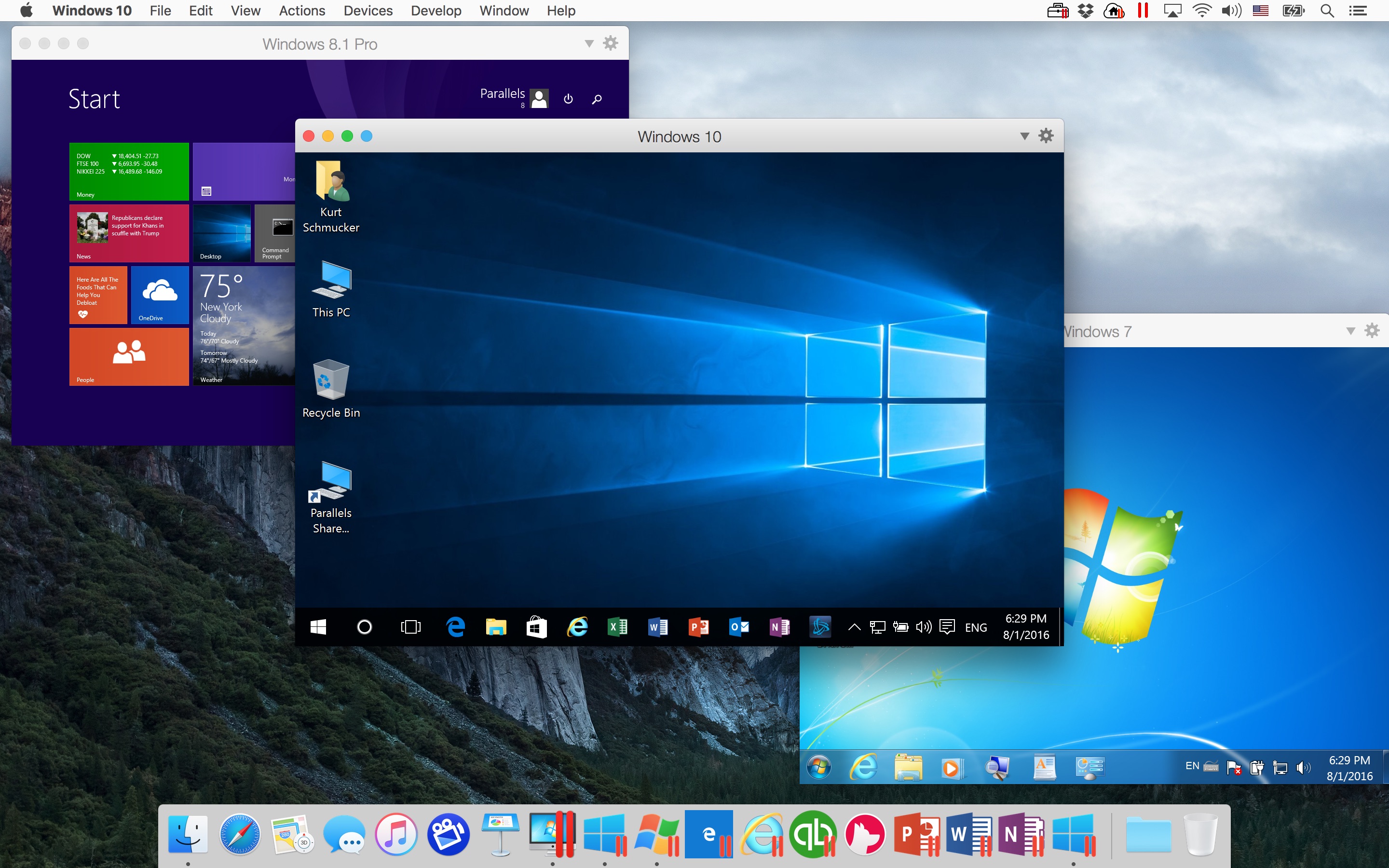
Parallels for Mac has a new version, but no huge reason to upgrade

With Windows 10 mostly unchanged, Parallels 12 upgrade is nice but not crucial.

Enlarge (credit: Parallels)

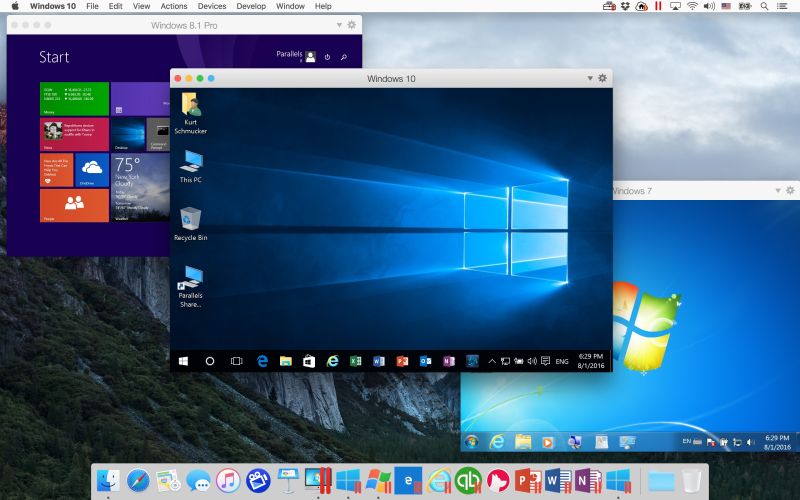
Like clockwork, Parallels releases a new version of its desktop virtualization software for Mac computers every year. They often coincide with major new versions of the Windows and Mac operating systems, requiring major software changes to bring new Windows features to Apple computers or to make sure everything keeps working properly.

Parallels Desktop 12 for Mac is thus being announced today, but there isn't much to be excited about. While Parallels can run just about any operating system in a virtual machine, its primary purpose is letting Mac users run Windows applications. For that use case, last year's Parallels Desktop 11 release is still good enough.

There was an obvious reason to upgrade to Parallels 11 last year for people who wanted to run Windows 10 on a Mac. That's because Parallels 11 was the only version to support Windows 10 in Coherence Mode, which lets Windows applications run on a Mac in their own windows and integrate with the Mac's Notification Center. Without Coherence Mode, Windows applications are all contained in a single window that displays Microsoft's whole operating system.

Read 17 remaining paragraphs | Comments

Verizon has a plan to make the Android bloatware problem worse

Verizon sought $1 to $2 per device, would install apps on Android phones.

(credit: Kham Tran)

Verizon Wireless is reportedly trying to add more bloatware to Android phones by installing apps from other companies in exchange for payment. "The wireless carrier has offered to install big brands' apps on its subscribers' home screens, potentially delivering millions of downloads, according to agency executives who have considered making such deals for their clients," Advertising Age reported yesterday. "But that reach would come at a cost: Verizon was seeking between $1 and $2 for each device affected, executives said."

Bloatware has been a problem on Android phones for years, and this wouldn't be the first time Verizon Wireless was the culprit. But the company's latest moves sound like they have the potential to make things worse.

Verizon started pitching the app installs to retail and finance companies, among others, late last year, according to Advertising Age. Verizon only makes the offer for Android phones since carriers don't have the same access to Apple's iPhone.

Read 3 remaining paragraphs | Comments

Cable expands broadband domination as AT&T and Verizon lose customers

Comcast and Charter get another 500,000 Internet subscribers.

(credit: Getty Images | Yuri_Arcurs)

The cable industry's majority share of US broadband subscribers rose again last quarter, as Comcast and Charter gained nearly 500,000 subscribers, combined, while phone companies AT&T, Verizon, CenturyLink, and Frontier all lost Internet customers.

The 14 largest ISPs, accounting for 95 percent of the US market, gained 192,510 Internet customers in Q2 2016, bringing the total to 91.9 million, Leichtman Research Group reported today. Cable companies accounted for all of the gains, adding 553,293 subscribers for a new total of 57 million. The phone companies lost 360,783 subscribers, bringing them down to 34.9 million. Phone companies' losses more than doubled since Q2 2015, when they lost about 150,000 subscribers.

"Over the past year, cable companies have added about 3.5 million broadband subscribers, while telcos have had net losses of about 500,000 broadband subscribers," the group's president, Bruce Leichtman, said in the press release.

Read 6 remaining paragraphs | Comments
Every major cable TV company lost subscribers last quarter

Top pay-TV operators lost 665,000 subscribers in Q2 2016.

(credit: Getty Images | DonNichols)

The second quarter of each year is generally bad for pay-TV companies, but subscriber losses this year reached new heights.

The 11 biggest pay-TV providers in the US, representing 95 percent of the market, lost 665,000 net video subscribers in Q2 2016, Leichtman Research Group reported today. This is more than double the losses of two years ago. Previously, the companies lost 545,000 subscribers in Q2 2015, 300,000 in Q2 2014, and 350,000 in Q2 2013.

This year's Q2 net losses "surpass[ed] the previous quarterly low set in last year's second quarter," said the research group president, Bruce Leichtman. The group has been tracking the industry since 2002.

Read 5 remaining paragraphs | Comments
ISPs and FCC Republicans celebrate FCC’s court loss on muni broadband

FCC critics glad that commission can’t preempt state laws.

(credit: Epic Fireworks)

A trade group representing ISPs rejoiced over a court decision that allows states to limit the growth of municipal broadband networks.

The "decision is a victory for the rule of law," said Walter McCormick, president of the United States Telecom Association (USTelecom). "The FCC’s authority is not unbridled; it is limited to powers specifically delegated by the Congress, and it does not extend to preemption of state legislatures’ exercise of jurisdiction over their own political subdivisions."

The best way for the FCC to accelerate broadband deployment is to "eliminat[e] federal regulatory impediments to innovation and investment—where there remains to be much that can and should be done," he said.

Read 20 remaining paragraphs | Comments
States win the right to limit municipal broadband, beating FCC in court

Major loss for Tom Wheeler in attempt to boost broadband competition.

(credit: FCC)

The Federal Communications Commission has lost in an attempt to preempt state laws that restrict the growth of municipal broadband networks.

The FCC in February 2015 voted to block laws in North Carolina and Tennessee that prevent municipal broadband providers from expanding outside their territories. The FCC, led by Chairman Tom Wheeler, claimed it could preempt the laws because Congress authorizes the commission to promote telecom competition by removing barriers to investment.

But this was a risky legal argument, as the FCC has no specific authority to overturn state laws. Officials in both states appealed the FCC decision, and today a three-judge panel of the US Court of Appeals for the Sixth Circuit ruled in favor of the states (full text).

Read 10 remaining paragraphs | Comments
US broadband: Still no ISP choice for many, especially at higher speeds

If you can choose from two high-speed ISPs, consider yourself lucky.

(credit: Free Press)

The latest Federal Communications Commission statistics show that Americans still have little choice of high-speed broadband providers.

On the surface, the numbers appear to show that the broadband market has gotten slightly less competitive since 2013. But what has really happened is the FCC is collecting more granular data that better illustrates the lack of choice for most Americans. Things are probably getting a little better as providers boost speeds and new entrants like Google Fiber and municipal ISPs offer service. But the FCC's improved statistical analysis shows how far there is to go.

This is the key competition graphic from the FCC's latest Internet Access Services report, which was released last week and contains data through June 30, 2015:

Read 9 remaining paragraphs | Comments

Ad board to Comcast: Stop claiming you have the “fastest Internet”

Comcast should also stop making confusing claims about Verizon, group says.

(credit: Comcast)

Comcast should discontinue its claim that Xfinity service "delivers the fastest Internet in America," the National Advertising Division (NAD) recommended today. Comcast should also discontinue certain ads where it claims to have the "fastest in-home Wi-Fi," the group said.

For its fastest Internet claim, Comcast relied on crowdsourced data from the Ookla Speedtest application. An "award" provided by Ookla to Comcast relied only on the top 10 percent of each ISP's download results.

"Although Xfinity offers a variety of speeds at a range of prices and tiers, Comcast’s advertising does not limit its claims to a particular tier," the NAD's announcement said. "NAD determined that the claims at issue in both print and broadcast advertising reasonably conveyed a message of overall superiority—that regardless of which speed tier purchased by a consumer, in a head-to-head comparison, Xfinity would deliver faster speeds."

Read 6 remaining paragraphs | Comments