Hillary Clinton wants “Manhattan-like project” to break encryption

US should be able to bypass encryption—but only for terrorists, candidate says.

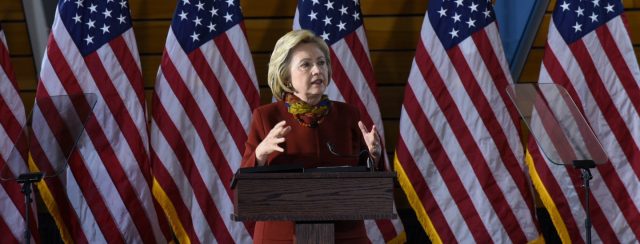
Enlarge / Hillary Clinton. (credit: Clinton campaign.)

Presidential candidate Hillary Clinton has called for a "Manhattan-like project" to help law enforcement break into encrypted communications. This is in reference to the Manhattan Project, the top-secret concentrated research effort which resulted in the US developing nuclear weapons during World War II.

At Saturday's Democratic debate (transcript here), moderator Martha Raddatz asked Clinton about Apple CEO Tim Cook's statements that any effort to break encryption would harm law-abiding citizens.

"You've talked a lot about bringing tech leaders and government officials together, but Apple CEO Tim Cook said removing encryption tools from our products altogether would only hurt law-abiding citizens who rely on us to protect their data," Raddatz said. "So would you force him to give law enforcement a key to encrypted technology by making it law?"

Read 9 remaining paragraphs | Comments
Bernie Sanders campaign improperly accessed Clinton voter data, DNC says

After breach, DNC cuts off Sanders campaign’s access to voter database.

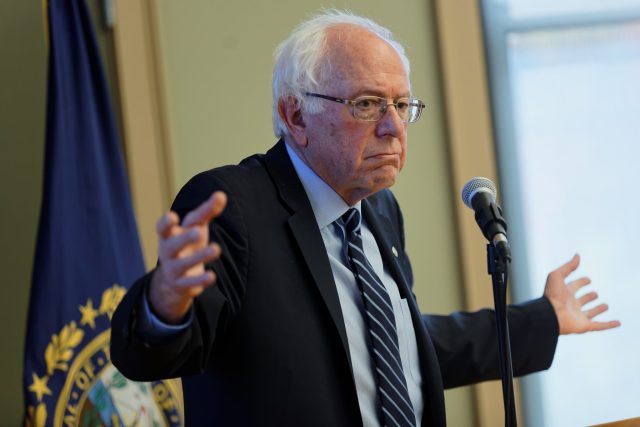
Democratic presidential candidate Bernie Sanders. (credit: Michael Vadon)

The Democratic National Committee has cut off the Bernie Sanders campaign's access to a voter database after allegations that Sanders staff members improperly viewed confidential information gathered by the campaign of Hillary Clinton.

The Sanders campaign fired the staff member who was responsible for accessing the data, according to multiple media reports. The breach was made possible by a bad patch applied by the software vendor that operates the database.

"The discovery sparked alarm at the DNC, which promptly shut off the Sanders campaign’s access to the strategically crucial list of likely Democratic voters," The Washington Post reported today. "The DNC maintains the master list and rents it to national and state campaigns, which then add their own, proprietary information gathered by field workers and volunteers. Firewalls are supposed to prevent campaigns from viewing data gathered by their rivals."

Read 5 remaining paragraphs | Comments

Comcast, AT&T, and T-Mobile must explain data cap exemptions to FCC

Zero-rating lets customers avoid data caps, but only by using approved services.

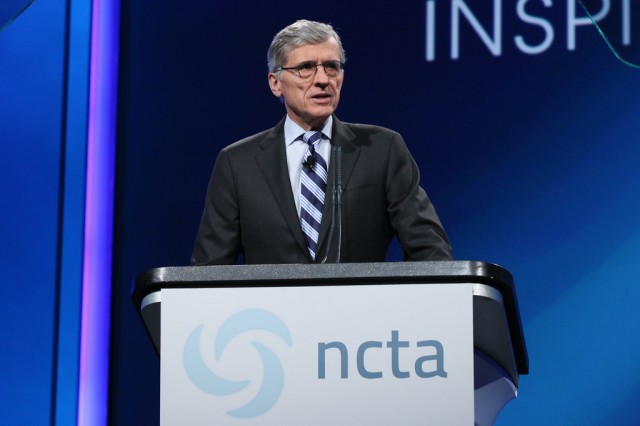
FCC Chairman Tom Wheeler. (credit: NCTA)

The Federal Communications Commission has asked Comcast, AT&T, and T-Mobile USA to answer questions about their implementations of "zero-rating," a practice that exempts certain types of content from customers' data caps.

FCC officials wrote to the companies yesterday, pointing out that data cap exemptions can favor some content providers over others, whose content does count against consumers' caps. The letters asked the companies to make "relevant technical and business personnel" available for discussions with FCC staff by January 15.

FCC Chairman Tom Wheeler told reporters today that "this is not an investigation. This is not any enforcement. This is to help us stay informed as to what the practices are, as we said we would do in the Open Internet Order."

Read 11 remaining paragraphs | Comments

Comcast customer discovers huge mistake in company’s data cap meter

Comcast said he used 120GB of data while on a multi-week vacation.

(credit: Comcast)

You probably know that Comcast is hitting subscribers with overage charges of $10 when they exceed their 300GB monthly data caps. But can customers trust Comcast to measure Internet usage accurately? The nation’s largest cable company points to research it commissioned showing that its data metering is usually accurate, but one customer who contacted Ars was able to prove that he was being incorrectly accused of using excessive data.

Oleg, a programmer from Tennessee who prefers that we not publish his last name, said he got repeated warnings from Comcast that he was using too much data. But the traffic logs from his router showed that “I was not even close to Comcast’s cap,” he wrote. Oleg described his saga in a Pastebin posting, a YouTube video, and in e-mails to Ars.

Oleg received warnings in September and another in October, the latter while he was overseas for a multiple-week vacation with his wife. When they returned home on November 9th, Comcast’s data meter was “showing I used 120 gigs of data, like, while I was gone,” he wrote. Customers can check their usage on Comcast’s website.

Read 13 remaining paragraphs | Comments

Trump doesn’t want ISIS “using our Internet”

GOP candidates debate closing the Internet, surveillance, and encryption.

(credit: Aurich Lawson / Thinkstock)

A week after saying the US should disrupt the Islamic terrorist group ISIS' online recruiting by "closing that Internet up in some way," Republican presidential candidate Donald Trump was given a chance to clarify what he meant at last night's GOP debate.

"You talk freedom of speech. You talk freedom of anything you want. I don’t want them using our Internet to take our young, impressionable youth," Trump said at the debate. "We should be using our brilliant people, our most brilliant minds to figure a way that ISIS cannot use the Internet."

Trump's "our Internet" phrasing referred to the fact that Americans invented the Internet, but he said he doesn't want to shut down the Internet in the US—only in other countries.

Read 11 remaining paragraphs | Comments

Republicans in Congress let net neutrality rules live on (for now)

Year-end spending bill agreed to without anti-net neutrality provisions.

A Republican proposal to put anti-net neutrality provisions into a government spending bill has been dropped.

House leaders from both major parties struck a deal late Tuesday night on a $1.1 trillion spending bill and tax breaks. Earlier versions of this bill would have withheld funding from the Federal Communications Commission in order to prevent implementation of net neutrality rules until Internet service providers exhaust all their appeals. Earlier versions also would have imposed new reporting requirements on the FCC and prohibited the commission from regulating Internet service rates.

The compromise budget bill (full text here) did not include those provisions. Tech companies, Democratic members of Congress, and the White House had all pressured Republicans to drop the anti-net neutrality proposals.

Read 3 remaining paragraphs | Comments

Tech companies urge Congress to drop fight against net neutrality rules

Republicans want anti-net neutrality provisions attached to budget.

Net neutrality protest at the White House in November 2014. (credit: Stephen Melkisethian)

A group of tech companies has urged Congressional leadership to abandon a GOP plan to kill the Federal Communications Commission's net neutrality rules.

Budget proposals have included provisions preventing the FCC from continuing to enforce the rules that took effect in June, at least until broadband providers have exhausted all of their appeals in court.

"We are writing to urge you to refrain from including riders relating to net neutrality and the Federal Communication Commission’s Open Internet Order in the upcoming omnibus spending legislation," the tech companies wrote in a letter Wednesday to House Speaker Paul Ryan (R-Wis.), Senate Majority Leader Mitch McConnell (R-Ky.), House Minority Leader Nancy Pelosi (D-Calif.), and Senate Minority Leader Harry Reid (D-Nev.).

Read 12 remaining paragraphs | Comments

Verizon to join AT&T in charging companies for “sponsored data”

Net neutrality rules apparently no obstacle to zero-rating.

Verizon is reportedly set to begin testing a sponsored data program that would let companies pay Verizon to deliver online services without using up customers' data plans. The news comes from a Re/code interview with Verizon Executive VP Marni Walden. “The capabilities we’ve built allow us to break down any byte that is carried across our network and have all or a portion of that sponsored,” Walden told Re/code.

Verizon will start testing sponsored data "in the next few days" with a few partners and will make it widely available early next year, Re/code reported. “We’ll be out in a larger commercial way in the first quarter of 2016,” Walden said.

The sponsored data program would presumably target just the Verizon Wireless portion of the company's business. Verizon home Internet service has no strict data cap.

Read 5 remaining paragraphs | Comments

“The more bits you use, the more you pay”: Comcast CEO justifies data caps

Unfortunately, usage-based billing only works one way: in Comcast’s favor.

Comcast CEO Brian Roberts. (credit: Business Insider)

Comcast CEO Brian Roberts defended his company's much-criticized data caps yesterday, saying that consumers should pay for Internet access based on how much data they use, just like they do with gas or electricity.

"Just as with every other thing in your life, if you drive 100,000 miles or 1,000 miles you buy more gasoline. If you turn on the air conditioning to 60 vs. 72 you consume more electricity," Roberts said. "The same is true for [broadband] usage." Cellular data is already billed this way, "the more bits you use, the more you pay," he said. So why not cable Internet, too?

Roberts was being interviewed by Business Insider CEO Henry Blodget at the publication's Ignition conference. (Video is available here.)

Read 9 remaining paragraphs | Comments
Mega-Apple update day brings ugprades to OS X, iOS, WatchOS, and tvOS

Time to update your iPhone, iPad, Mac, Watch, and Apple TV.

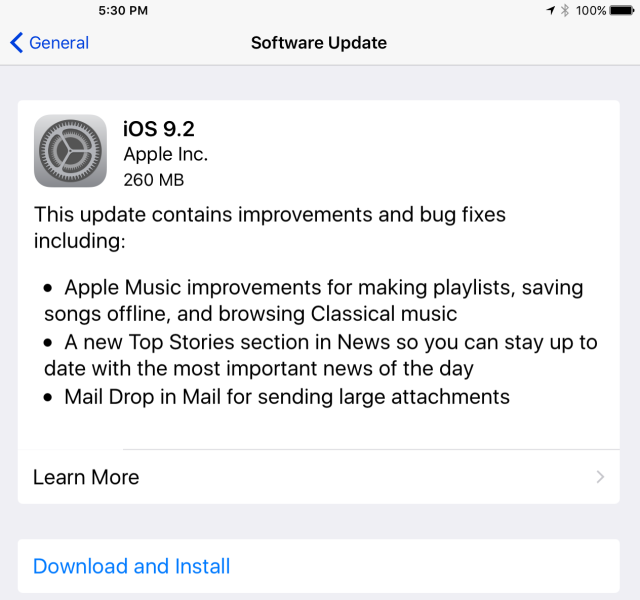
Apple today released updates for the operating systems that power iPhones, iPads, Macs, Apple Watches, and Apple TVs. iOS 9.2, OS X El Capitan 10.11.2, WatchOS 2.1, and tvOS 9.1 are all available on their respective devices.

iOS 9.2: Apple Music is now slightly better

Available for devices going back to the iPhone 4S, iPod Touch 5th generation, and iPad 2, this iOS update includes a few minor improvements for Apple Music:

  • You can now create a new playlist when adding a song to a playlist
  • Your most recently changed playlist is now listed at the top when adding songs to playlists
  • Download albums or playlists from your iCloud Music Library by tapping the iCloud download button
  • See which songs have been downloaded with the new download indicator next to each song in My Music and Playlists
  • See works, composers, and performers while browsing Classical music in the Apple Music catalog

iBooks has a couple of improvements, including support for 3D Touch on the iPhone 6S "to peek and pop pages from the table of contents, your notes and bookmarks, or from search results inside a book." iBooks also now supports listening to an audiobook while you read other books or search for books in your library or the store.

Read 10 remaining paragraphs | Comments