FCC had “productive” net neutrality talks with Comcast, AT&T, T-Mobile

Carriers explained data cap exemptions (and, in T-Mobile’s case, throttling).

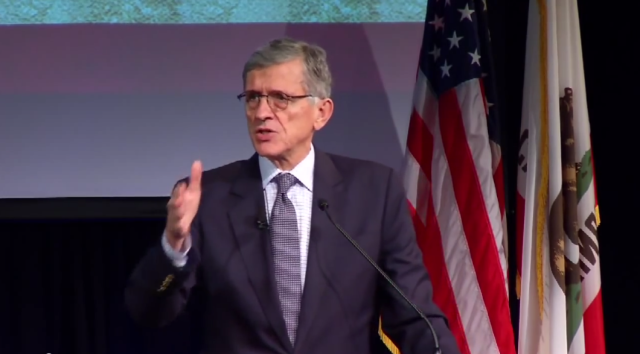
FCC Chairman Tom Wheeler. (credit: Computer History Museum)

The Federal Communications Commission says it has held "productive" meetings with Comcast, AT&T, and T-Mobile USA about whether data cap exemptions conflict with the goals of net neutrality.

The FCC sent letters last month asking the three carriers to meet with commission staff by January 15, and all the meetings have happened.

"FCC staff had productive discussions with company representatives as part of a larger policy examination of trends in the market. We cannot comment on the details of individual meetings," FCC spokesperson Kim Hart told Ars.

Read 8 remaining paragraphs | Comments
Netflix cracks down on customers using VPNs, proxies, and unblockers

It may affect all VPN users, not just those trying to evade license restrictions.

Netflix is aiming to block unblocking services like this one. (credit: TVUnblock)

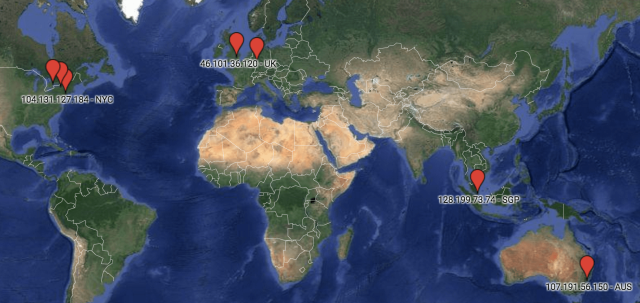
Netflix says it will step up enforcement against subscribers who use VPNs, proxies, and unblocking services to mask their locations. This will help Netflix prevent customers from watching video that isn't licensed for viewing in their country, but it may also affect people who use location-spoofing services for security or privacy reasons.

"Some members use proxies or 'unblockers' to access titles available outside their territory," Content Delivery Architecture VP David Fullagar wrote in a post today. "To address this, we employ the same or similar measures other firms do. This technology continues to evolve and we are evolving with it. That means in coming weeks, those using proxies and unblockers will only be able to access the service in the country where they currently are. We are confident this change won’t impact members not using proxies."

Luckily, Netflix is now available almost worldwide. But not every show is available everywhere.

Read 10 remaining paragraphs | Comments

Valve deploys 100Gbps Internet ports to handle 75% traffic growth

Steam averages 450-500PB of data per month and 10 million concurrent players.

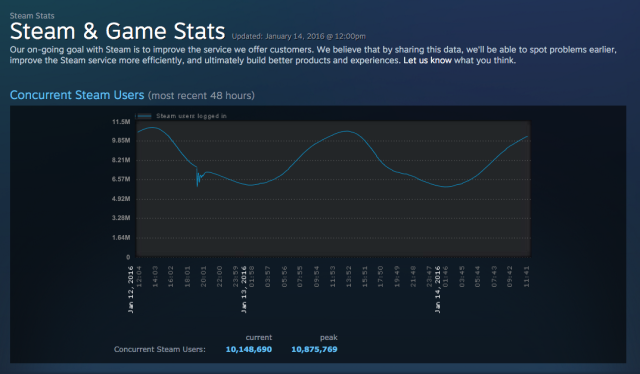
Steam's most recent usage data. (credit: Valve)

Valve is upgrading its network infrastructure with 100Gbps Internet ports to keep pace with big traffic growth. The news came in an announcement yesterday from Valve's network operator, Level 3 Communications. The press release exists mainly to promote Level 3's network, but it provides some details about Valve's massive bandwidth needs.

Steam's traffic levels are growing about 75 percent year-over-year, currently totaling 450 to 500 petabytes per month or four to five exabytes a year, the announcement said. Standard game downloads are 10 to 40 gigabytes, and the Steam platform "has over 100 million users, averaging more than 10 million concurrent players and over two billion minutes played logged per day."

Steam recently set a new record with more than 12.3 million concurrent users.

Read 3 remaining paragraphs | Comments

Multi-gigabit cable modems ready to help you blow past your data cap

Five DOCSIS 3.1 modems certified as Comcast starts deploying gigabit cable.

(credit: CableLabs)

Next-generation cable modems that can deliver multi-gigabit speeds have been certified by CableLabs, the cable industry's research and development lab.

The new modems use version 3.1 of DOCSIS (the Data Over Cable Service Interface Specification), cable's answer to fiber Internet speeds. The first DOCSIS 3.1 certifications were earned by Askey, Castlenet, Netgear, Technicolor, and Ubee Interactive, according to the announcement by CableLabs. The group's testing confirms that the modems comply with the new DOCSIS spec.

DOCSIS 3.1 reduces network latency and will enable "high-speed applications including Virtual and Augmented Reality, advanced video technologies such as Ultra High Definition 4K television, tele-existence and medical imaging, and gaming," CableLabs said.

Read 3 remaining paragraphs | Comments

David Bowie’s ISP, as remembered by the guy who helped create “BowieNet”

Dial-up service came with a CD containing Internet Explorer, David Bowie songs.

David Bowie. (credit: davidbowie.com)

When David Bowie became an Internet service provider in 1998, a man named Ron Roy helped him start the business. Now, three days after the legendary musician's death at age 69, we've interviewed Roy about how "BowieNet" came to life and why it was so important to the artist.

"David was tremendously involved from day one," Roy told Ars via e-mail. Roy appeared in some of the first press releases that followed BowieNet's US and UK launches; we tracked him down at his current business, Wines That Rock.

It was a lot easier to become an Internet service provider in 1998 than it is today. Instead of the enormous expense of deploying fiber or cable throughout a city, ISPs could spring to life by selling dial-up connections to anyone with a telephone line. BowieNet's dial-up service sold full access to the Internet for $19.95 a month (or £10.00 in the UK), but it was also a fan club that provided exclusive access to David Bowie content such as live video feeds from his studio. Customers who already had a dial-up Internet provider and didn't want to switch could buy access to BowieNet content separately for $5.95 a month. BowieNet had about 100,000 customers at its peak, Roy said.

Read 10 remaining paragraphs | Comments

ISPs will be able to charge anything they want if Republican bill passes

Ban on “rate regulation” could even help ISPs impose discriminatory data caps.

"Perhaps you should switch to another cable company… oh, that's right, we're the only one in town." (credit: Viacom)

Republicans in Congress are advancing a bill that could strip the Federal Communications Commission of authority to protect consumers from unreasonable broadband prices. Democrats and consumer advocates warn that the bill could help Internet service providers overcharge customers and impose unfair data caps.

When the FCC reclassified broadband as a common carrier service in order to impose net neutrality rules, the commission declined to impose traditional rate regulation in which telecommunications providers would have to seek permission before raising prices. But the reclassification allows customers to complain about prices, with the FCC judging on a case-by-case basis whether a price or pricing practice is "unjust" or "unreasonable."

Republicans led a hearing today on a few bills, including the "No Rate Regulation of Broadband Internet Access Act," which would do exactly what its title says by forbidding the FCC from regulating rates charged for Internet service. Republicans have said they're simply trying to put into law a promise made by President Obama and FCC Chairman Wheeler that the commission won't require ISPs to face the rate-of-return regulation traditionally applied to telephone service. Passing a law would prevent future FCC chairpersons from using a different strategy.

Read 20 remaining paragraphs | Comments

John Legere apologizes to EFF for mocking group in throttling debate

“I am a vocal, animated, and sometimes foul-mouthed CEO,” T-Mobile boss says.

T-Mobile CEO John Legere. (credit: T-Mobile)

T-Mobile USA CEO John Legere apologized to the Electronic Frontier Foundation (EFF) for mocking its concerns about the wireless carrier's "Binge On" program that throttles online video.

In an "Open Letter to Consumers About Binge On," Legere said T-Mobile plans to meet with the EFF, which argues that T-Mobile is violating net neutrality rules. Legere was less gracious to the EFF last week when he answered their concerns by saying "Who the fuck are you, anyway, EFF? Why are you stirring up so much trouble, and who pays you?"

In his open letter yesterday, Legere wrote:

Read 8 remaining paragraphs | Comments
AT&T’s unlimited smartphone data is back—but only for TV subscribers

No tethering, and the $100 plan is only for DirecTV and U-verse TV customers.

(credit: AT&T)

AT&T is once again selling unlimited smartphone data, but you'll have to subscribe to either DirecTV or U-verse TV to get it. The wireless plan with unlimited data, voice calling, and text messaging costs $100 a month for one person, and another $40 for each additional smartphone or tablet. The fourth line is free, so a family of four can get the unlimited plan for $180 a month (though they'd have to pay the full $220 for the first two months before the credit kicks in).

One bit of bad news: the unlimited plan doesn't include tethering, so you can't share the phone's Internet connection with another device.

The new deal that was just announced will be available beginning tomorrow for new and existing wireless customers who already have or add TV service. Customers who buy this bundle will also get a $10-per-month discount on their combined TV-and-wireless bill.

Read 6 remaining paragraphs | Comments

Video startup quits T-Mobile’s Binge On over net neutrality concern

John Legere’s fight with EFF isn’t winning him many new fans.

(credit: T-Mobile)

T-Mobile USA today continued to face criticism of its online video zero-rating and throttling program with one small video company saying it would quit Binge On.

Slidefuse, maker of 4Stream.TV, was spurred to action in part by T-Mobile CEO John Legere insulting the Electronic Frontier Foundation (EFF).

"In light of recent events and of comments made by your CEO, John Legere, we have decided to halt our participation in Binge On and disable our traffic shaping rules for the time being," Slidefuse told T-Mobile.

Read 13 remaining paragraphs | Comments

ISPs mad that FCC wants faster broadband deployment

FCC insists that US can do better, with 10 percent still lacking access.

"Seems fast enough to me." (credit: Comcast)

Broadband industry trade groups are hopping mad about a government report that says fast Internet service isn't being deployed to Americans quickly enough.

The Federal Communications Commission is required by Congress to determine annually whether broadband "is being deployed to all Americans in a reasonable and timely fashion" and to take action to encourage deployment if the answer is negative. The FCC's latest report finds that access to broadband—defined as 25Mbps downstream and 3Mbps upstream—has improved significantly but still isn't reaching the whole country.

That's not what Internet service providers wanted to hear.

Read 12 remaining paragraphs | Comments