Sprint cuts customer service jobs, says customers won’t notice a difference

Sprint will rely on “self-service” to offset 2,000 jobs lost in customer care.

Sprint is reportedly cutting 2,500 jobs, including 2,000 in customer service, but the company told Ars that subscribers won't actually see any decline in customer service quality. "These changes will not impact the level of service we provide to our customers," a Sprint spokesperson told Ars today.

Sprint said it has already boosted "self-service and digital care tools," helping to lower its churn rate (the percentage of subscribers who leave). "In addition, we have made changes in service assurance that have now resulted in our lowest ticket levels and fastest repair times in the last three years," Sprint said.

Read 7 remaining paragraphs | Comments

Comcast and Charter may soon control 70% of 25Mbps Internet subscriptions

If Charter buys TWC, two cable firms will dominate high-speed Internet market.

(credit: Free Press)

If Charter Communications is allowed to buy cable rivals Time Warner Cable (TWC) and Bright House Networks (BHN), just two Internet service providers could control about 70 percent of the nation's 25Mbps-and-up broadband subscriptions.

Comcast would remain the country's largest ISP with 22.87 million Internet subscribers, while Charter's merger will push it into second place with at least 20.56 million. (AT&T has 15.83 million.) Combined, Comcast and Charter would account for less than half of home Internet connections. But under the Federal Communications Commission definition of "broadband," which requires download speeds of at least 25Mbps, Comcast and Charter would reign supreme in the US.

The FCC changed its definition of broadband from 4Mbps downstream/1Mbps upstream to 25Mbps/3Mbps a year ago and uses the new definition to evaluate whether broadband is being deployed to all Americans at a reasonable and timely pace. Though many Americans get by with slower speeds, the FCC argues that higher speeds are necessary for multi-person families using the Internet to quickly download big files and use high-quality video and voice applications.

Read 20 remaining paragraphs | Comments

ISPs try to kill open-access fiber network, avoid competition

In West Virginia, cable lobby and telcos rally against expanded broadband.

(credit: Virginia Tech)

Private Internet service providers are speaking out against a proposal to build a publicly funded fiber network in West Virginia.

State Sen. Chris Walters, a Republican, introduced a bill this week that would deploy more than 2,000 miles of fiber optic cable. The state-owned and operated network would include only middle-mile infrastructure and not the "last mile" fiber connections that extend to people's homes and businesses. This network would be open access, however, so any Internet service provider could gain access to the lines and build last-mile facilities to offer service directly to customers.

That arrangement would make it easier for small Internet service providers to compete against the big ones. Naturally, small ISPs support the project while big ISPs oppose it, the Charleston Gazette-Mail reported.

Read 5 remaining paragraphs | Comments

GOP senators want lower Internet speeds to qualify as “broadband“

If you can stream Netflix, it should count as broadband, Republicans argue.

(credit: Aurich Lawson / Thinkstock)

A year after the Federal Communications Commission changed the definition of broadband Internet to include only faster speeds, Republicans in Congress are still mad about the decision.

Using the new broadband minimum speed of 25Mbps download and 3Mbps upload, the FCC's annual review of deployment this month said that broadband isn't being offered to about 34 million Americans. ISPs immediately criticized that assessment; yesterday their friends in Congress piled on.

Six Republican Senators—Steve Daines (R-Mont.), Roy Blunt (R-Mo.), Ron Johnson (R-Wis.), Roger Wicker (R-Mich.), Deb Fischer (R-Neb.), and Cory Gardner (R-Colo.)—outlined their concerns in a letter to FCC Chairman Tom Wheeler yesterday. (The Hill reported on the letter and posted a copy.) "We are concerned that this arbitrary 25/3 Mbps benchmark fails to accurately capture what most Americans consider broadband... Looking at the market for broadband applications, we are aware of few applications that require download speeds of 25Mbps," the senators wrote. "Netflix, for example, recommends a download speed of 5Mbps to receive high-definition streaming video, and Amazon recommends a speed of 3.5Mbps. In addition, according to the FCC's own data, the majority of Americans who can purchase 25Mbps service choose not to."

Read 6 remaining paragraphs | Comments

AT&T CEO won’t join Tim Cook in fight against encryption backdoors

Stephenson: Apple and other tech companies should stay out of encryption debate.

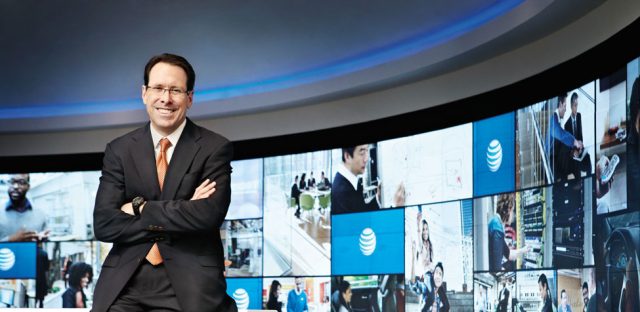
AT&T CEO Randall Stephenson. (credit: AT&T)

US politicians have been urging tech companies to weaken the security of smartphones and other products by inserting encryption backdoors that let the government access personal data.

Numerous tech companies—including Apple—have come out strongly against the idea, saying that encryption backdoors would expose the personal data of ordinary consumers, not just terrorists.

But tech company leaders aren’t all joining the fight against the deliberate weakening of encryption. AT&T CEO Randall Stephenson said this week that AT&T, Apple, and other tech companies shouldn’t have any say in the debate.

Read 7 remaining paragraphs | Comments

Netflix loves T-Mobile’s zero-rating, says it’s better than Comcast’s

Netflix’s past opposition to data cap exemptions doesn’t extend to Binge On.

Netflix CEO Reed Hastings. (credit: re:publica)

Netflix has periodically opposed zero-rating schemes in which ISPs exempt certain online services from data caps. But the US' biggest online video streaming company was a launch partner for T-Mobile's Binge On video zero-rating program, and this week it explained why it thinks T-Mobile's zero-rating is good for customers and video providers.

Netflix CEO Reed Hastings was asked in an earnings call this week why Binge On is different from Comcast's implementations of zero-rating.

"It's voluntary on the customer. Any customer of T-Mobile's can decide to turn it on or turn it off—that would be a big difference," Hastings answered. "They're not charging any of the providers; it's an open program. Many of our competitors such as Hulu and HBO are in the program also."

Read 10 remaining paragraphs | Comments

“Open set-top box” tech could help online video, kill cable rental fees

Cable companies “hate this idea,” consumer advocate says.

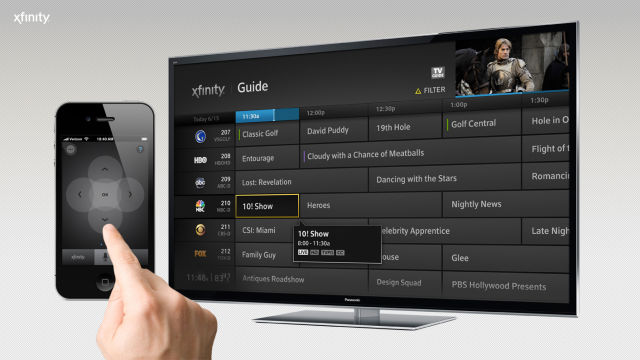
Comcast could see some new set-top box competition. (credit: Comcast)

What if, instead of renting a set-top box from your cable company, you could get all your TV channels and online video services delivered to a single device that you only pay for once?

The Federal Communications Commission could make it happen, consumer advocacy groups say. "An open set-top box market is a key component of freeing consumers from unnecessary monthly rental fees, and it would enable them to more easily access online video content right alongside their subscription TV programming," the groups said in a letter to FCC Chairman Tom Wheeler yesterday. The letter was written by Common Cause, Demand Progress, Free Press, Fight for the Future, the National Hispanic Media Coalition, New America’s Open Technology Institute, and Public Knowledge.

Replacing CableCard

The CableCard standard created nearly 20 years ago was supposed to make the set-top box industry competitive. And it has succeeded to an extent, letting cable subscribers use TiVo boxes and other devices. But the FCC long ago admitted that CableCard had only limited success. About 99 percent of customers still rent set-top boxes directly from their providers and pay an average of $231.82 a year in rental fees, US senators found in a survey of TV providers last year.

Read 20 remaining paragraphs | Comments
VPN providers mad about Netflix crackdown but say they can evade it

Even Netflix admits blocking all VPNs won’t be possible.

With Netflix saying it intends to disable video when customers use VPN services, VPN providers are criticizing the online video company and vowing to evade any measures designed to prevent their use.

Under pressure from content owners, Netflix said last week that it will step up enforcement against subscribers who use VPNs, proxies, and unblocking services to view content not available in their countries. But even Netflix acknowledges that it's "trivial" for VPN providers to avoid blocks by switching IP addresses, and VPN providers say they're ready.

“Unfortunately, many legitimate paid subscribers will be left in the dark as an unavoidable outcome of overreaching IP blocks," TorGuard's Ben van der Pelt told TorrentFreak in an article yesterday. “TorGuard is monitoring the situation closely and we have recently implemented new measures that can bypass any proposed IP blockade on our network. VPN users who encounter Netflix access problems are encouraged to contact us for a working solution."

Read 6 remaining paragraphs | Comments

Verizon Wireless selling data cap exemptions to content providers

Video, music, app downloads, and ads can be exempted from caps for a fee.

(credit: Verizon Wireless)

Verizon Wireless, like AT&T before it, is now charging online content providers a fee to get their services exempted from customers' data caps.

With Verizon's "FreeBee Data 360," content providers are billed for each gigabyte they serve to consumers, while the consumers can access the providers' services without using up their data allotments.

"Content providers can sponsor specific consumer actions on a per-click basis, free of data charges for subscribers—including mobile video clips, audio streaming, and app downloads," Verizon said today. Data used for advertisements can also be sponsored by the company delivering the ad.

Read 6 remaining paragraphs | Comments

Apple asked widow for court order when she sought late husband’s password

Woman supplied Apple will and death certificate, but it wasn’t enough.

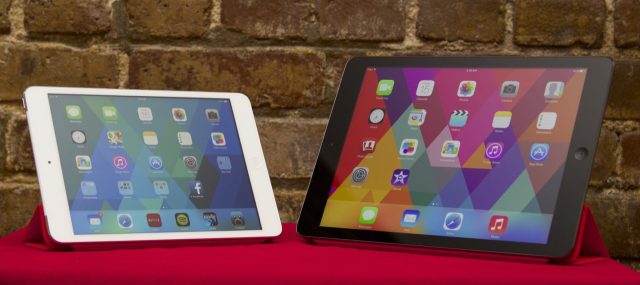
iPads. (credit: Andrew Cunningham)

A woman whose husband died has spent months trying to gain access to his Apple account, according to a Canadian Broadcasting Corporation report today. Apple initially told the woman that she would have to provide a will and death certificate, but once she provided those documents the company reportedly asked for something else—a court order.

There are good privacy and security reasons for Apple to impose strict controls on account access, but in this case the company seems to have acknowledged it went too far by demanding a court order. After CBC got involved, Apple relented and will apparently allow the widow, 72-year-old Peggy Bush of Victoria, BC, to get access to her late husband's Apple ID.

"After [CBC News] contacted Apple, it did reach out to the Bush family and apologize for what it called a 'misunderstanding,' offering to help the family solve the problem—without a court order," the report said. "At the time of publication, it was working with Donna Bush to do that."

Read 11 remaining paragraphs | Comments