As Google Fiber hits Atlanta, Comcast says, “don’t fall for the hype”

Comcast touts more on-demand video, voice remote; leaves out speed and data caps.

(credit: TheBen91)

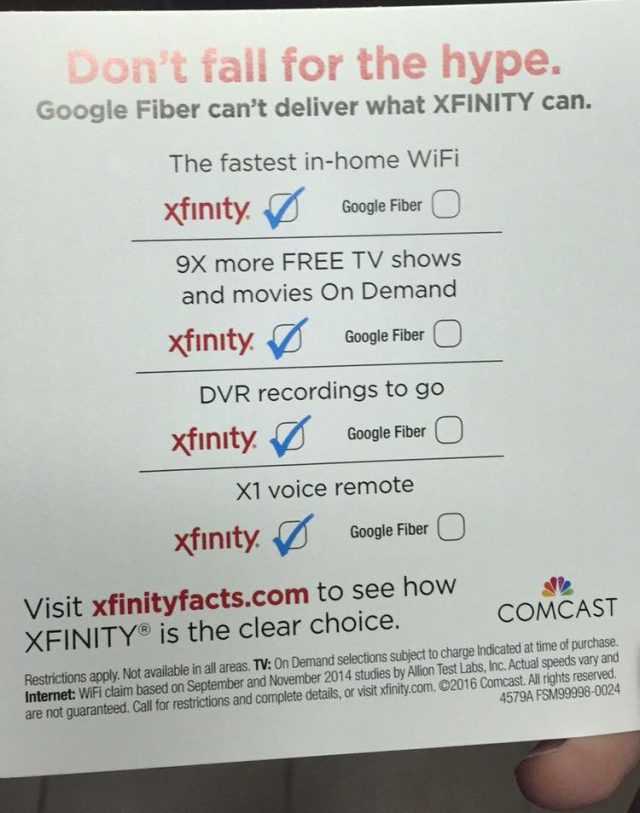
Google Fiber recently went live in apartments and condos in Atlanta, making it the fourth metro area to get Google's gigabit Internet service. Perhaps not coincidentally, Reddit user TheBen91 yesterday posted the above photo of a mailing from Comcast, in which the nation's largest cable company tries to convince customers that it offers a better deal than Google Fiber.

"So I got this in the mail today. I think someone is scared of Fiber coming to Atlanta," the user wrote.

Comcast's mailing touts "The fastest in-home Wi-Fi," "9X more FREE TV shows and movies On Demand," "DVR recordings to go," and the "X1 voice remote" as features that Google Fiber doesn't offer. Notably absent from the Comcast/Google Fiber comparison are prices and data caps. Google Fiber offers gigabit downloads and uploads for $70 a month, without any monthly data caps. "Basic Internet" of 100Mbps costs $50 for Google customers in Atlanta.

Read 7 remaining paragraphs | Comments
AT&T and FCC chairman square off in set-top box fight

FCC set to vote on a card-less replacement for CableCard.

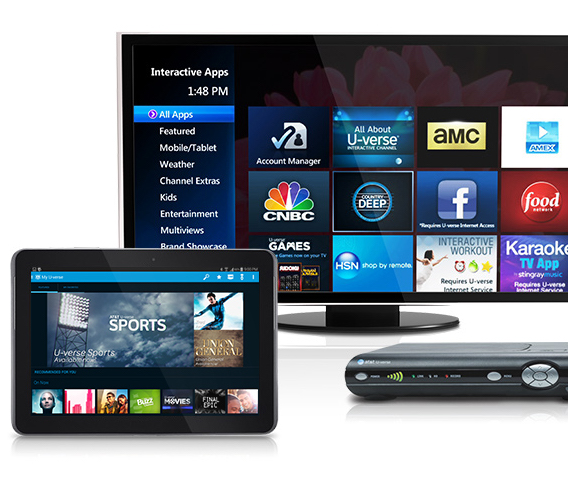
(credit: AT&T)

The Federal Communications Commission chairman dismissed concerns from AT&T and other pay-TV providers about new set-top box rules, saying that the companies shouldn't fear a little competition.

FCC Chairman Tom Wheeler's proposal would force pay-TV providers to make video programming available to the makers of third-party devices and software, saying he wants customers to have more alternatives to set-top boxes rented from cable companies. A vote is scheduled for next week, and TV providers are furious.

Wheeler doesn't mind, though. “The big kick I get is that AT&T and the cable companies have been putting out statements say, ‘This is going to thwart innovation,'” Wheeler said in an interview with Variety. “And I scratch my head and say, ‘My goodness, let’s see. When was the last time that competition thwarted innovation rather than spurring innovation?’ And you are telling me that a locked-down, closed system will have more impetus to be innovative, than a competitive, open system? I think that history shows that it is exactly the opposite of what happens in reality.”

Read 6 remaining paragraphs | Comments

Facebook’s free Internet app banned by India’s new net neutrality rule

Zero-rating targeted by regulators overseas while it remains legal in US.

(credit: Facebook)

Facebook's attempt to provide free access to a selection of websites in developing countries was dealt a blow today when India's telecom regulator banned arrangements that charge different amounts for access to different parts of the Internet. The move effectively prevents "zero-rating" schemes in which certain Web services count against data caps while others do not.

Facebook is partnering with mobile operators in various countries to offer "Free Basics," saying that the app provides "access to basic websites for free—like news, job postings, health and education information, and communication tools like Facebook." Any developer can try to get a website included, but Facebook imposes restrictions, including one that prevents high-bandwidth services like VoIP, video, and file transfers. In addition to Facebook, Free Basics includes AccuWeather, BBC News, Dictionary.com, ESPN, and other sites.

Critics say Free Basics violates net neutrality principles by prioritizing certain content, making it less likely that people will use websites not included in the app. The Telecom Regulatory Authority of India (TRAI) had temporarily banned Free Basics and today followed up with a new rule that prevents service providers from charging "discriminatory tariffs for data services on the basis of content." A discriminatory tariff under this rule includes free data applied only to certain websites.

Read 6 remaining paragraphs | Comments

Verizon’s mobile video won’t count against data caps—but Netflix does

Verizon Wireless tests limit of net neutrality rules by zero-rating own data.

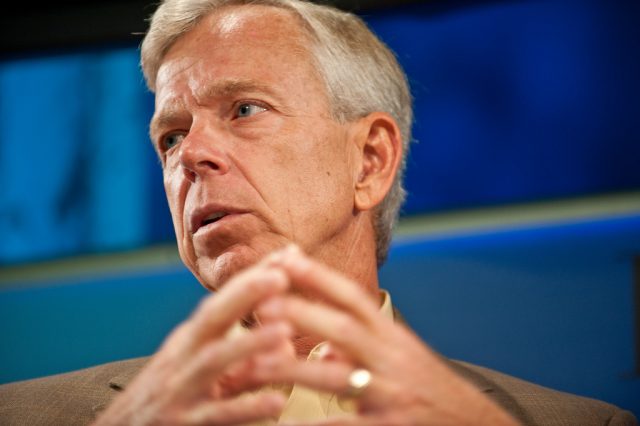
Verizon CEO Lowell McAdam. (credit: Fortune Live Media)

Verizon Wireless is testing the limits of the Federal Communications Commission's net neutrality rules after announcing that it will exempt its own video service from mobile data caps—while counting data from competitors such as YouTube and Netflix against customers' caps.

The only way for companies to deliver data to Verizon customers without counting against their data caps is to pay the carrier, something no major rival video service has chosen to do. While data cap exemptions are not specifically outlawed by the FCC's net neutrality rules, the FCC is examining these arrangements to determine whether they should be stopped under the commission's so-called "general conduct standard." The FCC is already looking into data cap exemptions—also known as zero-rating—implemented by Comcast, AT&T, and T-Mobile USA.

Verizon last month announced its new "FreeBee Data 360" program in which content providers can pay to send zero-rated data to customers. Verizon has also been pushing its new "Go90" streaming video service, and yesterday it added a perk to Go90's mobile app: free data.

Read 19 remaining paragraphs | Comments

T-Mobile urges FCC to “tread lightly” on video throttling and zero-rating

Customers love it, T-Mobile says, despite net neutrality complaints.

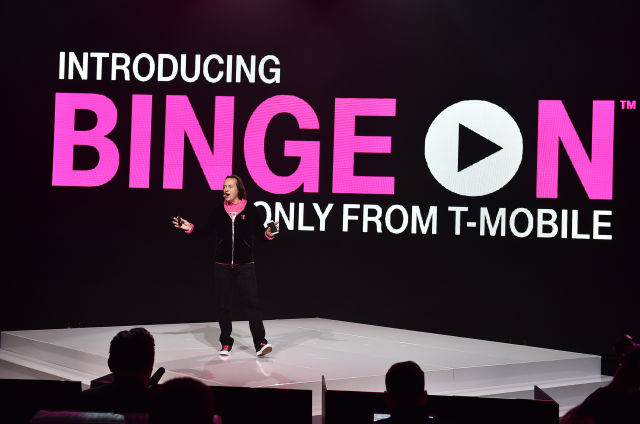
T-Mobile USA CEO John Legere. (credit: T-Mobile)

A T-Mobile USA executive yesterday urged the Federal Communications Commission not to take any action against the carrier's "Binge On" program, which throttles nearly all video content and exempts certain video services from data caps.

"I think the commission has to tread lightly—and certainly more lightly than it would in the wired world—in the wireless space when there is so much experimentation happening, so much differentiation happening, and a lot of it customers responding to," T-Mobile Senior VP of Government Affairs Kathleen Ham said at an event in Washington, DC. "We do have to be transparent about it, we do have to make sure that the customer has choices, but I think it's wise to tread lightly in this environment when there's so much going on that I think customers are benefiting from."

Yesterday's event on zero-rating and net neutrality was hosted by the New America Foundation's Open Technology Institute (see video here). The Hill also has a report on the panel discussion.

Read 25 remaining paragraphs | Comments

Would you buy smartphone service from Comcast? You may get the chance

Comcast files to participate in FCC’s broadcast TV spectrum auction.

(credit: Comcast)

Comcast executives say they are ready to purchase spectrum in an upcoming auction if the price is right, potentially setting the stage for the nation's largest cable company to offer mobile broadband.

The Federal Communications Commission has scheduled the auction to begin on March 29. It will transfer spectrum licenses in the 600MHz range from broadcast TV to wireless service. The chance to buy low-band spectrum is seen as a golden opportunity for T-Mobile USA and other smaller carriers to improve their networks and compete more effectively against AT&T and Verizon Wireless.

But it also offers potential for companies that aren't currently wireless carriers, like Comcast.

Read 7 remaining paragraphs | Comments

“AT&T is the villain” in city broadband fight, Republican lawmaker says

In Tennessee, AT&T fights against effort to expand municipal Internet.

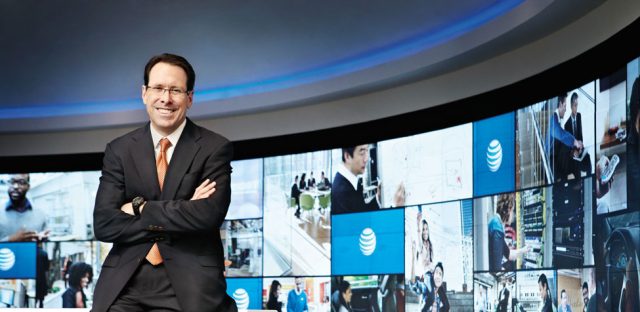
AT&T CEO Randall Stephenson. (credit: AT&T)

A Republican state senator in Tennessee is fed up with AT&T and other private Internet service providers that are trying to stop the spread of municipal broadband.

"We're talking about AT&T," Sen. Todd Gardenhire (R-Chattanooga) said at a rally of business owners, residents, and local officials in the state Capitol, the Chattanooga Times Free Press reported yesterday. "They're the most powerful lobbying organization in this state by far... Don't fall for the argument that this is a free market versus government battle. It is not. AT&T is the villain here, and so are the other people and cable."

The battle over municipal broadband in Chattanooga and surrounding towns is among the most prominent nationwide. Tennessee state law has prevented the Chattanooga electric utility—which also provides broadband—from expanding to adjacent communities that lack fast, cheap Internet access. Chattanooga petitioned the Federal Communications Commission to preempt that state law, and the FCC granted the request, using its authority to promote competition in local markets by removing barriers to infrastructure investment.

Read 11 remaining paragraphs | Comments

Google Fiber gives free gigabit Internet to poor people

Google’s free Internet for the poor is atypical in providing fastest speeds.

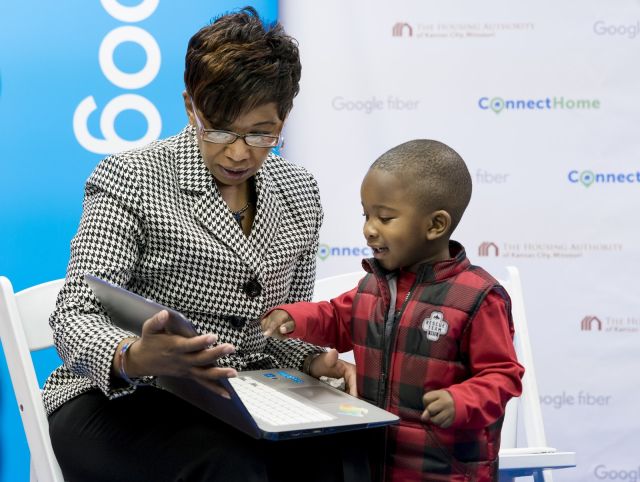
A Kansas City resident and her son, two of the first people to get free gigabit Internet from Google Fiber. (credit: Google)

Google Fiber today said it will provide free Internet access at gigabit speeds to residents in affordable housing.

Google Fiber was already providing free Internet in public housing, but speeds were limited to 5Mbps downloads and 1Mbps uploads.

Today's announcement said that's being pushed up to 1Gbps downloads and uploads, a speed that normally costs $70 a month. The free gigabit Internet is being rolled out first to West Bluff, a property in Kansas City, Missouri. Google partnered with the Housing Authority of Kansas City on the project.

Read 8 remaining paragraphs | Comments

Senators blast Comcast, other cable firms for “unfair billing practices”

FCC urged to look into erroneous rental charges and other billing problems.

(credit: Alyson Hurt)

Six Democratic US senators today criticized Comcast and other TV and broadband providers for charging erroneous fees, such as cable modem rental fees billed to customers who bought their own modems. The senators have written a letter to Federal Communications Commission Chairman Tom Wheeler asking the commission to "stop unfair billing practices."

Last year, more than 30 percent of complaints to the FCC about Internet service and 38 percent of complaints about TV service were about billing, wrote Senators Ron Wyden (D-Ore.), Bernie Sanders (D-Vt.), Jeff Merkley (D-Ore.), Al Franken (D-Minn.), Ed Markey (D-Mass.), and Elizabeth Warren (D-Mass.).

The senators described Comcast, the nation's largest cable and broadband company, as a repeat offender. "We are troubled upon hearing complaints of consumers being charged the modem rental fee after they have returned the rented equipment to Comcast or being charged the rental fee having never rented a modem in the first place," the senators wrote. "Not only are the majority of customers using automatic payment systems and may not personally authorize every erroneous charge, many consumers report having to call and remedy this problem throughout several billing cycles. In fact, customer help boards found online at Comcast’s Help and Support Forum contain complaints about this exact problem."

Read 7 remaining paragraphs | Comments
Comcast shrugs off years of cord-cutting losses, adds 89K TV customers

Though broadband has more customers, Comcast’s cable TV is a bigger money-maker.

(credit: Lynn Friedman)

Comcast has been steadily losing cable TV subscribers for years, but it turned things around in the most recent quarter by adding 89,000 video customers.

The 89,000 net additions in Q4 2015 was Comcast's best result on the video subscriber front in eight years, according to today's earnings release. Comcast did lose 36,000 video customers over the entire year, but even that was "the best result in nine years," Comcast said.

The broadband business continued to boom, meanwhile, with net additions of 460,000 in the quarter and 1.4 million for the year. Overall, Comcast now has 22.3 million video customers, 23.3 million Internet customers, and 11.5 million phone customers. The phone business added 139,000 subscribers in the quarter and 282,000 during the full year. Many of the additions came from existing customers adding a service. Comcast's total customer base increased by 281,000 in the quarter and 666,000 in 2015 for a new total of 27.7 million.

Read 8 remaining paragraphs | Comments