
Google joins Facebook’s Open Compute Project, will donate rack design

Google pulls back the curtain from some of its data center equipment.

A Google data center in Douglas County, Georgia. (credit: Google)

Google today said it has joined the Open Compute Project (OCP), and the company will donate a specification for a rack that it designed for its own data centers.

Facebook founded the Open Compute Project in 2011 to share designs of servers and other data center equipment. Many companies, including Microsoft, have joined the project and contributed their hardware designs. While Google has been building its own hardware for years, it hasn't joined the project until now.

Google's first contribution will be "a new rack specification that includes 48V power distribution and a new form factor to allow OCP racks to fit into our data centers," the company said. Google will also be participating in this week's Open Compute Summit.

Read 4 remaining paragraphs | Comments

Poor Americans will get $9 a month to buy broadband or mobile data

Lifeline program shifting from phone subsidies to Internet service.

(credit: robby-T)

The Federal Communications Commission will soon vote on a plan to give low-income Americans $9.25 a month to purchase home Internet service or cellular data. The plan would change the existing Lifeline program, which has provided phone subsidies since 1985, to focus on providing access to broadband.

FCC Chairman Tom Wheeler and Commissioner Mignon Clyburn wrote in a blog post today that millions of Americans don't have Internet service because they can't afford it. "Only half of the nation’s households in the lowest income tier subscribe to broadband," Wheeler and Clyburn wrote. "And 43 percent of all people who don’t subscribe to broadband at home say that affordability is the reason. Of the low-income consumers who have subscribed to mobile broadband, 44 percent have had to cancel or suspend their service due to financial constraints and for those whose only access to the Internet is their smartphone, 48 percent have had to cancel or shut off service for a period of time due to financial hardship."

Wheeler and Clyburn released details of the plan today and said the commission will vote on it on March 31.

Read 10 remaining paragraphs | Comments

In blow to inmates’ families, court halts new prison phone rate caps

Court stays new rate caps but allows limits on various other fees.

(credit: Jenn Vargas)

Prison phone companies today were granted a judicial stay that halts implementation of new, lower rate caps on inmate calls. The court did not halt new limits on certain ancillary fees related to inmate calls, though, so the overall price of prison calling should go down.

Global Tel*Link (GTL) and Securus Technologies had asked the US Court of Appeals in the District of Columbia to stay new price regulations until a lawsuit against the Federal Communications Commission is decided, arguing that they have a high likelihood of prevailing in the case. The companies argue that the FCC overstepped its authority and that the new limits fall short of what prison phone companies are contractually obligated to pay in "site commissions" to correctional facilities. Despite protest from the FCC, the court today partially granted the stay request.

"While the DC Circuit stayed implementation of new, lower rate caps, and a related rule limiting fees for certain single call services, the Court otherwise declined to delay critical reforms including implementation of caps and restrictions on ancillary fees," the FCC said in a response to the ruling. New ancillary fee limits will take effect on March 17 in prisons and on June 20 in jails.

Read 5 remaining paragraphs | Comments

Verizon’s “supercookies” violated net neutrality transparency rule

Verizon agrees to $1.35M fine and will make it easier to avoid tracking cookies.

Zombie hand cookies. (credit: Rakka)

Verizon Wireless has agreed to pay a $1.35 million fine and give users more control over "supercookies" that identify customers in order to deliver targeted ads from Verizon and other companies. Verizon's use of the supercookies without properly notifying users violated a net neutrality rule that requires Internet providers to disclose accurate information about network management practices to consumers, the FCC said.

Verizon's settlement with the Federal Communications Commission, announced today, stems from an investigation into the carrier's "practice of inserting unique identifier headers [UIDH] or so-called 'supercookies' into its customers’ mobile Internet traffic without their knowledge or consent," the FCC said. Verizon began inserting the identifier—which could not be deleted by consumers—into its subscribers' HTTP Internet traffic in December 2012 and made some limited disclosures in its privacy policy. But the company "did not specifically disclose the presence of UIDH and its uses until October 2014," the FCC said.

ProPublica reported in January 2015 that an online advertising clearinghouse called Turn was taking advantage of the unique identifiers, also known as "zombie cookies," and using them "to respawn tracking cookies that users have deleted." Shortly after that, Verizon said it would offer customers a way to opt out.

Read 4 remaining paragraphs | Comments

Comcast accused of violating NBC merger commitment and net neutrality rule

Comcast says its Stream TV isn’t an Internet service; consumer group disagrees.

Comcast Stream TV. (credit: Comcast)

Consumer advocacy group Public Knowledge has asked regulators to stop Comcast from exempting its own streaming video service from Internet data caps, saying that selective enforcement of caps violates a merger condition from when Comcast purchased NBCUniversal and may violate a net neutrality rule.

Public Knowledge filed its petition with the Federal Communications Commission yesterday. It relates to "Stream TV," a service for Comcast's Internet-only customers that streams live TV channels to computers, tablets, and phones. Stream TV doesn't require a set-top box, but Comcast says it "is an in-home cable service delivered over Comcast's cable system, not over the Internet." Stream TV offers some video outside the home, but live TV channels can only be watched on Comcast customers' home Internet connections.

Public Knowledge points out that when Comcast won government approval to buy NBCUniversal in 2011, the FCC and Department of Justice "prohibited Comcast from excluding its own services from data caps or metering and required it to count traffic from competing online video services the same as its own." Public Knowledge also says the data cap exemption for Stream TV should be stopped by the FCC's net neutrality order; though the net neutrality rules don't specifically ban zero-rating, the FCC imposed a "general conduct" rule to be applied on a case-by-case basis. That rule is meant to stop practices that limit consumers' access to content or the ability of online service providers to reach consumers.

Read 13 remaining paragraphs | Comments

Comcast gets big tax break that was designed for Google Fiber

Oregon law was designed to help Google Fiber, but Comcast benefits, too.

(credit: Paramount/CBS)

When the Oregon legislature changed the state's tax rules last year, it was trying to convince Google Fiber to bring its high-speed Internet to Oregonians.

But lawmakers apparently didn't realize that the rule change would also hand a big tax break to Comcast. The new rule reduced property taxes for companies that offer gigabit-speed Internet service, which Google sells for $70 a month with no construction fees passed on to customers. But the rule change didn't specify that companies have to offer gigabit service at any particular price in order to qualify for the tax break. Comcast thus now qualifies for lowered property taxes because it offers 2Gbps Internet service, despite charging prices that would steer most ordinary customers to slower Internet speeds. Comcast's 2Gbps service costs $300 per month, with $1,000 in startup fees.

Rep. Phil Barnhart (D-Eugene) told utility regulators yesterday that the tax break was meant to spur investments in new networks and that legislators never considered that a company charging such high prices for gigabit service would get the tax break, according to The Oregonian. 

Read 6 remaining paragraphs | Comments

AT&T to sell DirecTV online—no satellite dish or set-top box required

Still TBD: Which channels are available and whether the service will be zero-rated.

(credit: AT&T)

AT&T said on Tuesday that it plans to make DirecTV available over the Internet in the fourth quarter of this year, saying the new offerings "will not require annual contracts, satellite dishes, or set-top boxes."

The service won't be a full replacement for traditional cable or satellite TV, though, because AT&T has to negotiate new programming contracts for the online-only service. AT&T has "signed some deals" but still has "work to do," a company spokesperson said, according to The Wall Street Journal. The service will work on smartphones, tablets, Internet-connected TVs, "streaming media hardware," and PCs, AT&T said.

AT&T has owned DirecTV since buying the satellite TV company in July.

Read 4 remaining paragraphs | Comments

It took Verizon seven months to fix Internet outage in NYC building

DSL and phone was out, and residents can’t get FiOS.

East 127th Street in Harlem. (credit: Vernon Williams)

Last summer, a manhole fire knocked out Verizon telephone and DSL Internet service at an apartment building on East 127th Street in Harlem.

Verizon didn’t restore service to the building until Friday of last week, about seven months after the outage began. Needless to say, the owner of the building is angry at Verizon—and also can’t figure out why his building doesn’t yet have Verizon’s fiber-based FiOS service. Verizon made an agreement with New York City to bring FiOS to every household in the city by June 2014, but many buildings still don’t have access.

“You can’t turn around without seeing a pitch for Verizon FiOS,” the building owner, Vernon Williams, told Ars. “It sounds great.” Williams figures that his neighborhood is a lower priority for Verizon because there are fewer customers per block than areas with high-rise buildings.

Read 18 remaining paragraphs | Comments

Raspberry Pi 3 has Wi-Fi and Bluetooth, 64-bit chip, still just $35

Pi will still run 32-bit operating systems, but it’ll be 50% faster.

The Raspberry Pi 3. (credit: Raspberry Pi Foundation)

The third major version of the Raspberry Pi will go on sale Monday, with the $35/£30 credit card-sized computer now sporting a 64-bit processor and embedded Wi-Fi and Bluetooth.

In previous versions, the Pi needed USB adapters to get Wi-Fi and Bluetooth connectivity. Raspberry Pi 3 supports 802.11n Wi-Fi (2.4GHz only) and Bluetooth 4.0 without an adapter, freeing up its four USB ports for other purposes.

The computer will be on sale Monday from “all the usual resellers,” the Raspberry Pi Foundation told us. That would likely include Element14, Think Allied, and RS Components.

Read 12 remaining paragraphs | Comments
AT&T gave $62K to lawmakers months before vote to limit muni broadband

Missouri bill would make it difficult for cities to offer Internet service.

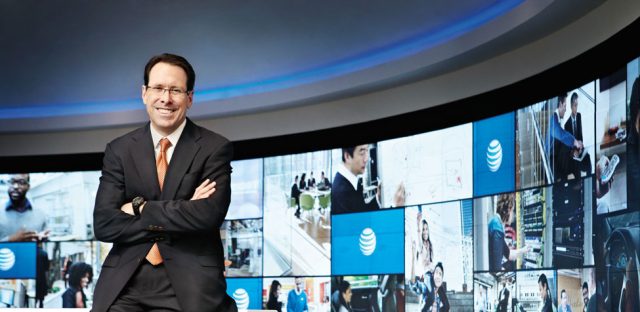
AT&T CEO Randall Stephenson. (credit: AT&T)

A Missouri legislative committee last week approved a bill that would limit the spread of municipal broadband networks, helping private Internet service providers such as AT&T avoid competition.

A few months before that vote, AT&T donated a total of $62,500 to political committees in Missouri. This included $20,000 to the House Republican Campaign Committee, $20,000 to the Missouri Democratic State Committee, $7,500 to the Missouri Republican Party, and $15,000 to the Missouri Senate Campaign Committee (apparently a Republican group). One of the donations is listed by the Missouri Ethics Commission as occurring just two weeks ago, but we’ve been told it was made in September 2015 and not deposited until this month because the original check was lost.

The donations were made before the legislature went into session; AT&T's policy is to not make contributions during legislative sessions. AT&T gave similar amounts in previous years.

Read 23 remaining paragraphs | Comments