Congressmen think FCC’s set-top box plan is just like “Popcorn Time”

Theoretical concerns about piracy put pressure on Tom Wheeler’s cable box plans.

(credit: Descrier)

The Federal Communications Commission proposal to boost competition in the cable TV set-top box market is facing opposition from some members of Congress who claim the plan will lead to copyright violations.

House Judiciary Committee Chairman Bob Goodlatte (R-Va.) and ranking Democrat John Conyers (D-Mich.) described their concerns in a letter to FCC Chairman Tom Wheeler Thursday, as noted by Politico. The letter echoes arguments made by cable lobbyists and some groups representing copyright holders.

"Creators have shared concerns that under the FCC's proposed rule, future set-top boxes or their replacements could purposely be designed to distribute pirated content obtained from sources that primarily offer stolen content," Goodlatte and Conyers wrote.

Read 10 remaining paragraphs | Comments
Verizon: Network sabotage during strike disrupted thousands of customers

Union blames Verizon for failing to maintain network, and strike continues.

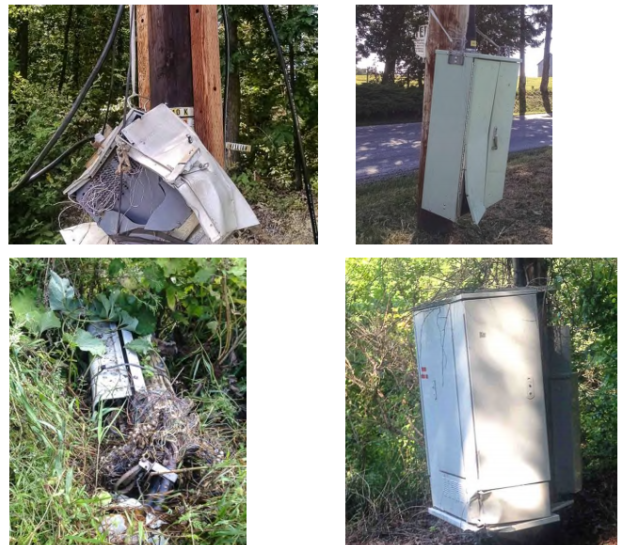
Poorly maintained equipment, as shown in a union complaint about Verizon maintenance. (credit: Communications Workers of America)

Verizon says its network has suffered 57 incidents of vandalism in seven states in the two weeks since 36,000 workers went on strike. The "incidents of sabotage," mostly involving the severing of fiber optic cables or damage to terminal boxes, "have cut off thousands of Verizon customers from critical wireline services," the company said Wednesday.

Under normal conditions, there are only about a half-dozen incidents of sabotage over the course of a year, a Verizon spokesperson told Ars today. Verizon says it is still investigating the incidents and hasn't pinned the blame on anyone specific. But the company's announcement pointed out that "these malicious actions take place as Verizon is experiencing a strike."

Verizon reported similar incidents of vandalism during another strike in 2011.

Read 10 remaining paragraphs | Comments
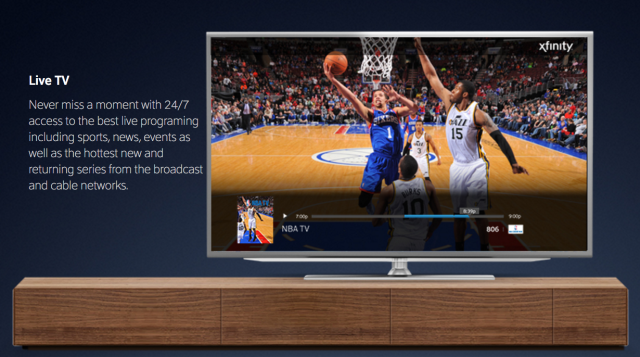
Tom Wheeler: Comcast’s TV app proves the FCC is right about set-top boxes

Rules are needed, because “that which Comcast giveth, Comcast can taketh away.”

(credit: Comcast)

Federal Communications Commission Chairman Tom Wheeler is a fan of Comcast's plan to bring its TV service to customers without traditional set-top boxes. Comcast putting set-top box functionality into Samsung smart TVs and Roku devices without charging a monthly set-top box fee "points the way forward" and proves that industry complaints about proposed FCC rules are misguided, Wheeler said in a press conference after yesterday's FCC meeting.

In February, the FCC took a preliminary vote on rules requiring pay-TV companies to make their content and programming information available to makers of third-party hardware or applications. Cable companies blasted the FCC proposal, but last week Comcast launched a program to make its TV service available on other set-top boxes.

"I think that what Comcast just did is proving our point that you can take a third-party device, put set-top box functionality into it, and protect copyright, protect the economic ecosystem, not have to rebuild the network, and all these other horrible things that the industry has [claimed would happen]," Wheeler said yesterday. "That is the essence of our proposal, that you can safely move content to a third-party device."

Read 9 remaining paragraphs | Comments

Google Fiber hits its fifth city, with a limited deployment in Nashville

AT&T and Comcast boosted fiber deployments in advance of Google arrival.

(credit: Google Fiber)

Google Fiber is available in Nashville, Tennessee, its fifth metro area, but for now is only installed in four apartment and condominium buildings, The Tennessean reported yesterday.

"The milestone comes 15 months after Google Fiber announced Nashville as a new market," the paper said. "In the meantime, existing providers AT&T and Comcast have upped their own fiber rollout in Middle Tennessee and have begun offering the ultra-fast connection to area homes and apartments."

A Google Fiber official said it intends to "connect the lion's share of Nashville," including single-family homes, multi-dwelling units, and small businesses, but it's not clear when that will happen. A list of the four buildings where Google Fiber is already installed can be found here, along with a list of many more buildings where "fiber is coming." The four Nashville buildings where Fiber is installed have a little more than 1,110 housing units combined.

Read 2 remaining paragraphs | Comments
FCC proposes new price regulations for cable—but not for home Internet

New “special access” rules would put cable and phone companies on equal ground.

(credit: Getty Images | Martin Hospach)

The Federal Communications Commission today proposed new price regulations for so-called “business data services,” potentially bringing Comcast and other cable companies under a type of regulatory regime that already applied to phone companies such as AT&T and Verizon.

The price rules won’t extend to home Internet or the typical broadband service that companies buy to get their employees online. Instead, this form of data connectivity—also called “special access”—is sometimes thought of as the Internet equivalent of a barrel of oil.

Even if you don’t know what a barrel of oil costs, its price affects how much you pay for gas. Similarly, special access prices can affect what ordinary consumers pay for mobile broadband. Wireless carriers buy special access to supply bandwidth for their cellular data networks, so the prices charged can indirectly affect the monthly bills paid by smartphone users.

Read 18 remaining paragraphs | Comments

A Comcastic miracle: Data caps will go from 300GB to a terabyte

Going over the cap will be harder, but also more expensive.

Comcast today announced that it will boost its data cap from 300GB per month to 1TB beginning June 1, but will also charge more to customers who want unlimited data.

Comcast has been trialling different caps in various cities in preparation for a potential nationwide rollout. Typically, customers would get 300GB per month and have to pay another $10 for each additional 50GB when they go over. Comcast also allowed customers to pay an extra $30 to $35 a month for unlimited data, depending on the city.

After the June 1 change, fewer customers will need to buy unlimited data—but it will cost them $50 a month to do so instead of $30 or $35. Overage fees will stay the same, $10 for each additional 50GB. Thus far, Comcast has allowed customers to exceed the cap in three "courtesy months" before charging them overage fees.

Read 7 remaining paragraphs | Comments

AT&T loses postpaid phone subscribers as T-Mobile takes away customers

DirecTV is up, U-verse TV down, and wireless grows despite postpaid phone loss.

(credit: Mike Mozart)

AT&T started the year with a mix of subscriber gains and losses in its core businesses, with losses in TV and postpaid phone customers to go along with increases in DirecTV and its overall total of wireless subscriptions.

In wireless, AT&T ended the quarter with 363,000 fewer postpaid phone subscribers, the company said yesterday. This loss coincided with T-Mobile USA adding 877,000 postpaid phone customers, mostly at the expense of AT&T. "According to [T-Mobile CEO John] Legere, approximately 80 percent of postpaid port-ins come from rival carriers AT&T and Verizon, with the lion’s share coming from AT&T," Wireless Week reported yesterday. (Verizon Wireless lost 8,000 postpaid phone customers in the quarter, though it added 640,000 retail postpaid customers overall.)

On the plus side for AT&T, most of its postpaid phone losses came from customers with feature phones. The average smartphone subscriber pays AT&T twice as much as a feature phone user. Overall, AT&T has 58.3 million postpaid smartphone subscribers, accounting for 88 percent of its postpaid phone customers. That proportion is growing, as smartphones accounted for 97 percent of AT&T's new phone sales in the quarter.

Read 4 remaining paragraphs | Comments

Time Warner Cable’s bad behavior helped Charter win merger approval

TWC is a leader in restraining competition from online video, DOJ says.

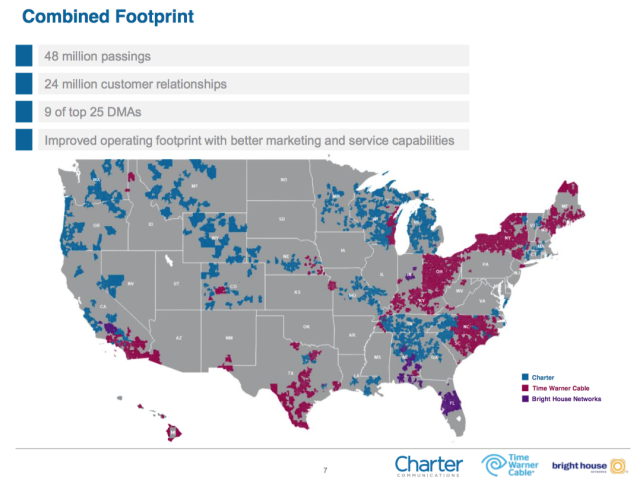
Charter's footprint after the proposed merger. (credit: Charter)

With Charter Communications set to receive approval for its acquisition of Time Warner Cable (TWC), regulators plan to impose a series of conditions designed to stop anti-competitive and anti-consumer policies pursued by TWC.

Conditions proposed by the Department of Justice and Federal Communications Commission would prohibit the combined company from imposing data caps and overage fees on Internet customers, charging large online content providers for network interconnection, and stifling growth of online video by demanding restrictive clauses in contracts with programmers. Time Warner Cable has more aggressively pursued these types of policies than Charter.

Charter doesn't have a sterling reputation, ranking nearly as low as Comcast and TWC in consumer satisfaction rankings. But Charter seized on the differences between itself and TWC while arguing its case and suggested some of the merger conditions that ended up forming the basis of the DOJ's and FCC's final proposals.

Read 12 remaining paragraphs | Comments

House votes to undermine net neutrality rules, and ISPs cheer

Vote to ban “rate regulation” would limit FCC’s consumer protection powers.

The US Capitol Building. (credit: House of Representatives)

The House of Representatives today approved a Republican proposal that limits the Federal Communications Commission's authority to regulate Internet providers.

The "No Rate Regulation of Broadband Internet Access Act" was ostensibly proposed to prevent the FCC from setting the rates charged by Internet providers. But the bill defines "rate regulation" so broadly that FCC Chairman Tom Wheeler says it could prevent the commission from enforcing net neutrality rules against blocking and throttling.

The FCC says it has no plans to impose strict utility rate regulation on Internet providers, but it can review whether specific rates are "unjust" or "unreasonable" under its authority to regulate common carriers. This bill would remove that authority and could also limit the FCC's authority to prevent ISPs from applying data caps in discriminatory ways.

Read 6 remaining paragraphs | Comments

Obama supports cable box competition and—surprise—cable lobby is angry

FCC should follow through on plan for alternative set-top boxes, president says.

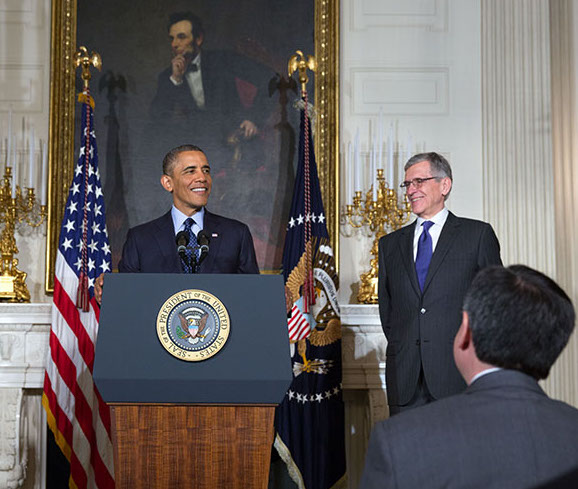
President Obama and FCC Chairman Tom Wheeler. (credit: White House)

President Obama today pledged support for the Federal Communications Commission effort to give cable TV customers a greater choice of set-top boxes. Shortly after, the top cable lobby group expressed its displeasure, saying the White House's statement "may be good politics, but it's bad government."

The White House published a blog post this morning saying that cable TV subscribers shouldn't have to spend "nearly $1,000 over four years to lease a set of behind-the-times boxes." Americans should "have options to own a device for much less money that will integrate everything they want—including their cable or satellite content, as well as online streaming apps—in one, easier-to-use gadget," the White House said.

The FCC in February approved a Notice of Proposed Rulemaking (NPRM) that would force pay-TV companies to provide content and programming information to makers of third-party hardware and applications. This would create a software-based replacement for CableCard, allowing other companies to build set-top boxes or mobile applications that display a pay-TV subscriber's channels without a physical CableCard.

Read 14 remaining paragraphs | Comments