Cable lobby group: Broadband competition is bad for customers

FCC requires Charter to overbuild competitors, angering small cable providers.

"Perhaps you should switch to another cable company… oh, that's right, we're the only one in town." (credit: Viacom)

A cable lobby group that represents more than 900 small and medium-size providers is angry that Charter Communications will be competing against other cable companies.

Cable providers usually avoid each other's territory, choosing not to "overbuild" in cities and towns where other cable networks already exist. But Charter agreed to bring some competition to the cable market in exchange for the Federal Communications Commission's approval of its purchase of Time Warner Cable and Bright House Networks. Specifically, Charter will deploy high-speed broadband to at least 2 million residential and small business locations, of which at least 1 million must be in areas served by at least one other provider.

Naturally, cable companies aren't happy about facing competition. The American Cable Association (ACA), the lobby for smaller providers, said yesterday that it is "troubled" by the FCC's overbuilding requirement on Charter. But instead of just arguing that competition will hurt small cable companies, the ACA also claims that competition will be bad for customers.

Read 12 remaining paragraphs | Comments

Big TWC outage: Fiber cuts take out service for 750,000 in NYC area

Construction accident causes multi-state outage for TWC and Cox customers.

(credit: Joe Shlabotnik)

Accidental fiber cuts caused by construction workers took out telecommunications service for more than 750,000 customers in the New York City area yesterday.

The fiber cuts hit the network of Level 3, an Internet backbone provider, and lasted for hours before being fixed. Problems hit several states: customer reports on DownDetector indicate that outages primarily affected Time Warner Cable (TWC) in New York and Cox Communications in large parts of Connecticut and Rhode Island and small parts of Massachusetts. Level 3's network serves both TWC and Cox.

The most specific outage numbers came from New York. The New York Department of Public Service (NYDPS) issued a statement saying that "more than 750,000 customers in the New York City area were unable to complete telephone calls." Most or all of those customers are apparently Time Warner Cable users. Internet and TV service was also affected.

Read 4 remaining paragraphs | Comments
Not really “broadband”—US grant program has 4Mbps speed standard

Senators ask USDA to boost speeds, because for the love of God why only 4Mbps???

Even turtles need more than 4Mbps. (credit: Comcast)

Four US senators say that the Internet speed standard for a government grant program shouldn't be stuck at 4Mbps.

The Community Connect program run by the US Department of Agriculture (USDA) funds broadband deployment in rural communities, but it uses a speed standard of just 4Mbps downstream and 1Mbps upstream. Even that speed is an increase over the 3Mbps (download and upload combined) standard the program used until just a few weeks ago.

US Senators Angus King (I-Maine), Shelley Moore Capito (R-W.Va.), Jeanne Shaheen (D-N.H.), and Kirsten Gillibrand (D-N.Y.) say that the USDA didn't raise the standard high enough. In a letter last week to USDA Secretary Tom Vilsack, the senators questioned the decision to set the grant program's speed threshold below the 10Mbps/1Mbps standard used by a separate USDA loan program.

Read 8 remaining paragraphs | Comments

Charter now Comcast’s biggest nationwide rival after TWC approval

FCC gives final signoff, big cable merger could be complete in days.

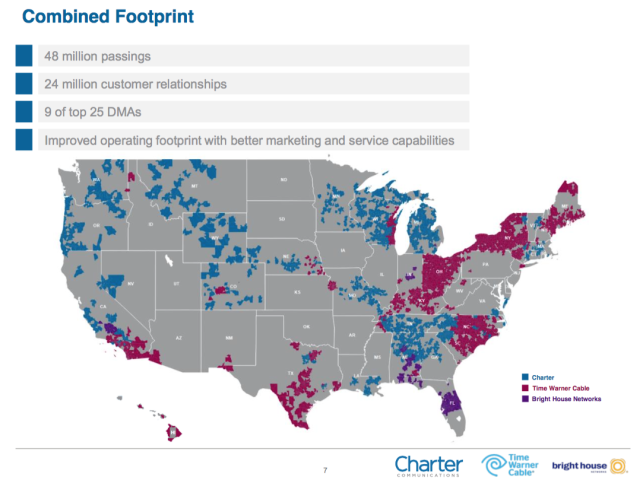
Charter's new footprint. (The numbers are slightly lower than actual as they're based on year-old data.) (credit: Charter)

The Federal Communications Commission just announced that it approved Charter's acquisitions of Time Warner Cable (TWC) and Bright House Networks, allowing Charter to nearly quadruple in size.

Charter will face conditions designed to boost broadband competition and prevent harms to online video providers that compete against the cable companies' TV services. Chairman Tom Wheeler's proposed conditions were approved over opposition from Republican commissioners.

Charter just needs to tie up a few loose ends before completing the deal. The Department of Justice has proposed a settlement that will allow the merger to proceed, and approval from California state regulators could come in a vote on May 12. When announced last year, Charter expected the acquisitions to cost a combined $67.1 billion.

Read 10 remaining paragraphs | Comments

Ajit Pai votes against Charter/TWC merger, objects to Wheeler’s conditions

Cable merger to be approved despite Pai’s complaint about FCC “micromanagement.”

FCC Commissioner Ajit Pai. (credit: FCC)

Charter Communications is close to winning approval of its acquisition of Time Warner Cable (TWC), but Federal Communications Commission member Ajit Pai is voting against the deal.

Pai, a Republican, isn't opposed to the cable merger itself, which will make Charter the nation's second largest broadband provider after Comcast. Instead, Pai objects to the conditions that FCC Chairman Tom Wheeler has proposed imposing on the deal. Charter should be able to buy TWC without facing onerous requirements, Pai says.

"The FCC's merger review process is badly broken," a Pai spokesperson said, according to an article in The Hill. "Chairman Wheeler's order isn't about competition, competition, competition; it's about regulation, regulation, regulation. It's about imposing conditions that have nothing to do with the merits of this transaction. It's about the government micromanaging the Internet economy."

Read 10 remaining paragraphs | Comments

Nightmarish transition from Verizon to Frontier has no end in sight

California lawmakers call hearings to discuss “government response.”

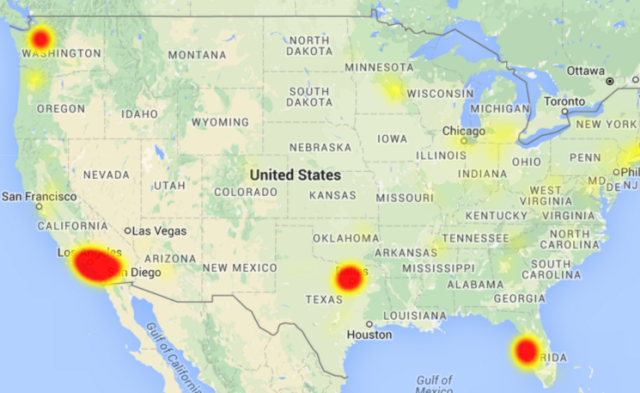
A visualization of Frontier outage reports on DownDetector. (credit: DownDetector)

A California legislative committee will hold hearings on problems former Verizon customers are having more than a month after their service was switched to Frontier Communications.

Frontier purchased Verizon's FiOS and DSL businesses in California, Florida, and Texas, taking over the fiber and copper networks on April 1. Outages and various other service problems hit customers almost immediately, and Frontier still hasn't solved all the problems.

Mike Gatto, a Democratic legislator from Los Angeles who is chairman of the California State Assembly's Utilities & Commerce Committee, issued a statement yesterday about the "ongoing Frontier Communications telephone and Internet outages after the Verizon FiOS changeover."

Read 11 remaining paragraphs | Comments

Netflix now lets customers increase video quality on cellular networks

Netflix finally lets AT&T and Verizon customers stream at more than 600kbps.

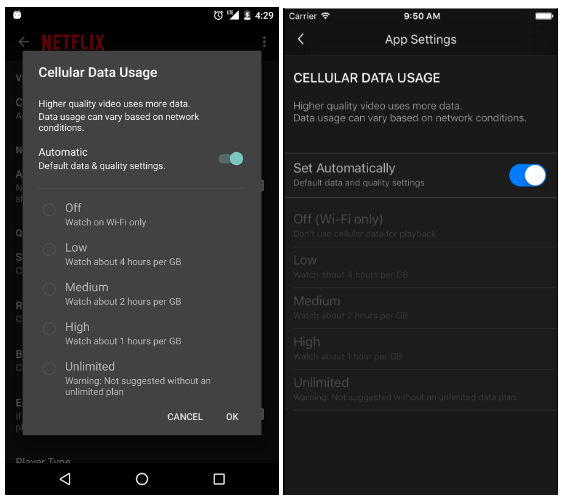
Boost your video quality in Netflix's mobile app. (credit: Netflix)

Netflix has updated its iOS and Android applications to let customers adjust streaming quality on mobile networks so that users with high data caps or unlimited data can choose higher-quality video.

Netflix sets its default mobile bitrate at 600kbps, limiting resolution to about 360p on AT&T, Verizon Wireless, and most other carriers. This helps customers stay under restrictive data caps, but the one-size-fits-all policy prevented customers from boosting the quality of video. The default setting will remain at 600kbps, but the new controls available to Netflix customers worldwide will boost data usage to as much as 1GB in 20 minutes.

"The default setting will enable you to stream about three hours of TV shows and movies per gigabyte of data. In terms of bitrates, that currently amounts to about 600 Kilobits per second," Netflix said today. "Our testing found that, on cellular networks, this setting balances good video quality with lower data usage to help avoid exceeding data caps and incurring overage fees. If you have a mobile data plan with a higher data cap, you can adjust this setting to stream at higher bitrates."

Read 4 remaining paragraphs | Comments

Comcast error caused porn movie charges after customer returned cable box

Comcast insisted charges were legit, but customers proved the company wrong.

You can check out any time you'd like, but you can never... well, you know the song. (credit: Aurich Lawson)

Comcast customers who were charged for adult movies they said they didn't order weren't able to prove their case until they decided to cancel their service and send back their cable box. The proof they were being charged incorrectly? Comcast's computer system accused them of ordering more movies after they returned the cable equipment.

The story was reported Tuesday by ABC Action News in Tampa Bay. Alyssa and Jason Overstreet had been Comcast customers for eight years, never ordering any adult movies, when suddenly Comcast started charging them for pay-per-view porn films supposedly ordered in the middle of the night, the report said.

"Comcast charged the Overstreets for about 20 of these films," with the first erroneous charge occurring on March 30, the ABC affiliate said.

Read 7 remaining paragraphs | Comments

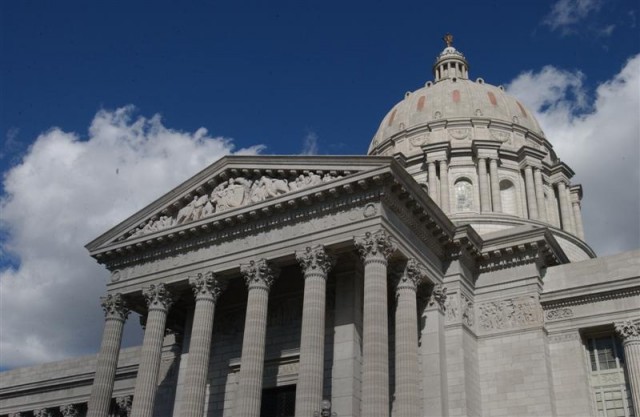
Muni broadband limits tucked into totally unrelated traffic bill in Mo.

Missouri “traffic citation” bill adds strict limits on city broadband networks.

The Missouri State Capitol. (credit: Missouri House of Representatives)

The Missouri House of Representatives has passed a bill prohibiting traffic ticket quotas—which ordinarily wouldn't be much of a tech news story, but this particular bill includes an entirely unrelated provision that would make it a lot harder for cities and towns to offer Internet service to their residents.

The traffic ticket bill was approved by the Missouri Senate without any municipal broadband provision. But when it got to the House, Republican legislator Lyndall Fraker proposed an amendment preventing cities and towns from competing against private Internet service providers unless they meet certain conditions or have a municipality-wide vote. The House approved the bill, including Fraker's amendment, on Monday.

Missouri is one of about 20 states that already have restrictions on municipal telecom services, but Fraker's proposal would make it more difficult for cities and towns to offer broadband. The amendment was described yesterday by the Institute for Local Self-Reliance's Community Broadband Networks project, which urged Missouri residents to contact the bill sponsors "and explain how you feel about amendments that do not relate to the substance of their bill."

Read 7 remaining paragraphs | Comments

Verizon workers’ union wants investigation of forced fiber upgrades

Verizon calls complaint “ridiculous,” just a negotiating tactic during strike.

(credit: Virginia Tech)

A union representing Verizon workers has asked the Federal Communications Commission to investigate the company’s copper-to-fiber upgrades, saying Verizon is pressuring customers to switch even when they don’t want to.

The complaint stems from Verizon’s “Fiber is the Only Fix” program, in which Verizon automatically sets up copper-to-fiber upgrades when customers with copper-based landline phones call for repairs twice in 18 months. Though many customers welcome the shift to fiber because it brings more reliable and faster Internet access, some prefer to keep copper-based landline phones because they can remain in service during long power outages.

The union, the Communications Workers of America (CWA), claims Verizon is violating a ban on deceiving consumers and a requirement that customers be given 90 days' notice before retiring copper networks.

Read 17 remaining paragraphs | Comments