“Mega Cable” is here, as Charter finalizes purchase of TWC

After approvals in Washington, DC and Calif., Charter closes big cable merger.

(credit: Cole Marshall)

Charter Communications today said it has closed its acquisitions of Time Warner Cable and Bright House Networks following approvals from the Federal Communications Commission and regulators in California, the final state that had to sign off on the deal.

Charter has nearly quadrupled in size as a result of the transactions, going from 6.8 million customers to about 25.4 million in 41 states, second in the US after Comcast's 28 million. The merger drew opposition from some advocacy groups, including one that took to calling the new Charter "Mega Cable." The cost of the acquisitions was originally expected to be about $67.1 billion, though Charter will reportedly end up paying a bit more than that.

Charter's announcement today said, "The completion of the transactions will drive investment into the combined entity's advanced broadband network, resulting in faster broadband speeds, better video products, more affordable phone service, and more competition for consumers and businesses."

Read 4 remaining paragraphs | Comments

10Gbps downloads and uploads over cable demoed by Bell Labs

Prototype sends 10Gbps over 100 meters of cable (some fiber still required).

Fun fact: This is what a data transfer looks like when you're inside an Internet tube. (credit: Getty Images | Yuri_Arcurs)

Cable networks are already starting to match the gigabit download speeds offered by fiber-based Internet services, but they still lag far behind on upload throughput. New technology could change that situation, bringing cable's theoretical speeds up to 10Gbps for both downloads and uploads.

The cable industry R&D consortium CableLabs announced a plan for full duplex technology in February, and the Nokia-owned Bell Labs yesterday said it has achieved 10Gbps symmetrical speeds in the lab in a "world-first" demo.

"Demonstrating for the first time that the concept is valid and achievable, the XG-CABLE test used point-to-point cable topologies to deliver 10Gbps symmetric data speeds over coaxial cable using 1.2Ghz of spectrum," Nokia said in its press release yesterday. With a point-to-multipoint deployment, Nokia's results were nearly 8Gbps downstream and 7.5Gbps upstream.

Read 10 remaining paragraphs | Comments

BitTorrent Inc. announces live streaming TV service powered by P2P

“With BitTorrent Live, every viewer is also a broadcaster.”

(credit: BitTorrent Inc.)

BitTorrent Inc., the company behind the BitTorrent peer-to-peer file sharing protocol, is planning to launch a live streaming TV service with both free and paid options. The company claims it will have better performance than existing services that broadcast live channels over the Internet.

Unveiled today, BitTorrent Live is "a multichannel, live, and linear video streaming platform" based on a peer-to-peer live video streaming protocol that BitTorrent has been developing for a few years. No availability date was announced, but BitTorrent said it will be available on Apple TV, iOS, Android, and Mac.

The company's announcement said that today's live streaming services usually use HTTP Live Streaming and are "notorious for latency issues, also known as lag." The BitTorrent Live protocol is an attempt to solve that problem.

Read 6 remaining paragraphs | Comments

Cable lobby says FCC launched assault on industry “without provocation”

Lobbyist Michael Powell complains about FCC’s “relentless regulatory assault.”

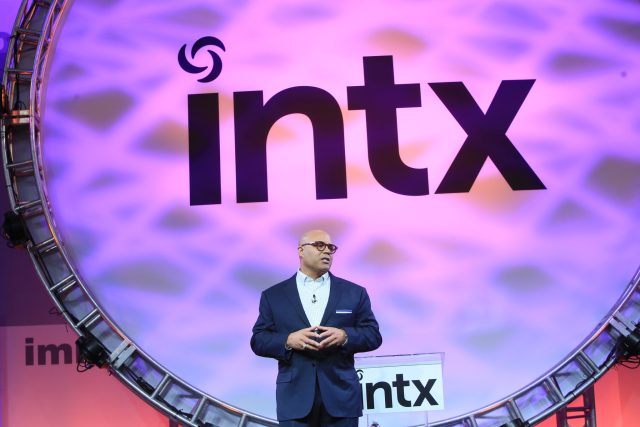
NCTA CEO Michael Powell at the cable lobby's annual INTX (Internet & Television Expo) conference. (credit: NCTA )

The cable industry's chief lobbyist today criticized what he called the Federal Communications Commission's "relentless regulatory assault" on the industry, claiming it has been unprovoked by the cable companies themselves.

"What has been so distressing is that much of this regulatory ordinance has been launched without provocation," said Michael Powell, CEO of the National Cable & Telecommunications Association (NCTA). "We increasingly are saddled with heavy rules without any compelling evidence of harm to consumers or competitors." The FCC's recent actions have not been "modest regulatory corrections," he said. Instead, "they have been thundering, tectonic shifts that have crumbled decades of settled law and policy."

Powell, who was FCC chairman himself from 2001 to 2005, made his comments today in a keynote speech at the NCTA's annual conference in Boston. Four FCC commissioners are scheduled to speak at the conference tomorrow, and FCC Chairman Tom Wheeler will do so on Wednesday. Wheeler—who was CEO of the NCTA from 1979 to 1984—has been critical of the industry in speeches at the conference in each of the last two years, and he would likely disagree with Powell's assertion that cable companies haven't harmed consumers or competitors.

Read 8 remaining paragraphs | Comments

Politicians fail in bid to squash municipal broadband in Missouri

Broadband limits defeated after being tucked into totally unrelated bill.

The Missouri State Capitol. (credit: Missouri House of Representatives)

Proponents of municipal broadband in Missouri can breathe easy for a while, as the latest attempt to prevent cities and towns from offering Internet service to their residents has failed.

As we wrote two weeks ago, the Missouri House of Representatives tucked new rules for municipal broadband into a completely unrelated bill that prohibits traffic ticket quotas. The Senate had passed the same bill, but without the muni broadband restrictions, so the two chambers had to set up a conference committee to hash out the text. The final bill was passed Friday, without the restrictions on municipal broadband that had been proposed by Republican House member Lyndall Fraker.

After lobbying from muni broadband advocates, the "conference committee stripped Rep. Fraker’s language out of the bill," the Coalition for Local Internet Choice (CLIC) wrote. CLIC reports that proponents of the muni broadband restriction "also attempted to slide its language into HB 1912, a bill concerning county buildings. But under threat of filibuster, the sponsor of the amendment backed off and offered his own amendment to strip out his broadband language. The session ended on May 13, 2016, with no new restrictions on local Internet choice."

Read 3 remaining paragraphs | Comments

Frontier: Fewer than 30,000 customers lost service in Verizon transition

Outages hit under 1 percent of the 3 million former Verizon customers.

"Less than one percent" of Verizon customers who were switched over to Frontier Communications suffered service outages after the transition, according to Frontier.

But with more than 3 million customers being forced to switch providers, that could put the total number of customers who suffered outages at nearly 30,000. What isn't clear is how many people still lack service.

Frontier closed its acquisition of Verizon's FiOS and DSL operations in Florida, California, and Texas on April 1. "Due to the size and complexity of the conversion of these customers to our systems, Frontier started planning over a year ago, with the goal of ensuring a conversion as seamless and straight-forward as possible," Frontier said in a statement sent to Ars. "We hired over 8,000 contractors to assist with the process. Overall, less than one percent of the over 3,000,000 customers transitioned to Frontier experienced a service disruption as a result of this conversion, and there was no disruption of traditional voice service or of the 911 network."

The number of customers who lost service could actually be more than 30,000, depending on how close the outage number is to 1 percent. The Verizon transfer gave Frontier another 3.3 million phone customers, 2.1 million Internet customers, and 1.2 million TV customers. We're doing a little guesswork here, but whether the number is a little above or below 30,000, that's a lot of customers who lost service.

Whatever the exact numbers are, Frontier said it is "not satisfied with that result." Customers and government officials aren't satisfied, either. California legislative committee is planning a hearing on the topic on Wednesday next week, and Florida Attorney General Pam Bondi demanded a meeting with Frontier officials.

Despite Frontier's statement that no "traditional voice service" went out, Bondi said that "business and residential customers have complained of going days or weeks without any Internet or phone service." With no phone service, customers lost access to 911, Bondi said. The discrepancy between the Frontier and Florida statements may be due to the former Verizon network offering two kinds of phone calling: traditional landline service and the newer FiOS Digital Voice that uses VoIP technology.

Bondi had her meeting with Frontier officials on Wednesday. Frontier agreed to prioritize complaints from seniors and people with serious medical problems and has set up a local customer service number and a "'SWAT Team' to coordinate the rapid response to customer escalations and service outages," Bondi said. Frontier also agreed to give credits to all customers who reported service outages.

“After a lengthy, productive meeting with Frontier executives, I am cautiously optimistic that Frontier disruptions in services will be quickly resolved,” Bondi said in a press release. "However, my office will continue to work with the company on each consumer complaint until they are all appropriately addressed.”

Bondi's office had received 721 complaints about Frontier as of yesterday morning and is forwarding each one to the company.

Linksys WRT routers won’t block open source firmware, despite FCC rules

But come June 2, a lot of other routers will block third-party firmware.

New rules that affect open source firmware on Wi-Fi routers will be implemented on June 2, but not all network hardware will prevent the loading of third-party software.

Linksys has been collaborating with chipmaker Marvell and the makers of OpenWrt to make sure its latest WRT routers can comply with the new rules without blocking open source firmware, company officials told Ars.

Linksys’s effort stands in contrast with TP-Link, which said it would entirely prevent loading of open source firmware on its routers to satisfy the new Federal Communications Commission requirements.

Blocking third-party firmware is the easiest way to comply with the FCC rules, which aim to limit interference with other devices by preventing user modifications that cause radios to operate outside their licensed RF (radio frequency) parameters.

The FCC wrote its rules in response to interference with FAA Doppler weather radar systems. Routers using certain portions of the 5GHz band were already required to use dynamic frequency selection (DFS) in order to detect nearby radar systems and avoid operating on the same channel. But it’s possible for users to disable dynamic frequency selection—the FCC has called this a “major cause of harmful interference.” Most cases of interference have been caused either by disabling DFS or “devices that have been modified to operate in frequency bands in which they are not certified to operate,” the FCC says.

“Our responsibility to the open source community”

Any 5GHz routers sold on or after June 2 must include security measures that prevent these types of changes. But router makers can still allow loading of open source firmware as long as they also deploy controls that prevent devices from operating outside their allowed frequencies, types of modulation, power levels, and so on.

This takes more work than simply locking out third-party firmware entirely, but Linksys, a division of Belkin, made the extra effort. On and after June 2, newly sold Linksys WRT routers will store RF parameter data in a separate memory location in order to secure it from the firmware, the company says. That will allow users to keep loading open source firmware the same way they do now.

Other Linksys routers, such as Max-Stream devices, will block open source firmware. But continuing support on the WRT line is a natural move for Linksys, given that the OpenWrt and DD-WRT third-party firmware was originally built for the company’s WRT54G routers more than a decade ago.

“They're named WRT… it's almost our responsibility to the open source community,” Linksys router product manager Vince La Duca told Ars.

WRT stands for “Wireless RouTer,” and Linksys has stuck with its naming conventions and support for open source for many years. The “WRT54GL” released in 2005 offered speeds of up to 54Mbps. The “L” stood for Linux.

Linksys resurrected the classic blue and black design of the WRT in 2014 with the new WRT1900AC. The numbers and letters indicated support for up to 1900Mbps and the 802.11ac Wi-Fi standard. That router as well as the newer WRT1900ACS and WRT1200AC will continue to support open source firmware after the new rules take effect, La Duca said.

"The hardware design of the WRT platform allows us to isolate the RF parameter data and secure it outside of the host firmware separately," Linksys said in a written statement given to Ars.

La Duca declined to get more specific about Linksys's exact method. Even though this is about enabling open source, Linksys’s method is proprietary and provides a competitive advantage over other router makers that aren’t supporting open source, La Duca said.

Using open source isn't about breaking the rules

While Linksys’s support of open source is partly a marketing strategy, La Duca understands why customers want to use OpenWrt and similar software.

“The real benefit of open source is not breaking the rules and doing something with malicious intent, the value of open source is being able to customize your router, to be able to do privacy browsing through Tor, being able to build an OpenVPN client, being able to strip down the firmware to do super lean, low-latency gaming,” La Duca said. “It's not about ‘I'm going to go get OpenWrt to go and piss off the FCC.' It's about what you can do in expanding the capabilities of what we ship with.”

But that doesn’t extend across all Linksys routers. For Max-Stream devices and other routers that lack WRT branding, “open source is not a value proposition that we are promoting,” La Duca said. For those non-WRT platforms, Linksys is not working with chip providers to enable open source support.

"All Linksys legacy and Max-Stream routers will have the full host firmware locked down," the Linksys statement said. The company noted that these routers were never marketed to open source users as the WRT routers are.

Whether open or closed, Linksys said all of its dual- and tri-band routers will comply with the new FCC rules "that require our routers and software to be secured to prevent changing the power output or unauthorized channel selection of the router on the 5Ghz band." (There are also similar new requirements implemented by the European Telecommunications Standards Institute, Linksys said.)

“No one else was prepared for this”

Imre Kaloz, a key OpenWrt developer, told Ars that he isn't aware of any other vendors making a similar effort to support open source. Kaloz has tried to get other hardware makers interested, but he said his attempts have so far only earned him some marketing e-mails.

Still, Kaloz holds out hope that other vendors will see the work Linksys has done and try to copy it. “It's not that complicated, it's simply that no one else was prepared for this,” Kaloz said.

Most of the necessary changes happened on the hardware side, Kaloz said. But OpenWrt developers also worked closely with Marvell to update the open source wireless driver so that OpenWrt can continue to work, he said.

Default OpenWrt functionality will remain unchanged on Linksys WRT routers, Kaloz said. It’s open source and can thus be modified, but by default OpenWrt doesn’t let users do anything that would violate FCC rules, he said.

DD-WRT, which is based on OpenWrt, is capable of disabling DFS.

Although Linksys has proven that open source firmware can still be used under the new FCC rules, it’s clear that options for open source users will be more limited than they are today. Kaloz wishes the FCC had taken a different approach, one focused on punishing people who cause interference without preventing legitimate uses of network hardware.

The decisions, he said, "have been made by lawyers who had not too much technical knowledge."

Charter blocked customer-owned modems for two years, must pay fine

Under settlement, Charter must notify FCC each time it blocks a 3rd-party modem.

Charter Communications prevented customers from using their own modems for two years beginning in 2012, and as punishment, the company will have to pay a $640,000 fine and complete a three-year compliance plan.

The Federal Communications Commission entered into a consent decree with Charter to settle the commission’s investigation into the matter, and it released the decree on Tuesday.

Charter’s actions were no secret—see this DSLReports article describing the modem ban in June 2012. But Charter—which just got FCC approval to complete a merger that will make it the nation’s second largest cable company—got away with it until the FCC stepped in.

The FCC’s Media Bureau began an investigation in July 2015 after modem maker Zoom Telephonics asked the commission to take action. Zoom also petitioned the FCC in October 2015  to reject Charter’s purchase of Time Warner Cable (TWC) and Bright House Networks.

“The Bureau’s investigation found that for a period of approximately two years beginning in 2012, Charter informed subscribers that they would no longer be permitted to attach new customer-owned modems,” the FCC said. “Charter later provided a list of authorized customer-owned modems, but new modems were only added to the list after passing a number of tests, many of which did not relate to harm to the network or theft of service.” (Charter customers who already used third-party modems before the policy went into place were allowed to keep using them.)

Because of the FCC investigation, Charter is shortening its modem testing period to three weeks. The $640,000 fine will be paid to the US Treasury.

Charter will have to file compliance reports every six months detailing its efforts to let customers attach their own modems. It won’t be a total free-for-all, though. For example, Charter can still prohibit attachment of modems that don’t support version 3.0 or higher of DOCSIS, the Data Over Cable Service Interface Specification. Charter will have to notify the FCC each time it prohibits the attachment of a specific modem and explain why.

Charter doesn’t charge a separate modem rental fee—the cost of a Charter-supplied modem is included in a customer’s monthly bill. Thus, using a third-party modem with Charter doesn’t save a customer any money. But regardless of whether cable companies charge a rental fee, FCC rules prohibit providers from preventing the use of modems except when they cause “electronic or physical harm” or are used for “the unauthorized receipt of service.”

Charter began preventing use of customer-owned modems when it launched new pricing and packages that included the modem at no additional cost. “As a result, we will no longer provision customer owned modems on our network when a customer signs up for Charter Internet service,” a company representative said at the time in a DSLReports thread. “If you are an existing Charter Internet customer and own your own modem, and you are content to stay in your current package and pricing, you can continue to use your modem. If you decide you would like to come to the new pricing, at that point, we will issue you a new Charter modem.”

Charter said it enforced the policy because it wanted to make sure every customer gets “the best online experience possible.” To make that happen, Charter said it needed to provide the modems itself and make sure they all have the most up-to-date firmware.

While Charter finally relented in 2014 and allowed use of third-party modems, the company’s testing program resulted in few options, according to Zoom’s petition to deny the Charter/TWC/Bright House merger. (The merger got the final required approval from California regulators today and is expected to be completed next week.)

“Most of the 22 Charter-certified modem models are unavailable at major brick and mortar retailers, and others are not easily available,” Zoom wrote. “Only three have wireless functionality, and none of them employ the 802.11ac standard.”

The Charter website currently lists 25 approved modems.

This wasn’t the only case of a cable company allegedly preventing attachment of customer-owned devices. A class-action lawsuit against Cablevision accused that company of requiring cable TV subscribers to rent a set-top box in order to receive certain video services. While Cablevision denied the allegations, it agreed to a settlement that offers customers one-time bill credits or payments of $20 to $40, or services valued at up to $140. Current or former Cablevision customers have until September 23 to request bill credits or cash payments.

Disclosure: Bright House is owned by the Advance/Newhouse Partnership, which is part of Advance Publications. Advance Publications owns Condé Nast, which owns Ars Technica. Advance/Newhouse will own 13 percent of Charter after the proposed transactions are completed.

Philly investigates whether Verizon finished required FiOS buildout

Philly wants residents’ help to determine whether Verizon wired up whole city.

(credit: bluepoint951)

Philadelphia government officials are investigating whether Verizon has met an obligation to bring FiOS service to all residents of the city. Verizon obtained a cable franchise agreement from the city in February 2009, and the deadline to wire up all of Philadelphia passed on February 26 of this year.

Philadelphia seems skeptical about whether Verizon actually met its obligation, but it is still looking for proof. The city set up a webpage asking residents to fill out a form to "tell us whether you have tried to order Verizon service but have been told by the company that service is not yet available in your neighborhood." Verizon was required to make its "cable service available throughout the entire city, subject to certain exceptions set forth in the franchise agreement," the page says.

A Verizon spokesperson told Ars that the city confirmed that Verizon met a requirement to build out 85 percent of the city last summer and is now verifying whether Verizon completed the final 15 percent. Verizon says it has met its obligation. "We believe we’ve completed our FiOS buildout in Philadelphia and have complied with the terms of our franchise agreement with the city," Verizon said. "We’re currently working with the city’s Office of Innovation and Technology and the Law Department—the two entities that have oversight over the project—to verify we’ve met those obligations."

Read 3 remaining paragraphs | Comments

Internet outages and early termination fees: Frontier customers get shafted

Florida AG asks Frontier to issue refunds and fix all problems.

(credit: Getty Images | Glowimages)

The Frontier Communications acquisition of Verizon's network in Florida has created tons of problems for customers, including weeks-long outages, painfully long customer service phone calls, and bigger early termination fees, state Attorney General Pam Bondi says. Bondi sent a letter Monday to Frontier CEO Daniel McCarthy asking for faster fixes to remaining problems and refunds for customers.

Frontier purchased Verizon's FiOS and DSL businesses in California, Florida, and Texas, taking over the fiber and copper networks on April 1. Florida government officials are not alone in expressing alarm about problems the transition has caused customers, as a California legislative committee is planning a hearing on the topic on Wednesday next week.

Bondi said her office has received 128 complaints from former Verizon customers in Florida. "Business and residential customers have complained of going days or weeks without any Internet or phone service," Bondi wrote. "We have also received several complaints from seniors who have lost essential 911 services as the result of disruptions in land line services. This is not acceptable."

Read 4 remaining paragraphs | Comments