Singapore—with world’s fastest Internet—is taking government PCs offline

Access limited to dedicated Internet-linked terminals—and personal devices.

The Parliament House in Singapore. (credit: TteckK)

Singapore is planning to take 100,000 government computers off the Internet in order to boost security, according to several news reports. Government employees who need Internet connectivity to do their jobs will have access to "dedicated Internet-linked terminals," but by default the civil servants won't be able to go online using government-issued devices, the Agence France-Presse (AFP) news agency reported today.

Government employees have received a memo about the change, which is being phased in over the course of a year. "There are some 100,000 computers in use by the public service and all of them will be affected," The Straits Times wrote.

Singapore government websites were hacked by Anonymous in 2013, apparently in response to censorship regulations imposed on news sites. The latest security measure is reportedly aimed at preventing similar attacks and the spread of malware through e-mail.

Read 4 remaining paragraphs | Comments
Verizon could rule the ’90s cyberscape as owner of both AOL and Yahoo

Having bought one 1990s Web giant (AOL), Verizon goes for the double.

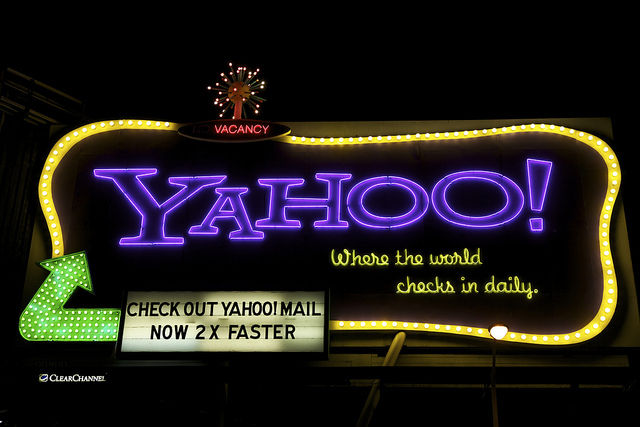
Yahoo's once-iconic San Francisco billboard, pictured here in 2011. (credit: Scott Schiller)

Verizon is submitting a $3 billion (£2 billion) bid to purchase Yahoo's core Internet business, according to The Wall Street Journal, which cites an anonymous source. Though at least one more round of bidding is expected, Verizon is reportedly the leading contender.

A Verizon spokesperson declined comment when contacted by Ars this morning.

Yahoo has been shopping itself around for months in an attempt to sell off just about everything except its valuable stake in Chinese e-commerce company Alibaba. Yahoo is also looking to sell other assets including real estate and patents, but Verizon reportedly isn't interested in buying those.

Read 2 remaining paragraphs | Comments

T-Mobile giving free ownership shares to postpaid customers

One free share to start, earn up to 100 more a year by recommending T-Mobile.

(credit: T-Mobile)

T-Mobile USA's latest promotion, announced today, is an unusual one. Millions of customers will be able to become part owners of the company with a gift of one full share of T-Mobile US (TMUS) common stock.

The "Stock Up" promotion is "something no other publicly traded company has done before," T-Mobile's announcement said.

“At T-Mobile, we already wake up every day working for our customers—so I’ve decided to make it official and turn T-Mobile customers into T-Mobile owners by offering them stock," T-Mobile CEO John Legere said in his usual understated manner.

Read 5 remaining paragraphs | Comments

TiVo’s new owner isn’t that interested in making set-top boxes

Rovi: “Being in the hardware business isn’t something that… excites us.”

(credit: cncphotos)

Rovi, the company that's buying TiVo, isn't very interested in staying in the hardware business.

The combined company will be looking to partner with set-top box makers instead of continuing to sell set-top boxes directly to consumers, Rovi Chief Financial Officer Peter Halt said at an investors conference last week. (See transcript and this Light Reading article.)

Halt noted that TiVo's direct relationship with consumers has "been a source of great innovation for them and stuff like that." But he then said that "being in the hardware business isn’t something that necessarily excites us." It sounds like TV watchers could still get boxes powered by TiVo software and services, but the hardware would be made by another company.

Read 4 remaining paragraphs | Comments

Data caps are a business decision—not a network necessity, Frontier says

Frontier has no plans for usage-based Internet billing, CEO tells investors.

Fun fact: This is what a data transfer looks like when you're inside an Internet tube. (credit: Getty Images | Yuri_Arcurs)

Frontier Communications, newly expanded after purchasing Verizon wireline networks in three states, says it has no plans to impose Comcast-style data overage charges.

"We have not really started or have any intent about initiatives around usage-based pricing," CEO Daniel McCarthy told investors Wednesday at the Bernstein Strategic Decisions Conference. "We want to make sure our product meets the needs of customers for what they want to do and it doesn't inhibit them or force them to make different decisions about how they're going to use the product."

FierceTelecom has a story about McCarthy's comments and audio is available here.

Read 8 remaining paragraphs | Comments

Tom Wheeler accuses cable companies of shutting out minority TV channels

But opponents say minority programmers are hurt by FCC’s set-top box proposal.

FCC Chairman Tom Wheeler. (credit: FCC)

Will minority programmers be hurt or helped by a Federal Communications Commission plan to boost competition in the set-top box market?

That's one of the most contentious questions raised since FCC Chairman Tom Wheeler proposed rules that would make TV channels available on more third-party devices and applications. Wheeler's aim is to give consumers more choices beyond the set-top boxes rented from cable providers. But those third-party systems might not display minority content as prominently as traditional cable TV systems, according to cable lobbyists and minority programmers that oppose the plan.

Wheeler contended the opposite in a letter to members of Congress. Cable TV companies are shutting out minority programmers today, but the proposed set-top box rules will make it easier for viewers to find minority programming, Wheeler argues. Wheeler also said he will continue with the rulemaking proceeding despite calls for a delay.

Read 9 remaining paragraphs | Comments
T-Mobile beats AT&T and Verizon in customer service ratings

Competition is better for customers than duopolies.

T-Mobile CEO John Legere. (credit: T-Mobile)

T-Mobile USA leads the four major wireless carriers in customer satisfaction, having moved ahead of AT&T and Verizon Wireless in the past year, according to an American Customer Satisfaction Index (ACSI) report released today.

Wireless carriers overall outperformed home Internet and subscription TV providers, a reflection of the greater competition in the mobile industry. Internet service and pay-TV companies ranked poorly in the latest ACSI report, just as they did in another recent customer survey. “Innovation tends to be strongest in markets with multiple companies vying for consumer preference,” ACSI founder and Chairman Claes Fornell said in a press release. “There are numerous wireless carriers and plenty of different cell phones to choose from. The same is not true for pay TV and ISPs, where consumers are usually beholden to a duopoly.”

T-Mobile scored a 74 on the ACSI's 100-point scale, up from 70 last year, while AT&T and Verizon each scored 71. Verizon's score was unchanged, while AT&T rose one point since 2015. Sprint improved its rating from 65 to 70 in the past year. While T-Mobile was first among the four biggest carriers, TracFone Wireless beat all the major wireless companies with a score of 75.

Read 6 remaining paragraphs | Comments
Comcast can’t get “gigabit” tax break that was created for Google Fiber

Oregon overturns previous ruling, potentially costing Comcast millions.

(credit: Comcast)

Comcast has hit a roadblock in its attempt to get a big tax break that Oregon legislators wrote specifically for Google Fiber.

It looked like Comcast had won a few months ago when Oregon's Public Utility Commission ruled 3-0 that Comcast's gigabit service qualifies the company for the tax exemption. But the exemption still needed to be certified by the state Department of Revenue, and last week the department refused to do so.

The department "ruled Comcast ineligible for the tax break, at least for this year," The Oregonian reported. "The department declined to disclose its reasoning, citing taxpayer confidentiality, and referred questions to Comcast. Comcast said any information would have to come from the Revenue Department."

Read 6 remaining paragraphs | Comments

The spammer who logged into my PC and installed Microsoft Office

Spam text made a tempting offer—so I let the spammer take control of my PC.

(credit: Aurich Lawson / Thinkstock)

It's Memorial Day, all Ars staff is off, and we're grateful for it (running a site remains tough work). But on a normal Monday, inevitably we'd continue to monitor the security world. Our Jon Brodkin willingly embraced a firsthand experience with low-grade scammers in April 2013, and we're resurfacing his piece for your holiday reading pleasure.

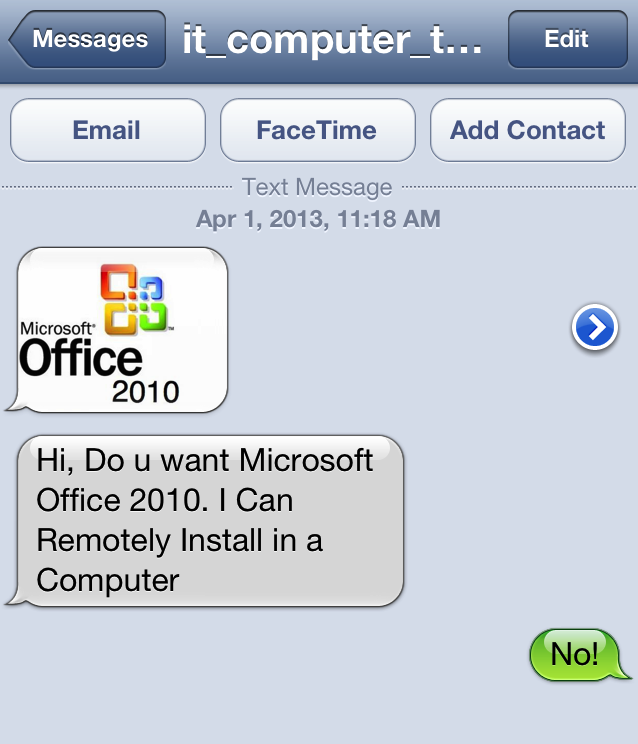
It all began with an annoying text message sent to an Ars reader. Accompanied by a Microsoft Office logo, the message came from a Yahoo e-mail address and read, "Hi, Do u want Microsoft Office 2010. I Can Remotely Install in a Computer."

An offer I couldn't refuse.

The recipient promptly answered "No!" and then got in touch with us. Saying the spam text reminded him of the "'your computer has a virus' scam," the reader noted that "this seems to be something that promises the same capabilities, control of your computer and a request for your credit card info. Has anyone else seen this proposal?"

Read 22 remaining paragraphs | Comments

Verizon workers declare end to 44-day strike, claim “big gains”

During Verizon strike, replacement workers maintained fiber and copper networks.

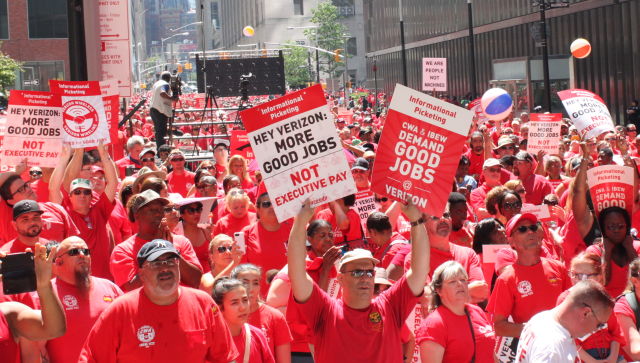
Verizon workers rallying in July 2015, just before their contract expired. (credit: Communications Workers of America)

Thirty-six thousand Verizon employees are close to going back to work because of an agreement struck by the company and union representatives.

The workers went on strike on April 13 after working without a contract for 10 months. The union said Verizon was seeking to move jobs offshore, outsource work to low-wage contractors, close call centers, and force technicians to go on months-long assignments away from home. Union reps also accused Verizon of cutting staff instead of living up to promises to install more FiOS fiber lines.

But there is now an agreement in principle to end the strike and sign a new four-year contract, US Labor Secretary Thomas Perez announced today.

Read 5 remaining paragraphs | Comments