China restricts online news sites from sourcing stories on social media

News outlets forbidden from using “conjecture and imagination to distort the facts.”

(credit: 东方)

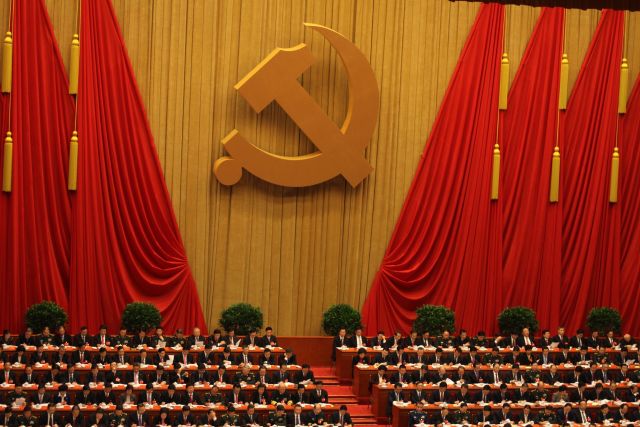
China’s Internet censorship body has warned online media not to use stories found on social networks as the basis of news reports without first asking permission from the authorities. The Cyberspace Administration of China said: “It is forbidden to use hearsay to create news or use conjecture and imagination to distort the facts.”

According to a story in the South China Morning Post: "No website is allowed to report public news without specifying the sources, or report news that quotes untrue origins."

The latest crackdown on Internet media comes just days after Xu Lin, formerly the deputy head of the Cyberspace Administration of China, replaced his boss, Lu Wei, as the guardian of China’s online world. The SCMP notes: “Xu is regarded as one of President Xi Jinping’s key supporters,” and this move is seen as a further tightening of Xi’s grip on cyberspace.

Read 5 remaining paragraphs | Comments
Russian ISPs will need to store content and metadata, open backdoors

Online surveillance measures come as part of anti-terrorism legislation.

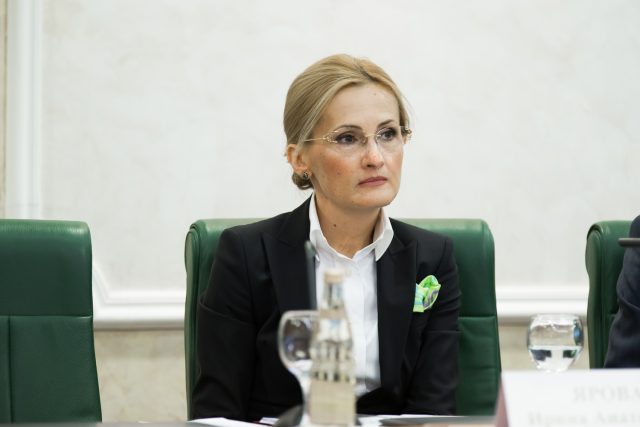
Irina Yarovaya, the driving force behind Russia's tough new anti-terrorism law. (credit: Official photographer of the Federation Council of Russia)

Russia's lower house of parliament, the State Duma, has approved a series of new online surveillance measures as part of a wide-ranging anti-terrorism law. In a tweet, Edward Snowden, currently living in Russia, wrote: "Russia's new Big Brother law is an unworkable, unjustifiable violation of rights that should never be signed."

As well as being able to demand access to encrypted services, the authorities will require Russia's telecom companies to store not just metadata, but the actual content of messages too, for a period of six months. Metadata alone must then be held for a total of three years, according to a summary of the new law on the Meduza site. Authorities will be able to access the stored content and metadata information on demand.

Snowden pointed out the difficulties of implementing the new law: "'Store 6 months of content' is not just dangerous, it's impractical. What is that, ~100PB of storage for even a tiny 50Gbps ISP?" He added: "This bill will take money and liberty from every Russian without improving safety."

Read 8 remaining paragraphs | Comments

Proxy.sh hints at gag order after VPN node withdrawn from warrant canary

Company promises to commit “corporate seppuku” if need be.

(credit: David Cairns / Getty Images)

The Seychelles-based VPN provider Proxy.sh has withdrawn an exit node from its warrant canary—a statement certifying that "to the date of publication, no warrants, searches, or seizures that have not been reported in our Transparency Report, have actually taken place."

The blog post in question simply states: "We would like to inform our users that we do not wish any longer to mention France 8 (85.236.153.236) in our warrant canary until further notice." The statement implies that the France 8 node has been subject to a warrant, but that a gag order forbids Proxy.sh from revealing that fact directly. It is not clear who served the warrant, and for obvious reasons, Proxy.sh is unable to say.

However, the TorrentFreak site obtained the following comment from Proxy.sh: "We recommend our users to no longer connect to it. We are striving to do whatever it takes to include that node into our warrant canary again."

Read 7 remaining paragraphs | Comments

Global Internet commission: Leave crypto alone, ditch opaque algorithms

Governments should agree on a list of “legitimate targets” for online attacks.

The Global Commission on Internet Governance, set up in 2014 by the UK-based Chatham House and the Canadian Centre for International Governance Innovation, has presented its "One Internet" Report. Its 140 pages provide "high-level, strategic advice and recommendations to policy makers, private industry, the technical community and other stakeholders interested in maintaining a healthy Internet."

More concretely, it comes down against crypto backdoors, the overuse of opaque algorithms, turning companies into law enforcement agencies, and online attacks on critical infrastructure. On the other hand, it is in favour of strict legal controls on the aggregation of personal metadata, net neutrality, open standards, and the mandatory public reporting of high-threshold data breaches. Along the way, it offers opinions on areas such as the sharing economy, blockchains, the Internet of Things, IPv6, and DNSSEC.

The Global Commission was chaired by Carl Bildt, and consists of 29 members drawn from various fields and from around the world, including policy and government, academia, and civil society.

Read 10 remaining paragraphs | Comments

Open access: All human knowledge is there—so why can’t everybody access it?

We paid for the research with taxes, and Internet sharing is easy. What’s the hold-up?

(credit: Diliff)

In 1836, Anthony Panizzi, who later became principal librarian of the British Museum, gave evidence before a parliamentary select committee. At that time, he was only first assistant librarian, but even then he had an ambitious vision for what would one day became the British Library. He told the committee:

I want a poor student to have the same means of indulging his learned curiosity, of following his rational pursuits, of consulting the same authorities, of fathoming the most intricate inquiry as the richest man in the kingdom, as far as books go, and I contend that the government is bound to give him the most liberal and unlimited assistance in this respect.

He went some way to achieving that goal of providing general access to human knowledge. In 1856, after 20 years of labor as Keeper of Printed Books, he had helped boost the British Museum's collection to over half a million books, making it the largest library in the world at the time. But there was a serious problem: to enjoy the benefits of those volumes, visitors needed to go to the British Museum in London.

Imagine, for a moment, if it were possible to provide access not just to those books, but to all knowledge for everyone, everywhere—the ultimate realisation of Panizzi's dream. In fact, we don't have to imagine: it is possible today, thanks to the combined technologies of digital texts and the Internet. The former means that we can make as many copies of a work as we want for vanishingly small cost; the latter provides a way to distribute those copies to anyone with an Internet connection. The global rise of low-cost smartphones means that "anyone with an Internet connection" will soon include even the poorest members of society in every country.

Read 120 remaining paragraphs | Comments

In “an unusual move,” US government asks to join key EU Facebook privacy case

Decision likely underlines pivotal importance of the case for transatlantic data flows.

(credit: europe-vs-facebook)

The US government has asked to be joined as a party in the Irish High Court case between the Austrian privacy activist and lawyer Max Schrems, and the social network Facebook. In a press release, Schrems called this "an unusual move."

He told Ars that there are no documents relating to the "amicus curiae"—friend of the court—request yet. "The US government simply appeared via a barrister at the first (administrative) hearing today," he said. "They will be able to file the documents until the 22nd."

Schrems speculated that the US government has made this move because it wanted to defend its surveillance laws before the European Courts. "I think this move will be very interesting," he told Ars. "The US has previously maintained that we all misunderstood US surveillance."

Read 7 remaining paragraphs | Comments

Open access should be the norm for EU by 2020, say research ministers

An important political signal, but not legally binding on EU member states.

EU research ministers have published a commitment to make “open access to scientific publications as the option by default by 2020.” The decision was taken during a meeting of the Competitiveness Council, which is made up of ministers from the EU’s member states. In addition, ministers agreed “to the best possible reuse of research data as a way to accelerate the transition towards an open science system.”

The formal “conclusions” of the meeting define open access to publications as “free availability on the public Internet, permitting any users to read, download, copy, distribute, print, search, or link to the full texts of these articles, crawl them for indexing, pass them as data to software, or use them for any other lawful purpose, without financial, legal, or technical barriers.” This is taken from the key Budapest Open Access Initiative that helped to define open access back in 2002—an indication of how slow progress has been so far.

Although the open access commitment by the EU ministers has been hailed as a “major boost” for open science by the League of European Research Universities, it is a political signal, rather than a plan for implementation. The Competitiveness Council is made up of ministers from each of the EU member states, and they have now committed their respective governments to move to open access in the next four years, but there is no legal mechanism to force them to do so.

Read 6 remaining paragraphs | Comments

Judge rules UK police can’t force defendant to hand over passwords

Lauri Love is fighting extradition to US over Federal Reserve Bank hack.

(credit: BBC)

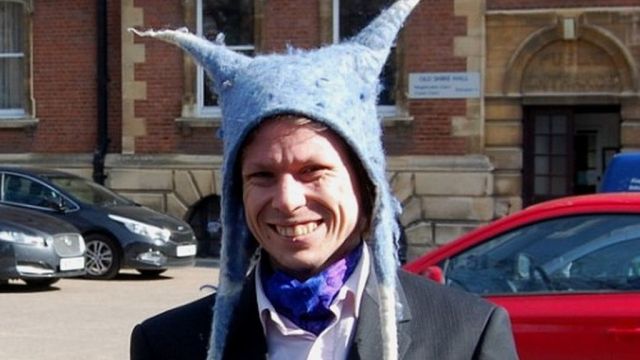
A judge has refused a request by the UK's National Crime Agency (NCA) to require Lauri Love, a British citizen who is accused of hacking into US computers, to hand over his encryption keys as part of a civil claim.

The Courage Foundation, which supports whistelblowers around the world, called Tuesday's ruling a "Victory for all who use encryption in the UK."

The case concerns the computer scientist and activist Lauri Love, whom the US authorities wish to extradite in connection with alleged hacking of US government computers.

Read 9 remaining paragraphs | Comments

Italy orders Facebook to hand over fake user account data to its alleged victim

US social networking giant refuses to say whether it will comply with Italian demand.

(credit: Google Maps)

The Italian data protection authority has ordered Facebook to provide an Italian user with all of their data, including the personal information, photos, and posts of a separate fake account set up in that person's name by somebody else.

In addition, the US social network must provide details of how the personal data was used, including who it was sent to or might have obtained knowledge about it.

Facebook refused to comment on the Italian order, instead sending us a standard boilerplate response.

Read 8 remaining paragraphs | Comments

Copyright chaos: Why isn’t Anne Frank’s diary free now?

Op-ed: EU’s long and fragmented copyright terms are unfit for the digital world.

(credit: Anne Frank House)

Anne Frank was a teenager who is now known the world over for her diary of life in hiding during the German occupation of the Netherlands during World War II. She died in February or March 1945, at the Bergen-Belsen concentration camp where was she held, shortly before it was liberated. Since the applicable term of copyright in the EU is 70 years after the death of a writer, this means that her famous diary should now be in the public domain.

That is the supposed deal of copyright: in return for a time-limited monopoly enforced by the state, a protected work passes into the public domain after the copyright term expires, after which it can be freely used by anyone for any purpose.

So why isn't The Diary of a Young Girl free now? The answer to that question reveals the patchwork nature of copyright in the EU, and the absurdly long duration that makes it unsuited for a digital world where sharing and reuse is the norm.

Read 9 remaining paragraphs | Comments