Warner Bros. flags own site for piracy, orders Google to censor pages

Studio also wanted Amazon, Sky, and IMDb links nixed for allegedly breaking copyright law.

Enlarge

Warner Brothers ordered Google to remove several of its own Web pages from search results on the grounds they infringed the media giant's copyright.

A posting on the Lumen database of cease and desist letters revealed the bizarre requests, which were sent by monitoring company Vobile on behalf of Warner Brothers.

It asked for the official pages of Batman: The Dark Knight and The Matrix films to be censored by Google under the terms of the Digital Millennium Copyright Act (DMCA.) A few days earlier,  according to TorrentFreak, Warner Brothers had requested that the official Web page for movie The Lucky One should be removed from Google's search results in the same way.

Read 8 remaining paragraphs | Comments

German spies violated law, must delete XKeyscore database—watchdog

Information about many innocent individuals was gathered, says leaked report.

Enlarge (credit: Dr. Johannes W. Dietrich)

Germany's spies seriously violated the country's laws multiple times, according to a secret report from its federal data protection commissioner Andrea Voßhoff.

The legal analysis, leaked to Netzpolitik, was made in July 2015 following a visit by data protection officials to Bad Aibling in southern Germany, in the wake of Edward Snowden's revelations about surveillance activities there. Bad Aibling is jointly run by Germany's intelligence agency, the Bundesnachrichtendienst (BND), and the NSA.

As well as listing 18 serious legal violations, and filing 12 formal complaints—the German data watchdog's most severe legal instrument—the secret report said that the BND created seven databases without the appropriate legal approval. As a result, commissioner Voßhoff said that all seven databases should be deleted, and could not be used again.

Read 10 remaining paragraphs | Comments

BT accuses Valve of infringing four patents covering basic online tech

UK telecom giant once claimed ownership of the hyperlink.

Enlarge (credit: SSPL/Getty Images)

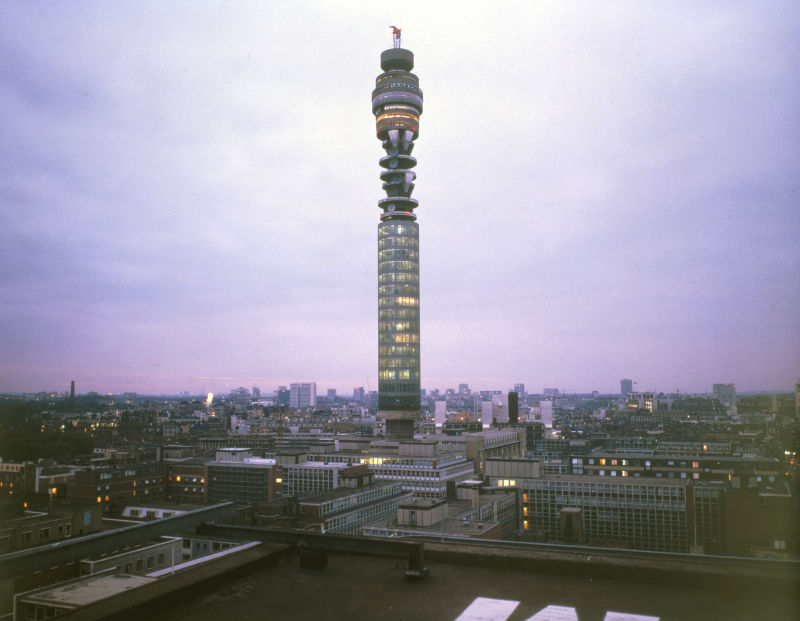
BT is taking legal action in the US against games company Valve for allegedly infringing on four of the UK telecoms giant's patents.

A BT spokesperson told Ars: "BT can confirm that it has commenced legal proceedings against Valve Corporation by filing a claim with the US District Court of Delaware for patent infringement. The patents in question relate to online computer or video gaming platforms, digital distribution services, and personalised access to online services and content."

Ars has contacted Valve for its comment on BT's move, but has not yet received a response.

Read 18 remaining paragraphs | Comments

Olympics fan claims Twitter killed his account after he posted Rio videos

Venezuelan tweeter says short clips were legal under local laws—Twitter disagrees.

Venezuelan free software activist Luigino Bracci Roa has claimed that his Twitter account was closed down permanently by the US company without any prior warning, after the International Olympic Committee (IOC) complained about videos he had posted on the micro-blogging service.

The @Lubrio account was popular: Bracci says that he tweeted 133,000 times since he created the account in 2008, and had garnered nearly 43,000 followers in that time.

On his blog, Bracci shared the letters of complaint sent by the IOC to Twitter, which show that the committee did not demand that his account be shut down, but instead asked Twitter to "immediately and permanently remove the material" from its website. That's hardly surprising given the IOC's attempts to impose strict controls on all media outlets and how they use material connected with the Olympics.

Read 6 remaining paragraphs | Comments

UK copyright extension on designed objects is “direct assault” on 3D printing

Industrial designs, like chairs and tables, now come with a copyright of 70+ years.

Enlarge (credit: Casey Marshall)

A recent extension of UK copyright for industrially manufactured artistic works represents "a direct assault on the 3D printing revolution," says the founder of the Pirate Party, Rick Falkvinge. Last month, the UK government extended copyright for designs from 25 years to the life of the designer plus 70 years. In practice, this is likely to mean a copyright term of over 100 years for furniture and other designed objects.

As Ars reported last year, a consultation was held by the UK government on how long the transitional period for the new rules should be. Originally, the new copyright term was due to come into force at the end of April, but following the consultation the government granted a further three months, which ended on July 28. In addition, there is a six-month "depletion period" for contracts in place prior to the consultation. This will conclude on January 28, 2017.

Writing on the Private Internet Access site, Falkvinge says that the copyright extension will have important consequences for makers in the UK and EU: "This change means that people will be prohibited from using 3D printing and other maker technologies to manufacture such objects, and that for a full century."

Read 5 remaining paragraphs | Comments

Russian spies claim they can now collect crypto keys—but don’t say how

Putin gave KGB’s successor agency two weeks to deal with encrypted services.

Enlarge (credit: Presidential Press and Information Office)

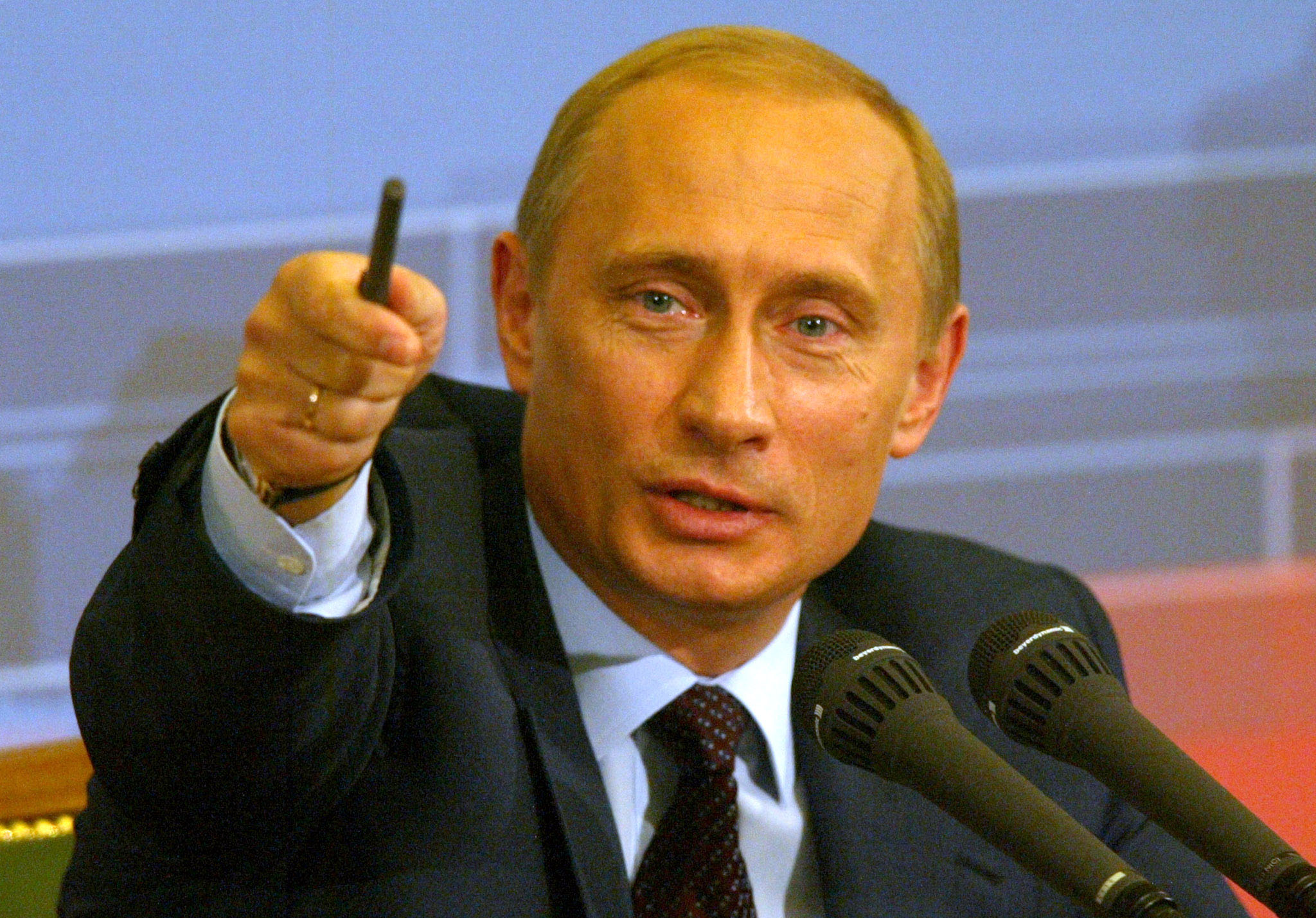
Russia's intelligence agency the FSB, successor to the KGB, has posted a notice on its website claiming that it now has the ability to collect crypto keys for Internet services that use encryption. This meets a two-week deadline given by Vladimir Putin to the FSB to develop such a capability. However, no details have been provided of how the FSB is able to do this.

The FSB's announcement follows the passage of Russia's wide-ranging surveillance law, which calls for metadata and content to be stored for six months, plus access to encrypted services, as Ars reported back in June.

The new capability seems to go even further, since the FSB notice (in Russian) speaks of obtaining the "information necessary for decoding the electronic messaging received, sent, delivered, and (or) processed by users of the 'Internet' network."

Read 5 remaining paragraphs | Comments

Google, Microsoft can’t be forced to censor “torrent” searches

Court disapproved of plaintiff’s attempt to use “torrent” as a badge of dishonor.

(credit: nrkbeta)

The high court of Paris has ruled that Google and Microsoft do not have to censor their search engines to remove all results involving the world "torrent" used in conjunction with the names of three French musicians.

The French music producers' association "Syndicat national de l’édition phonographique" (SNEP) had sought a court order to force the US companies to remove results for searches pairing the word "torrent" with the artists' names, which they claimed directed users to pirate sites.

As an article on the French site NextInpact explains, the Tribunal de grande instance de Paris refused to grant SNEP's request for Google's search results to be censored because of a legal technicality raised by Google's lawyers. SNEP's request referred to only three artists, and should have been on behalf of its entire membership, the high court ruled.

Read 5 remaining paragraphs | Comments

Festival uses CC-licensed pic without attribution, pays the price

Free stuff released under permissive licences is not in the public domain.

A CC-licensed photo that was incorrectly used in an Italian festival's promotional materials has led to a public apology by the organisers for not respecting the terms of the licence, and the reimbursement of legal costs incurred.

The picture in question was taken by Niccolò Caranti, who is a professional photographer and an active member of the Wikipedia community—nearly 900 of his images are available on Wikimedia Commons. The photo was used by the Festival delle Resistenze 2016, held in Trentino-Alto Adige, in northern Italy.

Journalist Federico Rampini was one of the guest speakers at the festival, and the image used for all the promotional material was a photo of him taken by Caranti, which had been uploaded to Wikimedia Commons under the Creative Commons BY-SA 4.0 licence. This particular variant allows the image to be used freely for any purpose on the condition that it includes attribution and releases it under the same or a similar licence. However, neither condition was respected in the festival's publicity materials.

Read 5 remaining paragraphs | Comments

TTIP leak rebuts EU pledge to tackle climate change, say green activists

New measures to stop leaks to be introduced—according to another leaked document.

The European Union's proposal for a chapter on energy and raw materials in the Transatlantic Trade and Investment Partnership (TTIP) agreement was leaked on Monday, just as the fourteenth round of talks between the EU and US got underway in Brussels.

However, the EU's plans have been criticised by the European wing of Friends of the Earth. Its economic justice programme coordinator Paul de Clerck said: "The EU's leaked proposal on TTIP and energy is in complete contradiction with Europe's commitments to tackle climate change, and the Paris agreement. It will flood the EU market with inefficient appliances, and consumers and the climate will foot the bill. The proposal will also hinder measures to promote renewable electricity production from wind and solar."

Green MEP Claude Turmes told the Guardian: “These proposals are completely unacceptable. They would sabotage EU legislators’ ability to privilege renewables and energy efficiency over unsustainable fossil fuels. This is an attempt to undermine democracy in Europe.”

Read 14 remaining paragraphs | Comments

Google’s DeepMind AI to use 1 million NHS eye scans to spot diseases earlier

Privacy is unlikely to be an issue for this fully anonymised dataset.

Google’s DeepMind division has announced a partnership with the NHS’s Moorfields Eye Hospital to apply machine learning to spot common eye diseases earlier. The five-year research project will draw on one million anonymous eye scans which are held on Moorfields’ patient database, with the aim to speed up the complex and time-consuming process of analysing eye scans.

The hope is that this will allow diagnoses of common causes of sight loss, like diabetic retinopathy and age-related macular degeneration, to be spotted more rapidly and hence be treated more effectively. For example, Google says that up to 98 percent of sight loss resulting from diabetes can be prevented by early detection and treatment.

Two million people are already living with sight loss in the UK, of whom around 360,000 are registered as blind or partially-sighted. Google quotes estimates that the number of people suffering from sight loss in the UK will double by 2050. Improvements in detection and treatment would therefore have a major impact on the quality of life for large numbers of people in the UK and around the world.

Read 7 remaining paragraphs | Comments