Fair Use Threatens Innovation, Copyright Holders Warn

Various music and movie industry groups have warned that fair use exceptions are a threat. The groups were responding to proposals put forward in Australia by the Government’s Productivity Commission. They claim that content creators will be severely disadvantaged if fair use is introduced Down Under.

Source: TF, for the latest info on copyright, file-sharing, torrent sites and ANONYMOUS VPN services.

ausEarlier this year the Australian Government’s Productivity Commission released a Draft Report on Intellectual Property Arrangements, recommending various improvements to the country’s copyright policies.

The commission suggested allowing the use of VPNs to bypass geo-blocking efforts. In addition, the proposals include drastically lowering the copyright term, while also introducing fair use exceptions.

Various interested parties have since responded to the proposals. As expected, copyright holders are not happy with the plans and some are outright offended by the recommendations.

For example, a coalition of Aussie TV and movie groups point out that the language being used reflects a “slanted, superficial and under-informed approach.” Similarly, two writers’ guilds describe the draft report as an “attack on the livelihoods” of Australian creators.

From the “offending” report

aussie-fair-use

Several rightsholder groups argue that strong copyright protections are essential for the survival of their businesses. This includes a long copyright term of 70 years, as well as the ability to block access to content based on the location of a consumer.

In addition, many believe that fair use exceptions will do more harm than good. For example, music group IFPI warns that fair use will threaten innovation and create legal uncertainty.

“Licensing, not exceptions to copyright, drives innovation. Innovation is best achieved through licensing agreements between content owners and users, including technological innovators,” IFPI writes.

Copyright is the cornerstone of the music industry, according to IFPI, while fair use will mostly benefit outsiders who want to profit from the work of others.

“The music industry exists because of copyright. Copyright drives innovation and creativity, enables record companies to invest in artists and repertoire, and gives creators an income.

“It is no coincidence that those who champion the ‘flexibility’ of fair use exceptions/defenses typically are those whose business models depend on unfettered access to copyright works.”

TV company Foxtel issues a similar warning about fair use. According to the Australian pay television company, it will directly damage the country’s creative industries.

“Fair use will introduce significant and unnecessary uncertainty into Australian law,” Foxtel writes.

“A fair use exception would be wide, vague and uncertain, while at the same time it would significantly erode the scope of copyright protection which is so critical in protecting investment in Australia‘s cultural industries.”

Foxtel also warns that third parties will exploit fair use exceptions at the expense of rightsholders. This will eventually hurt revenues and threaten the creation of new content.

“Fair use will have negative economic consequences and have a significant impact on creative output due to the associated uncertainties. Foxtel strongly believes that this type of reform will have a significant impact on creative outputs due to the uncertainties it will create,” the TV company adds.

But it’s not just major companies protesting against the proposed changes. The Australian Writers’ Guild also warns against fair use.

They believe that it will disadvantage their members, who don’t have the means to protect themselves against large corporations that could invoke fair use as a defense.

“We are particularly concerned about the uncertainty created by the introduction of fair use,” they write.

“It will contingent on scriptwriters, for example, to mount legal cases that their work has been infringed and is not subject to legitimate fair use by the respondent, who is likely to be a large corporation such as a news organization or search engine.”

While the copyright holders fiercely oppose fair use exceptions, others such as Google welcome it with open arms. According to Google, fears surrounding the uncertainty it would create are overblown.

Interestingly, Google cites none other than Hollywood’s anti-piracy group MPAA to make its case.

“Our members rely on the fair use doctrine every day when producing their movies and television shows – especially those that involve parody and news and documentary programs,” the MPAA stated previously.

The Government’s Productivity Commission will take the comments from various stakeholders into account before moving forward. The final report will be handed to the Government in August and published shortly after.

Source: TF, for the latest info on copyright, file-sharing, torrent sites and ANONYMOUS VPN services.
Phishing Scam Targets Game of Thrones Pirates

A new phishing scam targeting online pirates is much broader than initially thought, with Internet providers all over the world being bombarded with fake copyright infringement notices and settlement demands. The scammers are pretending to represent various rightsholders, including HBO.

Source: TF, for the latest info on copyright, file-sharing, torrent sites and ANONYMOUS VPN services.

scamScammers have found a way to exploit copyright infringement notices for their own profit.

Posing as a well-known anti-piracy monitoring outfit representing major movie and TV companies, they’re sending numerous takedown notices to Internet providers.

We first noticed the phishing scam last month when a Cox subscriber was targeted, but at the time it was unclear how significant it was.

Since then, we have learned that the phishing expedition is not limited to the United States. Also, the scammers are actively targeting a variety of alleged movie and TV-show pirates.

Employees at several ISPs have contacted TorrentFreak with additional information over the past several weeks. This detail shows that the scheme is much broader than previously thought.

The notices in question are not being exclusively sent to U.S. ISPs. Internet providers in the UK and Australia have also received similar notifications. While some ISPs realize that it’s a scam, others have forwarded the notices to their customers.

After our first report the imposters changed the domain name they’re using to collect the settlements. In addition, they also began targeting other content including the season finale of HBO’s Game of Thrones.

One of the phishing mails

gotphishing

In a professionally worded email, the account holder connected to an IP-address is accused of downloading a pirated copy of the popular TV show. If the recipient fails to settle the case for a few hundred dollars, the fake HBO says it might take legal action.

“You have 72 hours to access the settlement offer and settle online. If you fail to settle, the claim(s) will be referred to our attorneys for legal action. At that point the original settlement offer will no longer be an option and the amount will increase as a result of us having to involve our attorneys,” they write.

The emails are causing confusion at some ISPs as HBO and its piracy monitoring firm IP-Echelon do send takedown notices to Game of Thrones pirates. However, they have nothing to do with the threatening settlement requests.

“The notices are fake and not sent by us. It’s a phishing scam,” IP-Echelon informed TorrentFreak previously.

TorrentFreak spoke to an employee at a datacenter that was targeted by the phishing scam. The notices in question raised suspicion as not all reported IP-addresses were part of their network, but other than that they appeared to be real.

“They seemed believable at first because they were sending notices about customers who we are accustomed to seeing a high volume of torrenting complaints about,” the employee informed us.

Interestingly, this also suggests that the notices are not being sent to random addresses, and it may very well be that the scammers are scraping the IPs from real torrent swarms.

“We have a few VPN providers on our network and they get a lot of complaints from the real IP Echelon. At first I thought IP Echelon renamed their service or got bought out. I do think they are monitoring P2P networks, not just making these up out of thin air,” the datacenter employee adds.

TorrentFreak approached HBO for additional information about the issue but the company did not respond to our inquiry. Other rightsholders which are being faked, including Lionsgate and Warner Bros, are also yet to comment.

According to IP-Echelon, U.S. law enforcement is currently looking into the matter. However, tracking down the source of phishing operations is usually quite hard.

In the meantime, both ISPs and subscribers should be extra cautious.

Source: TF, for the latest info on copyright, file-sharing, torrent sites and ANONYMOUS VPN services.

UK Bill Introduces 10 Year Prison Sentence for Online Pirates

The UK Government’s Digital Economy Bill, which is set to revamp current copyright legislation, has been introduced in Parliament. One of the most controversial changes is the increased maximum sentences for online copyright infringement. Despite public protest, the bill increased the maximum prison term five-fold, from two to ten years.

Source: TF, for the latest info on copyright, file-sharing, torrent sites and ANONYMOUS VPN services.

uk-flagLast year the UK Government announced a plan to increase the maximum prison sentence for online copyright infringement to ten years.

The current maximum of two years is not enough to deter infringers, lawmakers argued.

The plan followed a recommendation put forward in a study commissioned by the UK Intellectual Property Office (IPO) a few months earlier.

This study concluded that criminal sanctions for online copyright infringement could be increased to bring them into line with related offenses, such as counterfeiting.

Before implementing the changes the Government launched a public consultation, asking for comments and advice from the public. But, even though the vast majority of the responses urged the authorities not to up the prison term, lawmakers decided otherwise.

As a result, a new draft of the Digital Economy bill published this week extends the current prison term from two to ten years. The relevant part amends the Copyright, Designs and Patents Act 1988, and simply replaces the word two with ten.

The new bill was unveiled in Parliament yesterday where it passed its first reading. If adopted in its current form, it allows courts to hand out tougher sentences.

The small but impactful change (3)

digec

Copyright holders have lobbied for this update for a long time. According to them, harsher penalties are needed to deter people from committing large-scale copyright infringement, something the Government agrees with.

“The Government believes that a maximum sentence of 10 years allows the courts to apply an appropriate sentence to reflect the scale of the offending,” the Government explained previously, adding that the maximum sentence will only be applied in rare cases.

This means that casual file-sharers are not likely to end up in prison for a decade. However, organized groups that systematically offer pirated files, such as Scene or P2P release groups, are likely to be punished more harshly.

One of the motivations to up the sentence for online piracy is to bring it on par with counterfeiting. Interestingly, however, both were already equal when they were first adopted.

When the Copyright, Designs and Patents Act was first introduced both counterfeiting and piracy carried a maximum sentence of two years. Following industry calls the counterfeiting sentences were increased in 2002, and now the piracy side has followed the same path.

Source: TF, for the latest info on copyright, file-sharing, torrent sites and ANONYMOUS VPN services.

Pirating TV-Shows and a Movie Costs Finnish Man Over €32,000

The so-called ‘copyright-trolling’ piracy lawsuits in Finland have claimed their first victim in court. Despite operating an open Wi-Fi network, a man has been ordered to pay more than 32,000 euros in damages and costs for sharing ten episodes of the TV show “Black Sails” and a movie.

Source: TF, for the latest info on copyright, file-sharing, torrent sites and ANONYMOUS VPN services.

finlandStarting two years ago TV-show and movie distributors in Finland began sending out thousands of settlement letters to alleged pirates, demanding payments of between 600 and 3,000 euros.

The letters in question are sent by lawfirm Hedman Partners, which threatens legal action if accused pirates refuse to cooperate.

It’s unclear how many recipients have paid up since the scheme started, but it is no surprise that some have ignored the warnings, hoping that the lawfirm wouldn’t follow-up on the threat.

However, Hedman Partners did take several people to court and the first case came to its conclusion in court yesterday.

The lawsuit in question was filed against a man who was accused of downloading ten episodes of the pirate TV-series “Black Sails” and a copy of the movie A Walk Among the Tombstones via BitTorrent.

The rightsholders employed the German tracking company Excipio, who linked the man’s IP-address to several swarms where these videos were distributed. In addition, the same IP-address was linked to dozens of other downloads.

In his defense, the man denied having downloaded the videos while pointing out that his Wi-Fi network was open to anyone. In fact, he actually bought the router on the same day the first infringement was observed.

Because of the open Wi-Fi network, outsiders could have easily been responsible for downloading the pirated videos, the defense argued. To illustrate this point, they setup a Wi-Fi honeypot at the defendant’s home to which the first outsider connected within minutes.

In response, the rightsholders provided evidence showing that the man ‘admitted guilt’ in an online forum, where an unredacted copy of the initial settlement letter was posted.

After weighing these and other arguments from both sides, the Finnish Market court found the defendant guilty.

The rightsholders demanded 8,500 euros in damages, but the court limited this to 50 euros per TV-episode and 100 euros for the movie, which makes 600 euros in total.

However, in addition the man must now pay 31,762 euros to cover the legal expenses of the copyright holders, Crystalis Entertainment and Scanbox Entertainment.

Jaana Pihkala, Executive Director at the local anti-piracy group, is happy with the court’s decision. He warns people who use unauthorized services, and notes that the settlement letter campaign is designed to limit the number of lawsuits.

“The letters and reconciliation process are designed to reduce unnecessary litigation,” Pihkala says.

Previously, the Market Court’s Chief Judge Kimmo Mikkola warned that a flood of file-sharing cases could prove problematic, as the court’s resources are limited.

The defendant in this case is not ready to give up just yet though. He has announced that he will appeal the case before the high court, which has yet to decide whether it will take on the case.

Source: TF, for the latest info on copyright, file-sharing, torrent sites and ANONYMOUS VPN services.

Blizzard Sues Overwatch “Cheat” Maker For Copyright Infringement

Blizzard Entertainment is suing Bossland, the maker of the popular Overwatch cheat tool “Watchover Tyrant” and several other game cheats. Among other things, the developer accuses the German company of various forms of copyright infringement and unfair competition.

Source: TF, for the latest info on copyright, file-sharing, torrent sites and ANONYMOUS VPN services.

blizzOver the years video game developer Blizzard Entertainment has published many popular game titles.
Most recently the company released the new first-person shooter “Overwatch,” which became an instant bestseller. The game received rave reviews and generated hundreds of millions of dollars in revenue during its first weeks on sale.

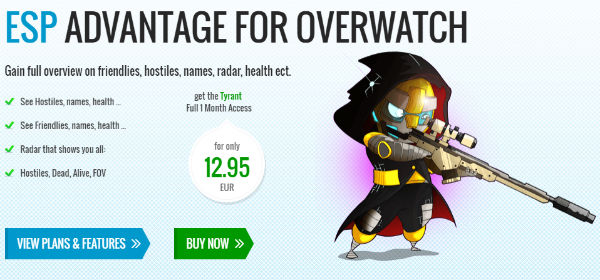
While most Overwatch players stick to the rules, there’s also a small group that tries to game the system. By using cheats such as the Watchover Tyrant, they play with an advantage over regular users.

Blizzard is not happy with the Overwatch cheat and has filed a lawsuit against the German maker, Bossland GMBH, at a federal court in California. Bossland also sells cheats for various other titles such as World of Warcraft, Diablo 3 and Heroes of the Storm, which are mentioned in the complaint as well.

The game developer accuses the cheat maker of various forms of copyright infringement, unfair competition, and violating the DMCA’s anti-circumvention provision.

According to Blizzard these bots and cheats also cause millions of dollars in lost sales, as they ruin the games for many legitimate players.

“Defendants’ sale and distribution of the Bossland Hacks in the United States has caused Blizzard to lose millions or tens of millions of dollars in revenue, and to suffer irreparable damage to its goodwill and reputation.”

“Moreover, by releasing ‘Overwatch Cheat’ just days after the release of ‘Overwatch,’ Defendants are attempting to destroy or irreparably harm that game before it even has had a chance to fully flourish.”

The Overwatch cheat has already become relatively popular in a short period of time. Thousands of players are reportedly using the tool, which enables them to display the locations and health status of hidden or obscured opponents.


watchover

Blizzard believes that by developing the cheats, Bossland has infringed on its copyrights in various ways. Among other things, the complaint accuses the German cheat maker of contributory copyright infringement.

“They have done so by enabling and encouraging third-party ‘freelancers’ or contractors to fraudulently obtain access to the Blizzard Games and then, having done so, to engage in unauthorized reproduction of the Blizzard Games,” the complaint reads.

“They also have done so by enabling users of the Bossland Hacks (particularly the Overwatch Cheat) to use the software to create derivative works, such as the dynamic screen overlay generated by the Overwatch Cheat,” it adds.

Blizzard notes that it has already taken action against thousands of cheaters. In response, Bossland announced that they would make their tool harder to be detected, which suggests that they intentionally violate the game’s EULA.

The game developer adds that the various cheats and bots may have generated millions in revenue for the German company, and demands compensation for its losses.

“Defendants not only know that their conduct is unlawful, but they engage in that conduct with the deliberate intent to harm Blizzard and its business. Blizzard is entitled to monetary damages, injunctive and other equitable relief, and punitive damages against Defendants,” the complaint reads.

Aside from the Overwatch cheat, the current case is very similar to one filed against a freelancer who works for Bossland. This case never really took off and was dismissed earlier this year.

TF spoke with Bossland CEO Zwetan Letschew, who informed us that his company hasn’t received the complaint at its office yet. However, they are no stranger to Blizzard’s legal actions.

“There are over 10 ongoing legal battles in Germany already,” Letschew says, noting that it’s strange that Blizzard decided to take action in the US after all these years.

“Now Blizzard wants to try it in the US too. One could ask himself, why now and not back in 2011. Why did Rod Rigole [Blizzard Deputy General Counsel] even bother to fly to Munich and drive with two other lawyers 380 km to Zwickau. Why not just sue us in the US five years ago?”

While Letschew still isn’t convinced that the lawsuit is even real, he doesn’t fear any legal action in the U.S. According to the CEO, a California court has no jurisdiction over his company, as it has no ties with the United States.

In addition, he is supported by a lawsuit his company won in Germany against Blizzard earlier this year. In that case, which dealt with the Heroes of the Storm bot, Blizzard was ordered to pay Bossland’s legal costs and attorney fees.

The full complaint filed at the Central District Court of California is available here (pdf).

Source: TF, for the latest info on copyright, file-sharing, torrent sites and ANONYMOUS VPN services.

Top 10 Most Pirated Movies of The Week – 07/04/16

The top 10 most downloaded movies on BitTorrent are in again. ‘Batman v Superman: Dawn of Justice’ tops the chart this week, followed by ‘’Independence Day: Resurgence’. ‘Finding Dory’ completes the top three.

Source: TF, for the latest info on copyright, file-sharing, torrent sites and ANONYMOUS VPN services.

batsupsThis week we have three newcomers in our chart.

Batman v Superman: Dawn of Justice is the most downloaded movie for the second week in a row.

The data for our weekly download chart is estimated by TorrentFreak, and is for informational and educational reference only. All the movies in the list are Web-DL/Webrip/HDRip/BDrip/DVDrip unless stated otherwise.

RSS feed for the weekly movie download chart.

Ranking (last week) Movie IMDb Rating / Trailer
torrentfreak.com
1 (1) Batman v Superman: Dawn of Justice 7.0 / trailer
2 (…) Independence Day: Resurgence (HDTS) 5.6 / trailer
3 (3) Finding Dory (HDTS) 8.1 / trailer
4 (2) Warcraft (TS/TC) 7.7 / trailer
5 (…) Central Intelligence 6.9 / trailer
6 (…) Me Before You (Subbed Webrip) trailer
7 (7) X-Men: Apocalypse (HDCam/TC) 7.7 / trailer
8 (9) Allegiant 5.9 / trailer
9 (4) The Huntsman: Winter’s War 6.2 / trailer
10 (5) Whiskey Tango Foxtrot 6.8 / trailer

Source: TF, for the latest info on copyright, file-sharing, torrent sites and ANONYMOUS VPN services.

Scene Group Asks For Bitcoin Donations, Gets $0

The Scene is generally known as a network of ‘pirate’ release groups mostly interested in sharing content among each other. In these circles money is rarely discussed, but one relatively new group has broken this taboo with a call for Bitcoin donations. Thus far the result is rather disappointing.

Source: TF, for the latest info on copyright, file-sharing, torrent sites and ANONYMOUS VPN services.

spamtvlogoWhile ‘pirates’ don’t always come across as well-coordinated, the groups that make up the top of the piracy pyramid abide by strict rules and traditions.


This is particularly true for the more traditional release groups that belong to The Scene. These groups are highly organized and only share content among themselves through topsites. At least, that’s what they are supposed to.

Scene groups “race” against each other and their ultimate goal is to be the first to release a certain title. The more races they win, the more credit they earn, simple as that.

For most release groups it’s their reputation that counts. Money doesn’t play a major role in this game. Of course, some cash is needed to buy equipment and other gear, but the topic is generally not discussed, neither are calls for donations.

Breaking with what may be described as a taboo, one Scene group has decided to cross the bridge.

Starting recently, TV Scene group “spamTV” is including a call for support in their release notes, as the screenshot below clearly shows.

spamTV NFO calling for donations

spamTV

“SUPPORT OUR CAUSE! BTC = 13mSLHHhmK5MUdtdcVVkmuJW9997EZpfM4,” a note in their NFO file reads.

This is the first time we’ve seen a Scene group publicly asking for Bitcoin donations through one of their releases. Given that Scene releases are supposed to stay private, we also wonder who the call is for.

While it may be unique for a Scene group, donations are more common among other pirate sources. P2P groups, distribution groups, and torrent site owners generally cater to a much wider audience, and many ask their users to chip in.

Unfortunately for them, pirates are not known as the most generous bunch, so the income from donations is usually minimal, to say the least.

This isn’t very different for spamTV. After listing their request for Bitcoin donations in several releases, they have yet to earn their first penny.

spamTV donations so far

spamtvdonations

Source: TF, for the latest info on copyright, file-sharing, torrent sites and ANONYMOUS VPN services.

BitTorrent Protocol Turns 15 Years Old Today

Fifteen years ago a developer named Bram Cohen posted a short message online, announcing his new file-sharing tool BitTorrent. Three years later his protocol was responsible for a quarter of all Internet traffic, and now it helps people to share hundreds of petabytes of data per day.

Source: TF, for the latest info on copyright, file-sharing, torrent sites and ANONYMOUS VPN services.

bittorrent_logo“My new app, BitTorrent, is now in working order, check it out here,” Bram Cohen wrote on a Yahoo! message board on July 2, 2001.

It was the first time a working copy of the BitTorrent code had been made available to the public, but the initial response wasn’t exactly overwhelming.

“What’s BitTorrent, Bram?” was the sole reply he received on the board.

Fast forward 15 years and BitTorrent has become one of the most prominent technologies of the current millennium. One that transformed the web and which is still hugely relevant today.

When Cohen first announced his invention to the world, he could have never imagined that the technology would be used by hundreds of millions of people in the years that followed.

He was simply trying to improve file transfers, by using people’s upload and download capacity simultaneously.

“Fundamentally, I was trying to figure out how people on the Internet could utilize all the unused upstream bandwidth to make it faster to send huge files,” Bram Cohen told TorrentFreak, commenting on these early days.

BitTorrent FAQ Cohen wrote in 2001

btfaq

While the technology itself was the main focus for Cohen, the public quickly realized that BitTorrent opened the door to sharing huge files, which was very rare at the time.

Since BitTorrent users download and upload at the same time, popular files are distributed more quickly. With other file-sharing technologies, distribution slows down.

This idea was a major breakthrough at the time. Before then, it was virtually impossible for a regular Internet user to share a video with dozens of people, but torrents made it possible. As a result, BitTorrent soon became responsible for a quarter of all Internet traffic.

As with many innovations on the web, porn fans were among the first to embrace the new technology in its full glory. Several of the early torrent sites were exclusively centered around adult content, and a torrent site without a porn category was rare.

After a few months, torrent sites started popping up left and right, listing a wide range of content. This included perfectly legal Linux distros, but also pirated copies of The Matrix, Photoshop and the Spice Girls’ latest album.

With the rise of sites such as The Pirate Bay, Mininova, isoHunt and KickassTorrents, torrents became a synonym for piracy among the broader public. However, the technology itself is “neutral” and used more broadly than most people realize.

Twitter and Facebook also discovered the power of BitTorrent. Behind the scenes, it’s helping these tech giants distribute files across their servers faster and more efficiently than any other alternatives. And the opportunities don’t end there.

BitTorrent Inc, the company Bram Cohen co-founded in 2004 has released various applications for the BitTorrent protocol over the past years. A “sync” tool that lets people run their private backup solution, for example, or a browser that serves webpages without the need for a central server.

Cohen himself also worked hard on a live streaming implementation of BitTorrent. Although this hasn’t been adopted widely just yet, BitTorrent Inc. believes that it could power the future of online live news and entertainment.

Whatever the future may look like, it is safe to say that with BitTorrent, Bram Cohen changed the lives of dozens of millions of people.

Directly, by allowing people around the world to easily share large files without the need for a central server. But also indirectly, by being one of the great motivators for the entertainment industries to compete with piracy and offer their content online.

If Bram hadn’t taken his invention public 15 years ago, the Internet may have looked very different today.

Source: TF, for the latest info on copyright, file-sharing, torrent sites and ANONYMOUS VPN services.

KickassTorrents Removed More Than 1 Million Torrents

KickassTorrents, one most popular sites on the entire web, offers access to millions of torrents. Users add several thousands of new files to the site every day, but not all of those survive. In fact, over the past few years the site has removed more than a million torrents to comply with rightsholders’ takedown requests.

Source: TF, for the latest info on copyright, file-sharing, torrent sites and ANONYMOUS VPN services.

kickasstorrents_500x500As the largest torrent site on the Internet, KickassTorrents (KAT) has become the go-to spot for millions of filesharers.

Like many other torrent sites, KAT is often used to share pirated files, much to the frustration of copyright holders.

However, unlike other sites such as The Pirate Bay, KAT accepts DMCA takedown notices. This means that rightsholders have the option to remove infringing content from the site.

This option hasn’t gone unnoticed by the site’s users, who sometimes see their uploads disappearing in real-time. In other cases, it can make it quite hard to find the latest episode of one’s favorite TV-show.

To find out how many DMCA requests the site processes, we asked the KAT team for an overview.

According to KAT’s official figures, 15,794 torrent files were deleted over the past week, and 55,238 for the most recent month. This means that at the current rate, the site removes more than half a million torrents per year.

Since the site started to keep track of the number of deleted torrents, which is a few years ago, well over a million torrents have been purged from the site. 1,200,313 to be precise.

Torrent removed…

fearkat

While the removals are a source for frustration among users, it also encourages some to come up with creative solutions to ‘revive‘ removed torrents.

Torrent revived?

kekahash

The KAT forums are littered with dedicated threads where people discuss alternative means to access removed content. For example, by generating a magnet link from the torrent’s hash.

In addition to reviving torrents, users also regularly re-upload files that have disappeared, starting a perpetual cat-and-mouse game.

Despite pushback from both users and copyright holders, the KAT team isn’t getting actively involved in the takedown discussion.

Like most other user-generated content platforms, they offer users the freedom to upload content as long as they stick to the rules, and rightsholders the tools to protect their work.

Source: TF, for the latest info on copyright, file-sharing, torrent sites and ANONYMOUS VPN services.

Ricky Gervais: Don’t Pirate My Film, I Stand to Make Millions

Ricky Gervais released a new anti-piracy PSA for his upcoming movie “David Brent: Life on the Road” today. As part of a copyright education campaign he asks people not to pirate his film, noting that while people might save a few bucks by pirating it, he stands to make millions.

Source: TF, for the latest info on copyright, file-sharing, torrent sites and ANONYMOUS VPN services.

Anti-piracy PSAs come in all shapes and sizes, but nearly all of them fail to appeal to the public they’re intended for.

Today, as part of the Industry Trust’s “Moments Worth Paying For” campaign, British comedian Ricky Gervais gives it a shot with a special anti-piracy message of his own.

The PSA is for his upcoming movie “David Brent: Life on the Road,” in which he brings the iconic character from The Office back to life. The movie premieres later this summer and Gervais hopes that pirates will go to see it in the cinema, instead of heading to a nearby torrent site.

“We’re basically asking you not to pirate movies. The quality is bad, and it’s a lot of people’s livelihoods,” Gervais says.

Pretty classic language for a PSA, but Gervais then adds another dimension.

“For example my new movie David Brent: Life On The Road. If it does well I stand to make millions. If you pirate it, sure, you’ll save a few quid. But millions…”

Of course, the entire PSA is tongue-in-cheek, but by using one of the classic pirate excuses combined with more traditional anti-piracy language, Gervais creates more food for discussion than more traditional PSAs.

The short video confuses both pirates and creators, and actually provides a starting ground for a decent discussion.

Amusingly, the Industry Trust stresses that Gervais himself wrote the anti-piracy message, as if they need an excuse. To compensate, they are quick to stress that piracy seriously hurts the UK movie industry.

“The Industry Trust handed artistic control of the trailer to Gervais, who tore up the rule book and took the trailer spectacularly off-message as only he can,” they write.

“While the trailer is a light-hearted take on piracy, the reality is that in 2015, the top 20 titles made up, a total of 41% of the total UK box office, meaning that a high percentage of films weren’t seen by a lot of people.”

Source: TF, for the latest info on copyright, file-sharing, torrent sites and ANONYMOUS VPN services.