Seeing the end of Obama’s space doctrine, a bipartisan Congress moves in

Democrats and Republicans see the Moon as a pragmatic first step in deep space.

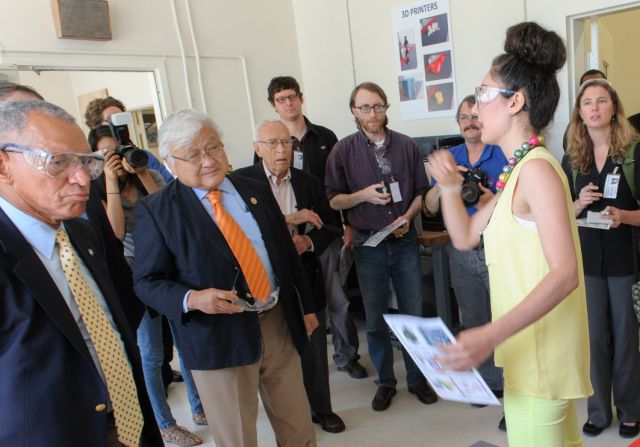
NASA Administrator Charles Bolden, left, and US Representative Mike Honda, center, tour the NASA Ames SpaceShop. (credit: NASA)

Although it has been less than thrilled by NASA’s effective taboo on lunar exploration, Congress has adopted a good-cop approach toward the agency's asteroid-then-Mars human spaceflight plans during the last six years. In hearings, members have suggested that the space agency reconsider its human mission to an asteroid and perhaps work with Europe on some tentative plans to send humans to the surface of the Moon. But NASA hasn’t acquiesced to this gentle cajoling.

During the recent appropriations process in the House, as Ars reported in May, members exercised the power of the purse to more forcefully nudge NASA back toward the Moon as an interim step to Mars. Lawmakers zeroed out funding for the asteroid mission and encouraged NASA to “develop plans to return to the Moon to test capabilities that will be needed for Mars, including habitation modules, lunar prospecting, and landing and ascent vehicles.” After discussions with lawmakers, aides, and officials in the aerospace community since then, it has become clear this is no transient movement. Rather, the Moon-then-Mars plan has bipartisan support.

NASA’s prohibition on lunar exploration dates to 2010, when President Obama set NASA's human exploration program on a course to visit an asteroid by 2025 and then on to Mars in the 2030s. As for the Moon, then the short-term goal of NASA’s human spaceflight program, Obama said, “We’ve been there before.” Now House members see the end of Obama’s presidency looming and have found his go-it-alone approach toward Mars probably will not be supported by the next president—Republican or Democrat.

Read 11 remaining paragraphs | Comments

Jeff Williams enters an inflatable room in space, lives to tell the tale

Bigelow’s expandable module so far looks “pristine” after its expansion.

Jeff Williams floats into the Bigelow Expandable Activity Module on Monday morning. (credit: NASA)

A little more than a week after NASA astronaut Jeff Williams successfully expanded a new module on the International Space Station, he and Russian cosmonaut Oleg Skripochka finally entered it on Monday morning. The expandable module, Williams told mission control in Houston, looked "pristine."

After entering, Williams collected air sample data from the module, which was nominal. He then began to download data from three Deployment Dynamic Sensor units inside that recorded vibration data during the expansion process. Later this week, Williams will also install radiation, impact detection, and temperature sensors before closing the hatch again.

The successful expansion marks a pivotal moment for Bigelow Aerospace, which built the module and has been at the forefront of trying to commercially develop expandable space habitats. In January, the company had to lay off as much as one third of its 150 employees as it sought to pare back expenses.

Read 1 remaining paragraphs | Comments
With iPhones and computer models, do we still need weather forecasters?

As automation continues to claim jobs in new fields, meteorology may be next.

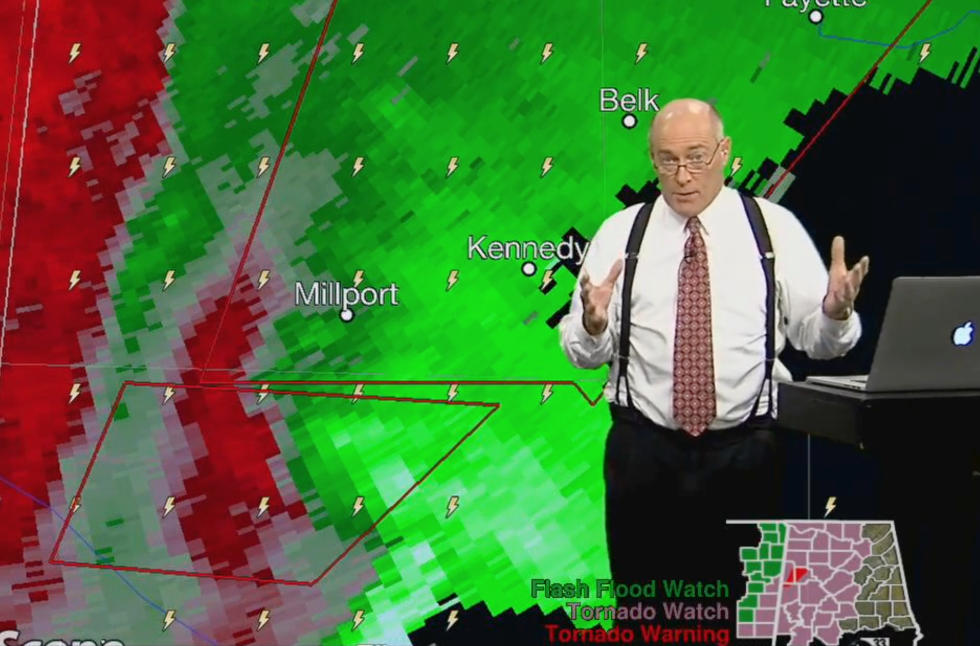
James Spann is Alabama's go-to meteorologist when the state's weather turns severe. (credit: James Spann)

As the 10pm newscast drew near one night last month, the chief meteorologist of Birmingham's ABC-affiliate began to get worked up. Balding and characteristically attired in suspenders, James Spann is one of the most recognizable and respected local TV meteorologists in the country. But he had a familiar problem. The day had been pleasant in Alabama, and more of the same temperate spring weather lay ahead—so what the heck was he going to talk about?

“I’ve got 2 minutes and 30 seconds to fill,” Spann explained. “Everyone in my audience is going to know what the weather is going to do. Except maybe my mom. She’s 85 years old. But most everybody has looked on their phone or some other device already. So what am I going to do? Am I just going to rehash everything they already know?”

Many forecasters have been asking themselves this question lately. Two technologies have converged to rapidly displace the primary function of meteorologists. First are computers that are generally better forecasters than humans. For most types of weather, numerical weather prediction has superseded human forecast methods. And secondly, thanks to the Internet and increasingly ubiquitous weather apps on mobile devices, people have continuous, immediate access to 5-day, 7-day or 10-day forecasts. As technology drives automation and machines take job after job once performed by humans, are meteorologists next in line?

Read 20 remaining paragraphs | Comments
Luxembourg wants to become the Silicon Valley of asteroid mining

We could live comfortably on resources just from space. But is it economical?

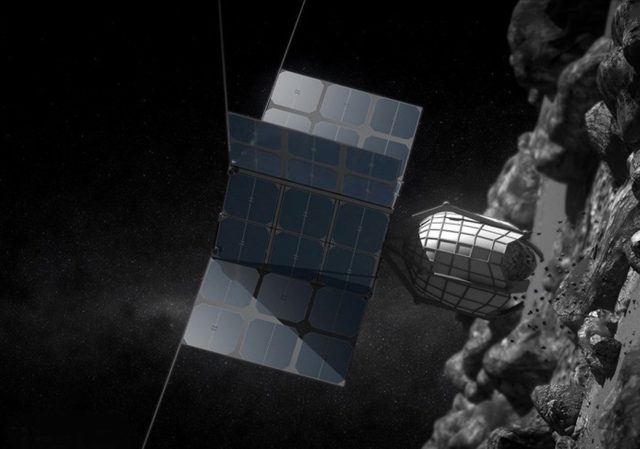
Concept image of a harvester for Deep Space Industries. (credit: Deep Space Industries)

Luxembourg, a small European country about the size of Rhode Island, wants to be the Silicon Valley of the space mining industry. The landlocked Grand Duchy announced Friday it was opening a €200 million ($225 million) line of credit for entrepreneurial space companies to set up their European headquarters within its borders.

Luxembourg has already reached agreements with two US-based companies, Planetary Resources and Deep Space Industries, to open offices in Luxembourg and conduct major research and development activities. "We intend to become the European center for asteroid mining," said Étienne Schneider, deputy prime minister and minister of the economy, during a news conference Friday.

The mining of space resources is a long bet. Although some deep-pocketed investors from Google and other companies have gotten behind Planetary Resources, and people like Amazon's Jeff Bezos have speculated that within a couple of decades most manufacturing and resource gathering will be done off Earth, there is precious little activity today. Humans have never visited an asteroid, and NASA is only just planning to launch its first robotic mission to visit and gather samples from an asteroid, OSIRIS-REx, this summer.

Read 6 remaining paragraphs | Comments
Meet the Mighty Hercules, slayer of hurricanes

On the eve of Atlantic hurricane season, we went aboard the planes that hunt storms.

The Mighty Hercules stands in the foreground, with the Gulfstream IV behind it. (credit: Lee Hutchinson)

Every minute of every hour, sophisticated weather satellites are circumnavigating the world, keeping vigil over the planet's atmosphere and streaming data back to the ground. But when it comes to hurricanes and their imminent landfalls, a somewhat lower and slower tool is the most valuable: the venerable WC-130 aircraft. Using a design dating back to 1962, these durable workhorses fly directly into the heart of the storm, where no satellite can see.

The “Mighty Hercules,” capable of flying about 18 hours without refueling, has been the mainstay of the US Air Force’s “Hurricane Hunters” program since 1999. Just weeks before the beginning of the 2016 Atlantic hurricane season on June 1, the National Hurricane Center and the Air Force invited the press to take a close-up look at one of these planes (along with a National Oceanic and Atmospheric Administration’s Gulfstream IV) at Scholes Field in Galveston.

This sliver of an island along the northern Texas coast has seen its share of large cyclones. It's close to where the devastating Hurricane Ike made landfall in 2008, and before that, Hurricane Alicia passed directly over the island in 1983. Galveston's most memorable hurricane is the Great Storm of 1900, which caused an estimated 6,000 to 12,000 fatalities and is still the deadliest natural disaster in US history. Fortunately, no storms threatened on the late spring afternoon when Ars visited Scholes Field. Instead, under partly sunny skies, we had a great opportunity to check out the tech used to fly into, and above, the most powerful terrestrial storms known to humans.

Read 8 remaining paragraphs | Comments

So far, so good for NASA’s new inflatable room in space

Saturday’s second attempt to expand the Bigelow module went smoothly.

How Bigelow Aerospace's module expanded on Saturday. (credit: NASA)

After difficulties with the first attempt to expand a new room on the International Space Station, NASA had little trouble with Bigelow Aerospace's inflatable module over the Memorial Day weekend.

On Saturday morning, NASA astronaut Jeff Williams allowed short bursts of air to escape into the module, allowing it to expand, as flight controllers at Johnson Space Center checked the module's internal pressure. Then, after this initial, successful expansion, NASA pressed ahead and fully pressurized the module on Saturday afternoon.

When packed inside the trunk of a Dragon cargo spacecraft, the Bigelow module measure 7 feet long by 7.75 feet wide; when expanded, it measures 13 feet long and 10.5 feet in diameter, creating 565 cubic feet of space and weighing 3,000 pounds. If all goes well during this week with a series of leak and pressure checks, Williams could enter the Bigelow module as early as next Monday.

Read 2 remaining paragraphs | Comments

Kennedy’s vision for NASA inspired greatness, then stagnation

The Apollo landings were great, but without a follow-up plan NASA suffered.

The spring of 1961 was a time of uncertainty and insecurity in America. The Soviets had beaten the United States to space four years earlier with Sputnik, and in April 1961, they flew Yuri Gagarin into space for a single orbit around the planet. Finally, on May 5th, America responded by sending Alan Shepard into space, but he only made a suborbital flight.

Few would have predicted then that just five years later the United States would not only catch the Soviets in space but surpass them on the way to the moon. Perhaps that is the greatness of John F. Kennedy, who found in such a moment not despair, but opportunity. When Kennedy spoke to Congress on May 25th, 55 years ago, NASA hadn’t even flown an astronaut into orbit. Yet he declared the U.S. would go to the moon before the end of the decade.

“No single space project in this period will be more exciting, or more impressive, or more important for the long-range exploration of space; and none will be so difficult or expensive to accomplish,” Kennedy told Congress. “In a very real sense it will not be one man going to the moon, it will be an entire nation. For all of us must work to put him there.”

Read 14 remaining paragraphs | Comments

Watch live: SpaceX takes another crack at launching, landing today

The company has addressed a “tiny glitch” with the Falcon 9’s upper stage.

The Falcon 9 and its Thaicom satellite payload are ready to go. Will Mother Nature cooperate? (credit: SpaceX)

Despite a two-hour window to get off the ground, SpaceX was unable to launch its Falcon 9 rocket this Thursday. According to the company's founder, Elon Musk, the company couldn't conduct the launch due to "a tiny glitch in the motion of an upper stage engine actuator." Better to scrub for 24 hours to investigate the problem and ensure the rocket's readiness, he said.

Whereas the weather was nigh perfect on Thursday, it's a tad less so today. Forecasters anticipate a 60 percent chance of "go" conditions for launch when the two-hour window opens at 5:39pm ET (10:39pm BST). Fresh off two straight launches and unprecedented water landings of its Falcon 9 rocket, SpaceX will try for its third sea-based landing this evening after it launches a 3,000kg Thaicom communications satellite to a supersynchronous transfer orbit.

Like a similar launch three weeks ago, the Thaicom mission requires the first stage of the Falcon 9 rocket to reach a high velocity relative to the Earth's surface before separating from its payload. "As with other missions going to geostationary orbits, the first stage will be subject to extreme velocities and reentry heating, making a successful landing challenging," the company stated in its mission overview.

Read 2 remaining paragraphs | Comments

Jeff Bezos is trying to destroy his own spacecraft—and that’s a good thing

Company appears to be closing the loop on low-cost, rapidly reusable rocketry.

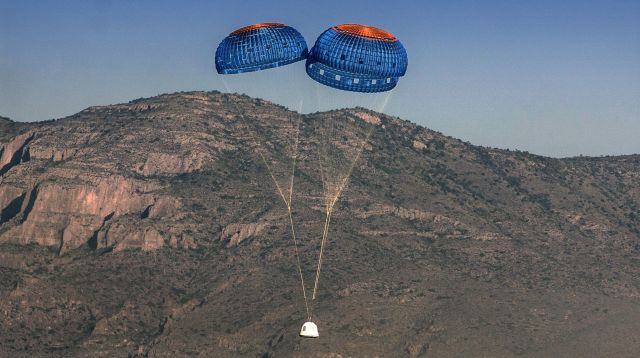
Normally Blue Origin's New Shepard spacecraft would require three parachutes to land. (credit: Blue Origin)

Spaceflight entrepreneur Jeff Bezos has promised to test his New Shepard spacecraft to the limit, and perhaps it is time to take him at his word. On Thursday, the founder of Blue Origin said his company has nearly finished planning the next test flight for his space capsule, and this time the crew vehicle will attempt to land with one of its three parachutes intentionally failing. The goal, Bezos said, is to demonstrate New Shepard’s ability to safely handle such a scenario. “It promises to be an exciting demonstration,” he wrote, perhaps understatedly, in an e-mail.

One of the maxims of spaceflight is that every launch is a test flight—rockets and spacecraft just don’t fly frequently enough, like airplanes, for spaceflight to become routine. So every time the space shuttle, or Saturn V or any other vehicle flew, engineers on the ground would learn more about the launch system, and how it operated. The same is true today, even for frequently flown rockets such as the Atlas V or Soyuz launch vehicle.

But what if it didn’t have to be that way? With the New Shepard architecture, a capsule atop a propulsion module powered by a single BE-3 engine, Blue Origin has fashioned a suborbital launch system that is not only completely reusable but is one that also appears to be relatively inexpensive to fly, costing a few tens of thousands of dollars to turn around. Critically for testing purposes, it is also completely autonomous. This means Blue Origin can test New Shepard as much as it likes to ensure the vehicle is safe without taking any meaningful risk. It might even get to the point where, one day, each flight is not a test flight.

Read 7 remaining paragraphs | Comments

Watch live: SpaceX aims for third straight water landing this evening

If SpaceX makes it three in a row, company will show it is on the road to reusability.

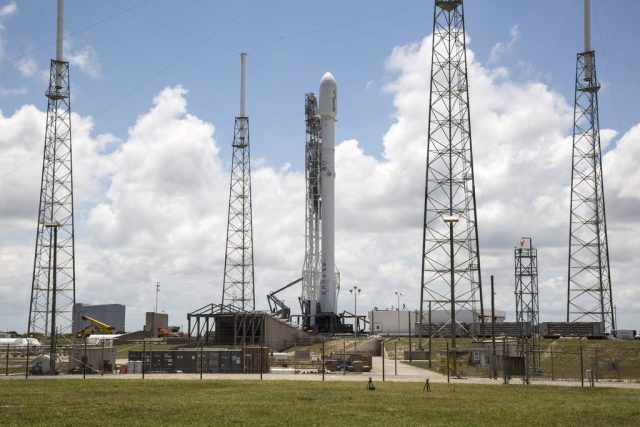
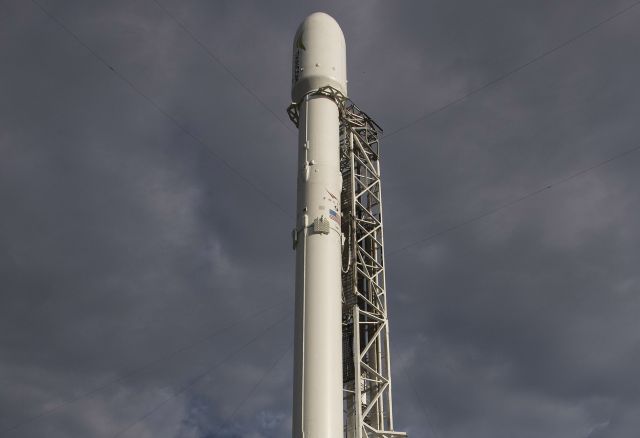
The Falcon 9 rocket with its Thaicom payload on the launch pad in Florida. (credit: SpaceX)

Fresh off two straight launches and unprecedented water landings of its Falcon 9 rocket, SpaceX will try for a third sea-based landing this evening after it launches a 3,000kg Thaicom communications satellite to a supersynchronous transfer orbit. The two-hour launch window opens at 5:40pm ET (10:40pm BST). Weather is 90 percent "go" for a launch today.

Like a similar launch three weeks ago, the Thaicom mission will require the first stage of the Falcon 9 rocket to reach a high velocity relative to the Earth's surface before separating from its payload. "As with other missions going to geostationary orbits, the first-stage will be subject to extreme velocities and re-entry heating, making a successful landing challenging," the company stated in its mission overview.

SpaceX has now shown it can land in relatively benign reentry conditions, as it did in April after delivering a payload to the International Space Station and in "hot and fast" conditions as it did earlier this month. A successful landing tonight would prove that the company has taken a big step toward making sea-based rocket landings—if not routine—at least something that can be attempted with a reasonable expectation of success.

Read 1 remaining paragraphs | Comments