This is what it looks like when fire burns inside a spacecraft

With the Saffire experiment NASA hopes to learn how to better control fire in space.

Orbital ATK's Cygnus cargo craft is released by the International Space Station. (credit: NASA)

There are many hazards in spaceflight, but one of the greatest is a fire inside a spacecraft filled with oxygen. Therefore the experiments NASA has conducted to date with fire in microgravity have been small and very well-controlled.

But with its new Saffire experiment NASA decided to go a little bigger. Scientists at Glenn Research Center and 10 other U.S. and international government agencies and universities built a 1-meter by 1.3-meter long module, and placed a 1-meter long cotton-fiber sample inside to burn. Although this burn would be controlled, it was still too risky to conduct the experiment aboard the International Space Station. So when the Cygnus cargo spacecraft departed from the station on Tuesday, the experiment was placed inside.

Shortly after the spacecraft's departure the fire was ignited, and it burned for about eight minutes. NASA released the video on Thursday night of the fire:

Read 2 remaining paragraphs | Comments

Meet Deep Thunder: IBM’s next step in the automation of forecasting

Company’s new mesoscale weather model combines forecasting and machine learning.

Five months after acquiring The Weather Company, IBM continues to move toward automated forecasting. (credit: IBM)

Until recently, weather forecasting was a fairly straightforward process. Scientists and meteorologists with a government agency developed computer forecast models, collected data about current weather conditions, input that data into their models, and then ran them on government hardware. A TV forecaster would next review the output of these models and give you the weather during the 6 and 10 o’clock news.

But more recently, the private US weather industry, valued at between $3 billion and $6 billion, has gone far beyond this traditional method of forecasting. Because the National Weather Service is federally funded, the agency makes both the basic code of its model, as well as the raw output, available to both research and commercial entities. Companies have taken the government’s models and “added value” for consumer and business customers.

In late January of this year, IBM finalized its acquisition of The Weather Company, buying all of its assets except for The Weather Channel television network. Both IBM and The Weather Company had been working separately with one of the government’s most popular models, the WRF, or Weather Research and Forecasting Model. Developed in the late 1990s, the WRF is tuned to provide more accurate local forecasts rather than predicting conditions across the globe. (Other companies, such as Panasonic, have developed their own global models based upon the government's code).

Read 7 remaining paragraphs | Comments

Watch live: SpaceX tries to land again—and increase its launch cadence

Another launch to GTO, so another high-energy, high-risk return.

Two communications satellites are today's payload for a SpaceX launch. (credit: SpaceX)

SpaceX has had a very nice run of success since April 8: it's launched three Falcon 9 rockets and landed all three of them on an autonomous drone ship in the Atlantic Ocean. Critically the last two of these rockets have delivered payloads to geostationary transfer orbit, more than 35,000km above the surface of the Earth. The higher energies required to reach this more challenging orbit has made the sea-based landings of the Falcon 9 rocket's first stage considerably more difficult.

On Wednesday the rocket company will go for a hat trick by landing its third rocket after a geostationary transfer orbit payload delivery. With a 45-minute launch window opening at 10:29am ET (3:29pm BST), the Falcon 9 rocket will attempt to send two commercial communications satellites into high orbit. The satellites, EUTELSAT 117 West B and ABS-2A, are operated respectively by Eutelsat and ABS.

"As with other GTO missions, the first-stage will be subject to extreme velocities and re-entry heating, making a successful landing difficult," SpaceX noted in a news release. The landing attempt will come about 8 to 10 minutes after launch.

Read 2 remaining paragraphs | Comments

NASA has a special fireworks show planned for July Fourth—at Jupiter

The $1.1 billion Juno mission has just one chance to get into orbit at the gas giant.

At first blush Jupiter may seem like a rather dull planet. A failed star. A ball of gas. A large, red storm. Sure, it's big, but what more is there? And we’ve been there before—lots of times, in fact. Beginning with Pioneer 11 and 12, NASA has flown seven probes by the gas world. One mission, Galileo, studied the Jovian system for nearly a decade from 1995 to 2003. So why is the space agency sending yet another probe, Juno, to once again visit the solar system's giant?

We're still studying Jupiter because despite all of these missions NASA has literally only scratched the surface. Its inner structure remains largely a mystery—and an intriguing one, too. The planet is essentially made of gas piled upon more gas. And like a big stack of pillows, as more gas is added on top, the bottom layers become more and more compressed as gravity pulls down on the gas. This creates extremely dense conditions inside the planet. Jupiter, after all, is only a little bit larger than Saturn—but it has three times the mass. Scientists have almost no idea how hydrogen will behave at the extreme pressures deep beneath Jupiter's outer layers toward its core. Indeed, does Jupiter even have a core? We simply don’t know.

The Juno spacecraft, launched in 2011 and arriving at Jupiter on July 4th this year, will be able to scrutinize the planet's gravity field and peer beneath its upper cloud layer. This should help offer some clarity about Jupiter’s interior. During a presentation in May at the Lunar and Planetary Institute in Houston, mission scientist Fran Bagenal discussed just how strange that interior might be.

Read 9 remaining paragraphs | Comments

First SpaceX missions to Mars: “Dangerous and probably people will die”

In a WaPo interview, Elon Musk says those who found cities on Mars will know the risks.

Elon Musk, SpaceX chief executive, at the StartmeupHK Festival in January. (credit: StartmeupHK)

As we get close to the end of September, when Elon Musk has promised to lay bare his plans for colonizing Mars at an international space conference, it seems like the ambitious founder of SpaceX can hardly contain his excitement. In an interview with The Washington Post, Musk gushed, “I’m so tempted to talk more about the details of it. But I have to restrain myself.”

SpaceX fandom has speculated for years about details of Musk's ideas, which include the Mars Colonial Transporter concept. The Transporter likely consists of a large first stage rocket and an upper stage spacecraft meant to deliver hundreds of people to the surface of Mars during the late 2020s and 2030s. During the interview, Musk said the first of these transporters could make a test flight as early as 2022, with the first crewed flight following in 2024. As is often the case with SpaceX, these dates are almost certainly too optimistic, but the company tends to eventually deliver on its promises.

Unlike NASA, which relies on public money and is therefore risk averse when it comes to "loss of crew" requirements for human missions into space, SpaceX appears to be willing to take some risks with the unprecedented exploration to Mars. Those first explorers would understand the perils, just as the pioneers who explored the New World or the poles of Earth did. "Hopefully there’s enough people who are like that who are willing to go build the foundation, at great risk, for a Martian city," Musk told WaPo. "It’s dangerous and probably people will die—and they’ll know that."

Read 1 remaining paragraphs | Comments

The world’s biggest, baddest rocket launched Saturday and it was stunning

The rarely flown heavy-lift vehicle delivered a secret spy satellite into space.

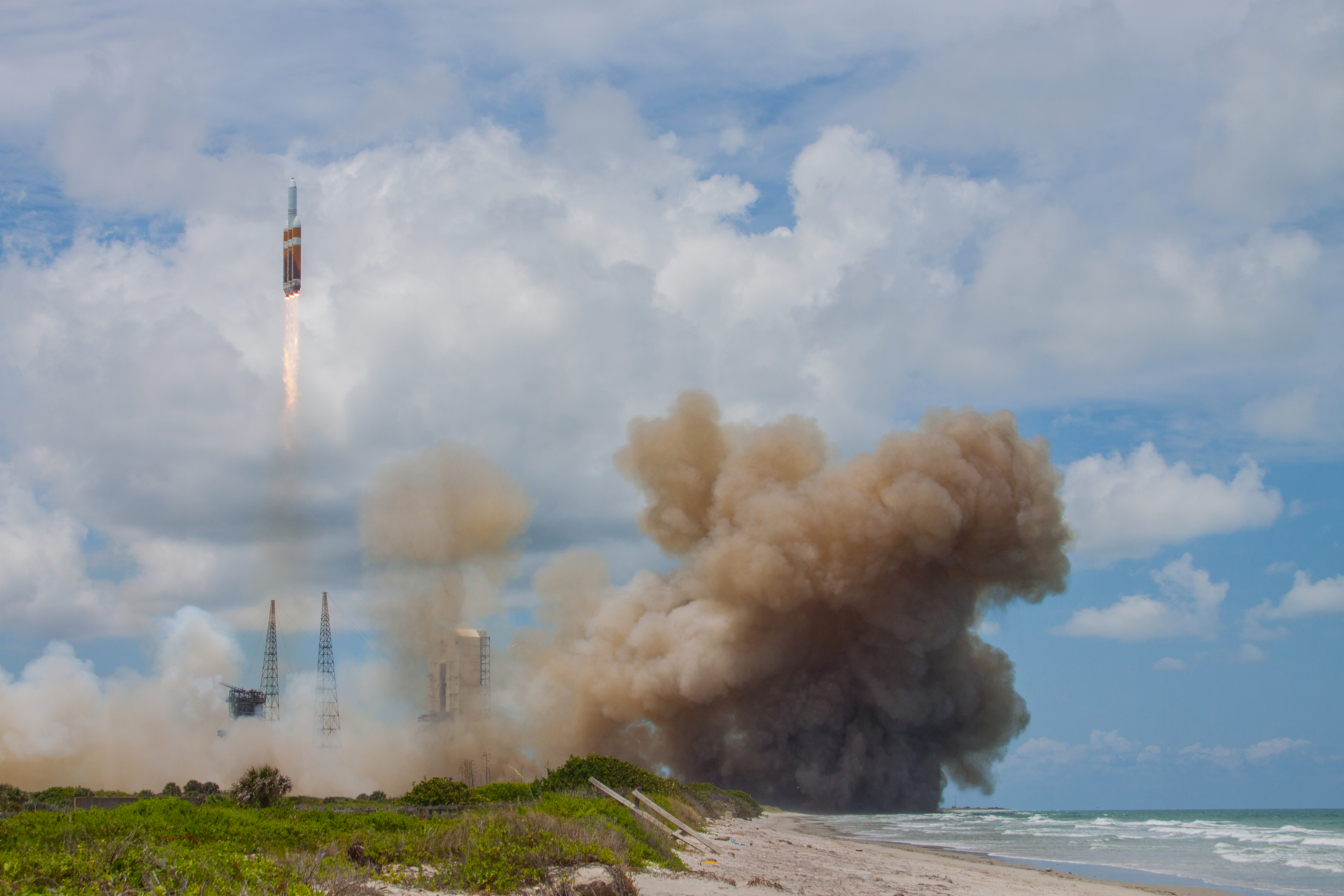
After the space shuttle retired in 2011, the Delta IV Heavy became, by default, the world's most powerful rocket. Standing 71.6 meters tall, fully 15 meters taller than the full space shuttle stack, the rocket built by United Launch Alliance can deliver up to 28.4 tons of mass to low-Earth orbit.

On Saturday, under splendid blue-and-white Florida skies, the rocket made one of its rare launches by delivering a spy satellite payload, NROL-37, for the National Reconnaissance Office into orbit. The agency has released no information about the satellite, but from the Delta IV Heavy's use we can conclude that it likely was one of the spy office's Advanced Orion satellites, which measure radio signals from the vantage point of geostationary orbit.

The Delta IV Heavy rocket has not flown since December, 2014, when it launched NASA's Orion spacecraft into a two-orbit test flight around Earth, reaching a peak altitude of 5,800km. In its entire history since 2004, the rocket, which uses three common booster cores to power its ascent, has flown only nine times. One of the reasons the Delta IV flies so infrequently is its cost—up to about $400 million per flight.

Read 4 remaining paragraphs | Comments

Low gravity and high radiation: Would humans remain human on Mars?

A biologist considers how harsh conditions on Mars might affect human evolution.

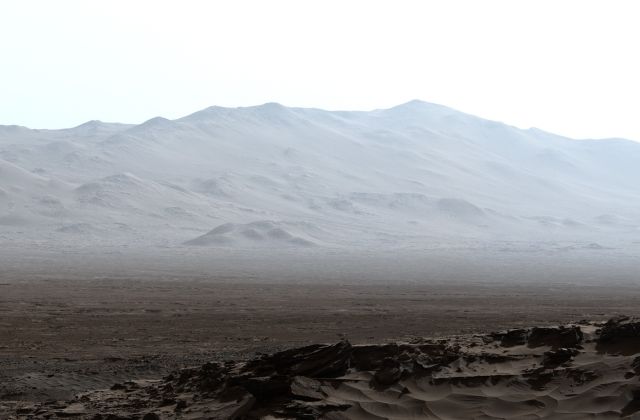
This early morning view of the inner wall of Gale Crater is ethereal. (credit: NASA)

People like Elon Musk and others in the "space settlement" camp believe NASA and the US space industry should colonize Mars and make homo sapiens a multi-planet species. Musk wants SpaceX to one day send colonists to Mars, while NASA is talking about building sustainable habitats on the red planet. Even if we overcome the technical and financial challenges that stand in the way of putting humans on Mars, we know precious little about how microgravity and heightened radiation will affect the ability of humans to reproduce in space. Without procreation, there is no permanent colony, and early tests aren’t promising.

But let’s assume SpaceX, or an international coalition led by NASA, or China’s space agency eventually figure out the engineering and financing of a Mars colony. Let’s also assume the biology of reproduction in space, and on foreign worlds, is a solvable problem. After homo sapiens becomes a multi-planet species, the question becomes, would we remain a single species of humanity? Scott Solomon thinks a lot about this question in his new book Future Humans, which will be published by Yale Press in October. In it, he explores the future evolution of our species, including some musings on Mars.

“The general concept for the book is to ask about our ongoing evolution, from the perspective of a scientist who takes what we know about our past, what we know about today, and thinking about the long-term possibilities for our species,” Solomon, a biologist at Rice University in Houston, said. What, he wondered, would it take to lead to development of a new species? Put another way, how long would humans on Mars remain human?

Read 6 remaining paragraphs | Comments

NASA’s room in space has expanded, but will it prove durable?

New images provide the first high-def look into Bigelow’s expandable module.

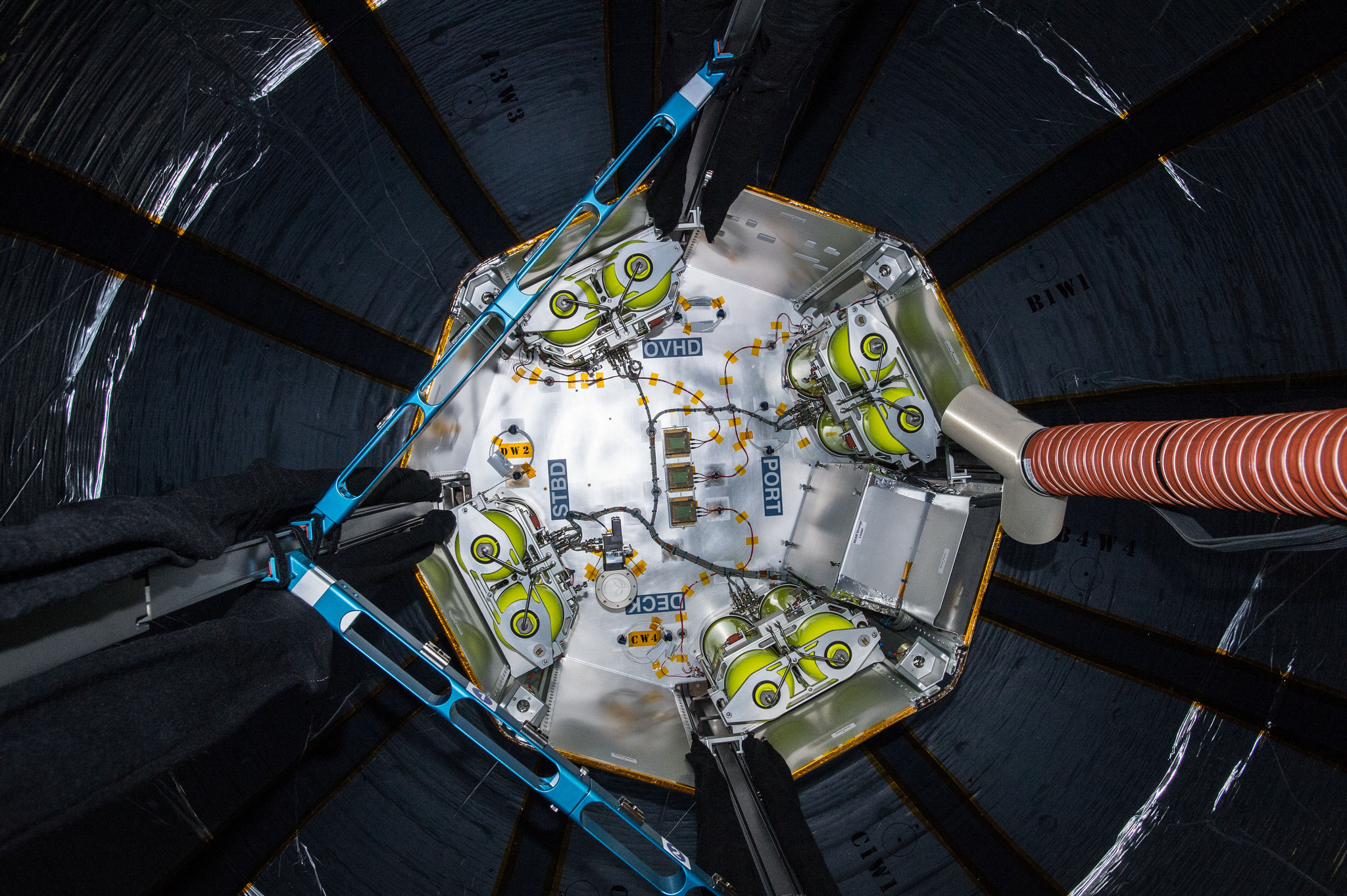
In April, astronauts attached an expandable room to the International Space Station, which they successfully inflated at the end of May. This week, NASA astronaut Jeff Williams entered the Bigelow Aerospace expandable module and said everything was fine. He subsequently installed some sensors to monitor air pressure, temperature, and other variables, as well as other hardware.

Finally, on Wednesday, Williams removed his tools from the module and closed the hatch. Astronauts will not reenter the 13-foot-long module now until August, when they will perform more checks of the equipment.

Why wait so long? Because as important as it was to demonstrate the module could be expanded, it is more important still to prove its durability over the two-year experiment. Engineers with Bigelow have said the expandable’s kevlar-like weave should be at least as protective as the station’s aluminum hull when it comes to tiny orbital debris. The company also says that with this material, the interior of the module should prove a quieter location than the notoriously noisy station interior. NASA is also interested in how the non-metallic shell of the module limits radiation exposure.

Read 2 remaining paragraphs | Comments

Want your kid to be hip? Be sure to buy ‘em this $111 flight suit

Ars takes a dip into the world of high fashion and emerges thoroughly bewildered.

Anwar Hadid sports a NASA flight suit. This is hip, folks. (credit: Teen Vogue)

Ars Technica will leave no stone unturned when it comes to space coverage—even if it means braving the pages of Teen Vogue. And so this week I found myself sidling into my pre-teen daughter's room and surreptitiously picking up the June/July issue of the magazine off her desk.

It was not an easy read for these middle-aged eyes, which haven't been fashion conscious for decades (if ever). But I eventually found Anwar Hadid on page something or other (fashion magazines rarely put page numbers on the pages). I had never heard of this guy, but he is apparently a big deal among the teens. He's the younger brother of "top models" Gigi and Bella and the son of Real Housewives of Beverly Hills star Yolanda and real estate mogul Mohamed. And now he's a model, too. (The article cites something called "Hadid mania.")

Anyway, Anwar is showing off a NASA flight suit in a full-page image. According to the article, this "Alpha Industries" designed suit retails for $111. It's a reproduction of NASA's Advanced Crew Escape Suit worn by space shuttle astronauts during ascent and entry. The new design, of course, is more suitable to wear on Earth, and it's based on one that can be bought at Kennedy Space Center's gift shop.

Read 2 remaining paragraphs | Comments

As company seeks to build AI-powered asteroids, what could go wrong?

Made in Space had two 3D printers on the space station. But that’s just the beginning.

Made in Space is developing a concept to turn an asteroid into a self-propelling spacecraft. (credit: Made in Space)

In his iconic science fiction novel Rendezvous with Rama, Arthur C. Clarke describes how humanity first mistakes a large inbound spacecraft for an asteroid and then interacts with the mysterious alien ship. The founders of Made in Space, a small company with big dreams of manufacturing materials in space, are clearly fans of the book, because they have named their latest venture Project RAMA.

Made in Space's plan seems like science fiction as well: the company wants to turn asteroids into spacecraft. No, really, this isn't the latest book from Neal Stephenson. The company is serious—and so, apparently, is NASA. The agency has agreed to pay as much as $100,000 to Made in Space to conduct a feasibility study on the concept. “This definitely is in the category of sci-fi inspired stuff,” agreed Spencer Pitman, head of product strategy, in an interview with Ars. “But it’s guided by a long-term vision of the future, of living and working in space.”

Made in Space is the company that has put two 3D printers on the International Space Station to serve both the needs of NASA and paying customers who want products printed in microgravity. But that’s just the beginning. The company’s goal is to pioneer the manufacturing of materials in space, using resources in space. So if you want to use the lunar regolith to build solar cells on the Moon or create concrete from Martian soil, they want to help.

Read 7 remaining paragraphs | Comments