Tests and chess: The road to space hasn’t changed much in 50 years

A behind-the-scenes look at how fliers live before blasting off from Baikonur.

Perhaps it's the bleak, Soviet-style block apartments. It could be the dust-blown, almost featureless landscape. Or maybe it's the scraggly trees that eke out their meager existence in Baikonur, with their lower trunks painted white so the bark does not crack during the bitter winter freezes. This lonely town in southern Kazakhstan is not one of planet Earth's garden spots.

As they began to build a spaceport to launch first satellites and then humans into space, the Soviets chose this desolate area of the Asian steppe in the 1950s both for its remoteness and its access to the Syr Darya River.  Amusingly, "Baikonur" means “rich soil,” an appellation that was true for the original Baikonur hundreds of kilometers to the north. To throw off American spies looking for its launch facilities during the Cold War, the Soviet Union built a fake launch site at the real town of Baikonur. Eventually, spy planes observed the southern site and its launches, so the Soviets simply called the new site Baikonur as well.

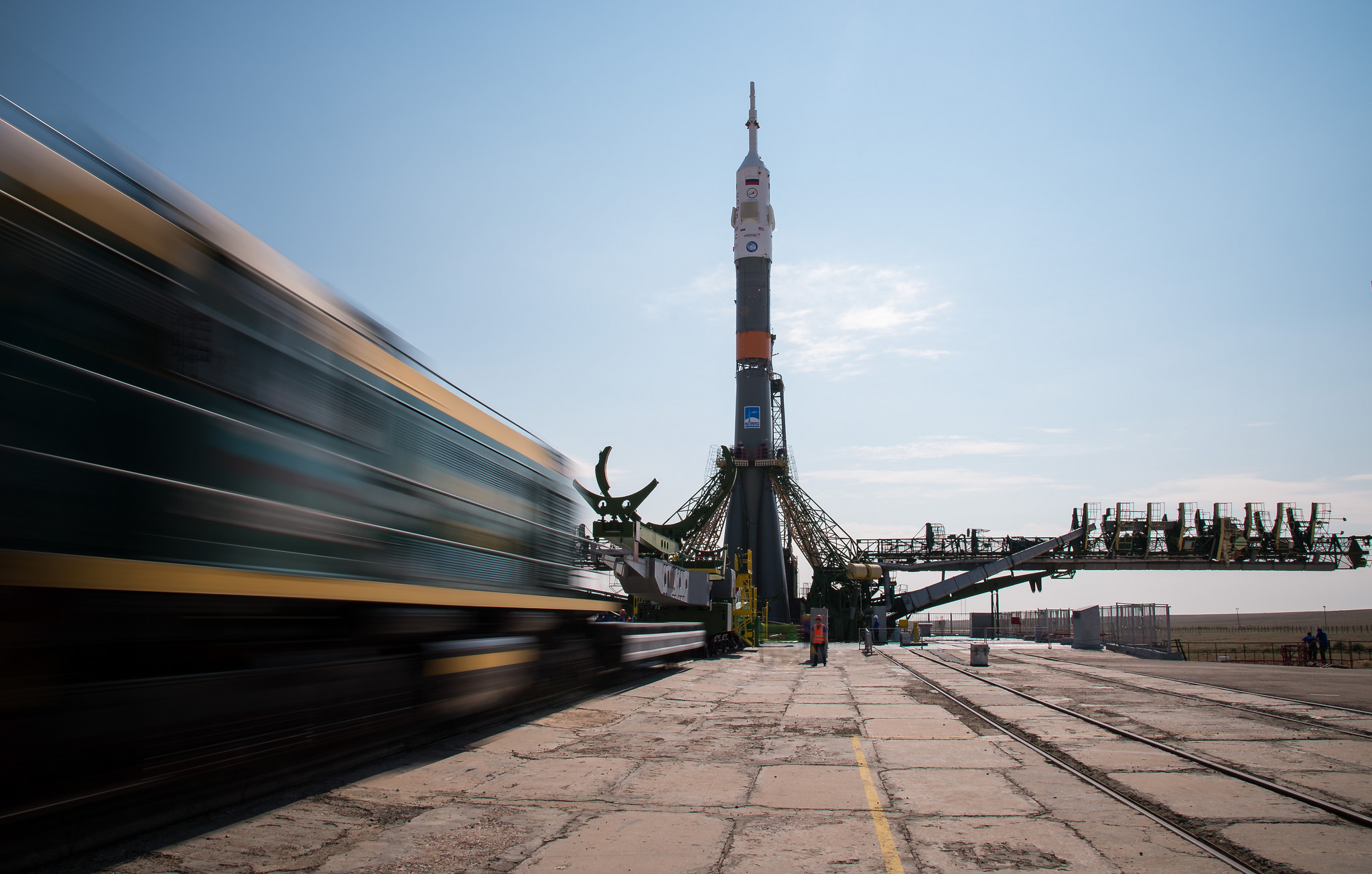
In the post-Space Shuttle world this camel-trafficked region serves as the launch site for all Russia and US human spaceflights, from the very same pad that Yuri Gagarin blasted off of in 1961. On Wednesday, at 7:36pm ET, the latest launch from the Baikonur Cosmodrome will carry Expedition 48—Soyuz commander Anatoly Ivanishin of Roscosmos, and engineers Takuya Onishi of the Japan Aerospace Exploration Agency and Kate Rubins of NASA—into space. They will spend about six months on board the International Space Station.

Read 4 remaining paragraphs | Comments
After 1.7 billion miles Juno nails its Jupiter orbit to within tens of miles

With a limited lifetime due to radiation, the spacecraft will get right to work.

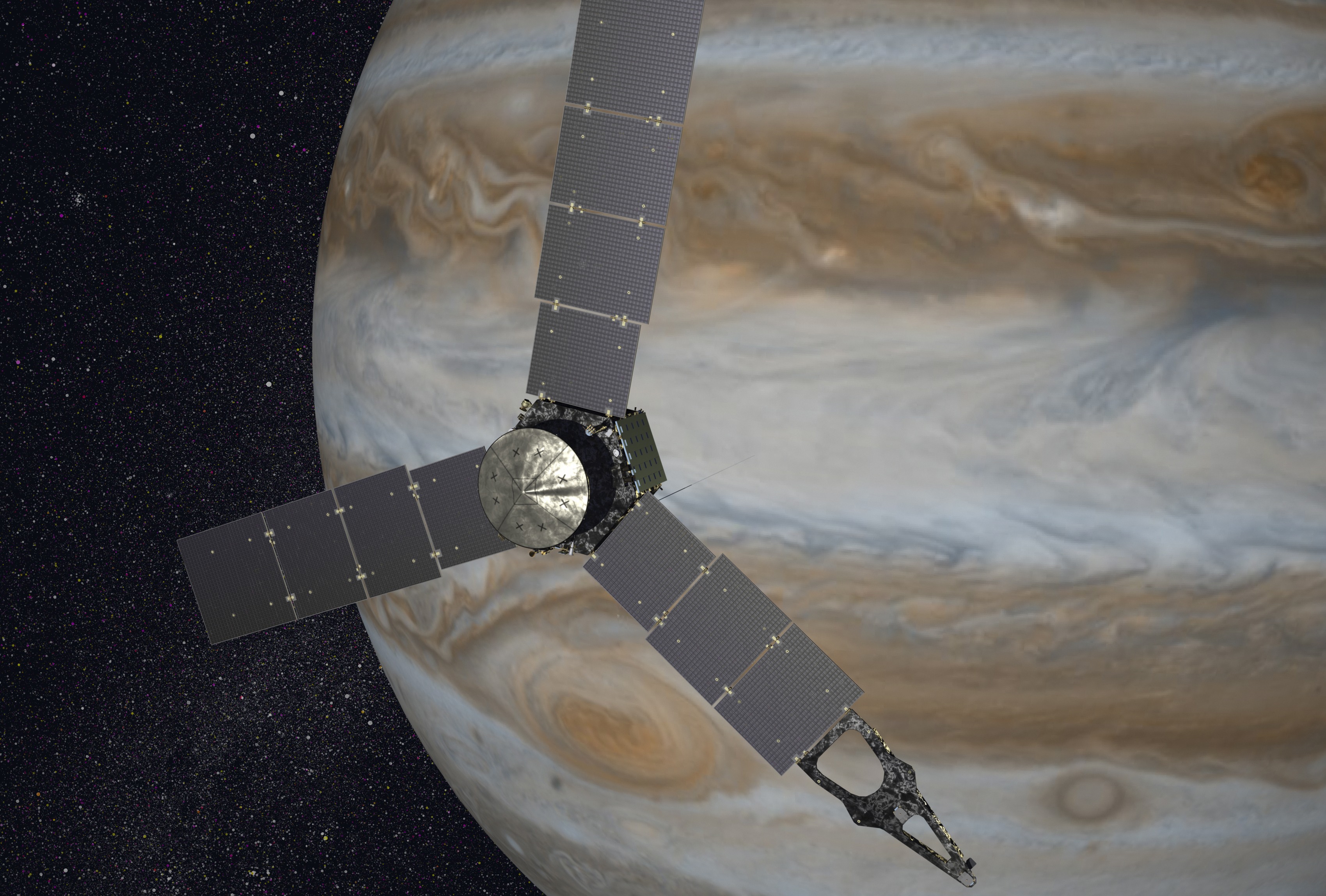
Traveling at a speed of 165,000 mph toward a swirling gas giant Monday night, the Juno spacecraft would have no second chances. Had its Leros 1b engine burned too long, Jupiter would have swallowed Juno into its gaseous maw. If the engine burned too short, the spacecraft would have zipped onward into space, lost into the inky blackness forever. But Juno needed no second chance late on the night of July 4th as its hardy little engine fired for a total 2,102 seconds, perfect to within one second, inserting the spacecraft neatly into orbit around Jupiter.

Back on Earth engineers at the Jet Propulsion Laboratory in California cheered heartily. During the last five years a team of 300 engineers have guided Juno along its path. Another 900 built and launched the spacecraft. Moments after the orbital insertion Scott Bolton, the mission’s principal investigator, saluted the team of engineers, telling them they were the “best ever.”  In his euphoria, Bolton added, “You just did the hardest thing NASA's ever done."

Perhaps not, but it is no small thing to spend the better part of a decade building a spacecraft to survive the harsh radiation of Jupiter, launch it across 1.7 billion miles of space over five years, and then drop it precisely where you want around a planet 2.5 times more massive than all the other planets in the solar system—combined. At the end of the day Juno hit a key hole a few tens of miles across.

Read 5 remaining paragraphs | Comments
Mars may have once had lots of moons, but soon it will be down to just one

New simulations may explain why only Phobos and Deimos remain around Mars today.

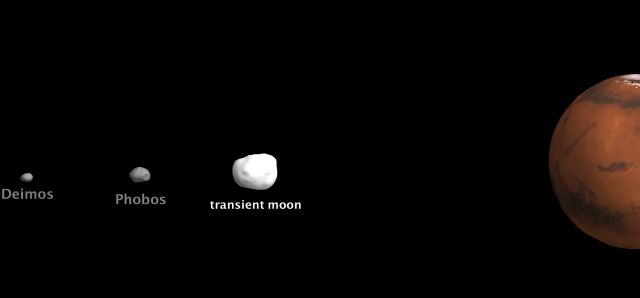
Mars may have once had a much larger moon that eventually fell into the red planet. (credit: Labex UnivEarths / Université Paris Diderot)

When a moon orbits a planet, everything is fine as long as the gravity holding the moon together exceeds the pull of the planet. However, if the moon gets too close, and the tidal forces of the planet exceed the gravitational bind of the moon, the satellite will break apart. This is known as the Roche limit. Fortunately for the Earth's Moon, this limit is just under 10,000km, and the satellite itself is nearly 385,000km away.

But this is not the case for the tiny Martian system of satellites. Phobos, the larger of the two Martian moons at 22km in diameter, is slowly falling toward Mars and will reach the Roche limit in about 20 million years. It will break apart thereafter into a spectacular ring. That will leave just Deimos, which is smaller and further out, as the last Martian satellite. It may be a lonely system then, but a new simulation suggests that Mars once had a very complex system of moons.

For a long time, scientists thought potato-shaped moons were probably captured asteroids, however their circular orbits at the equator argued in favor of another possibility—their formation from a giant impact billions of years ago. A very giant impact. The new research, published in Nature Geoscience, suggests a massive 2,000km proto-planet struck Mars in the past, resurfacing much of the red planet and kicking a mass of debris more than 100 times the mass of Phobos and Deimos into orbit.

Read 3 remaining paragraphs | Comments

Today’s the day: Juno faces perilous insertion into Jupiter orbit

A critical burn to allow the spacecraft’s capture begins at 11:18pm ET Monday.

Juno captured this view of the Jovian system on June 24th, as it approached. (credit: NASA)

Back in the early 2000s, scientists began planning how to design and build a spacecraft that could not only survive the voyage to Jupiter, but subsist in its hellish radiation environment long enough to make a careful study of the gas giant's composition and its mysterious interior. For the spacecraft, the radiation dosage during the 1.5-year science mission is equivalent to a patient sitting in a dentist's chair and being X-rayed every second of every day for three years.

Juno is now more than 850 million kilometers away from Earth. After all of that work, a spectacular launch and a deep space cruise, the fate of Juno comes down to tonight—can it successfully fall into orbit around the giant of the solar system?

Engineers at NASA's Jet Propulsion Laboratory in California have already sent a command to the spacecraft to initiate its autopilot mode. This kicked off a software program that will culminate on Monday night when the spacecraft's main engine, a Leros 1b built by Moog-ISP in England, fires for 35 minutes. That burn is scheduled to begin at 11:18pm ET (4:18am BST on July 5).

Read 2 remaining paragraphs | Comments

Adam Savage thinks NASA should get working on a backup plan for Earth

The builder developed a fondness for space after working with NASA engineers.

When we met Adam Savage on a Friday evening, the Mythbusters co-host was jazzed after spending much of the day at Johnson Space Center, where he got to hang out with engineers and technicians in the robotics and advanced space suit labs. Savage was visiting Houston to promote his new exhibit—The Explosive Exhibition—at Space Center Houston. But during his interview with Ars, he was just as happy to talk space. “This is totally a thing for me,” he explained, doffing his fedora.

Savage spent 14 years building and destroying stuff on the hit TV show Mythbusters. He was driven from an early age to work with his hands and explore the boundaries of human experience by testing, failing, and trying again. In this he feels some kinship with NASA, which he characterized as “a ritualized failure analysis organization.” Both Mythbusters and the space agency, he said, try to game out all of the ways in which something can fail to ensure overall safety.

“It feels very simpatico to me because when I look at NASA hardware I can tell that people built it,” Savage said. “That’s different from when I sit in a modern car. Most modern stuff is made by robots and machines. But there is a tactile element of NASA hardware that is super evocative. I wasn’t obsessed with NASA until I met NASA scientists making Mythbusters, and I realized they were treating me like a peer.” The TV show has visited NASA’s Ames Research Center in Mountain View, California numerous times to use the facility’s wind tunnels and its iconic Hangar One facility. They were welcomed with open arms.

Read 5 remaining paragraphs | Comments

No, the Earth’s jet streams are not spinning out of control

Sometimes outlandish claims about the changing climate are just that—outlandish.

Winds in the 250mb level of the atmosphere, as seen on June 29. (credit: earth.nullschool.net/modified by Ars)

There are plenty of reasons to be concerned about the Earth's climate, from rising seas to droughts and intense heat waves. But amidst these concerns there is the potential for hyperbole, and we saw some of that flare up during the last few days, when two protagonists put forward the idea that the planet's jet streams are spinning out of control.

One of the people making this claim was Paul Beckwith, a self-described "well-known climate science educator," who noted that the jet stream in the Northern Hemisphere has crossed the equator and joined up with the jet stream in the Southern Hemisphere. "Welcome to climate chaos," Beckwith wrote. "We must declare a global climate emergency." He then encouraged readers to donate to his site. Another person, Robert Scribbler, declared that the jet stream was now wrecked. These claims went viral.

It sounds terrible, of course, and we definitely need to be concerned with rising levels of carbon dioxide and other greenhouse gases playing havoc with global atmospheric circulations. But in this case, we can probably view these claims as a bit of hot air.

Read 2 remaining paragraphs | Comments

After Brexit comes Rosexitt: European scientists to end spacecraft’s life

Scientists hope to collect close-up data about comet right up until the very end.

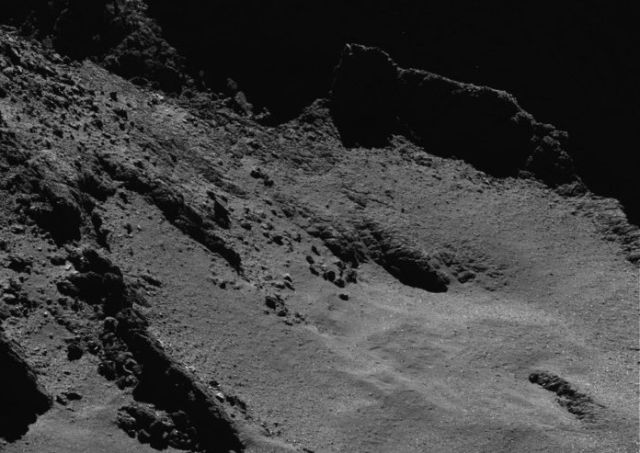
The Rosetta spacecraft will soon get too close to Comet 67P for comfort. In fact, it will crash into the comet. (credit: European Space Agency)

After launching 12 years ago and achieving its primary mission of reaching an orbit around Comet 67P/Churyumov–Gerasimenko, the aging Rosetta spacecraft will now die. On September 30, the European Space Agency says it will command Rosetta to crash into the comet it has been following since 2014.

Now at a distance of more than 850km from the Sun, Rosetta's two solar arrays cannot collect enough power to guarantee the spacecraft's heaters will keep it warm enough to survive. Instead of putting Rosetta into hibernation, which engineers believe is not survivable, Rosetta will follow its Philae lander to the surface of the comet.

The journey, at least, should prove fruitful. During the final hours of descent, Rosetta will attempt to capture some very-high-resolution images of the comet while collecting other data about 67P. Scientists hope communications with the spacecraft continue right up until the very end—when it crashes into the comet.

Read 1 remaining paragraphs | Comments

NASA’s supersized rocket passes a key test in northern Utah

The second qualification test of the SLS boosters was a noisy, fiery success.

Say what you will about the Space Launch System. It's expensive, costing so much that NASA can't really afford to build payloads to fly on it. The Senate specified the rocket to fly with components derived from the Space Shuttle expressly to preserve jobs that otherwise would have been lost following the shuttle's retirement. And the entirely expendable launcher uses 1970s technology while private companies are focusing on smaller, modern, and reusable rockets.

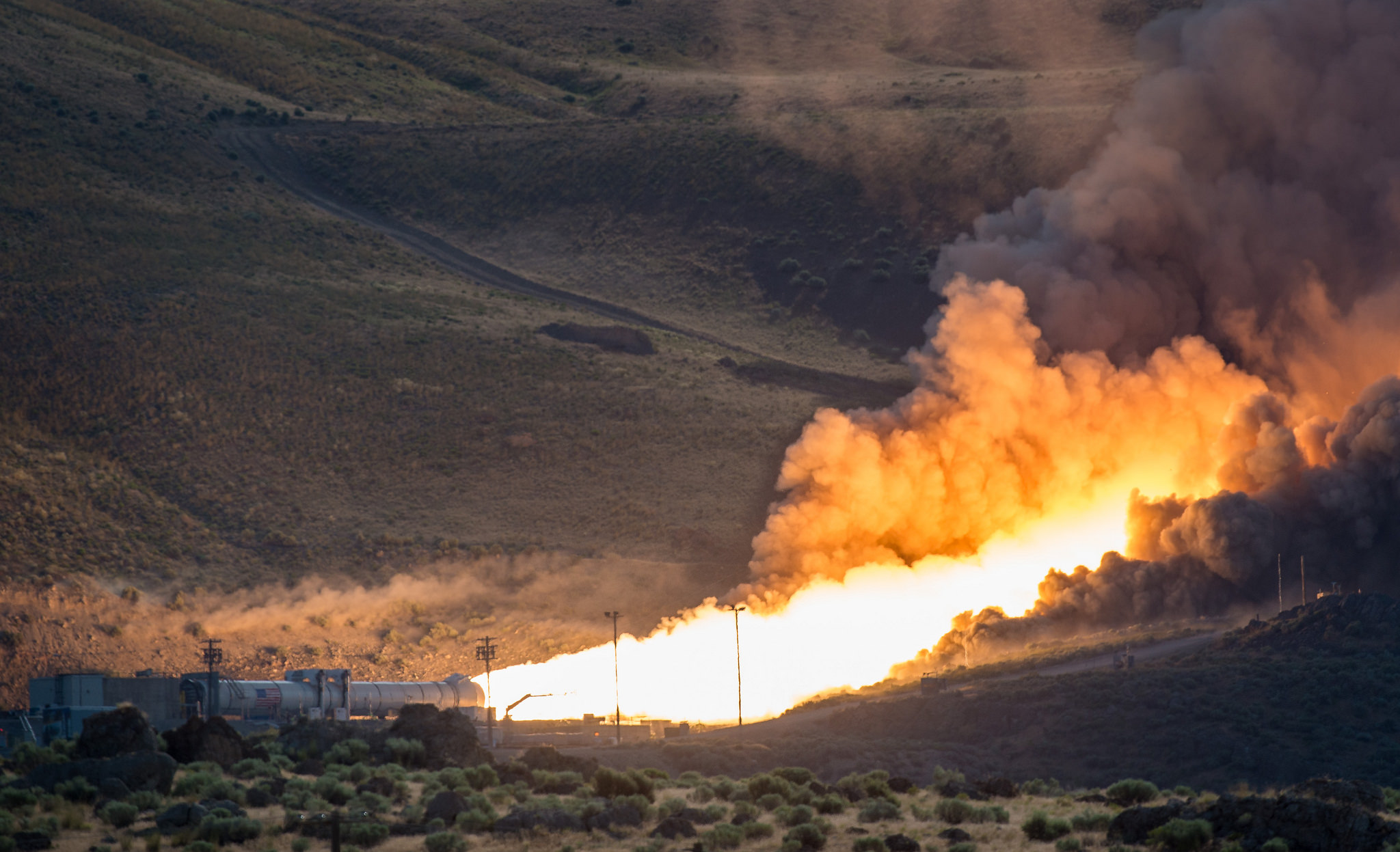
All of that, more or less, is true. But it is also undeniable that the Space Launch System, whenever it does fly, will be one hell of a firecracker. On Tuesday, the space agency offered a taste of that when it demonstrated the firing of one of the solid rocket boosters that will help blast the SLS rocket off of the launch pad.

These boosters will provide about 75 percent of the thrust needed to lift the rocket and its payload into low-Earth orbit. As implied by their name, the boosters burn a solid composite made largely of aluminum. During Tuesday's test, a single booster produced about 3.2 million pounds of thrust. By way of comparison, a Falcon 9 rocket with its nine engines produces about 1.7 million pounds of thrust.

Read 2 remaining paragraphs | Comments

China’s long march to the Moon began with a bang this weekend

The Asian country has embarked upon a long-term plan to colonize the Moon.

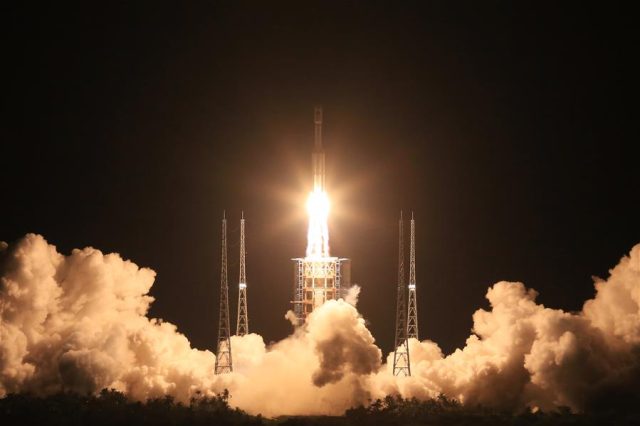
The Long March 7 rocket lifts off on Saturday from the Wenchang Satellite Launch Center. (credit: XInhua)

Until recently it was fairly easy to dismiss China’s space program. Yes, China is one of just three nations to launch humans into space, but its technology has always seemed highly derivative of Russian spaceflight architecture. And when a recent article raised the question of whether China might develop reusable rocket technology, one Ars reader offered an amusing yet perhaps not entirely untruthful response: “That depends on how good SpaceX's IT security is.”

After Saturday’s launch of the Long March 7 rocket from the new Wenchang Satellite Launch Center, however, such skepticism appears to be increasingly unwarranted. Although largely ignored by the Western world, the Chinese launch marks something of a defining moment for the giant of Asia, a moment when China firmly staked its position as one of the world’s great space-faring nations. More than that, it took a step toward equaling, or perhaps even surpassing, NASA one day.

The Long March 7 rocket does not immediately threaten NASA or the US launch industry, of course. With the capability to heft 13.5 metric tons to low-Earth orbit, it is roughly on par with the Falcon 9 and the Atlas V launch vehicles. And the Tiangong-2 space laboratory China intends to launch later this year is but a shadow of the International Space Station.

Read 12 remaining paragraphs | Comments

That time when Littlefinger and Lyanna Stark promoted a comet landing

European Space Agency released a short film in 2014 to hype the Philae landing.

A still image from the movie Ambition. (credit: European Space Agency)

Littlefinger, the conniving and vulpine Game of Thrones character who loves all the Stark women, got together with one of them two years ago to promote the European Space Agency's comet-chasing mission, Rosetta.

Aidan Gillen and Aisling Franciosi, who play Littlefinger and Lyanna Stark respectively, starred in the short film to hype the mission, which caught up to Comet Churyumov–Gerasimenko in 2014 and later sent the small Philae spacecraft to make a soft landing in November of that year. The movie, titled Ambition, is all the more chilling after Sunday's episode of Game of Thrones, in which Franciosi (Lyanna Stark) plays a key role in finally revealing the true parentage of Jon Snow.

In the short film, Franciosi seems to be some kind of a Jedi padawan in a far future Earth. As part of one lesson, Gillen recalls the Rosetta mission that had occurred in the distant past, explaining that it was about more a comet rendezvous. "We also wanted to show what was possible," Gillen's character explained.

Read 1 remaining paragraphs | Comments