Preliminary price tag on SpaceX’s Red Dragon mission: $300 million

SpaceX remains on a very aggressive schedule if it is to launch in 2018.

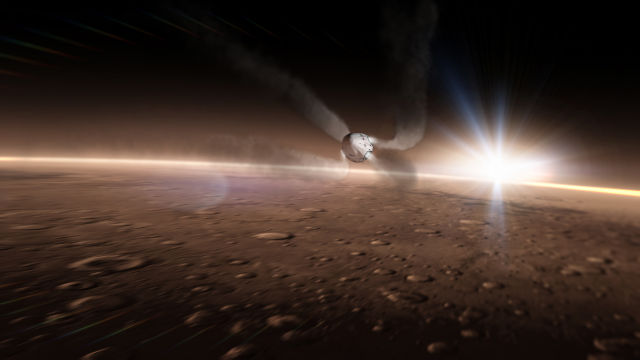
In this conceptual image, eight SuperDraco thrusters fire as a Dragon spacecraft enters the Martian atmosphere at supersonic speeds. (credit: SpaceX)

In April, when SpaceX announced an ambitious mission to land an uncrewed Dragon spacecraft on Mars by 2018, one of the biggest questions was how much the private rocket company would spend on this venture. Now we have a ballpark estimate: $300 million.

During a meeting of NASA's Advisory Council Tuesday, one of the agency's deputy associate administrators, Jim Reuter, provided an overview of NASA’s agreement with SpaceX, SpaceNews reports. NASA estimated that it would spend about $32 million on the mission, with SpaceX spending about 10 times as much.

The agency and the company have a Space Act agreement that bars the transfer of funds, but the agreement will allow NASA to assist SpaceX with some technical advice. NASA can also gather critical information about the Martian atmosphere and get tips on how to slow a large spacecraft descending toward the planet's surface. It's also likely that NASA, with its assets in orbit around Mars, will help facilitate communication between the Red Dragon and Earth.

Read 5 remaining paragraphs | Comments

Market doesn’t justify reusable launchers, expendable rocket makers argue

So what if SpaceX and Blue Origin are launching and landing. Can they profit?

Screen grab of the resuable rocket panel discussion. From left: Dan Dumbacher, Gary Payton, Doug Bradley, Ben Goldnerg and Tom Markusic. (credit: AIAA/LiveStream)

The US government and some of its major aerospace contractors have tried to tackle the problem of reusable rockets and spacecraft for several decades, from the DC-X to the space shuttle, with mixed success. Even after spending hundreds of billions of dollars on these technologies in development and flight costs, neither the government nor its traditional aerospace contractors have mastered the art of flying vehicles to space, recovering them, and turning them around for new missions quickly and at low cost.

During the last half year, however, both SpaceX and Blue Origin have begun to demonstrate these capabilities. Although much work remains to be done, Blue Origin has already flown a suborbital rocket four times, in relatively short order, with low turnaround costs. And SpaceX has recovered five orbital rockets at land and sea and expects to refly at least one of them later this year.

Monday evening in Salt Lake City, some aerospace industry officials sat down to discuss this new development. The panel at an American Institute Of Aeronautics And Astronautics forum on propulsion had a provocative title, “Launch Vehicle Reusability: Holy Grail, Chasing Our Tail, or Somewhere in Between?"

Read 12 remaining paragraphs | Comments

Sorry, Eileen Collins: Here’s why America is already great in space

Former Shuttle commander bemoans NASA’s woes while ignoring vibrant private industry.

Retired US Astronaut Eileen Collins arrives speak on the third day of the Republican National Convention on Wednesday. (credit: Jim Watson/AFP/Getty Images)

In the week or so since it became known that Eileen Collins would appear at the Republican National Convention on Wednesday night, the space community has buzzed with questions and concerns. A brilliant astronaut and the first woman to command a space shuttle, Collins has a sterling reputation among the flight directors, astronauts and engineers at NASA who worked with her. Why would she jump into the political fray, many asked? And for Donald Trump, of all people?

I felt the answer was pretty simple. Like a lot of astronauts Collins comes from a military background (she's a colonel in the U.S. Air Force), and therefore more likely to be conservative politically. Perhaps she had had discussions with the Trump people, and they endorsed her view that NASA should return to the Moon before going to Mars. In any case, it's not like she's the first former astronaut to take on politics (Hello, John Glenn and Harrison Schmitt).

So on a night when Ted Cruz stole the show at the convention for political observers, the four-minute speech given by Collins garnered the most interest among the space industry. Her remarks were largely a fairly standard call to restore some glory to America's space program, and she touched on how it has been unacceptable to rely on Russia for transport to the International Space Program for the last five years. America can, and must do better than that, Collins said.

Read 9 remaining paragraphs | Comments

What it was like to watch the last shuttle fly home—from space

Mike Fossum’s hands were shaking as he photographed the shuttle’s plasma trail.


As Mike Fossum floated inside the International Space Station with camera in hand, one thought kept coming back to him: Don’t screw this up. Two days earlier, he had said goodbye to the crew of Space Shuttle Atlantis. And not just any crew—the final crew. Chris Ferguson, Doug Hurley, Sandy Magnus, and Rex Walheim had all left and were strapped into their seats in preparation to re-enter Earth’s atmosphere. They would make a rare nighttime landing, offering Fossum an unparalleled opportunity to photograph the last shuttle to ever fly home.

If he didn’t screw it up.

Read 10 remaining paragraphs | Comments

SpaceX in 2016: Launching more with a better rocket that it can land [Updated]

Streaming tonight, next launch would be the company’s seventh in 2016.

Stream tonight's launch as it happens.

Update, 7/17 (10:45p ET): SpaceX will livestream its launch attempt (above) this evening at 12:45a ET. Our original story from 7/15 appears below.

One of the most persistent criticisms of SpaceX has been the rocket company's inability to meet its launch commitments. Talk to any of Elon Musk's competitors in the rocket and spacecraft business, and they will all say the same thing—SpaceX isn't meeting the demands of its customers. Too much pizzazz, too little substance, and so on.

To some extent, this jealousy-tinged criticism is valid. In 2014, the company had about a dozen missions on its books, and it launched six times. Last year the company had as many as 17 launches planned, but an accident on June 28, 2015 forced it to stand down for nearly the entire second half of the year. SpaceX ended up making six successful launches in 2015. However, this year the company is off to a good start with six successful missions completed so far and a seventh launch planned for 12:45am ET Monday (5:45am BST) from Cape Canaveral Air Force Station in Florida.

This flight of SpaceX's Falcon 9 rocket seeks to deliver the Dragon spacecraft to the International Space Station with its payload of 1.7 tons of supplies as well as an International Docking Adapter. This adapter will allow crewed versions of the Dragon Spacecraft and Boeing's Starliner to perform automated rendezvous and docking maneuvers with the station beginning in late 2017 or early 2018.

Read 4 remaining paragraphs | Comments

A Cold War mystery: Why did Jimmy Carter save the space shuttle?

Ars solves the mystery by going directly to a primary source—the president himself.

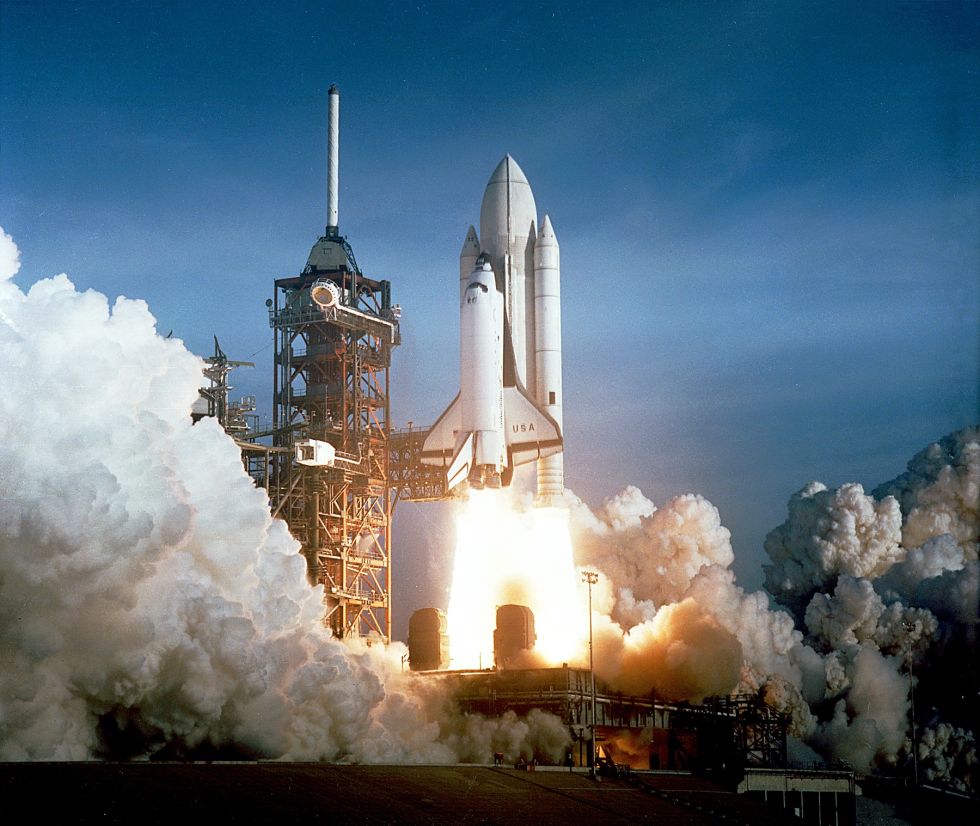
The first launch of the space shuttle finally came on April 12, 1981. (credit: NASA)

We’d been chatting for the better part of two hours when Chris Kraft’s eyes suddenly brightened. “Hey,” he said, “Here’s a story I’ll bet you never heard.” Kraft, the man who had written flight rules for NASA at the dawn of US spaceflight and supervised the Apollo program, had invited me to his home south of Houston for one of our periodic talks about space policy and space history. As we sat in recliners upstairs, in a den overlooking the Bay Oaks Country Club, Kraft told me about a time the space shuttle almost got canceled.

It was the late 1970s, when Kraft directed the Johnson Space Center, the home of the space shuttle program. At the time, the winged vehicle had progressed deep into a development phase that started in 1971. Because the program had not received enough money to cover development costs, some aspects of the vehicle (such as its thermal protective tiles) were delayed into future budget cycles. In another budget trick, NASA committed $158 million in fiscal year 1979 funds for work done during the previous fiscal year.

This could not go on, and according to Kraft the situation boiled over during a 1978 meeting in a large conference floor on the 9th floor of Building 1, the Houston center’s headquarters. All the program managers and other center directors gathered there along with NASA’s top leadership. That meeting included Administrator Robert Frosch, a physicist President Carter had appointed a year earlier.

Read 35 remaining paragraphs | Comments

NASA’s Solar System program is just about the greatest thing ever

Celebrate NASA’s amazing record with space probes. Don’t take it for granted.

NASA Planetary Science Division Director Jim Green (left) and other key science officials celebrate Juno's orbital insertion on Monday night. (credit: NASA)

Carlos Entrena, one of the bright young minds in aerospace, asked a fair question last week in the wake of the Juno mission's successful insertion into orbit around Jupiter: "So why is a spacecraft doing a pre-planned burn a big deal again?" He was right, it did seem a relatively straightforward maneuver.

Another young scientist, Christopher Stelter, offered a series of answers that put the Juno spacecraft's 35-minute engine burn into perspective. Among the reasons, he said, was that, "Most burns a spacecraft does are not critical. If there's a glitch, you can try again later. Not this time. And it's a very long burn."

This exchange captured my attention because NASA in recent years has made the extremely difficult—flying robotic probes throughout the Solar System—look easy. The agency's record of achievement appears more impressive still when compared to other space agencies. In reality, no other country or space agency can really be considered NASA's peer, especially when it comes to Mars and beyond. (Admittedly, the Soviet Union does have a better record with Venus).

Read 7 remaining paragraphs | Comments

China’s new radio observatory is 200 meters larger than Arecibo

With the FAST telescope construction complete, next comes first light in September.

This photo taken on June 27, 2016 shows the FAST at night. (credit: Xinhua photo/Liu Xu)

For half a century, the National Science Foundation's Arecibo telescope, sited in Puerto Rico, has been the world's largest radio observatory. It measures 305 meters across and among other major discoveries has confirmed the existence of neutron stars. The observatory also featured prominently in the movie Contact.

But now a Chinese observatory has superseded Arecibo. According to China's Xinhua news service, installation of the 500-meter FAST radio telescope is complete, with the last triangular reflector put into place. The observatory is expected to begin observing the heavens in September.

China has spent $180 million on the telescope since beginning construction in 2011 and will devote the next couple of years to testing and refining the massive instrument. After Chinese researchers receive the initial opportunities to use the telescope the government plans to open it to scientists worldwide, said Peng Bo, director of the NAO Radio Astronomy Technology Laboratory.

Read 2 remaining paragraphs | Comments

Juno was a success—but there is precious little coming after it

Advisor claims Obama “revitalized” planetary science, but the opposite is true.

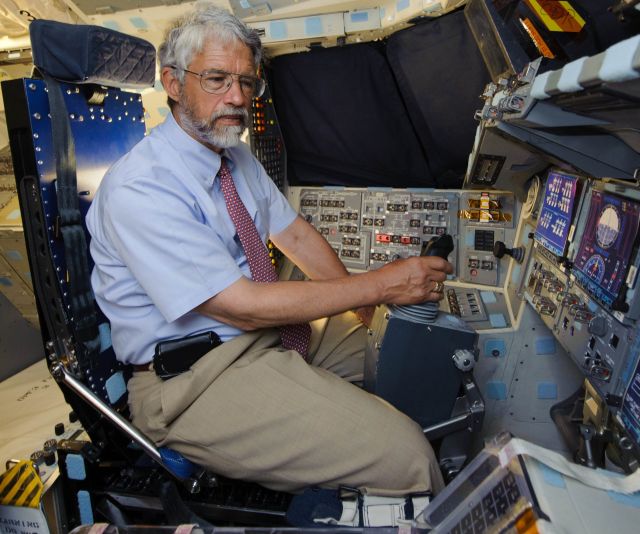
John Holdren, President Obama's science advisor, sits in the commander's chair of space shuttle Discovery in 2011. (credit: NASA)

Juno's insertion into orbit around Jupiter on July 4th made the US proud of its space agency, and NASA's planetary exploration program has certainly had a nice run during the last year. New Horizons revealed Pluto, and now a spacecraft will soon deliver new insights about the Solar System's largest planet.

But the party is just about over. NASA, and more particularly the Obama administration, have failed to invest in future planetary science missions. Earlier this year, I had a chance to catch up with Casey Dreier, director of space policy for The Planetary Society, which as its name implies advocates for increased exploration of the Solar System. Although generally an ally to the science-minded Obama administration—the society's chief executive Bill Nye often hobnobs with the president—Dreier did not mince words about the The Planetary Society's views.

"I think with President Obama you have a legacy of a missed opportunity to really build on the foundation that he inherited, which was a fleet of spacecraft from Mercury going out to Pluto," Dreier told me. "He had an opportunity to build political bridges. There’s a very high level of bipartisan support for that, and a huge amount of public engagement."

Read 10 remaining paragraphs | Comments

Another good reason to sail the seas of Titan—life may exist there

Research finds prebiotic chemistry that could serve as a scaffold for life.

Come and sail the methane seas of Titan! (credit: NASA)

Saturn's moon, Titan, is one of the most exotic places in the Solar System, with large lakes filled with nearly pure, liquid methane, a thick atmosphere that provides surface pressures similar to those on Earth, and very cold temperatures of about -180 degrees Celsius. Aside from Earth, Titan is the only body in the Solar System with liquid on its surface.

This has always tantalized astrobiologists who have wondered about the possibility of some kind of unknown life living in those methane lakes. Now scientists have found some solid theoretical reasons to believe that some of the complex chemistry in Titan's atmosphere could support life on the world.

Citing experimental and observational data, the researchers note the abundance of hydrogen cyanide in Titan's atmosphere. This is a hydrogen-bonding molecule that may combine with other molecules on the surface to form polymers, including polyimine. Using quantum mechanical calculations, the scientists demonstrated that polyimine has electronic and structural properties at very cold temperatures that could potentially facilitate prebiotic chemistry in conditions like those on the surface of Titan, especially in tidal pools near the large seas.

Read 3 remaining paragraphs | Comments