The most powerful camera in deep space just sent 1,000 more pics back to Earth

The HiRISE camera on the Mars Reconnaissance Orbiter continues to dazzle.

It has now been nearly a decade since the HiRISE camera arrived in orbit around Mars and began taking high-resolution images of the Red Planet. Tucked aboard the Mars Reconnaissance Orbiter, HiRISE has a telescope aperture of 0.5 meter, making it the most powerful camera ever sent into deep space, with a maximum resolution of about 0.3 meter/pixel. This has allowed NASA to spy on its Curiosity and Opportunity rovers from space.

The camera was sent to Mars to help scientists identify regions of the Red Planet that would be good candidates for sample return missions (which NASA hopes to fly sometime in the 2020s), as well as possible landing sites for humans on Mars (no earlier than the late 2030s, for NASA). The instrument has also allowed scientists to characterize the surface of Mars and better understand its evolution over billions of years. Finally, the high-resolution images also helped dispel pareidolia such as the "face on Mars."

The Mars Reconnaissance Orbiter has now completed about 50,000 orbits around Mars, taken nearly 250,000 images, and returned nearly 300 terabits of data about the planet to Earth. It has survived well past its original 5.5-year mission, which was supposed to end in late 2010.

Read 1 remaining paragraphs | Comments

No major US hurricanes in 11 years. Odds of that? 1-in-2,300.

Earl is dead, now, as yet another hurricane has avoided the United States.

Hurricane Earl on Wednesday, shortly before it made landfall in Belize. (credit: NOAA)

On Thursday some meteorologists (who are by nature a cheesy lot) had an opportunity to channel their inner Dixie Chick and sing "Goodbye Earl" as yet another hurricane went into the Yucatan Peninsula to die. Most of the rest of the United States yawned—another hurricane in the Atlantic, and no harm done.

But the hurricane was remarkable precisely because of this. Earl, which attained a maximum wind speed of 80 mph before striking Belize, marked another in a long line of hurricanes that have formed in the Atlantic basin—the Atlantic Ocean, Caribbean Sea, and Gulf of Mexico—but have not affected the United States.

Consider some of the following statistics: the last hurricane to reach the Gulf of Mexico was Ingrid in September, 2013. The current, nearly three-year-long drought for the Gulf has not been equaled since at least 1851. The drought in hurricanes that make Florida landfalls is even more pronounced. The Sunshine State, which juts into the Atlantic Ocean like a lightning rod for tropical weather, has not been hit by a hurricane since Wilma (2005). Earl was in fact the 67th Atlantic hurricane in a row to not make landfall in Florida, according to hurricane scientist Phil Klotzbach. The previous record was a mere 33 hurricanes, a streak between Hurricanes David (1979) and Elena (1985).

Read 3 remaining paragraphs | Comments

Trump: “Look at your space program… We’re like a third world nation”

Trump appears to have little to no space policy at all.

Republican presidential nominee Donald Trump leaves after speaking during his campaign event on August 3, 2016 in Daytona, Florida. (credit: Getty Images)

During a brief, unofficial Reddit AMA one week ago, the Republican nominee for president of the United States, Donald Trump, had kind words for NASA and US space policy. “Honestly I think NASA is wonderful! America has always led the world in space exploration,” Trump responded to a question on NASA's role in his administration.

Evidently Trump no longer feels that way. During a "town hall" Wednesday in Daytona Beach, Florida, about 75 miles up the coast from Kennedy Space Center, the presidential candidate offered some extemporaneous remarks (see video) about America's progress in space. "By the way, look at your space program, look at what's going on there," he said. "Somebody just asked me backstage, 'Mr. Trump, will you get involved in the space program?' Look what's happened with your employment. Look what's happened with our whole history of space and leadership. Look what's going on folks. We're like a third world nation."

Somehow during the last week, when NASA demonstrated progress with its SLS rocket, a US company received a license to make the first-ever private launch to the Moon, SpaceX successfully tested a rocket that landed on a boat, and NASA's Juno spacecraft reached the halfway point of its first orbit around Jupiter, America's space enterprise has gone from always leading the world to being worthy of a developing country.

Read 1 remaining paragraphs | Comments

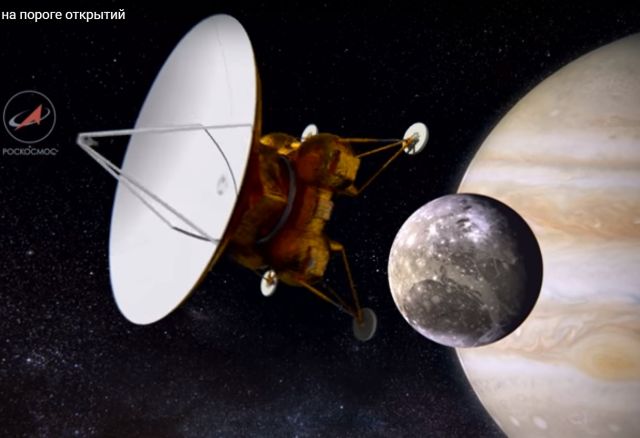
Russia says it’s going to send a lander to the solar system’s largest moon

In a new video, Russian engineers outline a daring plan to land on Ganymede.

Screen capture of video showing a Russian spacecraft approaching the Jovian moon Ganymede. (credit: Roscosmos)

After years of pressure from Congress and the scientific community, NASA has finally begun formal mission planning to send both an orbiter, possibly launching as early as 2023, and a follow-up lander mission to the Jovian moon Europa. But the US space agency may not be alone in sending probes Jupiter's moons. Russia now says it is going to Ganymede.

In a promotional video uploaded to YouTube, engineers from the Russian space agency, Roscosmos, discuss a proposed orbiter and lander mission to the largest moon in the solar system. Specific dates are not discussed for this "Laplace-P" concept, but the Russians have previously targeted a launch date of 2023, and the video suggests a launch could come in the next decade. Although the commentary is in Russian, the video appears to suggest that Ganymede may be as good (or better) candidate for life than Europa. Both moons are believed to have large subsurface oceans, but NASA scientists generally believe that Europa's large ocean, which is relatively near the surface and has a rich internal heat source, is likely more conducive to life.

Despite the video, it is not clear how "real" the Laplace-P mission actually is. For example, Russia has talked repeatedly about building a permanent lunar base in the 2030s, but the country hasn't made much progress toward that goal. Moreover, the Russian agency's planetary exploration program has somewhat been in state of a shambles in recent decades.

Read 2 remaining paragraphs | Comments

The federal government just approved first private mission to the Moon

Before blazing a trail to the Moon, company had to cut a regulatory trail through DC.

The Outer Space Treaty requires countries to “authorize and continuously supervise" the activities of space missions under their jurisdiction, including those of commercial companies. In the United States, the Federal Aviation Administration carries out those duties with regard to private spaceflight, and things have worked well enough.

But now a number of companies, including SpaceX with its Red Dragon mission, are seeking to push beyond Earth orbit, which has been the traditional boundary for commercial activity. Perhaps the biggest of the many questions this raises is how permissive the federal government would be regarding this new commercial interest.

The early answer seems encouraging. The first company to apply for a commercial space mission beyond Earth orbit has just received approval from the federal government. As part of the Google Lunar X Prize competition, Moon Express intends to launch a small, single-stage spacecraft to land on the Moon by the end of 2017.

Read 7 remaining paragraphs | Comments

SpaceX HR chief: “It’s a myth” that our employees are overworked

Despite the long hours, SpaceX received 39,000 applications for internships in 2015.

If you want to fly Dragons, you've got to get close to the fire.

In recent years, former SpaceX employees have said that the company forced them to work long hours for relatively low pay. Some even filed lawsuits alleging that the Hawthorne-based rocket company violated California labor law. What seems clear is that the rocket company is a demanding employer, hiring the best and brightest and expecting them to work hard toward solving some very difficult problems—like landing rockets on boats in the ocean.

However, during a revealing Reddit AMA on Tuesday with Brian Bjelde, head of human relations at SpaceX, the engineer pushed back against the notion that the company overworks its employees. "We recruit people who are incredibly driven by our mission, but it’s a myth that most of our employees are working 100 or even 80 hour weeks on a regular basis," Bjelde wrote. "Sometimes you have incredibly tight schedules that you need to keep, and that just goes along with launching rockets. But we want our employees to be productive over the long term and that means working at a pace that’s sustainable."

According to Bjelde, SpaceX turnover rates are "below average" for the industry, although he didn't specify the rate. "We have lots of employees, like me, who have been here more than 10 years and have made a fantastic career with SpaceX!" he wrote. "Getting to Mars is a long term mission so we seek to attract employees, and retain them, for the long term."

Read 3 remaining paragraphs | Comments

Tiny rocket company aims for 100 launches a year—and it just might succeed

Vector Space Systems completes a successful test flight and has its first customer.

Alone in the Mojave desert, the tiny rocket stood barely as tall as a basketball goal backboard. Launch control was a laptop inside a nearby bunker, and the small gathering of aerospace engineers and investors seemed almost like a rocket hobby club as it watched the vehicle soar to about 5,000 feet before parachuting back to Earth. But this scene may have represented something much more than that. With its small-scale test Saturday, the company Vector Space Systems took another step toward upending the rapidly expanding small satellite launch market.

Not since the Germans and their V-2 rockets during World War II has anyone launched more than a few dozen of the same rockets per year. Now, within about five years Vector intends to launch as many as 100 of its 13-meter-tall Wolverine vehicles annually, with a capability to put a 50kg satellite into low-Earth orbit. The company aims to fill a niche below the current generation of launchers being developed by companies such as RocketLab and Virgin Galactic, with rockets capable of delivering 200 to 250kg satellites to low-Earth orbit.

So far, it seems like a good bet. On Tuesday morning, Vector announced that it has acquired its first customer, Finnish-based Iceye, to conduct 21 launches of the company’s commercial synthetic aperture radar satellite constellation. “Getting your satellite into orbit is one of the biggest challenges for new-space companies, but there just isn’t the launch capacity right now,” Iceye Chief Executive Rafal Modrzewski said in a news release.

Read 7 remaining paragraphs | Comments

NASA spaceflight chief: “Amazing time” for building rockets at the agency

Development of monster rocket proceeding largely on schedule—so far.

For most of the last five years, NASA’s space launch system has been largely a PowerPoint rocket, consisting of designs on computers and disparate hardware in various stages of development across the United States. But now the massive SLS rocket is starting to come together, and senior NASA managers are optimistic about its future.

“This is an amazing period of time in US spaceflight,” Bill Gerstenmaier, chief of human spaceflight for NASA, said last week during a meeting of the agency’s advisory council. “I’m starting to see a real shift from just kind of hardware development to almost a flight cadence. The volume of work is just amazing.” He added that with “roughly” two years to go before the first launch of SLS and the Orion spacecraft, the agency is beginning to test flight hardware.

Barring further delays, the maiden launch of SLS will occur between September and November 2018. Until now NASA has been mostly designing and building individual components of the massive rocket, which will have an initial capability to heft 70 metric tons to low-Earth orbit but may eventually grow into a 130-ton rocket. However, now the focus is turning toward testing that hardware and, later next year and in 2018, beginning to integrate it for launch.

Read 8 remaining paragraphs | Comments

Burn, baby, burn: SpaceX test fires a rocket previously flown in May

The booster performed well, raising chances of a first reuse flight this year.

Landed Falcon 9 first stage test firing

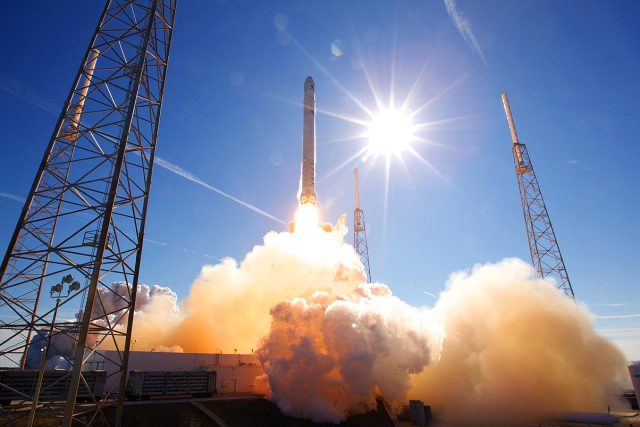
On Thursday, SpaceX took another step toward reusing rockets when it fired the nine engines on the first stage of a Falcon 9 booster it launched in May. The company released video of the full-duration engine firing, which mimicked the length of a first-stage burn toward orbit, conducted at its test site in MacGregor, Texas.

This particular booster, which launched a Japanese communications satellite to geostationary transfer orbit on May 6, will not be re-flown. According to Spaceflight Now, the company designated it as a reference vehicle because it weathered extreme temperatures during its reentry into Earth's atmosphere. The rocket will undergo additional tests as engineers determine the readiness of flown boosters for additional flights into space.

This test plan is part of SpaceX's plans to re-fly the first booster it landed at sea, the rocket it used in April to launch a cargo delivery mission to the International Space Station. That first stage had an easier ride back to the surface because it boosted a payload into low-Earth orbit, rather than the much higher geostationary altitudes common for communications and spy satellites.

Read 2 remaining paragraphs | Comments

A new, independent review of the Orion spacecraft is pretty damning

The capsule is over budget and may need seven more years before flying crews.

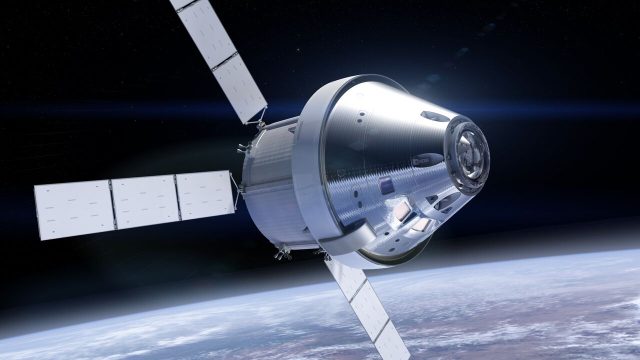
NASA's Orion spacecraft may first carry crew into space in 2023. (credit: NASA)

At the request of Congress, the nonpartisan US Government Accountability Office reviews the finances and management of federal programs, and this week it released a study critical of NASA’s crew capsule, Orion. Most worryingly, the 56-page report (PDF) regularly draws parallels between the Orion program and another large NASA project, the James Webb Space Telescope. The successor to the Hubble Space Telescope is notorious for ballooning from a 10-year, $500 million project to a 20-year, $8.8 billion (£6.7 billion) instrument that may finally launch in 2018.

Although Orion has not yet experienced such dramatic increases in costs, the spacecraft is now into its second decade of development. NASA estimates that it will spend a total of $16 billion (£12 billion) to ready Orion for its first crewed flight in April 2023. However, the GAO review, signed by Director of Acquisition and Sourcing Management Cristina T. Chaplain, did not find these numbers to be reliable.

The federal auditing agency based this conclusion on the fact that only a handful of NASA’s methods for estimating costs and schedule were consistent with “best practices.” Moreover, the GAO found, in making a number of its estimates, NASA appears to be relying too heavily on data analysis from the primary contractor for Orion, Lockheed Martin. In regard to Orion’s cost and schedule estimates, then, the GAO report concludes, “They do not fully reflect the characteristics of quality cost or schedule estimates and neither estimate can be considered reliable.”

Read 10 remaining paragraphs | Comments