How much will SLS and Orion cost to fly? Finally some answers

Production and operations costs of $2 billion or less annually would be manageable.

Enlarge / Bill Hill, manager of exploration systems development for NASA, speaks during a social media event Thursday at Michoud Assembly Facility in Louisiana. (credit: Eric Berger)

One of the biggest criticisms of NASA’s Space Launch System rocket and Orion spacecraft is that they will be too expensive to fly. Namely—while the large rocket and sizable capsule appear to be more-than-capable vehicles that could form the core of a deep-space exploration program—will there be any money left after producing them for NASA to actually go and explore? Until now, this has been a question the space agency has offered only vague assurances about.

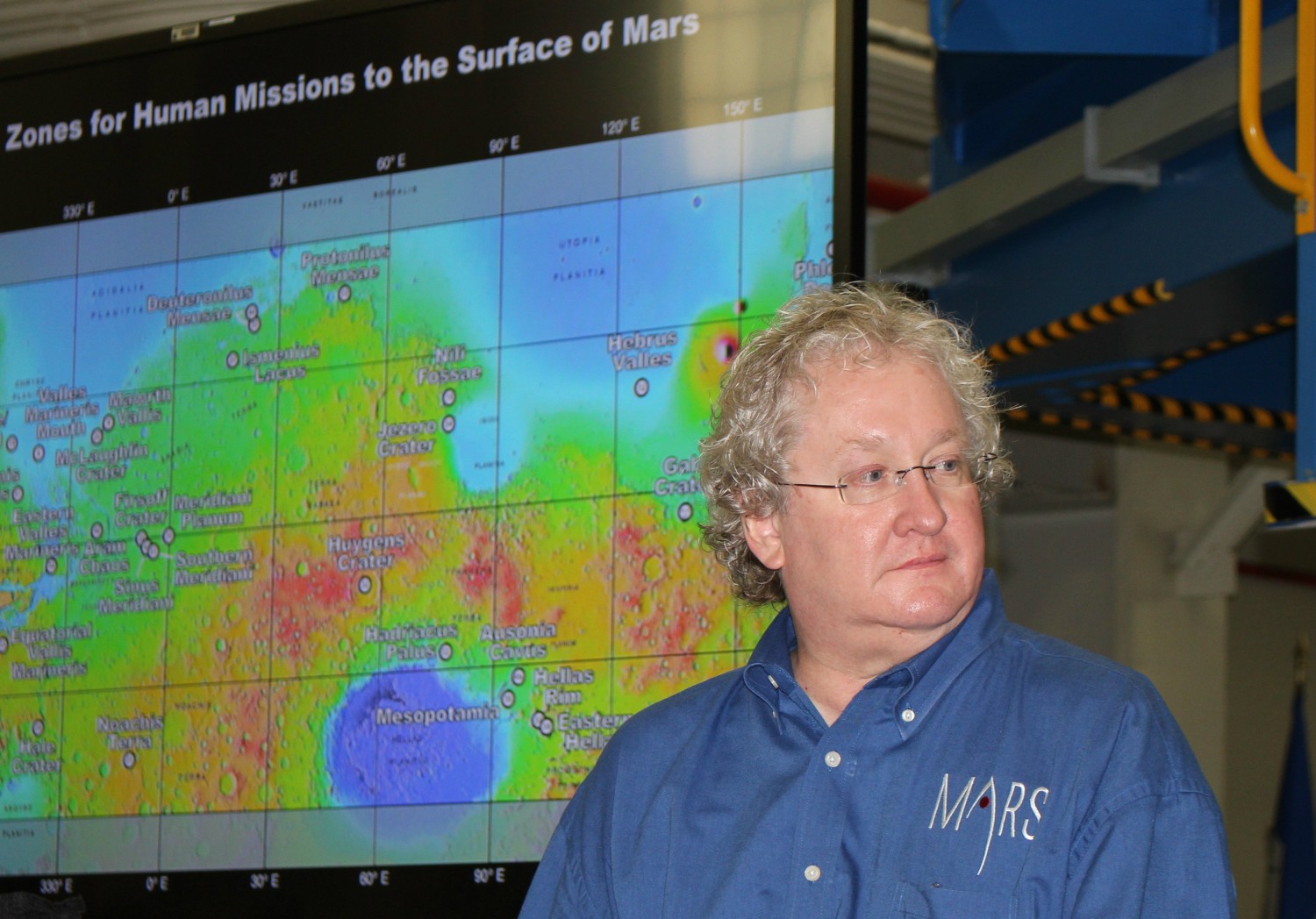
But on Thursday, when Ars sat down to interview NASA’s Bill Hill inside the Michoud Assembly Facility, where the SLS core stage and Orion are assembled, the NASA manager was notably forthcoming. “We’re just way too expensive today,” Hill acknowledged. “It’s going to take some different thinking and maybe a little bit more risk taking than what we’re wanting to do today.”

Hill should know. As deputy associate administrator for exploration systems development, he is the NASA headquarters official responsible for the development of SLS, Orion, and the ground systems at Kennedy Space Center. Hill said he has given managers of each of those three programs some targets for production and operating costs once the vehicles move out of the development phase and into production.

Read 9 remaining paragraphs | Comments

He must be serious about Mars: Elon Musk invests $2 billion in carbon fibers

The lightweight materials will increase the amount of payload a rocket can carry.

(credit: SpaceX)

SpaceX appears to be betting big on carbon fiber composites, which could increase the capacity of its future rockets to get people and supplies into space—and eventually to the surface of Mars. According to a report in Nikkei Asian Review, SpaceX has signed an agreement with Toray Carbon Fibers estimated to be worth $2 billion to $3 billion. The total price and delivery dates have yet to be finalized.

It is not immediately clear exactly when, and in which launch vehicles, these lightweight composites will be employed by SpaceX. But the company is not alone in its interest—NASA and other aerospace companies have been experimenting with the materials because of their potential to increase the amount of payload that can be carried by a rocket. They could also lower overall manufacturing cost.

The scale of the deal seems telling, however. If the value of the deal as reported is correct, in the billions of dollars, it seems probable that the carbon fiber composites would be used in SpaceX's proposed Mars Colonial Transporter rocket. This is the very large (but still under development) rocket the company plans to use to transport humans to Mars. SpaceX is already far along in the production of its Falcon Heavy rocket, which is based on the Falcon 9 core stage. The first stage of the Falcon 9 rocket, which SpaceX has successfully been landing this year, has tank walls and domes built from an aluminum lithium alloy. (Ars has reached out to SpaceX for comment on this story and will update accordingly).

Read 2 remaining paragraphs | Comments
Louisiana’s 1,000-year floods inundated 80,000 homes and businesses

4 trillion gallons of water. 20,000 rescues. Worst Louisiana flooding since Katrina.

It is difficult to know where to begin with the historic flooding in Louisiana during the past week. There is the sheer volume of water itself—based on rainfall accumulations, an estimated 4 trillion gallons of rain fell across southern Louisiana from the middle of Thursday through Saturday morning. That is roughly the same amount of water discharged by the Mississippi River into the Gulf of Mexico over the course of 80 days.

The rains hit hardest just to the east of Baton Rouge in Livingston Parish, which straddles Interstate 12 and is home to about 130,000 people. Some state officials have estimated that as many as 70 percent of the homes and businesses in this parish—more than 30,000 homes—were flooded. Across the state, officials say as many as 80,000 structures may have flooded. Some 20,000 people had to be rescued from flooded homes and vehicles. Very early damage estimates pegged the storm at $1 billion to $2 billion. At least seven people have died.

Area roadways were also hit extremely hard. The state's Department of Transportation and Development estimates that 30 state roads were washed out, and thousands of miles of state roads were under water as water levels rose on Sunday. Some 1,400 bridges will need to be inspected, as well. From Saturday through Monday large chunks of Interstate 10 and 12, which cross the southern tier of Louisiana, were closed due to floodwaters. As of Tuesday morning, parts of Interstate 10 remained closed due to flooding.

Read 5 remaining paragraphs | Comments

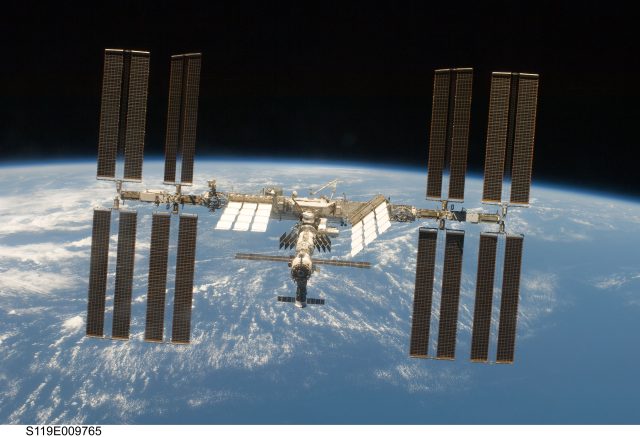
Space station crew may drop to five because of Russia

NASA confirms that Roscosmos may drop back from three cosmonauts to two on station.

(credit: NASA)

In 2009, following a series of space shuttle missions to complete major portions of the International Space Station, the crew size aboard the orbiting laboratory expanded to six. The number of crew members aboard the station has, more or less, remained steady since then, with Russia providing half the crew while NASA and its international partners provide another three astronauts.

But, in a surprise announcement, Russia is considering scaling back its crew complement from three to two. According to Russian media reports, Sergei Krikalev, the director of human programs for Roscosmos, said the move was made to lower Russia's ongoing costs to service the station. By reducing the number of its crew members, Russia will need to fly fewer Progress cargo ships, which deliver food and supplies to the Russian side of the station.

Roscosmos already spends considerably less on station operations than NASA does. Russian media report that Roscosmos plans to spend about $4.1 billion from 2016 through 2025 for station maintenance. That's just a little more than NASA's annual expenses for station operation and transportation, which were $3.7 billion in fiscal year 2016.

Read 7 remaining paragraphs | Comments

SpaceX seeks to continue its hot streak with tonight’s Falcon 9 launch

With an upgraded rocket, SpaceX wants to show customers it can launch frequently.

(credit: SpaceX)

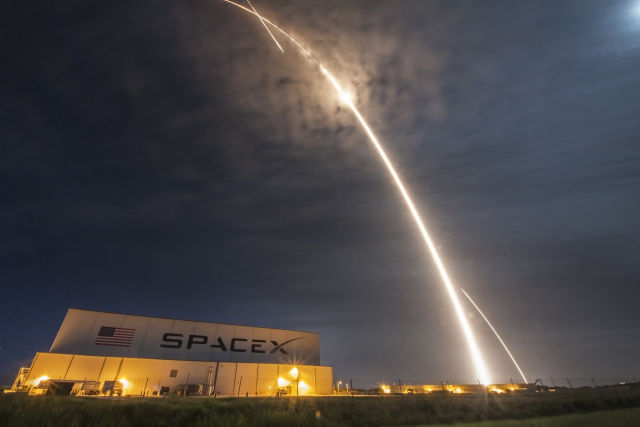
SpaceX hopes to continue increasing the frequency of its rocket business with a Sunday launch. The two-hour launch window for the company's Falcon 9 rocket opens at 1:26am ET on Sunday, as SpaceX endeavors to deliver the JCSAT-16 commercial communications satellite to geostationary transfer orbit.

After seven successful launches in 2016, SpaceX has already broken its previous mark for successful rocket missions during a calendar year, six. Sunday morning's attempt comes a little less than one month after the last flight of the Falcon 9 on July 18, when the Dragon spacecraft delivered two tons of supplies to the International Space Station. Considering the company's launch manifest through December, it is possible SpaceX will make a dozen or more flights of its Falcon 9 rocket in 2016, coming close to reaching its stated goal of a launching once every other week by the end of this year.

The other big question tonight again surrounds the company's prospects for a successful return of its Falcon 9 first stage to Earth. Because the rocket will be delivering the satellite to an altitude of 35,800km above the equator, the first stage must reach a high velocity before releasing its upper stage and payload into orbit.

Read 2 remaining paragraphs | Comments

Chasing Bennu: Inside NASA’s daring mission to capture asteroid pebbles

A few weeks out from the launch of OSIRIS-REx, Ars checks in with its “anxious” PI.

About a dozen years ago, the notion of bringing a pristine asteroid sample back to Earth was one of those "wouldn't it be cool if..." things nerdy scientists kicked around over a few beers. But after one of those bar-table discussions Dante Lauretta and a few of his colleagues decided they might just be onto something. So they spent seven years writing and making proposals, and finally won enough support from their colleagues that NASA agreed to fund the concept.

The idea has since become a spacecraft, OSIRIS-REx, now resting in a hangar at Kennedy Space Center. The rocket that will launch it into deep space on Sept. 8 stands nearby. If all goes well for OSIRIS-REx over the next two years, it will fall into orbit around the 500-meter asteroid Bennu, and spend the next 700 days carefully studying the asteroid to determine where best to try to grab a sample for a return to Earth.

Only then, sometime in July, 2020, will the real challenge begin. How, exactly, does one reach out and grab some pebbles off the surface of an asteroid and live to tell the tale? Ars spoke with Lauretta, a planetary scientist at the University of Arizona and the mission's principal investigator, to get the details.

Read 12 remaining paragraphs | Comments

Titan appears to have steep gorges and rivers like the Nile

Rivers. Lakes. A thick atmosphere. Titan is a strange, almost Earth-like world.

(credit: NASA)

Saturn's exotic moon Titan, with its thick atmosphere and large, methane lakes, continues to beguile planetary scientists. Now, using data collected by an altimeter aboard NASA's Cassini spacecraft, scientists have found liquid methane flowing through deep gorges on the moon's surface.

Unlike Earth and its water cycle, Titan's hydrologic cycle is based on methane, the main component of natural gas. It exists as a liquid on the very cold surface of Titan, with an average temperature of about -180 degrees Celsius. Scientists have previously discovered a number of hydrocarbon seas—or mare—on Titan. However, by analyzing additional data from various Cassini flybys over the last decade, they are now finding other features of Titan's complex hydrologic cycle.

In a paper published in Geophysical Review Letters, an assessment of altimeter echoes has identified steep canyons carved into the icy surface of Titan as deep as 570 meters, with a reflection at their bottoms that indicates they are filled with liquid hydrocarbons. Studying the 400km-long Vid Flumina river that flows into Titan’s second-largest sea, Ligeia Mare, scientists identified eight ice-lined canyons branching off of this Nile River-like feature.

Read 4 remaining paragraphs | Comments

SpaceX has shipped its Mars engine to Texas for tests

If a full-scale Raptor engine is undergoing tests, the company is progressing to Mars.

(credit: NASA)

SpaceX appears to have taken a significant step forward with the development of a key component of its Mars mission architecture. According to multiple reports, during the Small Satellite Conference Tuesday in Logan, Utah, SpaceX President Gwynne Shotwell said the company has shipped a Raptor engine to its test site in MacGregor, Texas. A spokesman confirmed to Ars that the engine has indeed been moved to Texas for developmental tests.

The Raptor is SpaceX's next generation of rocket engine. It may be as much as three times more powerful than the Merlin engines that power its Falcon 9 rocket and will also be used in the Falcon Heavy rocket that may fly in late 2016 or early 2017. The Raptor will power SpaceX's next generation of rocket after the Falcon Heavy, the so-called Mars Colonial Transporter.

Although official details regarding the Raptor engine remain scarce, SpaceX founder Elon Musk has suggested the engine will have a thrust of about 500,000 pounds, roughly the same power as a space shuttle's main engines. Whereas the shuttle was powered by three main engines and two booster rockets, however, it is believed the large rocket SpaceX uses to colonize Mars would likely be powered by a cluster of nine Raptor engines.

Read 2 remaining paragraphs | Comments

Mining firm plans launch to a deep space asteroid by the decade’s end

Deep Space Industries will build a water-powered spacecraft to search for resources.

(credit: Deep Space Industries)

Asteroid mining is the ultimate high-risk, high-reward business. While there are undoubtedly billions—some argue trillions—of dollars' worth of valuable minerals and metals in near-Earth asteroids, a host of questions remain about the practicality of harvesting them. How much technology is required to identify asteroids and extract the materials? How difficult will it be to return them to Earth or other desired destinations? And how much will the upfront costs be?

A few companies, such as Planetary Resources, have begun to try to answer these questions, and it seems the initial responses aren't entirely positive. The venture has decided to put its initial focus on Earth observation rather than deep space asteroid mining. But another asteroid company, Deep Space Industries, appears to be pressing ahead. On Tuesday, that company announced its intent to fly the world’s first commercial interplanetary mining mission, Prospector-1.

Under the company's new timeline, Deep Space Industries plans to launch the Prospector-X mission in 2017 into low-Earth orbit as a technology test bed for further development of low-cost exploration spacecraft. Then, "before the end of this decade," the company would launch Prospector-1 to rendezvous with a near-Earth asteroid and investigate its value as a source of mineral resources.

Read 3 remaining paragraphs | Comments

Lockheed Martin and NASA finalize deal for tiny Moon satellite

NASA hopes to add some science to its inaugural SLS launch with CubeSat payloads.

SkyFire’s new infrared technology is intended to capture high-resolution images of the lunar surface. (credit: Lockheed Martin)

The maiden launch of NASA's Space Launch System, likely in late 2018 or early 2019, will primarily serve to demonstrate that the massive rocket is capable of delivering a sizable payload—the Orion spacecraft—into a lunar orbit. However, amid the launch fireworks and shakedown mission for the uncrewed Orion spacecraft, NASA will also manage to do a little science.

The adapter ring that connects Orion to the rocket will include 13 bays for CubeSats, shoe-box sized payloads that until now haven't been delivered in significant numbers into deep space. Each of those payload operators is working to finalize contracts with NASA for the ride into space, and on Monday, Lockheed Martin announced a few details of its 6U CubeSat, called SkyFire. Lockheed's payload will capture high-quality images of the Moon. And in exchange for the ride into deep space, NASA will receive data from the mission.

“The CubeSat will look for specific lunar characteristics like solar illumination areas,” James Russell, Lockheed Martin SkyFire principal investigator, said in a news release. “We’ll be able to see new things with sensors that are less costly to make and send to space.”

Read 2 remaining paragraphs | Comments