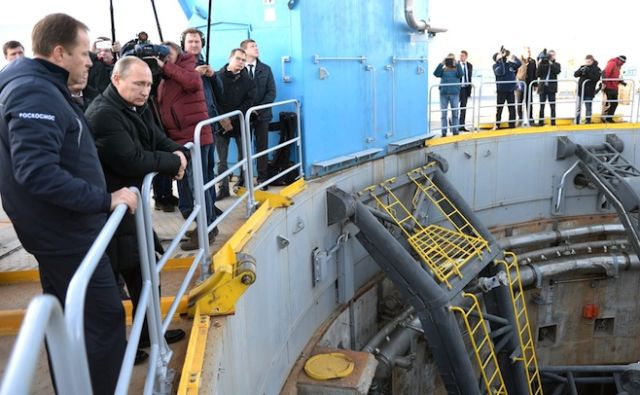
President Vladimir Putin visits the Vostochny Cosmodrome in October 2015. (credit: Kremlin Press Service)
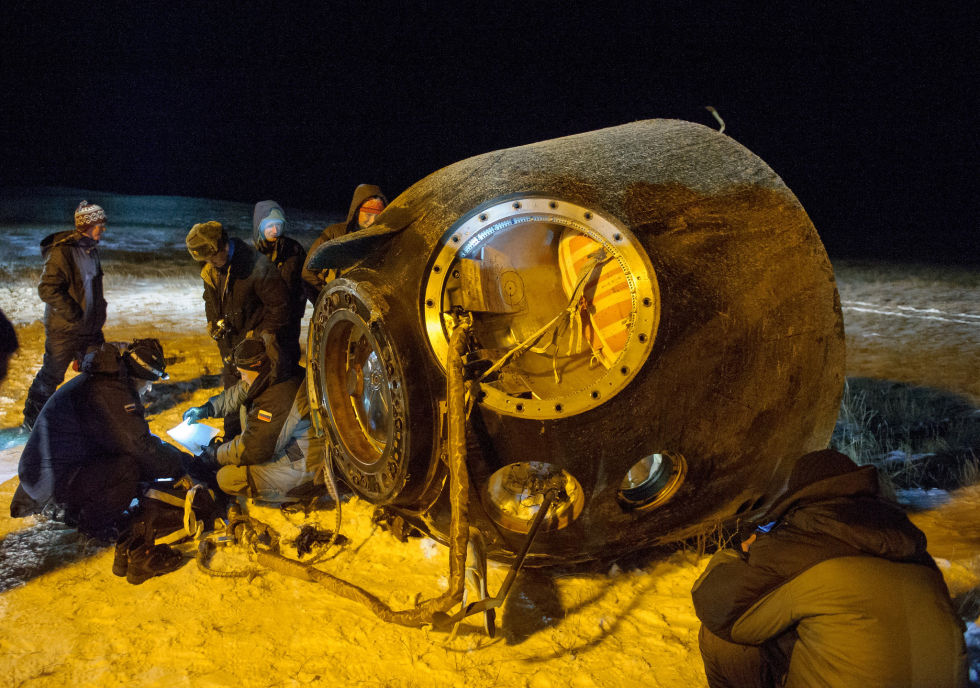
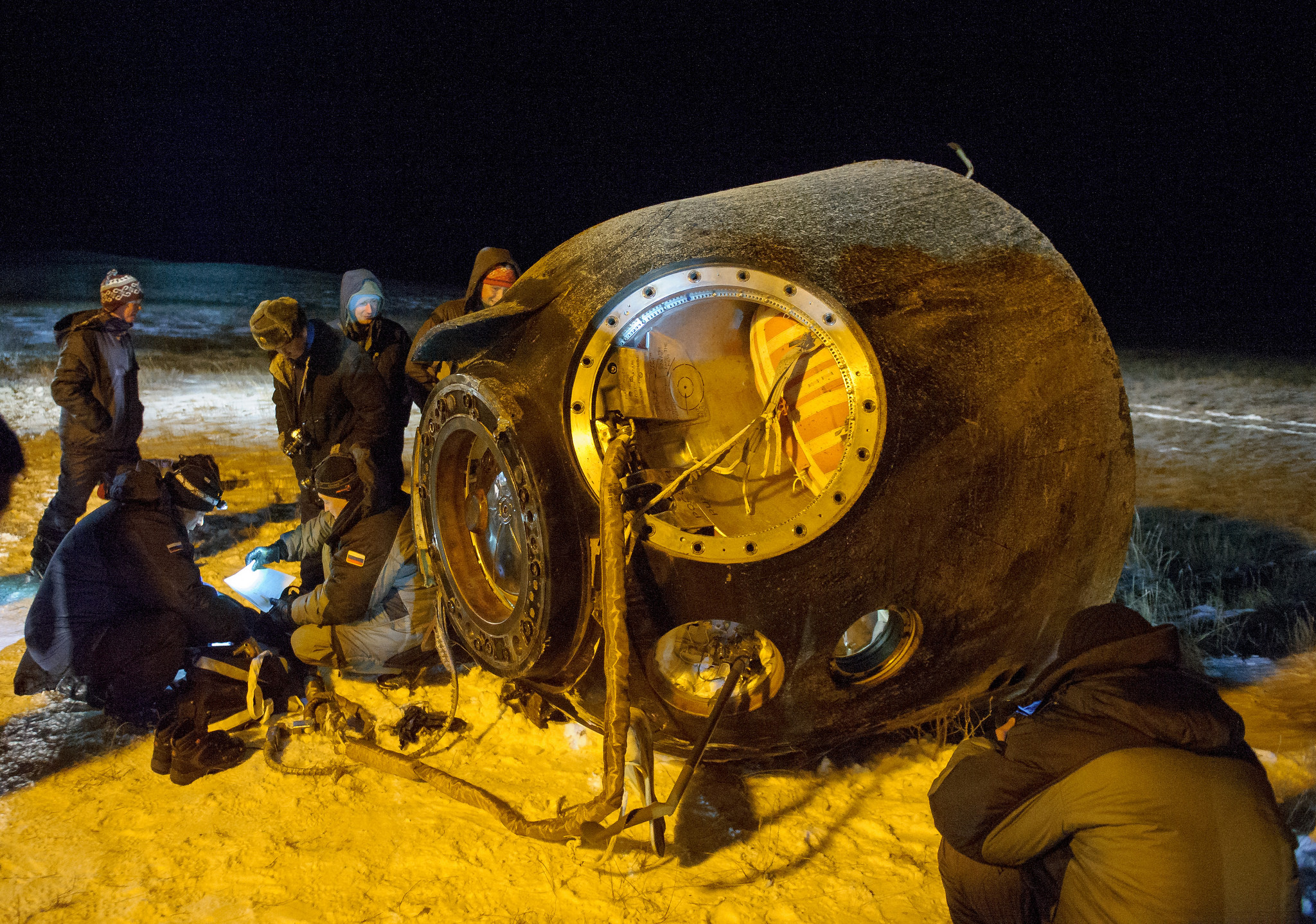
An old theater rises above the center of Baikonur, a dusty town in Kazakhstan near the cosmodrome from which Russians have launched humans into space since 1961. Long ago, Soviet soldiers mingled in its lobby and sat in its uncomfortable wooden chairs to watch propaganda films. In those early days, the Soviets often bested the United States with space milestones.
Today, after launches of Russian, American, and other astronauts to the International Space Station, the fliers’ families gather along with NASA officials in the theater to watch the Soyuz spacecraft dock to the orbiting laboratory. Afterward, they will offer celebratory toasts in the lobby against a backdrop of large, beautiful murals depicting Russia’s three great space pioneers. There’s the rocket visionary Konstantin Tsiolkovsky on the left, Yuri Gagarin in the middle, and aerospace engineer Sergei Korolev on the right.
All of those men have been dead for nearly half a century, and the Russian space program has been in a long slumber for most of the time since then. Yes, Russia is one of only two nations capable of putting humans into space, and it has an enviable record of launch safety, having not lost crew members since Soyuz 11 in 1971. Additionally, the most reliable American rocket, the Atlas 5, uses the exceptionally well-built Russian RD-180 engines to power its ascent into space.
Read 9 remaining paragraphs | Comments