After 100 years, scientists are finally closing in on Einstein’s ripples

Ars goes inside ground zero of the search for gravitational waves.

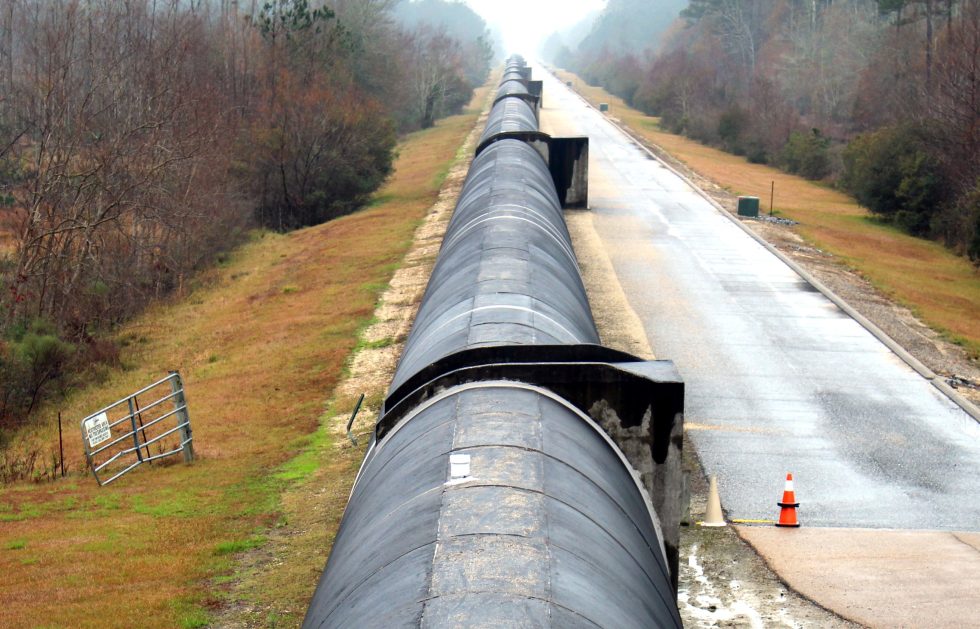
The 4km "west" arm of the LIGO interferometer stretches into the foggy distance. (credit: Eric Berger)

LIVINGSTON, La.—The rain began to fall as Joe Giaime and I scrambled down a lonely rise, back toward the observatory’s main building. It wasn’t so much rain as a hard mist, characteristic of the muggy weather southern Louisiana often sees in January when moisture rolls inland from the Gulf of Mexico. As gray clouds fell like a shroud over the loblolly pines all around us, Giaime mused, “Well, I guess you’ve already gathered that we’re in the middle of nowhere."

Middle of nowhere happens to be ground zero in the search for gravitational waves, which were first posited by Albert Einstein a century ago and may soon become one of the hottest fields in science. Livingston is remote in terms of geography, but as humans scan the heavens for gravitational waves this forest is practically the center of the physics universe.

Because of general relativity, we understand that large masses curve spacetime, kind of like standing in the middle of a trampoline distorts the fabric. When massive, dense objects in space accelerate, such as black holes or neutron stars, they create ripples in the fabric of spacetime. These ripples carry gravitational radiation away from the very massive objects, and the radiation then propagates through the Universe. This Louisiana observatory, the Laser Interferometer Gravitational-Wave Observatory or LIGO, exists to try to measure these subtle ripples.

Read 37 remaining paragraphs | Comments
Feds consider helping fund Elon Musk’s Hyperloop

The future of transportation was on display at Texas A&M University.

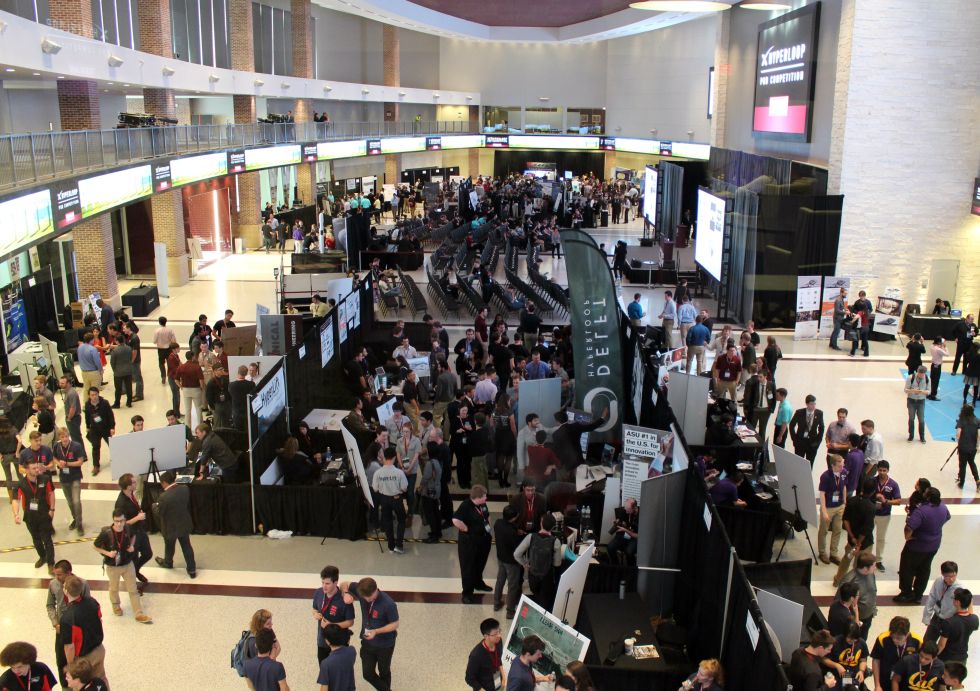
The hyperloop pod design contest took place in Texas A&M University's Hall of Champions. (credit: Eric Berger)

COLLEGE STATION, TEXAS—For years, the Hyperloop was a much buzzed-about myth. Finally, in 2013, Elon Musk provided a bit of substance by outlining the proposal in a research paper. People riding inside a tube, he said, could go from Los Angeles to San Francisco in just 30 minutes at speeds exceeding 700mph. But Musk had rockets and electric cars and batteries to build, and he expressed a hope that others would step forward to help carry the idea forward as an open source project.

Now some help has arrived. While SpaceX is building a test track near its southern California headquarters, more than 100 teams of student engineers have spent the fall and winter months designing “pods” to run inside the Hyperloop. And perhaps more importantly still, this weekend US Secretary of Transportation Anthony Foxx said that the idea merits consideration for a public-private partnership to develop it further.

On Friday and Saturday, the student teams gathered in central Texas to show off their homegrown designs, taking the first step toward building pods and making the future Elon Musk a reality. In these teens and young twenty-somethings, Musk has found not only some of the world’s brightest minds but also believers. Musk had inspired them, and in the students he had found the youthful energy to push forward a brash idea like the Hyperloop.

Read 14 remaining paragraphs | Comments

Elon Musk to unveil Mars plans this year, wants to go to space by 2020

Musk hopes to discuss the Mars plans in September at an international space meeting.

Elon Musk, SpaceX chief executive, at the StartmeupHK Festival this week. Screen capture from YouTube. (credit: StartmeupHK)

During the StartmeupHK Festival in Hong Kong this week, an expansive Elon Musk addressed some key questions about SpaceX's ambitions for Mars, as well as his personal spaceflight plans.

For the last few months rumors have been swirling within the aerospace community about how the company would soon unveil an ambitious architecture that will allow it to begin human missions to Mars within a decade. In response to those rumors, a company source told Ars that nothing was "imminent," and that appears to be true.

During the forum, uploaded to YouTube, Musk said, "I'm hoping to describe that architecture later this year at IAC ... and I think that will be quite exciting." This year's International Astronautical Conference will be held in Guadalajara, Mexico, from September 26 to 30. This may include discussion of both a super-heavy rocket as well as starships that could ferry large numbers of people from Earth to Mars, known as the Mars Colonial Transporter.

Read 4 remaining paragraphs | Comments

To boost commercial activity, NASA may add private airlock to ISS

NanoRacks says it will self-fund a $12 to $15 million “doorway to space.”

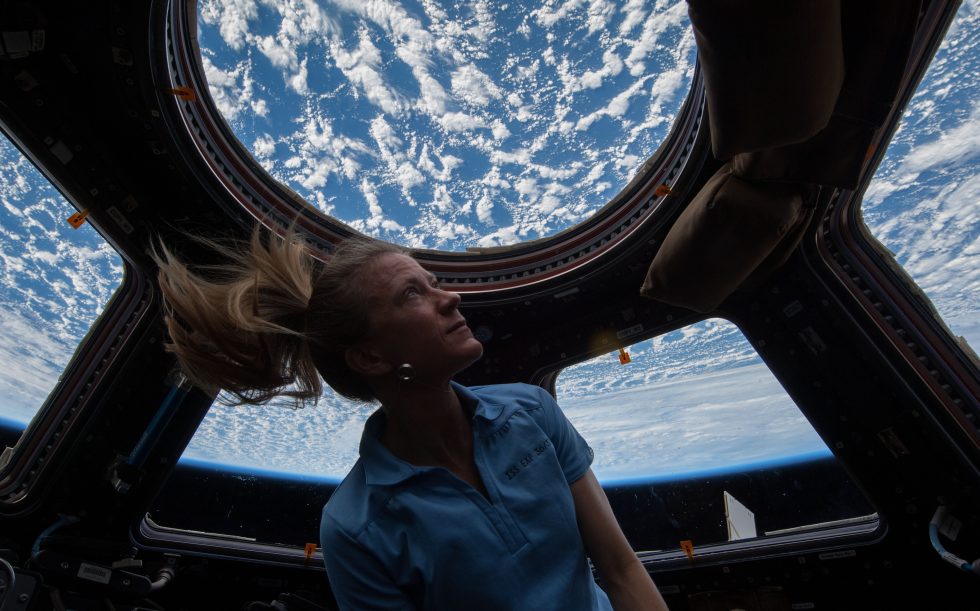
Astronaut Karen Nyberg gazes out of the International Space Station's cupola. A company, NanoRacks, wants to add a commercial airlock to the same module. (credit: NASA)

When NASA engineers designed the International Space Station during the 1990s, they didn’t envision the orbital outpost becoming a hub of commercial activity; nevertheless, that has become one of the most important contributions of ISS to US spaceflight. And as it nurtures American enterprise in low-Earth orbit, the station is increasingly running into a bottleneck: getting scientific research and other payloads outside.

Now a Texas company, NanoRacks, has proposed a solution. It is offering to build an airlock that will be attached to the space station and provide the capability to deploy cubesats and larger satellites. The $12 million-15 million airlock would also allow NASA to bring in costly large pumps and storage tanks for repairs, rather than disposing of them.

“We developed a commercial pathway to the station, and now we want to extend that pathway outside the station,” Jeff Manber, the company’s managing director, told Ars in an interview. “This is a sign that we believe in the future of the station.”

Read 11 remaining paragraphs | Comments

Forget Blue Origin vs. SpaceX—the real battle is between old and new ideas

Lost in the debate over who did what, first, is a critical revolution in spaceflight.

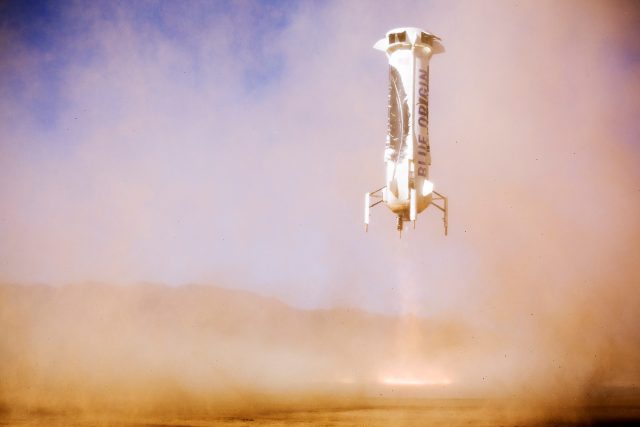
The New Shepard booster makes a controlled landing at 6.7 kph. (credit: Blue Origin)

Friday’s launch of the New Shepard rocket in West Texas renewed the tired debate about whether Blue Origin or SpaceX has achieved more in the reusable spaceflight game. These discussions first flared up in November, when no less than Jeff Bezos and Elon Musk sparred on Twitter over the magnitude of New Shepard’s first flight into space and subsequent vertical landing. Ultimately the debate is vacuous and completely misses the big picture.

Each company has achievements to be proud of. Blue Origin landed first and now has taken the next critical step toward full reusability by reflying a booster. SpaceX also landed vertically, about a month after Blue Origin. SpaceX’s Falcon 9 rocket is a much larger and more powerful booster, flying a more dynamically challenging profile. Technically, its landing was more impressive. The company is also developing this capability while delivering payloads into orbit for NASA and the private sector.

There is no “better.” Both companies are kicking ass. I think a lot of people who read this probably share a common goal with me: we’d like to see wider access to space. We’d like to see colonization of the Moon, or maybe Mars, or maybe beyond. We’d like to see a highway to the stars. There is only one way this happens: dramatically reducing the cost of getting into space. And the way to do this is by reusing your rockets and spacecraft.

Read 11 remaining paragraphs | Comments

Blue Origin soars again, successfully reusing its New Shepard rocket

Like last time, the booster flew to space and then stuck a vertical landing.

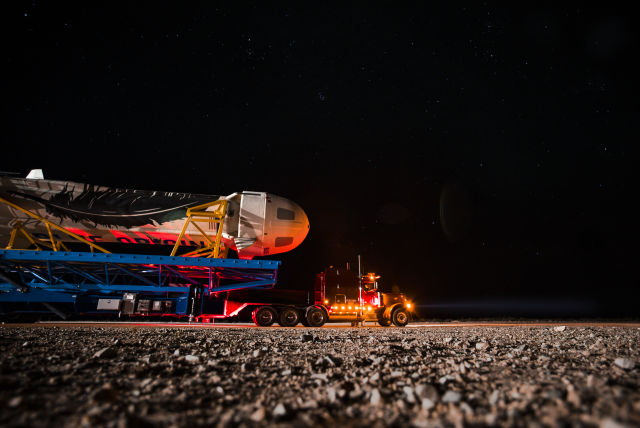
The reused New Shepard booster rolls out to the launch pad at the company's West Texas launch site. (credit: Blue Origin)

The barriers to reusable rockets keep falling. Late Friday night Blue Origin posted a new video of its New Shepard rocket booster flying into space a second time and then landing safely again back in West Texas. This marked the first time a rocket booster has been flown into space, landed, and re-flown again.

Friday's launch to an altitude of 101.7km, which is just above the Karman line considered to be the boundary of outer space, follows a similar flight of the same booster in November. A month later, in December, SpaceX landed a much larger booster, the first stage of its Falcon 9 rocket, back at Florida for the first time. But even as SpaceX has begun testing that rocket, which will likely not fly again, Blue Origin has moved ahead to a second flight.

Video of the launch of a reused New Shepard booster.

The rivalry between Blue Origin's Jeff Bezos and SpaceX's Elon Musk is spurring the race toward reusability, with the aim of driving down rocket costs so that more people and hardware can be launched into space. As the new video's tagline says, "You can't get there by throwing the hardware away." This may be a subtle dig at NASA, which is building an expensive, massive new rocket, the Space Launch System, which is entirely expendable.

Read 4 remaining paragraphs | Comments

No shuttle? No problem. Space City’s new carrier aircraft exhibit soars

Ars takes a sneak peak at Independence Plaza, which opens Saturday.

Independence sits atop the Shuttle Carrier Aircraft. (credit: Lee Hutchinson)

HOUSTON—It was the bitterest of pills for Houston, the home of human spaceflight. This is the city Neil Armstrong hailed, by name, after the lunar module reached the surface of the Moon. And more than that, however, thousands of technicians, engineers, and flight directors had managed the space shuttle program from Houston for three decades. They designed the shuttle, tested it, and operated it. They loved those vehicles and mourned when 14 neighbors lost their lives during two accidents.

And then, in April 2011, the city of astronauts learned the bitter truth. The retiring space shuttles would go to museums in Washington, DC, New York, and Los Angeles plus a visitor’s center at Kennedy Space Center in Florida. Houston’s prize? A pair of flown space shuttle seats.

For the city and more specifically Space Center Houston, the official visitor’s center for Johnson Space Center that had made a bid for a shuttle, it was a humbling moment. “We are really disheartened,” the visitor center’s president, Richard Allen, said at the time.

Read 17 remaining paragraphs | Comments

Scott Kelly plays ping-pong in space and we’re all winners

NASA’s yearlong astronaut celebrates 300 days by sending a video down.

Playing ping pong in space. (credit: NASA)

Scott Kelly and his Russian colleague, Mikhail Kornienko, hit the 300-day mark on board the International Space Station on Thursday, and they're now less than two months away from flying home in a Soyuz capsule.

To celebrate the milestone, Kelly sent down a nifty little video in which he uses two hydrophobic paddles to bounce a droplet of water back and forth in microgravity.

On Earth, of course, gravity pulls water droplets down to fill in whatever container water is poured into. But in space the water molecules at the surface are bonded such that the tension holds them together as spheres, and water can be bounced back and forth, like a ball.

Read 1 remaining paragraphs | Comments

Above the world in 80 minutes: Balloon company will fly to the edge of space

World View says it will fly from Arizona beginning as soon as 2017.

Who wouldn't want to see space from the comfort of a balloon capsule? (credit: World View)

There are balloon rides, and then there are balloon rides. And although it may sound like something out of a Jules Verne novel, a company called World View says it will begin taking passengers to the edge of outer space by the end of 2017. In a step toward that goal on Tuesday, company officials confirmed that the first flights will take place in southern Arizona near the Tucson International Airport.

World View plans to fly six passengers in a pressurized cabin to an altitude of 30km, where they will remain for a couple of hours. The generally accepted boundary between Earth’s atmosphere and outer space is 100km, known as the Kármán line. However, at 30km, or about 100,000 feet, the balloon will have risen above 99 percent of Earth’s atmosphere and afford fine views of the planet’s curvature and the blackness of space. The company has priced tickets at $75,000 per person for an experience that will last four to six hours in total.

The company is relying on established technology, as well as new innovations, to bring humans to the edge of space. Weather balloons have flown into the stratosphere for nearly a century. High altitude balloons, like the one World View will use, are made of a high performance polyethylene film. When inflated with helium, at its maximum altitude, World View’s balloon will be about the size of a football field.

Read 7 remaining paragraphs | Comments
NASA’s newest cargo spacecraft began life as a Soviet space plane

Dream Chaser may finally carry humans after 50 years of design and development.

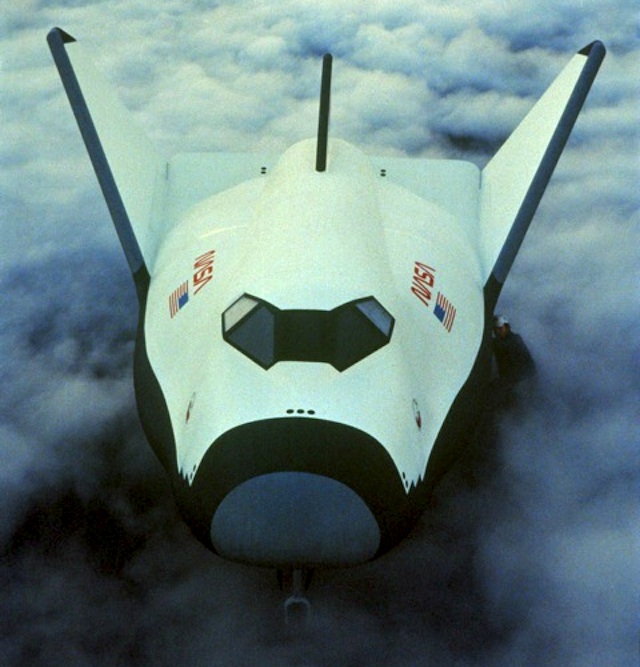
NASA's HL-20 in the fog at Langley Research Center in Virginia. (credit: NASA)

Last week when NASA awarded Sierra Nevada a contract to develop its Dream Chaser vehicle for cargo delivery to the International Space Station, it validated a design that dates back half a century. This particular winged vehicle concept marked the Soviet Union’s first attempt to develop a space plane and now, in an ironic twist of history, the Soviet design may help the United States to commercialize space.

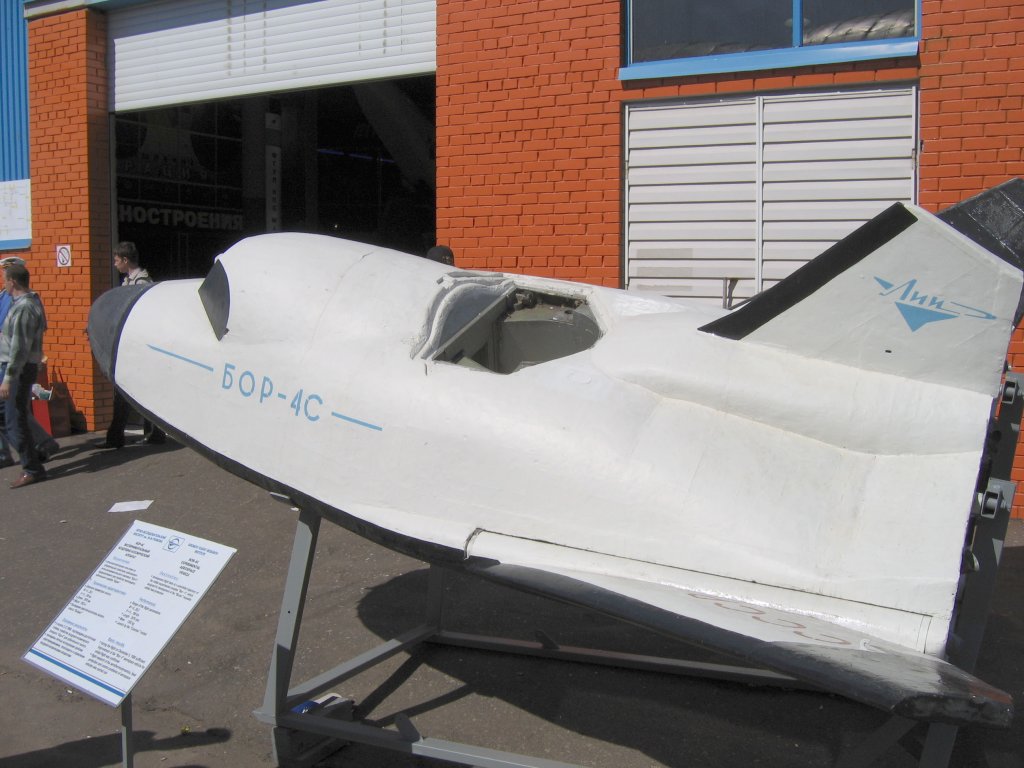
The Dream Chaser traces its heritage to the BOR series "Беспилотный орбитальный ракетоплан," or uncrewed orbital rocket plane of lifting bodies, which themselves were derived from a 1965 space plane concept, the Soviet MiG-105. The BOR-1 was first tested in 1969, launching to an altitude of 100 km as the Soviets sought to study various heat shields for a winged vehicle.

The Soviets continued a series of test flights leading up to the BOR-4 vehicle, and it began flying in 1980. Although they had discarded the BOR concept for their space plane (choosing instead the shuttle-derived Buran orbiter), Soviet engineers continued to use the vehicle as a means to test the Buran’s thermal protection system.

Read 14 remaining paragraphs | Comments