Peggy Whitson likely to miss out on US spaceflight duration record—by 2 days

Whitson is now scheduled to end her flight two days short of Jeff Williams’ mark.

NASA has made a concerted push toward diversity in its astronaut corps over recent decades, filling its ranks with women and minorities. The space agency’s most recent class, selected in 2013, featured four women and four men. It would have been equally spectacular for NASA to have veteran astronaut Peggy Whitson emerge from a Russian space capsule next spring, holding the US record for most time accrued in space by a single astronaut.

But this no longer appears likely to happen. When Whitson met with the media this week in Houston, as part of the lead up to her Nov. 15 launch to the International Space Station, the veteran astronaut said her return date from space had been pushed forward to April 20, 2017, nearly a full month short of a typical six-month increment. “The original schedule was such that we thought I might break the record as well, but that’s not going to happen,” Whitson explained.

It was only last month that NASA’s Jeff Williams, nearing the end of his third increment on the space station, surpassed Scott Kelly’s cumulative time in space, 520 days. When Williams returns to Earth on September 6, he will have spent a cumulative 534 days in space. Whitson, with 377 days accrued so far, already the most for any woman in history, was to have easily surpassed him thanks to a mission that was supposed to return on May 15. But now her capsule will return nearly a month early, on April 20, to Kazakhstan. That will leave her with 532 total days in space, two short of Williams US record.

Read 8 remaining paragraphs | Comments

Turns out the signal astronomers saw was “strong” because it came from Earth

Of course, you already knew that if you read the skeptical Ars report on Monday.

Ars was among the first news outlets to report on discussions among astronomers about observations of an intriguing "signal" that may have originated from a distant, Sun-like star. We cautioned readers that, because the signal was measured at 11Ghz, there was a "significant chance" it was of terrestrial origin, likely due to some military activity.

Well, it apparently was. First, astronomers with the search for extraterrestrial intelligence downplayed the possibility of an alien civilization. "There are many other plausible explanations for this claimed transmission, including terrestrial interference," Seth Shostak, a senior astronomer with SETI, wrote.

Now the Special Astrophysical Observatory of the Russian Academy of Sciences has concurred, releasing a statement on the detection of a radio signal at the RATAN-600 radio astronomy observatory in southern Russia. "Subsequent processing and analysis of the signal revealed its most probable terrestrial origin," the Russian scientists said. (Maybe it was really Steve Martin and his hair dryer?)

Read 1 remaining paragraphs | Comments

SpaceX finds a customer for its first reused rocket, satellite operator SES

Company has shown it can land rockets, but now it needs to fly them again.

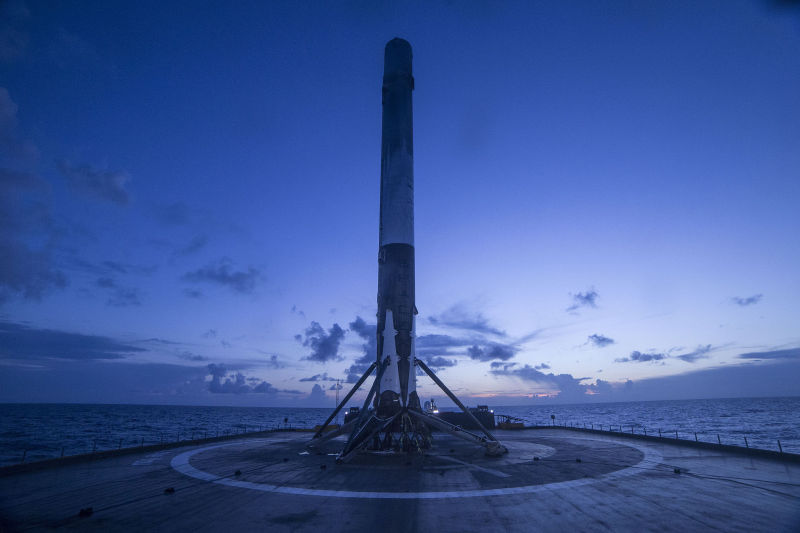
Enlarge / SpaceX landed its latest booster on August 13, after the JCSAT-16 mission. (credit: SpaceX)

SpaceX has been running out of room in its facilities in Florida as it lands rockets by sea and air, so it would like to begin reusing some of these first-stage Falcon boosters as soon as possible. The first step was finding a customer, and now SpaceX has done that. The Luxembourg-based satellite operator SES said Tuesday that it intends to launch a geostationary satellite, SES-10, on a reusable rocket in the fourth quarter of this year.

“Having been the first commercial satellite operator to launch with SpaceX back in 2013, we are excited to once again be the first customer to launch on SpaceX's first ever mission using a flight-proven rocket," said Martin Halliwell, Chief Technology Officer at SES. "We believe reusable rockets will open up a new era of spaceflight and make access to space more efficient in terms of cost and manifest management."

SpaceX has not yet specified how much it will charge for launch services on one of its flown boosters, but industry officials anticipate about a 30 percent discount on SpaceX's regular price of $62 million for a Falcon 9 launch. The company has not shared how much it is spending to refurbish and reuse a Falcon 9 stage, nor has it offered much public information about the extent to which the vehicle's engines have had to be tested and prepared for a second flight.

Read 1 remaining paragraphs | Comments

SETI has observed a “strong” signal that may originate from a Sun-like star

The star is located 95 light years from Earth and has at least one confirmed planet.

Enlarge / The RATAN-600 radio telescope, in Zelenchukskaya, Russia. (credit: Wikimedia commons)

It remains only the barest of probabilities that astronomers have just found evidence of extraterrestrial, intelligent life. Nevertheless, in the community of astronomers and other scientists who use radio telescopes to search the heavens for beacons of life there is considerable excitement about a new signal observed by a facility in Russia.

According to Paul Glister, author of the Centauri Dreams website, the Italian astronomer Claudio Maccone and other astronomers affiliated with the search for extraterrestrial intelligence have detected "a strong signal in the direction of HD164595." HD 164595 is a star of 0.99 solar masses about 95 light years from Earth, with an estimated age of 6.3 billion years. The system is known to have at least one planet, HD 164595 b, which is similar in size to Neptune and orbits its star in 40 days. Other planets may exist in the system as well.

The observation was made with the RATAN-600 radio telescope in Zelenchukskaya, in southern Russia, Glister reports. He cautioned that the evidence is very preliminary:

Read 3 remaining paragraphs | Comments

On Saturday Juno flew to within 4,200km of Jupiter—and survived

Spacecraft has now successfully completed one of 36 planned orbits.

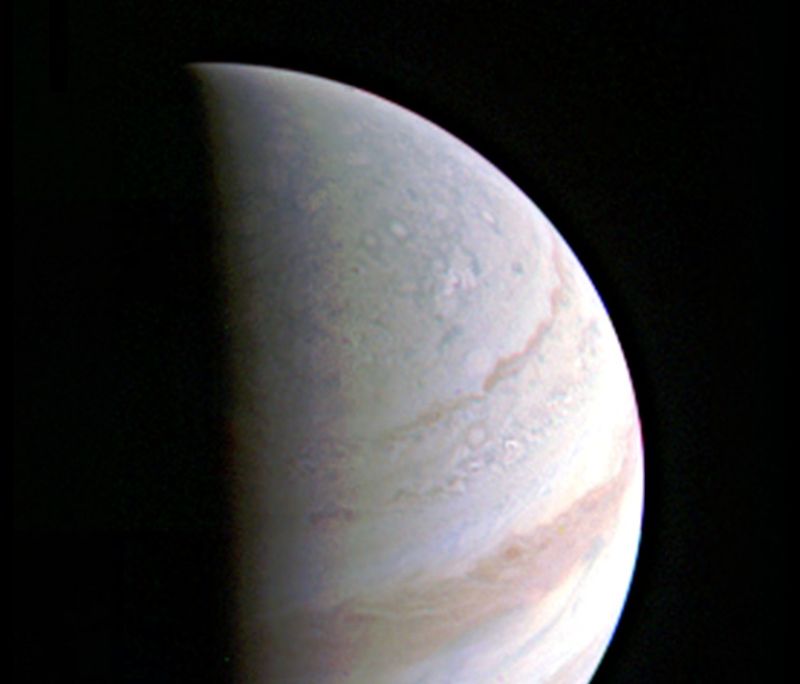
Enlarge / Jupiter's north polar region was 703,000km away on Saturday morning when Juno took this photo. (credit: NASA/JPL-Caltech/SwRI/MSSS)

NASA's daring Juno spacecraft must fly into the heart of Jupiter's deadly radiation belts to complete its mission. So far, so good. On Saturday morning, the spacecraft made its first close approach to Jupiter, flying to within 4,200km of the giant of the Solar System. That is less than the distance from New York to Los Angeles.

The spacecraft shot past Jupiter at the speed of 208,000km/hr relative to the planet, and mission managers pronounced that Juno was in good health. "Early post-flyby telemetry indicates that everything worked as planned and Juno is firing on all cylinders," said Rick Nybakken, Juno project manager at NASA's Jet Propulsion Laboratory in Pasadena, California. Saturday's flyby, at 9:44am ET, marked the first time Juno had activated its entire complement of nine scientific instruments and turned them toward Jupiter.

Mission managers said early returns from the data were promising, but cautioned it would take several more days to download all of the information collected by the spacecraft, and to begin to assess what it means. Although photography is not the principal aim of the mission, NASA intends to release images taken during the flyby during the next week or so. The pictures are expected to include the highest-ever resolution views of Jupiter's atmosphere, and the first good views of both the gas giant's poles.

Read 2 remaining paragraphs | Comments

It’s true—the closest star to the Sun harbors an Earth-sized planet

The big question is whether Proxima b has an atmosphere or is a cold, dead world.

After weeks of rumors and unconfirmed reports, European scientists have officially announced the discovery of an Earth-sized world around the closest star to the Sun, Proxima Centauri. Although the planet theoretically orbits its star in a region where water could exist as a liquid on its surface, no direct information can be gleaned about whether Proxima b has an atmosphere, water, or other characteristics that would increase its habitability. Nonetheless, it is tantalizing to imagine a habitable world so close to home.

The existence of a likely terrestrial world orbiting Proxima Centauri, which is 4.2 light years from the Sun and part of a three-star system that includes two distant members, Alpha Centauri A and B, has been speculated about for some time. That's because Guillem Anglada-Escudé, an astronomer at the Queen Mary University of London, and colleagues used spectrograph data from the European Southern Observatory in Chile during the 2000s to discern a wobble in the star’s movement.

Then, earlier this year, with a concerted observing program over 60 nights at the observatory, they gathered additional data to rule out other explanations for Proxima Centauri's wobbling, such as flares or other stellar activity. It had to be the gravitational effect of a nearby planet. “Statistically, there can be no doubt now,” Anglada-Escudé said during a telephone news briefing about the findings, published Wednesday in Nature.

Read 7 remaining paragraphs | Comments
NASA’s outsourced computer people are even worse than you might expect

Agency’s CIO holds off signing the “authority to operate” for systems and tools.

Enlarge / NASA is unhappy with its HPE services contract. (credit: NASA)

As part of a plan to help NASA "modernize" its desktop and laptop computers, the space agency signed a $2.5 billion (~£1.9 billion) services contract with HP Enterprise Services in 2011. According to HP (now HPE), part of the Agency Consolidated End-User Service (ACES) program the computing company would "modernize NASA’s entire end-user infrastructure by delivering a full range of personal computing services and devices to more than 60,000 users." HPE also said the program would "allow (NASA) employees to more easily collaborate in a secure computing environment."

The services contract, alas, hasn't gone quite as well as one might have hoped. This week Federal News Radio reported that HPE is doing such a poor job that NASA's chief information officer, Renee Wynn, could no longer accept the security risks associated with the contract. Wynn, therefore, did not sign off on the authority to operate (ATO) for systems and tools.

A NASA spokeswoman confirmed the ATO expired on July 24. She said Wynn signed a “conditional” ATO for the systems under ACES, but internal NASA sources said the authorization is just for the management tools and not for the desktops, laptops and other end user devices.

“NASA continues to work with HPE to remediate vulnerabilities,” the spokeswoman said. “As required by NASA policy, system owners must accomplish this remediation within a specified period of time. For those vulnerabilities that cannot be fully remediated within the established time frame, a Plan of Actions and Milestones (POAM) must be developed, approved, and tracked to closure.”

Letting an ATO expire on a major agency network is unheard of in government.

Practically, this probably won't change much on the ground for NASA's computing systems immediately. But operating without an ATO indicates that the agency is accepting (or perhaps "accepting") a large amount of operational IT security risks, instead of trying to understand and mitigate them.

Read 1 remaining paragraphs | Comments
Jeff Williams will quietly become NASA’s most experienced flier

Record of 534 days in space may stand for about a year, until Peggy Whitson breaks it.

Enlarge / Jeff Williams works aboard the Space Station in April. (credit: NASA)

During his nearly year-long mission aboard the International Space Station, former NASA astronaut Scott Kelly garnered a large measure of attention for his Ironman feats, including setting a US record for the cumulative amount of time in space—520 days. Jeff Williams may be less well-known, but he will quietly become NASA’s new spaceflight Ironman on Wednesday morning.

Williams has reached 520 days after a Space Shuttle mission in 2000, two previous increments on the Space Station in 2006 and 2009, and he’s now nearing the end of his third mission to the Space Station. When he lands on September 6, Williams will have spent a cumulative 534 days in space, two weeks longer than Kelly’s total. (No NASA astronaut can equal the duration records of Russian cosmonauts. The all-time leader, Gennady Padalka, has spent 879 days in space over five missions).

In many ways, Williams' tenure at NASA has paralleled the development of the Space Station. After a decorated career as a test pilot, Williams was selected to become an astronaut in 1996, a time when the United States and Russia were in the formative stages of planning and developing the station as an international project. His first spaceflight, in May 2000, was just the third shuttle flight devoted to station construction. It helped pave the way for the first crews to live aboard the station, beginning in November, 2000. Williams is also the first NASA astronaut to spend three separate increments aboard the orbiting laboratory.

Read 2 remaining paragraphs | Comments

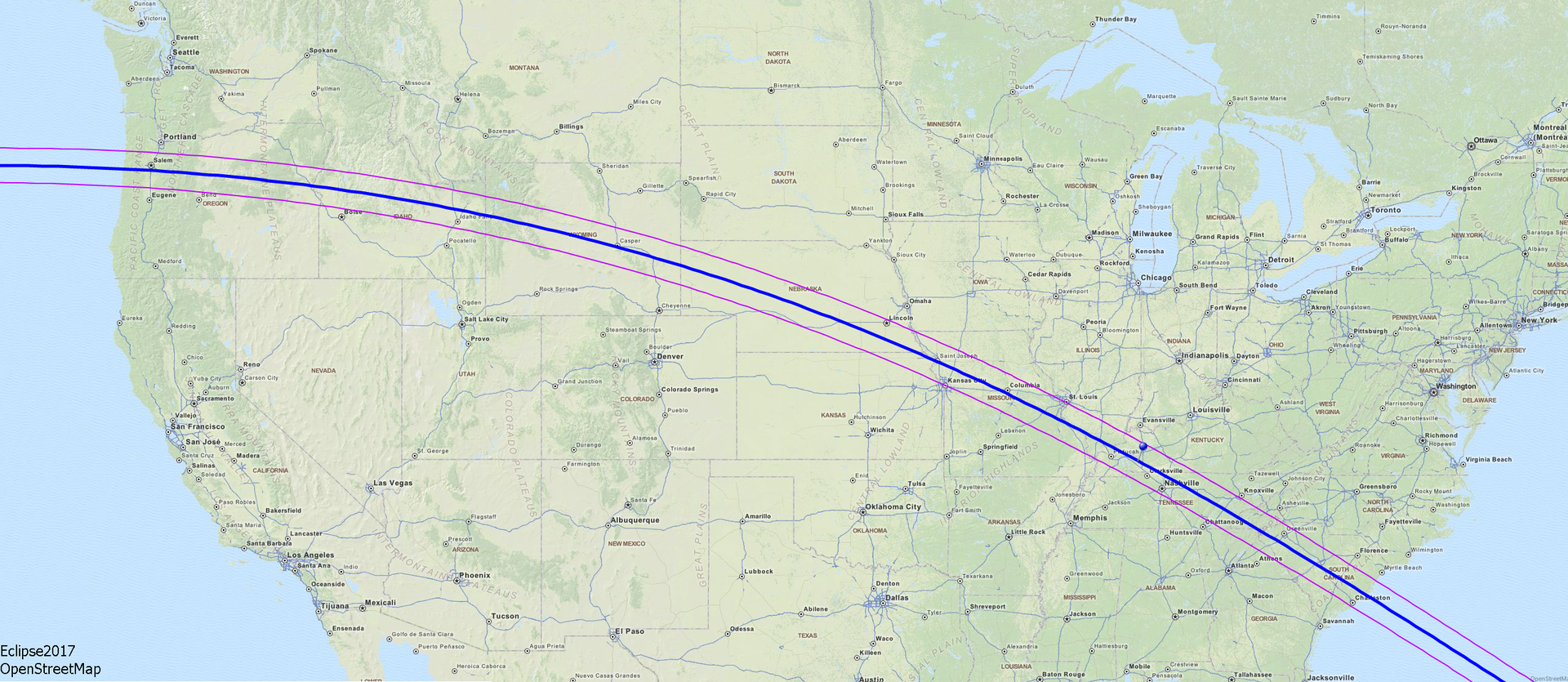
America hasn’t seen a solar eclipse like this since the end of World War I

Next August, Americans will get best chance to see solar eclipse in their lifetimes.

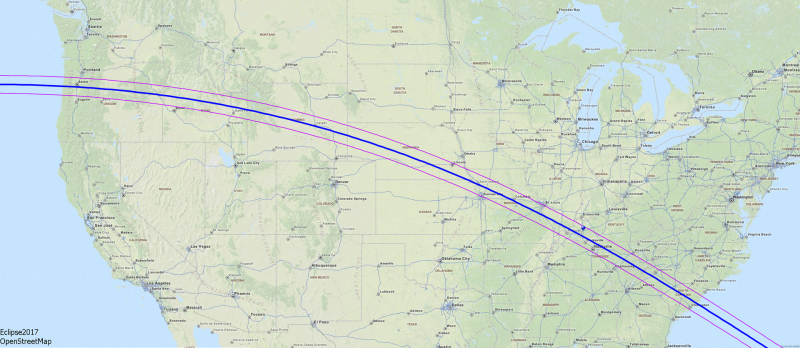
Enlarge / Path of totality for the August 21, 2017 total solar eclipse. (credit: Wikimedia)

For many cultures a total solar eclipse represents a time when either a demon or animal consumes the Sun. For example, the Vikings saw a pair of sky wolves chasing the Sun, and when one caught it, the wolf would eat it. In Vietnam, either a frog or toad consumed the Sun. For the Kwakiutl tribe on the western coast of Canada, it was the mouth of heaven.

Soon, the United States will have a chance to see an eclipse of our own (and assign cultural value as we please). Mark your calendars: the next total solar eclipse comes to the USA one year from today, on August 21, 2017.

Modern Americans probably don't know exactly what to make of a total solar eclipse—because most of them have never seen one. The last total solar eclipse in the contiguous United States, 37 years ago, only clipped the northwestern United States, mostly rural areas of Washington, Oregon, Idaho, Montana and North Dakota. According to Eclipse2017.org, the day of Feb. 28, 1979, was cold and dreary in the Northwest, and most people in the path of totality did not see the eclipse due to clouds and rain. The last eclipse to traverse much of the United States came all the way back in 1918, on June 8.

Read 2 remaining paragraphs | Comments

Initial damage analysis of Louisiana storm

In one parish, 87 percent of homes and 91 percent of businesses flooded.

Enlarge / Along Honey Cut Bayou, in eastern Baton Rouge, just north of Interstate 12. (credit: Louisiana Civil Air Patrol)

The first damage analysis of the slow-moving tropical system that deluged southern Louisiana last weekend is sobering. But for all the destruction it has caused, the low pressure system was not classified as a tropical storm or depression. Had it been a tropical cyclone, the storm would almost certainly rank among the 10 costliest hurricanes to strike the United States.

Louisiana newspaper The Advocate recently shared an analysis by the Baton Rouge Area Chamber. The analysis uses geographic information system data to study homes and businesses that had flooded in nine parishes in southeastern Louisiana. Some of the report's key findings include:

  • About 31% of homes (a total of 110,000 residences) within the nine parishes flooded.
  • The estimated value of homes located in flooded areas is $20.7 billion.
  • About 280,000 Baton Rouge metropolitan statistical area residents live in flooded areas.
  • As a region, a maximum of just 15% of all homes—not solely in the flood-impact areas—were insured against flooding.
  • Overall, 7,364 businesses employing 73,907 individuals are located in areas affected by floods. These represent 21% of businesses in the region.
  • Proportionally, businesses in Livingston experienced the most severe impact with 3,305 businesses that employ 27,653 employees in the areas of flood-impact, representing 91% of businesses and 94% of employees.

The $20.7 billion dollar figure for residential damages represents the estimated total value of residences in areas that flooded, not the actual damage. While that total will be significantly lower, this damage report does not include losses sustained to businesses, automobiles, or other personal items lost in the floodwaters. It will take some time before a total damage amount is released, which will include damage from insurers.

Read 3 remaining paragraphs | Comments