NASA’s foremost solar system explorer says Europa lander a “necessity”

NASA engineers look eager to explore Europa though agency’s administrator is not.

Charles Elachi has been director of the Jet Propulsion Laboratory for 15 years. (credit: NASA/JPL-Caltech)

The fact that Charles Elachi is retiring after 15 years of directing NASA's Jet Propulsion Laboratory in June may have him willing to speak freely. During a hearing Thursday before a Congressional committee, Elachi apparently had no qualms about contradicting NASA's administrator, Charles Bolden.

Bolden has said NASA should fully explore Europa with a flyby mission before building and flying a lander to Jupiter's ice-covered moon, which contains a vast, subsurface ocean. "Our belief is that that is imprudent from a scientific perspective," NASA's administrator told Ars late last year.

During the Congressional hearing, however, Elachi said his engineers could design both a flyby spacecraft and lander that could fly to Europa in tandem. Moreover, Elachi said, to really begin addressing the question of life existing on Europa, such a mission must have the capability to reach the surface. "In order to make sure we have confirmation, we really need to make direct measurements on the surface, to take samples," he said. "Clearly a lander, in my mind, is a necessity to understand the oceans on Europa."

Read 11 remaining paragraphs | Comments
NASA may have found snow-covered mountains on Pluto

Don’t book your ski vacation yet; we hear airfare to Pluto is exorbitant.

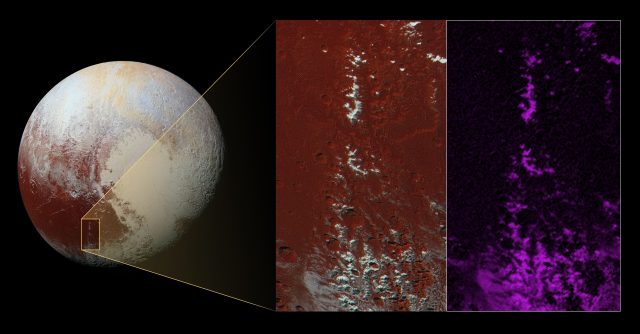
From visual images and a spectral analysis, scientists think methane ice caps some of Pluto's mountains.

After studying images and data that characterize a range of mountains that run for 420km across Pluto's Cthulhu feature, planetary scientists now think they are seeing peaks capped with methane snow.

Pluto's Cthulhu region, about the size of Alaska, is characterized by reddish hues in contrast to the more pale, heart-shaped feature known as Sputnik Planum. Cthuhlu likely gets this darker color from tholins, complex organic molecules that form when ultraviolet light strikes simple organic molecules like methane. Tholins have been found on several worlds in the outer solar system, including Titan.

However, higher resolution images of mountains within the Cthulhu region have shown that the upper slopes on the highest peaks are much brighter. The most obvious explanation for this is a methane snow that has condensed out of Pluto's thin atmosphere, scientists say.

Read 1 remaining paragraphs | Comments

Stopping killer asteroids costs less than you think

But NASA has dithered on detection and deflection for more than a decade. Why?

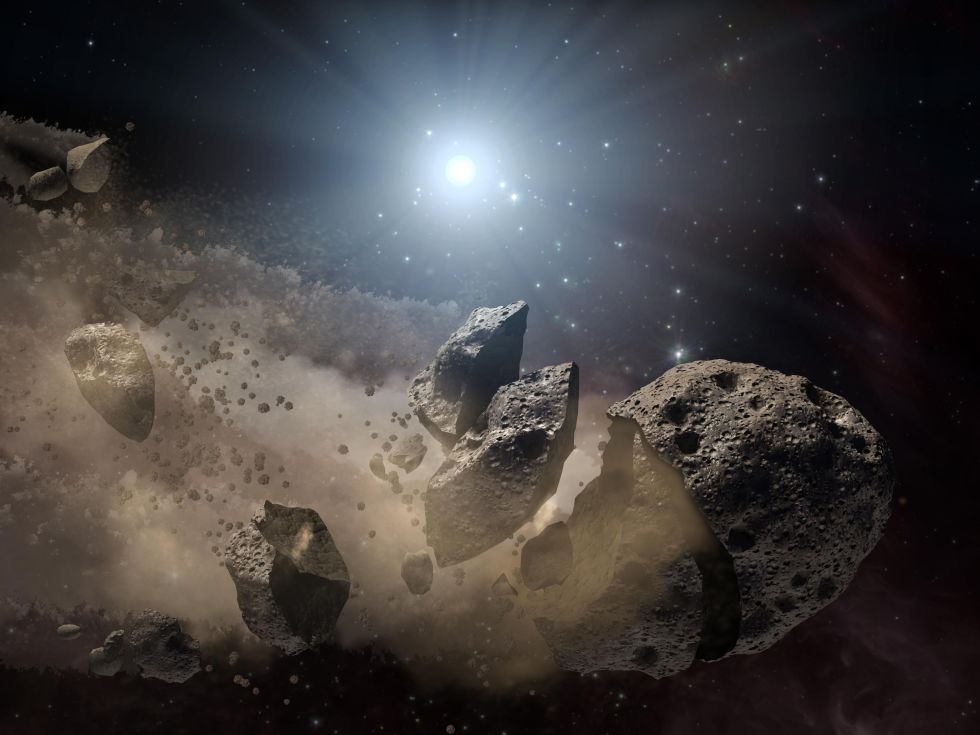
Scientists think a giant asteroid broke up long ago in the main asteroid belt before eventually striking Earth 65 million years ago and wiping out the dinosaurs. (credit: NASA/JPL-Caltech)

An asteroid some seven meters across swooped to within a few hundred thousand kilometers of Earth on Halloween, and the collective public reaction registered as barely more than a snigger. Various news stories called the rock “spooky” or the “The Great Pumpkin,” dismissing it as yet another near miss while we celebrated the holiday with costumes and candy. The sobering reality is that, only three weeks before its closest approach, Earth-based observers discovered a rock that could dissipate many times the energy of the Hiroshima blast in the atmosphere.

We view ourselves as a modern civilization, with dazzling rocket launches and pocket computers that allow us to communicate with anyone, anywhere in the world. Yet when it comes to detecting and deflecting asteroids, we are little better than our ancestors who evolved in Africa some 200,000 years ago. We can look up into the sky, see the bright fireball, and if we’re close enough to the impact, we will die. Just like them, except we might be able to tweet about the end of the world.

Unlike our ancestors, however, we actually have the technology to prevent such a calamity. For about $1 billion we could build an infrared space telescope to find all of the asteroids that threaten Earth, and we could then fly a mission to demonstrate our capacity to deflect one. NASA, in fact, could fund such efforts with about one percent of its annual budget over the next five years. The price of planetary insurance, it turns out, isn’t all that high.

Read 36 remaining paragraphs | Comments
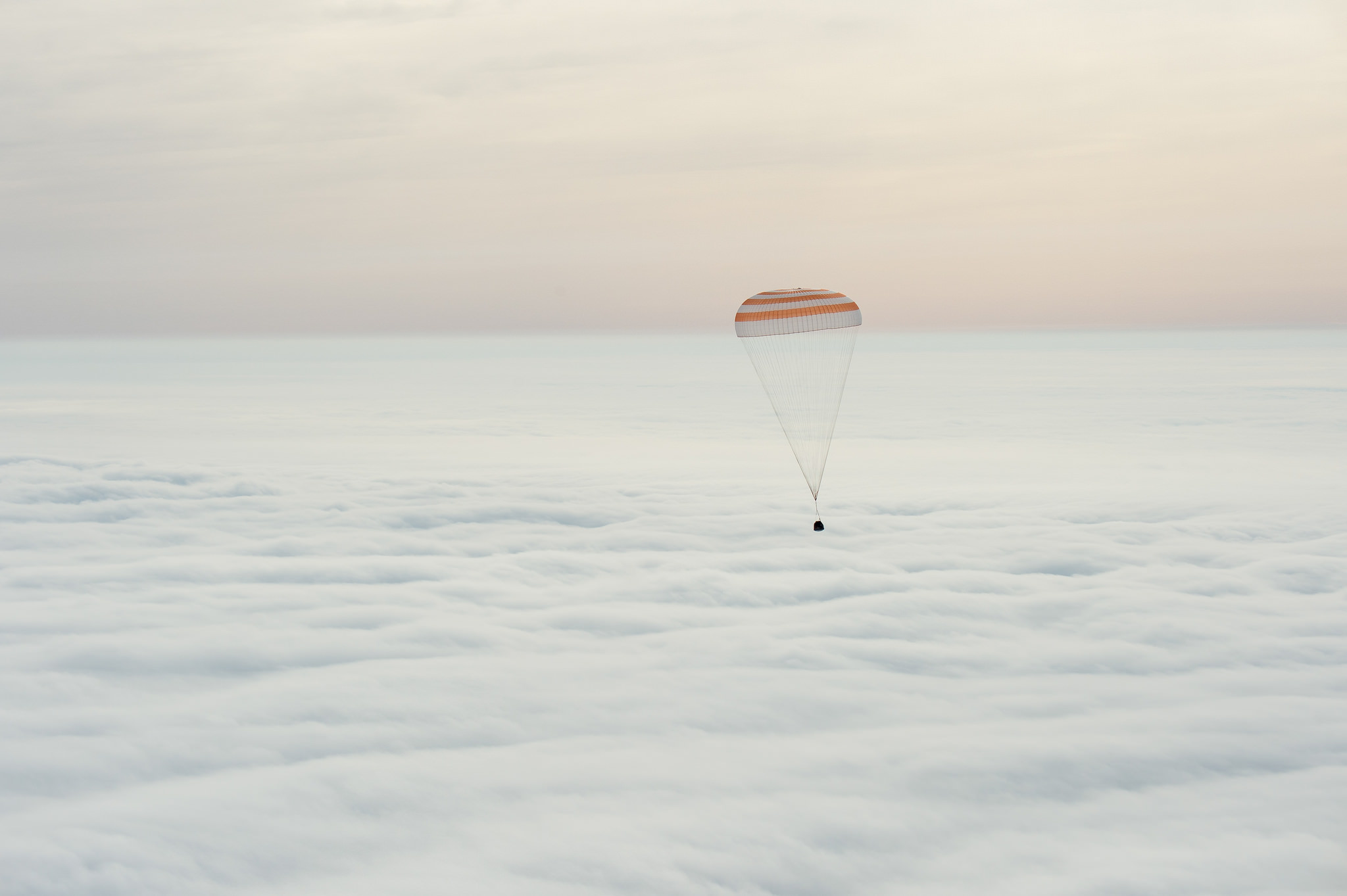
After his picture perfect landing last night Scott Kelly seemed just fine

See how Kelly returned safely to planet Earth after 340 days in style.

Scott Kelly returned from space Tuesday night, landing on a cold, barren Asiatic steppe. And he couldn't have seemed more pleased with himself—or even with the weather, which featured a cool wind and temperatures in the 20s. "The air feels great out here," Kelly told NASA officials, who were helicoptered to the landing site to meet him.

Shortly after being extracted from the spacecraft, Kelly told his flight surgeon, Dr. Steve Gilmore, that the experience was "not much different than it was five years ago," when he spent six months on the International Space Station.

After a few minutes, Kelly and cosmonauts Mikhail Kornienko and Sergey Volkov were moved to a medical tent where they underwent several tests, such as measurements of their vision, balance, muscle tone, strength, nimbleness of their fingers, and so forth. They then took a helicopter flight back to Dzhezkazgan, in Kazakhstan.

Read 2 remaining paragraphs | Comments
Liveblog: Scott Kelly comes home from space tonight after nearly a year

At 10:30pm ET let’s talk about Kelly’s return, and where NASA goes from here.

After 340 days in space Scott Kelly is ready to come home and jump in his pool. (credit: NASA)

View Liveblog
2016-03-01T21:30:00-06:00

Tonight, after 340 days in space, seasoned astronaut Scott Kelly will fly home from orbit inside a Soyuz spacecraft.

By all accounts, Kelly has had a sterling turn of work aboard the station during the last 11-plus months, with his health holding steady and his meeting of virtually every milestone NASA has placed before him. Now he will come home for more extensive medical tests to help NASA determine the effects of long-duration spaceflight on the human body.

According to the flight schedule, Kelly and Russian cosmonauts Mikhail Kornienko and Sergey Volkov will undock from the International Space Station tonight at about 8pm ET. After maneuvering away from the space station, they will be in position to begin their de-orbit burn about 2 hours and 30 minutes later.

Read 1 remaining paragraphs | Comments

Meet NASA’s new X-planes: “Quiet” sonic booms and engines at the back

Agency ready to press ahead with demonstrator flights if Congress grants funding.

NASA wants to build a new series of X-planes to increase fuel efficiency and reduce noise and pollution from commercial aircraft. (credit: NASA)

NASA wants to build a new series of X-planes to increase fuel efficiency and reduce noise and pollution from commercial aircraft. After years of flat or declining budgets in aeronautics research, NASA will seek a substantial increase for the coming fiscal year and beyond. The agency’s administrator, Charles Bolden, will speak more about this request later today at Reagan National Airport in Washington DC, but Ars has learned details of the plan.

The proposed budget increase of $3.7 billion over the next decade would allow NASA to work on dramatically improving both subsonic and supersonic flight. In an interview, Jaiwon Shin, the associate administrator for NASA’s Aeronautics Research Mission Directorate, told Ars that the agency has been working with industry and academic partners to research several “revolutionary” technologies. To take the next step and begin actually flying these concepts, however, NASA needs to build a new generation of X-planes. And that costs money.

Shin said the design-and-build phase will take about four to five years, after which time the planes would be tested at Armstrong Flight Research Center in California and Langley Research Center in Virginia. If successful, these concepts might be incorporated into commercial fleets within about a decade, and through fuel savings, noise, and emission reductions, they could save the aviation industry as much as $255 billion over 25 years, NASA estimates.

Read 13 remaining paragraphs | Comments

Watch live (6:25p ET): SpaceX tries a third launch attempt and daring landing

The company has struggled with fueling the Falcon 9 as close to launch as possible.

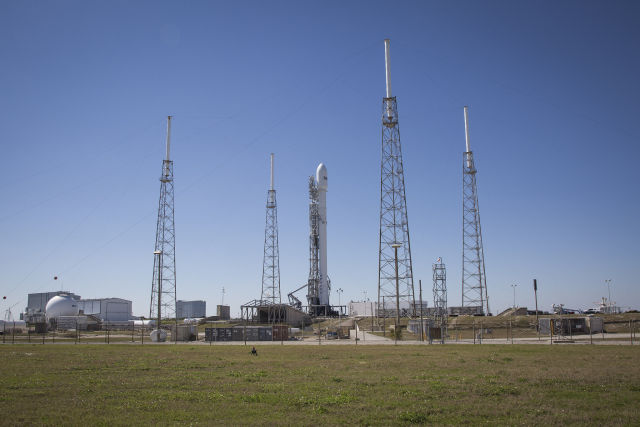
SpaceX's Falcon 9 and the SES-9 satellite are on the launch pad, and ready to go. (credit: SpaceX)

Twice SpaceX attempted to launch the SES-9 communications satellite into space last week, and twice the rocket company had to scrub. The reason was not weather, but rather issues with ensuring the rocket was fueled with the right amount of liquid oxygen postponed the festivities.

With its new, more powerful variant of the Falcon 9 rocket, SpaceX is having to handle this super-cold, dense propellant more carefully, and one of the things it is trying to do is deliver the right amount of fuel just before launch. With near perfect weather conditions expected for launch today, look for that to be the main issue to watch as SpaceX counts down toward the 6:46pm ET opening of the launch window.

As with other recent launches, SpaceX will try yet again to fly its booster back to an automated ship in the Atlantic Ocean off the coast of Florida. However, because this is a high orbit (about 35,000km above the equator) and will require a heavy vehicle with more fuel and more speed, returning safely back to Earth is far from a sure thing. Additionally, at 5,300kg, this is the heaviest payload SpaceX has attempted to deliver to a geostationary orbit.

Read 3 remaining paragraphs | Comments

That one time a man deliberately crashed at 632mph to pull max Gs

A review of Space Men, on PBS, turns up a new hero in pre-NASA space adventures.

Col. Joseph Kittinger is ready to gooooooooo during Project Excelsior. (credit: National Museum of the US Air Force)

Aside from documentaries by Ken and Ric Burns, my favorite PBS program is American Experience, the invariably well done series that covers slices of US history. So when I heard the network planned to run an episode on "pre-astronauts," people who pushed into the edge of space and tested human physiology in extreme environments before NASA rose to prominence, I was eager to watch.

Space Men premieres Tuesday at 9pm ET on PBS. It chronicles Project Manhigh and Project Excelsior, two initiatives in which explorers rose as high as 102,800 feet in helium-filled balloons to experience the frigid cold and near zero atmospheric pressure of such altitudes. In some ways these missions set the stage for Project Mercury, which would come shortly after, and they're worth remembering for their own sake.

While I was familiar with Project Excelsior and the daring high altitude jumps made by Col. Joseph Kittinger, I admit I never heard the name John Paul Stapp, who entered the Army Air Corps as a physician in 1944. He really stands out in this episode as an out-of-his-time man who foresaw that one day humans would fly into space.

Read 10 remaining paragraphs | Comments

Watch live: SpaceX to make second launch attempt and try a dicey landing

After a scrub Wednesday, SpaceX will have another go at launching the SES-9 satellite.

The Falcon 9 rocket carrying the SES-9 satellite is ready to go. (credit: SpaceX)

Are you ready for round two? On Wednesday, SpaceX delayed the launch of a commercial communications satellite, SES-9, to a geostationary transfer orbit out of an abundance of caution. The company said it wanted to ensure that liquid oxygen temperatures are as cold as possible to maximize performance of the vehicle. So it's going to try the launch today at 6:46pm ET. Weather is better as well, with an 80 percent chance of "go" conditions when the launch window opens.

As with other recent launches, SpaceX will try yet again to fly its booster back to an automated ship in the Atlantic Ocean off the coast of Florida. However, because this is a high orbit (about 35,000km above the equator) and will require a heavy vehicle with more fuel and more speed, returning safely back to Earth is far from a sure thing. Additionally, at 5,300kg, this is the heaviest payload SpaceX has attempted to deliver to a geostationary orbit.

Still, the company says it will make another attempt at a historic first, landing an orbital rocket on a sea-based platform. "The first stage of the Falcon 9 will attempt an experimental landing on the 'Of Course I Still Love You' droneship," SpaceX said in its press kit. "Given this mission’s unique GTO profile, a successful landing is not expected."

Read 2 remaining paragraphs | Comments

Sure, Scott Kelly says, he could go another year in space

What will he first do back in Houston? Jump in his pool, the astronaut says.

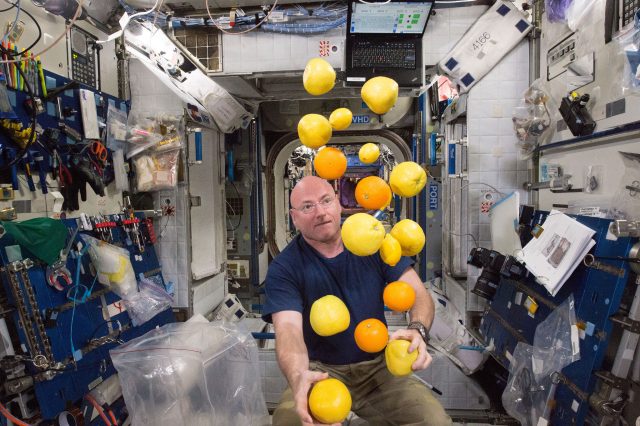
Scott Kelly will be able to eat all the fresh fruit he wants next week. (credit: NASA)

Scott Kelly is less than a week from coming home. When he climbs into a Soyuz spacecraft next Tuesday night, he will have completed a 340-day mission in space, the longest ever by any NASA astronaut.

But during a space-to-ground news conference with reporters on Wednesday, Kelly said he was feeling fine and still really enjoying his time in space. "I could go another year if I had to," Kelly said. "It would just depend on what I was doing and if it made sense. Although I do look forward to getting home next week."

Kelly will land Tuesday night at 11:25pm in Kazakhstan, likely about 140 kilometers southeast of Zhezkazgan. After medical tests there, he will return to Houston on a NASA airplane and undergo subsequent tests at crew quarters at the Johnson Space Center. And what will he do when released from there early Thursday morning? He's going to go home and jump in his pool, Kelly quipped.

Read 2 remaining paragraphs | Comments