His one year mission complete, Scott Kelly will retire from NASA

Astronaut plans to continue in medical studies of his post-flight health.

Scott Kelly is all smiles after landing in Kazakhstan earlier this month. (credit: Bill Ingalls/NASA)

Just 10 days after landing safely back on Earth, astronaut Scott Kelly has announced he will retire from NASA at the beginning of April. Kelly has been with the space agency since 1996, and he has flown two shuttle missions in addition to serving two stints aboard the International Space Station.

Kelly holds duration records for both the longest US spaceflight, 340 days, as well as most cumulative time in space by a NASA astronaut, 520 days. He hopes those records are fleeting, however. “Records are meant to be broken,” Kelly said Friday. “I am looking forward to when these records in space are surpassed.”

Although he is retiring from NASA, Kelly will continue to participate in the follow-up research that will monitor his health after he returned from space, including regular medical check-ups at Johnson Space Center, MRIs, blood draws, and other procedures. The goal is to understand how his body changed during the long duration flight so that NASA can better mitigate against the health hazards posed by long spaceflights.

Read 2 remaining paragraphs | Comments
The European forecast model already kicking America’s butt just improved

Better resolution will allow the world’s best model to improve local forecasts.

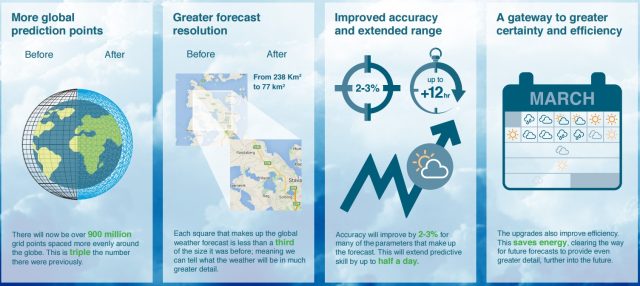
The European Center for Medium-Range Weather Forecasts is touting several improvements in its already industry-leading forecast model. (credit: ECMWF)

The European forecast model already outperforms all of the world’s other global forecasting systems, including the North American GFS model. The most overt demonstration of the European model’s superiority came in the week before Hurricane Sandy’s devastating landfall in 2012. Out of more than a dozen computer forecasts, only it showed the storm veering along a path toward the East Coast of the United States instead of staying harmlessly out to sea.

Now the world’s best forecast model is getting better, and not just by a little bit. An upgrade that went live this week provides dramatic improvements to the resolution of the model, both for its deterministic forecast as well as the ensemble model runs that are used for forecasting conditions a week or more in the future. “What the European modeling community is doing is just amazing,” Ryan Maue, a meteorologist with WeatherBell, told Ars. “This is the golden age of weather forecasters. It’s an absolute wonder of computer modeling technology.”

Maue lives and breathes computer forecast models every day when he converts the raw output from global forecasting entities, including the meteorological agencies of Europe, Canada, Japan, China, Brazil, and the United States, into graphics that depict weather conditions around the world. Many of the weather maps shared on social media sites bear the Weather Bell imprint.

Read 9 remaining paragraphs | Comments

First engine to power SLS rocket roars to life on Mississippi test stand

Four of these engines will provide 2 million pounds of thrust.

NASA successfully fired a space shuttle main engine today that will power the SLS rocket. (credit: NASA)

As NASA builds its new rocket, the Space Launch System (SLS), it is relying on some older technologies, including the space shuttle's reusable engines. And before the new rocket flies, the older engines must be test fired to ensure they still function properly. On Thursday, that happened for the first time with one of the engines that will be used on the SLS's maiden flight.

The engine, number 2059, fired for 500 seconds on a test stand at NASA's Stennis Space Center in southern Mississippi. It had not been used since 2011, when it powered space shuttle Endeavour to orbit in what was the penultimate flight of the space shuttle program. This engine flew five times into space.

The SLS rocket will rely on four space shuttle main engines, which combined will provide more than 2 million pounds of thrust. The new rocket may make its initial flight in late 2018 or 2019, with an uncrewed launch of the rocket and Orion spacecraft called Exploration Mission-1. Unlike the shuttle, however, only the capsule returns from space so engines that were designed to be reusable are lost.

Read 1 remaining paragraphs | Comments

Jeff Bezos says he wants to fly into space “as soon as possible”

Sadly, for paying customers, a ride into space doesn’t come with Amazon Prime.

Jeff Bezos, not a member of the Hair Club for Men, in Blue Origin's rocket factory. (credit: Eric Berger)

The thickly coiffed Sy Sperling gained a measure of fame as the founder of the Hair Club for Men in the 1980s and 1990s with commercials that reminded viewers he wasn’t just the president of the company, he was “also a client.” For Jeff Bezos, it’s much the same. No, the close-shaven, balding-pate Bezos decidedly isn’t a member of the hair club. Rather, he’s not just the founder of Blue Origin, he also intends to fly into space aboard its New Shepard spacecraft.

And is he ever excited about this. Oh yes. This week, while pointing out the large windows in the New Shepard on the floor of his rocket factory, Bezos talked expansively about what it would be like to ride into space aboard the vehicle for the first time. The seats recline, he explained, with each of the six inside the spacecraft facing its own window.

But the spacecraft won’t just offer a room with a view. Passengers will feel the effect of rocketing into space. During ascent, passengers will experience 3 to 4Gs, and up to 5Gs during descent, although the maximum g-forces will last only for about 10 seconds.

Read 11 remaining paragraphs | Comments

Mars InSight mission gets new life after seismometer failure

The delay to NASA’s latest Mars probe may cost the agency about $150 million.

NASA's InSight Mars lander spacecraft in a Lockheed Martin clean room near Denver. (credit: Lockheed Martin)

NASA announced Wednesday that it will attempt to launch its InSight mission to Mars in 2018, two years after its original launch date, after engineers discovered problems with the spacecraft's seismometer system. The decision is a win for Mars scientists because there had been some concern that NASA would have to cancel the mission due to cost overruns.

"The science goals of InSight are compelling," said John Grunsfeld, associate administrator for NASA's Science Mission Directorate in Washington. "The quest to understand the interior of Mars has been a longstanding goal of planetary scientists for decades. We're excited to be back on the path for a launch."

The seismometer itself worked fine, but several times during the last summer and fall engineers found a leak in the 22cm sphere that creates a vacuum so that the instrument can function on the harsh surface of Mars. Their temporary fixes didn't address the problem. Now NASA and the French seismometer manufacturer Centre National d'Études Spatiales believe they have found a permanent fix for the recurring leak.

Read 2 remaining paragraphs | Comments

Behind the curtain: Ars goes inside Blue Origin’s secretive rocket factory

Jeff Bezos’ rocket company invited just a few reporters for its first media tour.

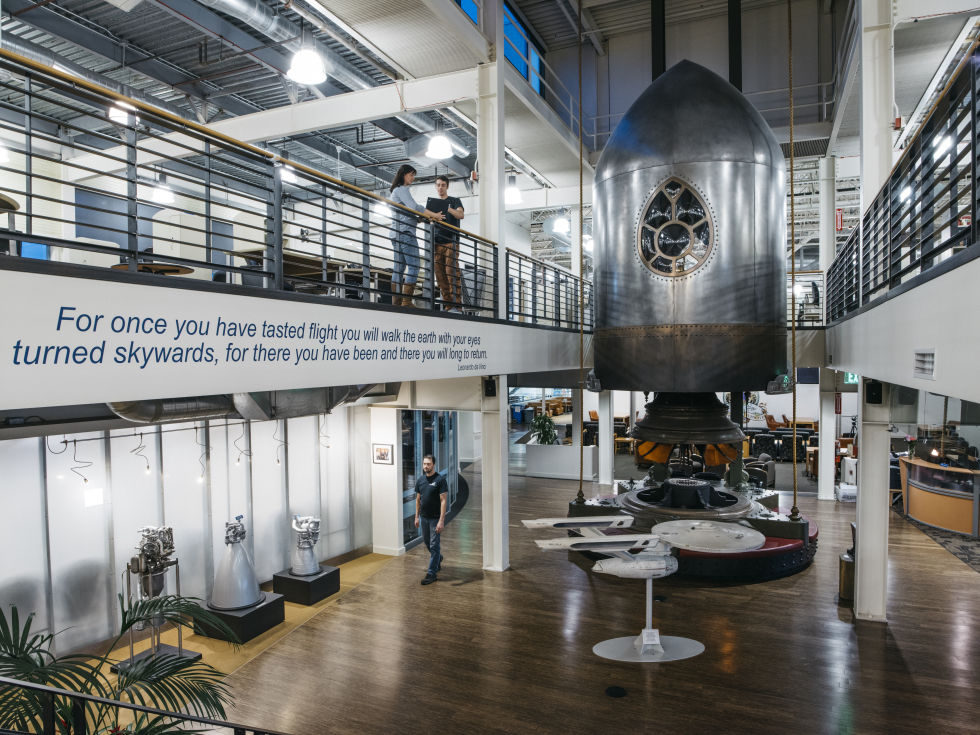
Welcome to Blue Origin, where you're greeted with a replica of the spacecraft in Jules Verne's From the Earth to the Moon. (credit: Blue Origin)

KENT, Wash.—Notebooks in hand, we gathered around a long table inside Jupiter 2, a conference room on the second floor of Blue Origin’s headquarters. Ten of us had come at the company’s invitation to see for the first time, first hand, where Blue Origin builds its spaceships and rockets. For years, this had been undiscovered country for journalists. And then Jeff Bezos, as casual as you please in a blue and white checkered shirt and designer jeans, strolled into the room.

Bezos may be better known for upending the retail world with Amazon and making himself the fifth richest person in the world along the way. But his passion lies above in the night sky. He has thought about building rockets and flying into space since he was five years old, so he started this day accordingly. “Alright, are you guys ready to have some fun?” he asked.

We were.

Read 34 remaining paragraphs | Comments

Meet the real ironman of spaceflight: Valery Polyakov

He spent 438 days in space and then stood up and walked away from his spacecraft.

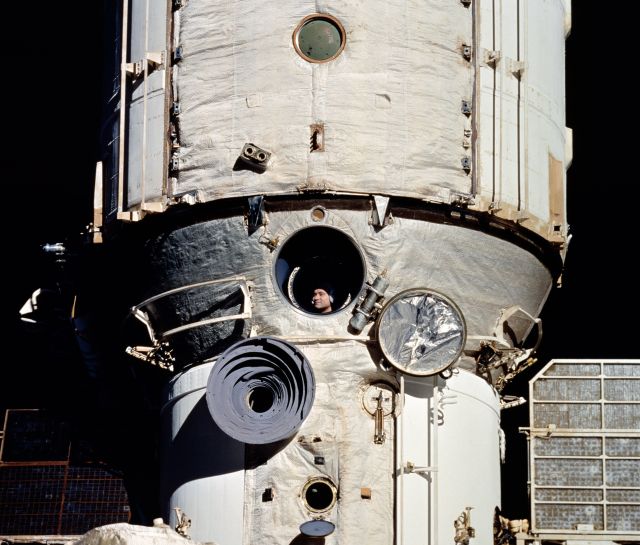
Valery Polyakov looks out of Mir as space shuttle Discovery approaches the space station in 1995. (credit: NASA)

When Scott Kelly and Mikhail Kornienko returned from space last week after 340 days, they showed few outward signs of fatigue. Moreover, they had the self-satisfaction of putting in nearly a year of very hard work on the International Space Station. Their efforts, along with those of hundreds of scientists on Earth, will undoubtedly advance our knowledge of the effect of long-duration spaceflight on human health.

But to call Kelly and Kornienko pioneers in the truest sense of the word, as those who ventured into the truly unknown, would be a disservice to the Russian cosmonauts who did so much more than two decades ago in more cramped, less comfortable conditions aboard the Mir space station.

Before NASA’s one-year mission, four Russian cosmonauts had spent a year or more in space, beginning with Vladimir Titov and Musa Manarov in 1987. Russian and Kazakh space officials were quick to remind Kelly and Kornienko of this last week after they landed in a remote area of Kazakhstan.

Read 9 remaining paragraphs | Comments
Spacecraft finds “magic island” in hydrocarbon seas of Titan

World’s tantalizing oceans may teem with “weird life” we cannot begin to imagine.

This image shows the evolution of a transient feature in the large hydrocarbon sea named Ligeia Mare. (credit: NASA/JPL-Caltech/ASI/Cornell)

By comparing radar images of Saturn's exotic moon Titan, scientists have found a bright, island-like feature that has changed over time. The images, captured by the Cassini spacecraft from 2007 through 2015, show this "magic island" brightening and then dimming again.

From studying the images, scientists conclude the brightening is most likely due to waves at or beneath the surface. They do not think it's likely to be caused by tides or sea level or seafloor changes. The surface of Titan is extremely cold, on average about -180ºC, but methane and other hydrocarbons on its surface can still exist in liquid form. The "lake" shown in this image, Ligeia, is Titan's second-largest liquid hydrocarbon sea. With an area of about 130,000 square kilometers, it is nearly as large as the Caspian Sea, Earth's largest lake.

Previous images indicate other, similar features exist in Kraken Mare, Titan's largest hydrocarbon sea. With these observations, planetary scientists are beginning to understand that this moon's oceans are not stagnant, but are instead dynamic environments. Cassini will have one more opportunity to look for "magic island" in 2017, during its final, close flyby.

Read 3 remaining paragraphs | Comments

NASA offers few details about what it learned from Scott Kelly’s mission

Sore muscles aside, Kelly feels good—but we won’t see twin study results for a year.

Scott Kelly, left, and his brother Mark Kelly share a laugh at the Johnson Space Center on Friday. (credit: Eric Berger)

HOUSTON—Less than three days after falling back to Earth in a fireball from space, Scott Kelly told a group of reporters gathered at Johnson Space Center that he hadn’t expected to feel quite so sore upon returning from space. But overall,Kelly said, he could have gone longer in space if the mission demanded it.

Immediately after exiting the Soyuz capsule, Kelly said he felt stronger than he did in 2011, after he had spent 159 days in space. “This time I felt better coming out of the capsule, but at some point those two lines must have crossed,” he said. Now he has a lot of muscle fatigue and soreness. When asked which muscle groups were sore Kelly replied, “Most of them.”

Another unexpected issue came with his skin. In space, in microgravity, not much touched his skin in the free floating environment. Back on Earth he’s found it to be very sensitive to the touch. “There’s almost a burning feeling whenever I sit or lay down,” he said. Kelly had put on dress shoes for the news conference, but he had more comfortable sneakers at hand for afterward.

Read 14 remaining paragraphs | Comments

Fifth time’s the charm? SpaceX to launch, hopefully land, rocket today

After scrubs for fuel loading issues, weather, and stray boats, what’s next?

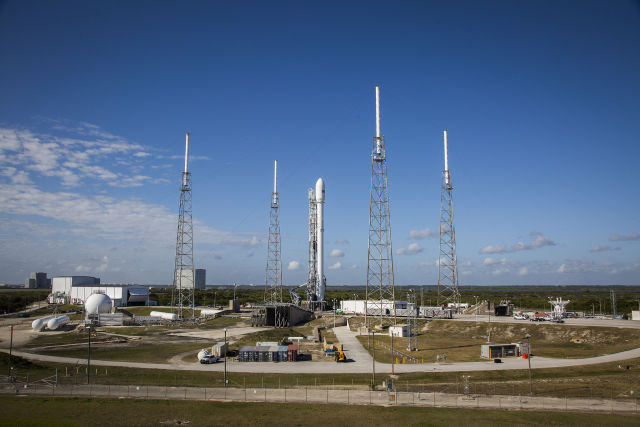
The SES-9 satellite is ready to go. Will we see a launch this evening? (credit: SpaceX)

Here we go again. Four times SpaceX has attempted to launch the SES-9 communications satellite, and four times the rocket company had to scrub. For today's launch attempt, at 6:35 pm ET (11:35pm UK) weather does not appear to be a constraint, so we will again be watching primarily for fuel-loading issues.

The most dramatic of the four scrubs came on Sunday when, just as the launch countdown reached zero, flight computers on board the rocket halted the launch due to a low thrust detection. Elon Musk, the company's chief executive, said that issue was partly due to a 35-minute delay caused by a boat that strayed into the safety zone off the coast of Florida.

With its new, more powerful variant of the Falcon 9 rocket, SpaceX is having to handle this super-cold, dense propellant more carefully, and one of the things it is trying to do is deliver the right amount of fuel just before launch. Issues related to propellant loading caused the first two scrubs. The most recent scrub, on Tuesday, came due to high winds. SpaceX has been waiting for them to die down, and they now have.

Read 3 remaining paragraphs | Comments