Department of Defense opens investigation into ULA launch contracts

Inquiry comes after executive said government had “bent over backward” to favor ULA.

A United Launch Alliance Atlas V rocket successfully launches the AFSPC-5 satellite for the U.S. Air Force in 2015, (credit: United Launch Alliance)

In a memorandum sent Tuesday to the US Secretary of the Air Force, the Department of Defense's deputy inspector general for policy and oversight, Randolph R. Stone, announced his office had begun an investigation "regarding assertions" made by a former United Launch Alliance executive.

The executive, Brett Tobey, resigned from the Colorado-based company last week after making comments about ULA struggling to compete on launch costs with another rocket company, SpaceX. Tobey also said the government "had bent over backwards to lean the fill to our advantage," when it came to awarding launch contracts.

"At the request of the Secretary of Defense, the OIG DoD has opened an investigation regarding assertions made by United Launch Alliance’s former Vice-President of Engineering relating to competition for national security space launch and whether contracts to ULA were awarded in accordance with DoD and Federal regulations," Stone writes in the memorandum, obtained by Ars Tuesday evening.

Read 4 remaining paragraphs | Comments

Tonight’s launch to supersize space science, researcher to follow in May

3D printing? Fire? Gecko grips? Regolith simulants? All of this and more going up.

The Atlas V rocket and the S.S. Rick Husband spacecraft are rolled out to the launch pad at Kennedy Space Center. (credit: NASA)

Like Matt Damon in The Martian, NASA is getting ready to science the @$!# out of the International Space Station. Late on Tuesday night, pending last-minute weather or technical issues, a spacecraft named for the late space shuttle Columbia commander Rick Husband will launch from Kennedy Space Center. Liftoff of the science-laden spacecraft is set for 11:05pm EDT (3:05am GMT Wednesday).

The launch of the Orbital ATK spacecraft is NASA’s second resupply mission to the International Space Station after two critical supply ship failures: an Orbital launch in late 2014, and a SpaceX flight in June 2015. After NASA’s commercial fleet was grounded for half a year, the space agency is now trying to settle into a more regular resupply schedule. The first SpaceX resupply flight since its accident is scheduled for April 8.

A variety of scientific payloads highlight Tuesday’s launch. Among its 3.5-ton cargo of food, water and other supplies, the S.S. Rick Husband will ferry 777kg of scientific experiments into space, including an upgraded version of a 3D printer, gecko-like grippers for moving around in microgravity, the first component of an ambitious Spacecraft Fire Experiment, and an experiment to that will allow scientists to better understand the behavior of regolith on asteroids and other small bodies with near-zero gravity.

Read 10 remaining paragraphs | Comments

Russian space program to match NASA’s annual budget—over the next decade

Roscosmos will receive a 30 percent cut amid country’s economic problems.

NASA subsidizes the Russian space program through astronaut launches, like Jeff Williams on March 18, but for how much longer? (credit: NASA)

When it comes to space, Russia talks a good game. It speaks of sending humans to the Moon in 2029. It is building a large, $3 billion cosmodrome in far Eastern Russia. And at present it can boast of being NASA's only means of getting astronauts to the International Space Station.

But behind a reliable program of aging rockets that date to the 1960s (the Soyuz and Proton launch vehicles), most of Russia's successes have come in conjunction with NASA during the last two decades. Beyond this participation in the space station program, however, lies a much beleaguered science program. Russia has not had a successful interplanetary mission in more than three decades since 1984’s launch of Vega 2, a probe to Venus and Halley’s Comet.

Now comes more concern for the Russian space program. Amid the country's budget problems due to a slump in oil prices and western sanctions for its intervention into Ukraine, Russian Prime Minister Dmitry Medvedev intends to cut funding for Russia's space program by 30 percent, Reuters has reported.

Read 2 remaining paragraphs | Comments

Goodnight, Antarctica: Researchers won’t see sun for six months

NOAA posts a photo of the last sunset at US Amundsen-Scott South Pole Station.

The Sun sets over the US South Pole station for the last time until this fall. (credit: NOAA)

The first day of spring causes most people in North America to think longingly of warmer days ahead in the summer months. But at the southern edge of the world—specifically, the US Amundsen-Scott South Pole Station—a northern spring marks the last time southern researchers will see the sun for six months.

On Sunday, NOAA posted a haunting photo of the last sunset at the research station, where a few dozen researchers will spend the next six months in darkness. It's so cold, with temperatures as low as -100 degrees Fahrenheit, that airplanes will not return to the site until October at the earliest.

But the experience is not without its amusements. As the Atlantic described in a 2015 article, many South Pole winter denizens will attempt to join the 300 Club, in which one enjoys a 200-degree sauna and then streaks naked to the South Pole itself in -100 degree conditions. Most participants wear nothing but a scarf.

Read 1 remaining paragraphs | Comments

To arms! A revamped Game of Thrones card game delivers combat and treachery

Ars test drives the second edition of the game inspired by George R.R. Martin’s world.

This is how a typical game looks a few turns in. Of course, your game board won't be this tidy. (credit: Fantasy Flight Games)

Welcome to Ars Cardboard, our weekend look at tabletop games! Check out our complete board gaming coverage right here—and let us know what you think.

Six decades have passed since J.R.R. Tolkien's The Return of the King first hit bookstores, and since then, The Lord of the Rings has reigned over the fantasy genre. Yet in recent years, no challenger has come closer to toppling Tolkien's epic in popular culture than George R.R. Martin’s A Song of Ice and Fire.

The series' widespread popularity, due in part to a wildly successful HBO series, has opened the door to countless spinoff products. But even before the show brought Tyrion Lannister into our living rooms, Fantasy Flight Games (FFG) had been catering to George R.R. Martin fans for years. And because Martin’s world is populated with dozens of vivid, unpredictable, and often downright evil characters, it's no surprise that FFG launched A Game of Thrones: The Card Game back in 2008. Who wouldn't want to do battle as Jaime, Cersei, or Tywin under House Lannister, or wield Sand Snakes as The Red Viper of House Martell, or fight alongside the other factions?

Read 14 remaining paragraphs | Comments

Watch live: Record-setting NASA astronaut launching to space station

During his six-month rotation, Jeff Williams will set a US spaceflight endurance record.

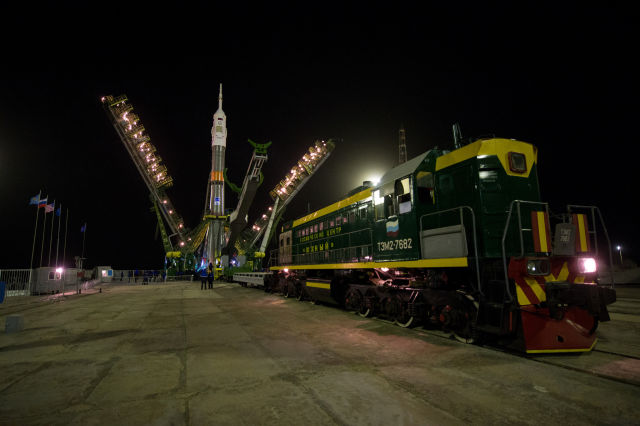
The gantry arms close around the Soyuz spacecraft to secure the rocket at the launch pad on Wednesday. (credit: NASA)

A Russian rocket will launch two cosmonauts, Alexey Ovchinin and Oleg Skripochka, and NASA astronaut Jeff Williams into space today from the Baikonur Cosmodrome in Kazakhstan. Liftoff is set for 5:25pm ET, and live NASA TV coverage of the launch begins at 4:30pm in the video below.

Williams will be making his third visit to the International Space Station, and he'll become the first astronaut to make three rotations through the orbiting laboratory as a crew member. He has previously lived on the station in 2006 and 2009. This has given Williams a cumulative time in space of 362 days.

He presently ranks sixth among NASA astronauts in cumulative time in space and 35th among all space fliers on a list mostly populated by Russian astronauts. Before the end of his present mission (after 158 days, specifically), Williams will surpass Scott Kelly for the US record for total time in space (520 days). At the scheduled end of his third station mission in September, Williams will have spent 534 days in space.

Read 1 remaining paragraphs | Comments
Senator asks Pentagon to investigate “troubling” launch contracts

Inquiry comes after ULA official said his company couldn’t compete with SpaceX.

Sen. McCain asks questions at a Senate Armed Services Committee in 2014. (credit: Department of Defense)

On Wednesday, a senior executive with United Launch Alliance said the US military "bent over backwards" to favor the Colorado-based rocket company in the bidding process for national security payload launches. On Thursday, Sen. John McCain (R-Ariz.), chairman of the Committee on Armed Services, asked Secretary of Defense Ash Carter to investigate these comments.

"Let me just say that yesterday disturbing statements made by a senior executive of the United Launch Alliance were reported in the media," McCain said at the onset of a committee hearing Thursday morning. "These statements raise troubling questions about the nature of the relationship between the Department of Defense and ULA. This committee treats with the utmost seriousness and implication that the department showed favoritism to a major defense contractor or that efforts have been made to silence members of congress. Mr. Secretary, I expect that you will make a full investigation into these statements and take action wherever appropriate."

McCain was referring to comments made by Brett Tobey, a vice president of engineering for United Launch Alliance, during a seminar with students at the University of Colorado-Boulder. Tobey has since resigned, effective immediately, and ULA chief executive Tory Bruno has said Tobey's comments were "inaccurate."

Read 2 remaining paragraphs | Comments

ULA executive admits company cannot compete with SpaceX on launch costs

The senior engineer has resigned from United Launch Alliance, effective immediately.

A United Launch Alliance Atlas V rocket launches NASA’s Magnetospheric Multiscale spacecraft in March, 2015, from Florida. (credit: NASA)

The most reliable US rocket company, United Launch Alliance, could not compete with upstart provider SpaceX during a competition in late 2015 for an Air Force payload, a senior engineer with the company said Wednesday. SpaceX was able to offer launch capabilities for as little as one-third the price of what United Launch Alliance could, said Brett Tobey, vice president of engineering for the Colorado-based rocket company.

It does not appear Tobey knew his remarks at a University of Colorado-Boulder seminar were being recorded. But Space News obtained a copy of the audio and posted the revealing, nearly hour-long recording on its website. By Wednesday night Reuters reported that Tobey had resigned from his position at United Launch Alliance, effective immediately.

"The views, positions, and inaccurate statements Mr. Tobey presented at his recent speaking engagement were not aligned with the direction of the company, my views, nor the views I expect from ULA leaders," the company's chief executive, Tory Bruno, said in a statement. Tobey's comments are likely to undermine the efforts of Bruno, who has received kudos within the US spaceflight community for trying to make ULA more competitive and innovative.

Read 10 remaining paragraphs | Comments

NASA chief: Apollo engineers who criticize SLS don’t grok modern rocketry

Bolden defends NASA’s plans against those who say new rocket is too costly to fly.

Charles Bolden flew on the space shuttle four times. (credit: NASA)

It was nearing the end of a two-hour Appropriations subcommittee hearing in the US House of Representatives when Rep. Mike Honda (D-Calif.) asked NASA Administrator Charles Bolden an interesting question. The question referred to comments Chris Kraft made a few years ago in an interview with the Houston Chronicle, in which he said that the operating costs of NASA's large Space Launch System rocket "will eat NASA alive."

Kraft, the agency's original flight director, and the man for whom NASA's mission control is named, is skeptical of the plan to build a very large rocket with a similar capability to the Saturn V used by Apollo program. He and a number of Apollo engineers are concerned that NASA can't afford to fly the expensive rocket more than once every other year and that a lack of missions will have dangerous consequences for the rocket's reliability. Some, like Kraft, have argued that NASA should cede rocket-building to private companies like the United Launch Alliance and SpaceX, which have demonstrated an ability to do so safely and at a lower cost.

After summarizing this idea, Honda asked Bolden, "How do you respond to these sorts of concerns about the Space Launch System, and what is NASA doing to work with industry and government partners to develop a spectrum of missions beyond EM-1 and EM-2 to fully utilize this enormous national asset?"

Read 6 remaining paragraphs | Comments

With today’s launch, Europe and Russia seek to break the Mars “curse”

Only NASA has had sustained success in landing spacecraft on the red planet.

Artist's impression of the ExoMars 2016 Trace Gas Orbiter at Mars. (credit: ESA)

The spaceways to Mars are littered with the debris of probes trying reach the dusty red planet's surface. In 55 years of Mars exploration, no space agency in the world other than NASA has ever landed a probe on the surface of Mars that survived more than a handful of seconds.

NASA's success in putting a sequence of increasingly larger and more complex onto the surface of Mars, culminating with the 1-ton Curiosity rover in 2012, has been rather remarkable in comparison to other space agencies. Eight of NASA's nine missions to the surface of Mars have been successful, with only its Mars Polar Lander failing to safely reach the surface in 1999.

By contrast, four of five Soviet Union landers failed to reach Mars safely, and the one that did, Mars 3 in 1971, survived for only about 15 seconds. In addition there have been a number of failed Soviet and Russian attempts to reach the Martian moon Phobos.

Read 10 remaining paragraphs | Comments