Watch live: SpaceX tries not to crash another rocket

Come for the cargo launch. Stay for a history-making landing. Or a crash.

With an instantaneous launch window that opens and closes at 4:43pm ET (9:43pm BST) today, SpaceX will attempt to send its Falcon 9 rocket and Dragon spacecraft soaring into space.

While there is some intriguing cargo aboard the Dragon spacecraft, notably the expandable Bigelow habitation module, most of today's suspense will come after launch when SpaceX attempts to land its first stage booster on a drone ship off the Florida coast.

According to today's flight profile, the first stage main engines will cutoff at 2 minutes, 30 seconds after launch. The main engines will separate about 4 seconds later, and the first stage boostback burn will begin 4 minutes after launch. The landing burn should occur at 8 minutes, followed by an experimental landing attempt at around 10 minutes.

Read 3 remaining paragraphs | Comments
To power its rocket of the future, NASA turns to 1950s technology

NASA opts for old-time reliability over newer, more efficient upper-stage options.

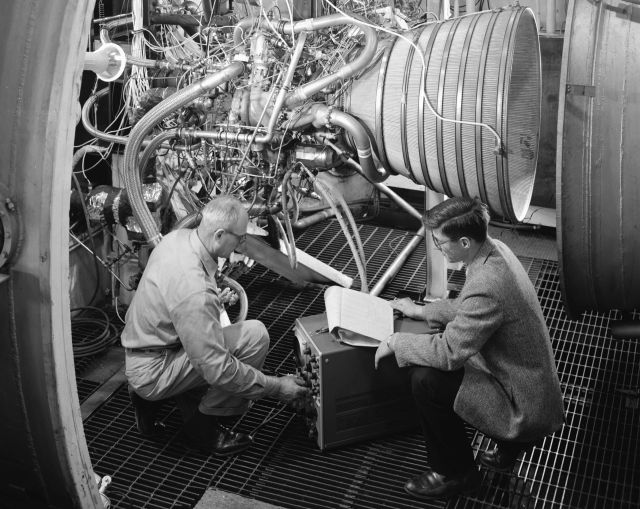
Engineers test the RL-10 engine in NASA Lewis (now Glenn) Research Center's Propulsion Systems Laboratory. (credit: NASA)

NASA is making good progress on developing the core stage of its Space Launch System rocket, as directed by Congress in 2010. Per the request of legislators, the agency is using legacy hardware such as the space shuttle's main engines to propel this core stage and solid rocket boosters to give it an initial kick off the launch pad.

Meanwhile, the agency hasn't yet settled on an architecture for the upper stage of the massive rocket, which is used to boost payloads beyond low-Earth orbit and into deep space. For at least the first, uncrewed flight in 2018, NASA will use an interim upper stage. But Congress has been pressing the agency to settle on a new, permanent upper stage, dubbed the "Exploration Upper Stage," in time for the second launch of the SLS rocket in 2022 or 2023.

According to an insider website, NASASpaceflight.com, the agency had been considering nine proposals for the upper stage, but it has now chosen an architecture that uses four RL-10 engines as it moves forward. The RL-10 engine, a workhorse developed in the late 1950s and first flown in 1963, runs on liquid hydrogen/liquid oxygen fuel.

Read 2 remaining paragraphs | Comments

SpaceX says cargo launch ready, hopes to “nail the landing” this time

Company also intends to increase launch cadence to every other week by year’s end.

The Dragon spacecraft sits atop the Falcon 9 rocket in preparation for launch on Friday, (credit: SpaceX)

A little more than nine months after the loss of its Dragon spacecraft during a cargo flight to the International Space Station, SpaceX is ready to set matters right. On Wednesday, the company completed a successful static firing of its Falcon 9 rocket engines, and a Thursday readiness review found all systems were go for a launch on Friday afternoon.

The resupply flight will carry 3,136kg of cargo to the station inside the Dragon capsule, including the 1,413kg Bigelow Expandable Activity Module. And while there has been some excitement about the potential for expandable habitats in space, which may lead to much larger living quarters for human activity, much of the anticipation for Friday's launch again revolves around whether SpaceX will make a historic landing on a drone ship at sea. Launch is scheduled for 4:43pm ET (9:43pm BST) on Friday.

During a news conference on Thursday, Hans Koenigsmann, a senior launch official with SpaceX, said the company has learned from previous attempts to gently set the Falcon 9 down at sea. Nevertheless the procedure remains a tricky one, given that SpaceX is trying to land a 70-meter tall rocket stage in the middle of the ocean after it has flown into space at six times the speed of sound. "I certainly hope we're going to nail the landing this time," Koenigsmann admitted.

Read 8 remaining paragraphs | Comments
The next big thing in space may be really, REALLY small satellites

Space for all? Put your very own GoPro into orbit for about $3,000.

A proposed FemtoSat is shown in space, with a penny for scale. (credit: Arizona State)

The miniaturization of space continues, unabated. First came CubeSats, measuring about 11cm long and weighing no more than 1.33kg. These small research payloads have helped spur the development of a small satellite launch industry, and using the International Space Station to deploy them has become one of the national lab's hottest commercial activities.

However, the evolution of satellites downward from thousands of kilograms, down to a single kilogram, does not seem to be stopping. On Thursday. Arizona State University announced it is developing FemtoSats, a 3cm cube with a mass of just 35g. These "SunCubes" grew out of a research project begun in 2014 by Jekan Thangavelautham, a professor in the university's School of Earth and Space Exploration.

The FemtoSats will deploy in an almost matryoshka doll-like manner—from a CubeSat fitted with a Jack-in-the-box-like spring. According to the developers, this mechanism will allow the FemtoSat standard to be bootstrapped to the CubeSat standard, allowing FemtoSats to be carried as additional payloads on CubeSat missions. A single deployer could release 27 FemtoSats.

Read 5 remaining paragraphs | Comments

TV maker Panasonic says it has developed the world’s best weather model

The company says it has beaten the GFS for awhile, and now equals the ECMWF.

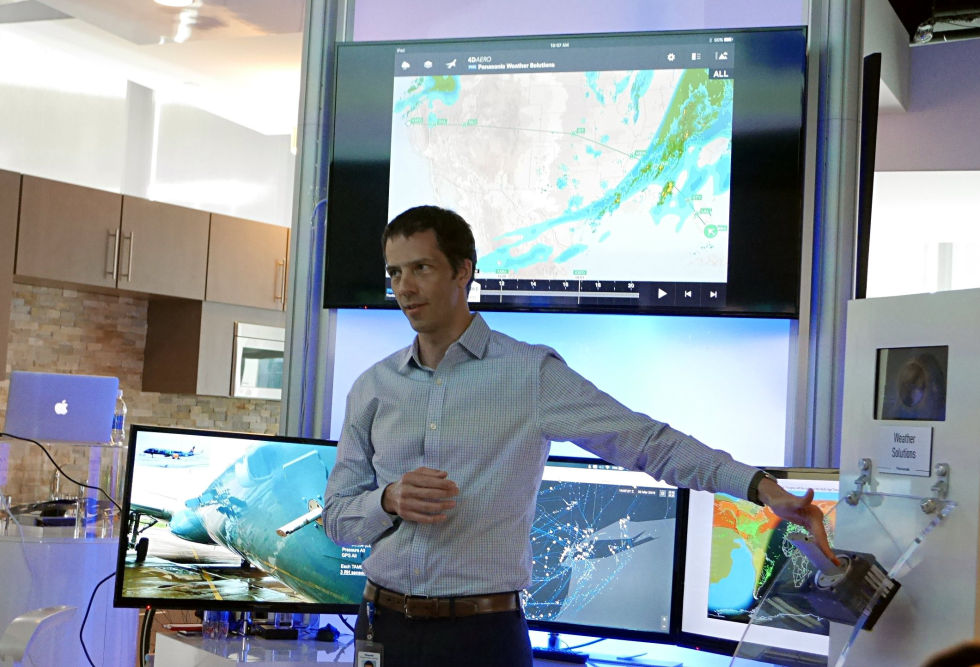
Neil Jacobs, chief atmospheric scientist with Panasonic Weather Solutions, talks about his global weather model (credit: Panasonic Weather Solutions)

For a long time, weather forecasting was largely the domain of governments, with the National Weather Service leading the way in the United States. During the last two decades, however, the private weather forecasting industry—which includes well-known companies such as AccuWeather and many hundreds of smaller businesses—has grown up and is now estimated to be worth as much as $6 billion.

Even so, these companies largely just repackage model forecasts and incorporate data from government weather agencies. The heavy lifting, in the form of sophisticated computer modeling and the processing power to run them, is still done by the large ECMWF center in Europe, NOAA's National Centers for Environmental Prediction in the United States, and similar forecasting services in Canada, Japan, and elsewhere.

All of these government agencies, with staffs generally in the hundreds of scientists, forecasters, and coders, collect weather data from a variety of sources, including shared satellite data along with in-situ observations from aircraft, balloon soundings, surface observations, and other sources. Then, using their own software, they "assimilate" these observations into physics-based forecast models that simulate weather conditions around the globe, at various levels of the atmosphere, over a 10- to 16-day period. The results from these global models are then used to predict things like the high temperature on Wednesday and whether it is likely to rain on Saturday afternoon for little Joey's birthday party.

Read 14 remaining paragraphs | Comments

Astronaut Prime: Here’s how Jeff Bezos plans to remake spaceflight

Some are not impressed with Blue Origin’s small beginning, but it’s just a first step.

The New Shepard rocket made its third flight on Saturday from West Texas. (credit: Blue Origin)

After Blue Origin completed the third flight of its New Shepard launch system on Saturday, the spaceflight community applauded the effort. And on Sunday, after video emerged showing the dramatic firing of its engines just before the rocket would have struck the ground, the response was again approbation. This third test in a little more than four months demonstrated that Blue Origin has continued to progress toward its goal of launch, land, and repeat—the holy grail of low-cost spaceflight.

But among the cheers were also a few mutterings. What does it matter if all Jeff Bezos is going to do is take rich people on joy rides, some said. Or, if researchers want to do suborbital experiments, can't they get those done in conventional aircraft flying parabolas? Others have complained that New Shepard's propulsion module is relatively small and has only a single engine, and flying to suborbital space requires a fraction of the energy that getting into orbit does. In short, some critics say Bezos is just dabbling at the edges of space, not doing the hard stuff of going all the way.

This may all be true, but it misses the point. Much like Mercury represented America's first tentative steps into outer space, so does New Shepard represent only a beginning for the company. New Shepard, after all, is named after Alan Shepard, the first American in space who rode inside a Mercury capsule. It may or may not succeed, but Blue Origin aspires to be much more. It's trying to build a scalable, reusable architecture from the ground up, and that takes time.

Read 15 remaining paragraphs | Comments

Japanese X-ray observatory seen spinning out of control

Much anticipated X-ray observatory a big loss to scientific community.

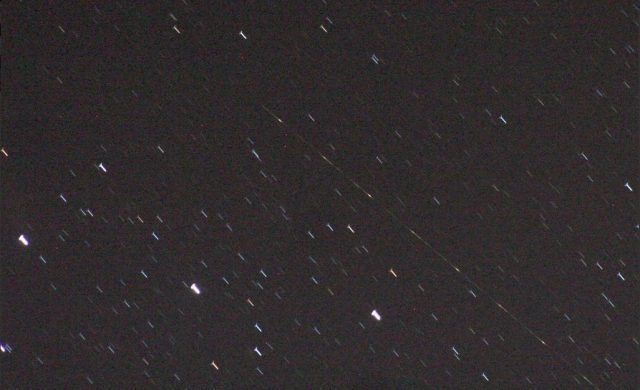
Pieces of Japan's Hitomi satellite are seen tumbling through the Orion constellation Sunday night. (credit: William Keel)

The prognosis wasn't good last week when the Japanese Space Agency, JAXA, lost communication with its new Hitomi X-ray astronomy satellite. However, there was some hope a few days later when the space agency reestablished intermittent contact with the spacecraft orbiting some 580km above the Earth.

Astronomers have since been observing the satellite, originally known as Astro-H, as it has orbited around the Earth. The photos with this story, captured by University of Alabama astronomer William Keel on Sunday evening, appear to show different pieces of the spacecraft catching the Sun as they slowly rotate. The brightest moments are probably caused by solar panels spinning into view. The pattern of brighter and then fainter light suggests at least two large pieces, with different periods, are tumbling out of control.

One astronomer who has been tracking Hitomi closely, Jonathan McDowell at the Harvard-Smithsonian Center for Astrophysics, tweeted on Sunday evening, "Sadly, I now believe that the radio signals were the dying sighs of a fatally wounded Astro-H."

Read 2 remaining paragraphs | Comments

Why Blue Origin’s latest launch is a huge deal for cheap space access

Blue already proved it could land. Now it’s showing it can rinse and repeat.

Engineers work on a New Shepard capsule in March inside Blue Origin's rocket factory near Seattle. (credit: Blue Origin)

Today marks the third time in just over four months that Blue Origin has successfully launched and landed its New Shepard spacecraft and propulsion module. The launch and landing took place in a remote area of West Texas and is a significant step for a company that wants to dramatically cut the cost of access to space.

Before last November, when New Shepard made its historic first flight, it was unclear how difficult it would be to land a rocket vertically on the ground after sending it into space. But then Blue Origin did it. A month later SpaceX performed the same feat with its Falcon 9, a much larger and more powerful booster that had just delivered a payload into orbit.

That led to the next hurdle: could rockets be refurbished quickly and relatively inexpensively for subsequent flights? This was a stumbling block for the space shuttle, which required hundreds of millions of dollars in engine tests and retrofitting after every flight. Blue Origin has begun jumping this hurdle too. First, it flew the New Shepard module again in January, a turn-around time of about two months.

Read 7 remaining paragraphs | Comments

Jeff Bezos is live tweeting today’s Blue Origin launch [Updated]

The company’s openness suggests confidence in the its vehicles.

Jeff Bezos stands next to a nozzle of a BE-4 engine in his Blue Origin rocket factory. (credit: Eric Berger)

For more than a decade Jeff Bezos kept his Blue Origin rocket company under a shroud. Engineers worked away at four versions of engines in a rocket factory near Seattle, and then tested those machines in a remote area of West Texas. All the while the spaceflight industry wondered what Bezos and his billions were up to.

In November the plan became more clear when Blue Origin pulled off the remarkable feat of flying its New Shepard space vehicle to 100.5km and then returning it successfully to the ground near its West Texas launch site. It then re-flew the booster.

After these successes Bezos began to open up Blue Origin a little bit. In March he invited Ars and a handful of other media outlets for an unprecedented tour of the Washington state-based rocket factory, and talked expansively about the company's plans. His philosophy about secrecy, he said, was that he didn't want to make unwarranted claims about Blue Origin's capabilities until they could be demonstrated.

Read 6 remaining paragraphs | Comments

The first telephoto lens used on the Moon is going up for auction

Lightly used. Well traveled. Operates in extreme cold. May contain lunar dust.

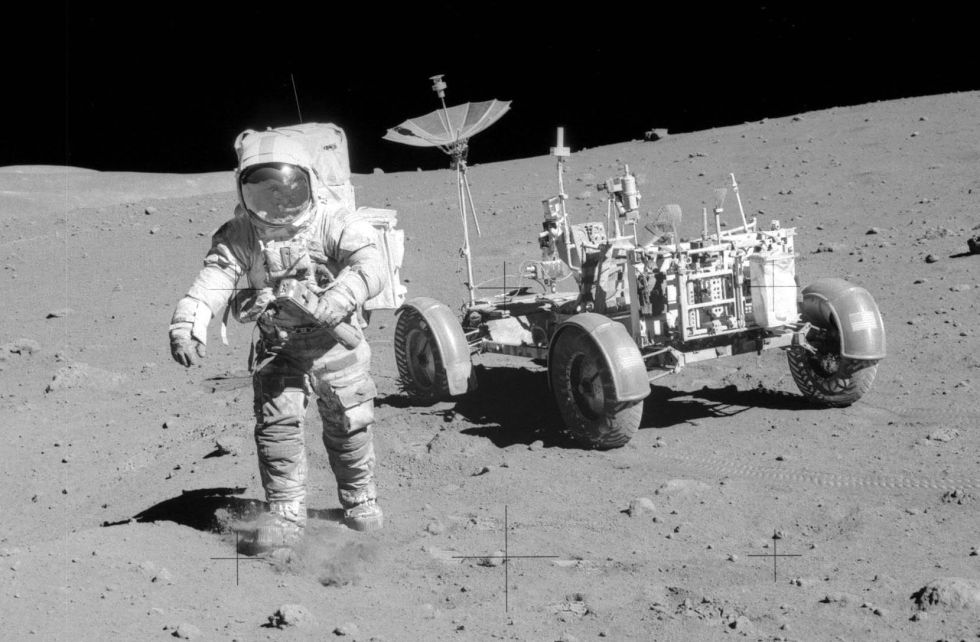
David Scott commanded the Apollo 15 mission, which launched on July 26, 1971. Here he holds the Hasselblad camera with a Zeiss 500mm lens. (credit: NASA)

Apollo 15 was the first of that program's "J missions," which featured longer stays on the lunar surface and more science-heavy timelines. As part of that, for the first time, the lunar module also brought an electric rover to the Moon's surface so astronauts could visit interesting geological features farther away from the landing site.

For the first of these J missions, astronauts David Scott and Jim Irwin landed at the base of the Apennine Mountains, allowing them to explore the Hadley Rille, a deep rift in the Moon’s surface gashed by some early volcanic process. All told, the rover drove a total of 27.9km during the Apollo 15 excursions. But there was only so much the astronauts could do up close. And so it is a good thing, for the first time, they also brought a 500mm telephoto lens to the Moon.

Because weight restrictions were so tight on the mission after inclusion of the 209kg rover, Scott had to argue with mission managers to include the lens, and ultimately they agreed to slightly decrease the spacecraft's abort propellant to gain the extra margin in weight—about one pound.

Read 6 remaining paragraphs | Comments